


Latest by
-
 Handok and Welt's SleepQ Surpasses 1,000 Registrations with NECA Handok and Welt's digital therapeutic device (DTx) SleepQ has surpassed 1,000 registrations with the National Evidence-based Healthcare Collaborating Agency (NECA). This milestone reflects the growing acceptance of digital therapeutic devices as a new option for treating insomnia.On July 8, Handok and Welt announced that SleepQ reached the cumulative total of 1,000 registrations with NECA on July 3.NECA registration is a procedural requirement for medical institutions to utilize digital therapeutic devices in actual clinical practice. The companies explained that surpassing 1,000 registrations indicates an increasing number of healthcare providers considering digital therapeutic devices as a viable option for insomnia treatment.Among the medical professionals registered with NECA for SleepQ, approximately 30% are from internal medicine, while psychiatry and family medicine each account for about 12%.In April, Handok integrated its digital healthcare division into its prescription drug organization, enhancing communication with healthcare professionals in the sleep health sector, focusing on SleepQ.SleepQ is a prescription digital therapeutic device that implements cognitive behavioral therapy for insomnia (CBT-I), which is recommended as the standard treatment for insomnia. It has been approved as the first innovative medical device by the Ministry of Food and Drug Safety. Under medical supervision, it offers a six-week evidence-based program that includes sleep restriction, stimulus control, cognitive restructuring, relaxation techniques, and sleep hygiene education, along with three phone consultations during the treatment period.In domestic clinical trials, patients using SleepQ showed a 15.14% improvement in sleep efficiency at the seven-week mark compared to baseline, and the time taken to fall asleep decreased from an average of 65.7 minutes to 35.8 minutes, a reduction of about 45%. The DBAS-16 score, which assesses dysfunctional beliefs and attitudes about sleep, also showed statistically significant improvement.Since the first prescription of SleepQ in April 2024, Handok and Welt have been actively exploring various initiatives to expand its use. Considering the characteristics of digital healthcare, they initially focused on accumulating usage cases through accessible telemedicine, and recently, they have also been expanding prescriptions in face-to-face consultations.Kim Yoon-mi, Executive Director of Handok's Prescription Drug Division, stated, "The surpassing of 1,000 NECA registrations for SleepQ demonstrates that digital therapeutic devices are entering a stage where they are being seriously considered and prepared for implementation in the treatment of insomnia. We will continue to enhance accessibility for insomnia patients to receive evidence-based cognitive behavioral therapy more easily."* This article has been translated by AI. 2026-07-08 16:52:00
-
Testing Smartphone Facial Recognition: 10-Second Verification Even with Glasses On July 8, at the LG Uplus Namdaemun store in Seoul, I activated my smartphone camera to experience the facial recognition process firsthand. Following the on-screen instructions, I moved my head side to side, and within 10 seconds, my identity was confirmed. Despite wearing glasses, the facial recognition system had no issues.Oh Hyung-il, head of the Customer PI team at LG Uplus, explained, "The system measures the distance between both eyes, allowing customers who wear glasses to authenticate without difficulty."However, the non-face-to-face activation process was more stringent. To prevent circumvention through photos or video calls, users were required to blink as part of the verification process. This method imposed stricter standards than face-to-face verification.Oh stated, "The recognition criteria are not arbitrarily adjusted by the telecom companies but are applied according to standards set by the system operator. Non-face-to-face verification must enhance security to eliminate the possibility of fraudulent activations."On June 30, the Ministry of Science and ICT announced a comprehensive plan to prevent mobile phone fraud. Since July 6, the three major telecom companies (SK Telecom, KT, and LG Uplus) and budget mobile operators have implemented facial recognition for both face-to-face and non-face-to-face activations.There was a six-month pilot period before the system's introduction. According to LG Uplus, the government verified the feasibility of the system at 308 leading stores of the three major telecom companies during this pilot phase, and security checks were conducted through specialized information protection agencies.LG Uplus has also continuously improved the system by addressing issues that arose in real-world settings. Oh noted, "We have consistently gathered data on errors caused by lighting or glasses and worked with the system operator to enhance the system. Currently, the success rate in the field has stabilized at a reliable level."The Ministry of Science and ICT explained that the facial recognition process does not store original facial images but compares facial features and immediately discards related information. Oh emphasized, "Telecom companies do not collect or verify facial data. Verification occurs through a certification system jointly established by the three telecom companies via QR codes, and we only receive the authentication results."If facial recognition temporarily fails, users can still verify their identity using alternative methods, such as mobile identification or resident registration documents. The Ministry plans to expand alternative verification methods starting in August and introduce a system to automatically check for alterations in resident registration documents by September.* This article has been translated by AI. 2026-07-08 16:52:00
-
Hidden Forest-Adjacent Apartments in Seoul's City Center Sell for Over $10 Million The saying 'You see what you know' applies not only to cultural heritage but also to the dream of homeownership. To achieve this dream, one must be willing to explore. This is why we embark on site visits. The first destination of 'Star Site Visits' is Hongje-dong in Seodaemun-gu, Seoul. Hongje-dong is approximately a 15-minute bus ride from Gwanghwamun. While it falls within the urban living zone of Seoul, apartments with a floor area of 84 square meters are trading around 1 billion won, which is relatively affordable compared to nearby complexes. The area around Muakjae Station on Line 3 continues to attract interest from potential buyers seeking proximity to work and home. A recent walk revealed that while the excellent urban accessibility is a significant advantage, the steep slopes and limited commercial areas remain challenges. Exiting through Exit 3 of Muakjae Station, the first thing that catches the eye is Tongil-ro. Vehicles from Eunpyeong-gu and Goyang and Ilsan in Gyeonggi Province continuously head toward downtown Seoul, with a nearly 30-year-old apartment complex facing a newly constructed one across a crosswalk. The distance to Gwanghwamun is about 3 kilometers, and Seoul City Hall is approximately 3.5 kilometers away. Taking a bus from the stop in front of the complex, it took just over 12 minutes to reach Gwanghwamun. Using Line 3, one can reach Gyeongbokgung, Jongno 3-ga, and Euljiro 3-ga in under 10 minutes without transfers. However, Tongil-ro, being a major arterial road connecting the northwest of Seoul, often experiences traffic congestion during rush hours, making it somewhat challenging to use personal vehicles. A local real estate agent noted, "The bus-only lanes are generally not heavily congested, but regular lanes can be quite jammed." The first site visited was the Muak Cheong Apartments, built between 1994 and 1997. Located just a 2-3 minute walk from Muakjae Station, the atmosphere changes once inside the complex. Built along the slopes of Ansan Mountain, the area features significant inclines, making even a short walk feel steep. Parking conditions are also somewhat limited. Currently, there are rising expectations for the reconstruction of the Cheong Apartments. A local real estate agent mentioned, "Residents are discussing the formation of a reconstruction promotion committee." However, no official procedures for designating a maintenance area or establishing a cooperative for reconstruction are currently underway. The Muak Cheong Apartments are divided into three phases. The first phase consists of 14 buildings with 862 units, making it the largest among the three. The second phase has one building, while the third phase has two buildings, making them relatively smaller. Another real estate agent stated, "Currently, we are collecting consent forms for reconstruction primarily from Phase 1, and while there is a possibility of pursuing the project with Phase 2, it will be challenging to include Phase 3 in the same plan." Prices are relatively low considering the urban accessibility. According to the real estate platform Asil, a 84-square-meter unit in Muak Cheong Phase 3 sold for 940 million won in April. Recently, a 79-square-meter unit in Muak Cheong Phase 2 was listed for 1.05 billion won. The larger Muak Cheong Phase 1 saw a record sale of 1.265 billion won for an 84-square-meter unit in June. Crossing the street from the Cheong Apartments leads to a newly constructed complex, the Seodaemun Prugio Central Park, which opened in 2022. This new development consists of 832 units built on the site of the Hongje District 1 reconstruction. During a weekend afternoon visit, children playing in the playground were the first sight to catch the eye. The complex features a daycare center, community facilities, and a small library, with residents frequently seen walking around. Although the complex is situated on a hilly terrain, moving around is more convenient than expected. Elevators are installed throughout the complex, allowing residents to navigate without having to climb the hill directly. The elevators operate by entering the building and unit numbers, restricting access for outsiders. A local real estate agent explained, "While the complex is on a hill, many residents feel there is hardly any incline due to the elevators." There are currently few rental options available. A nearby real estate agent noted, "There are no rental listings for 20-pyeong and 22-pyeong units, only for 25-pyeong units. As the end of this year marks four years since the complex opened, we expect a significant number of rental listings to become available around that time." The sale prices reflect the premium associated with new constructions. According to Asil, a 55-square-meter unit in this complex sold for 1.25 billion won in April, while 84-square-meter units are currently listed around 1.5 billion won. What stood out most while exploring the Muakjae Station area was its proximity to the city center. Both complexes are just a 2-3 minute walk from the station, allowing residents to enjoy the urban lifestyle of Gwanghwamun and Jongno while also benefiting from the green environment of Ansan Mountain. The combination of urban accessibility and natural surroundings is a defining feature of this area. In contrast, the local infrastructure is somewhat lacking. While there are no large supermarkets, basic shopping is possible at the E-Mart Everyday located near the station exit. The dining and café options are limited, resulting in relatively quiet streets even during the evening. The hilly terrain also appears to be a factor to consider in daily life. Entering the complex changes the atmosphere. Ansan Elementary School is adjacent, and the Ansan Mountain trail is easily accessible. Some buildings offer views of Inwangsan Mountain, and despite the proximity to Tongil-ro, the interior of the complex maintains a relatively quiet ambiance. In Hongje-dong, where older and newer buildings coexist across from Muakjae Station, both types of apartments share common advantages of urban accessibility and natural surroundings. The older buildings have the added expectation of reconstruction, while the new ones stand out for their amenities and community features. For those seeking urban living in the 1 billion won range, this area is worth a visit. 2026-07-08 16:48:00
-
Teachers' Unions Demand Immediate Halt to Education Budget Cuts On July 8, as a public discussion on the restructuring of local education finance grants was held, national teachers' unions strongly opposed attempts to reduce education funding. The three unions argued that cutting budgets under the pretext of declining student numbers undermines the foundation of public education and called for the government to allocate separate national funds instead of shifting the costs of national policy projects onto primary and secondary education budgets. The three unions, including the Korean Federation of Teachers' Associations (KFTA), the Korean Teachers and Education Workers Union (KTU), and the Korean Teachers' Union (KTU), held a joint press conference at 10 a.m. in front of the Government Seoul Complex. The press conference preceded a public discussion on the necessity of restructuring education grants, organized by the Ministry of Education and the Ministry of Economy and Finance, scheduled for 10:30 a.m. The unions emphasized, "This discussion should not serve as a justification for reducing education funding under the guise of declining student numbers," and demanded an immediate halt to discussions on reducing local education finance grants while reinforcing the government's responsibility for public education. They stated, "Local education finance grants are not merely a budget allocation mechanism but a fundamental institutional basis for ensuring basic educational conditions for all students. Undermining this foundation shakes schools and disrupts the learning conditions for students and the teaching conditions for educators." The unions also criticized the Ministry of Economy and Finance's rationale of 'declining school-age population,' arguing that education funding cannot be judged solely based on student numbers. They insisted that even with fewer students, essential facilities such as classrooms, cafeterias, care rooms, and special education classes must be maintained, and responsibilities for ensuring basic academic skills and improving aging facilities should not diminish. They directed pointed remarks at the Ministry of Education, stating, "The Ministry of Education should not be a negotiating body with the Ministry of Economy and Finance but rather the responsible agency for safeguarding public education funding." They urged the ministry not to resolve support for higher education, lifelong education, and childcare institutions by diverting funds from primary and secondary education but to secure separate national funding. They specifically called for the government to provide dedicated resources for national policy projects requiring substantial funding, such as the 'Extended School Day Program' and digital education, rather than shifting these costs onto schools. During the press conference, representatives from the unions vividly testified to the harsh realities in classrooms, calling for increased investment in education. Park Young-hwan, chair of the KTU, remarked, "The Ministry of Economy and Finance argues for budget cuts due to declining student numbers, but classrooms are filled with students needing support for basic skills, special education, and counseling. If education funding decreases, the first to suffer will be actual educational activities, and that burden will fall squarely on students and teachers." Song Soo-yeon, chair of the Korean Teachers' Union, pointed out the limitations of personnel and fixed costs. She stated, "We cannot demolish school buildings or extinguish them just because student numbers have decreased. Given that about 70% of grants are spent on teacher salaries, it is unreasonable to continue introducing new policies like the Extended School Day Program or digital transformation and expect them to be resolved within existing grants." Kim Jin-young, vice president of the KFTA, also noted, "Even in non-rural areas, schools are dealing with outdated restrooms and heating and cooling costs. Ignoring the reality that schools are burdened with policies intertwined with welfare while cutting budgets is dangerous." He added, "If there are criticisms that only the size of the education office is increasing while support for schools is hard to feel, that is not a reason to cut budgets but a reason to reduce wasteful projects and ensure proper allocation to schools."* This article has been translated by AI. 2026-07-08 16:44:00
-
KOSPI Plummets Over 5% Amid Middle East Risks and Weak Investor Sentiment The KOSPI index dropped more than 5% as concerns over semiconductor investments combined with geopolitical risks in the Middle East. The sell-off triggered trading halts in both the KOSPI and KOSDAQ markets as investor sentiment sharply declined.On July 8, the Korea Exchange reported that the KOSPI closed at 7,246.79, down 409.52 points (5.35%) from the previous trading day.The index opened at 7,452.48, down 203.83 points (2.66%), but briefly turned positive during the day due to bargain hunting by foreign and institutional investors. However, selling pressure, particularly in semiconductor stocks, intensified in the afternoon, leading to a larger decline by the close.As volatility increased, both markets activated trading halts. At 1:31:58 PM, the KOSPI 200 futures price fell 5.21% to 1,174.36, prompting a five-minute suspension of sell orders in the securities market. Shortly after, at 1:33:58 PM, the KOSDAQ 150 futures price dropped 6.31%, and the KOSDAQ 150 index fell 6.76%, resulting in a similar suspension in the KOSDAQ market.Overnight, U.S. markets fell as the impact of Samsung Electronics' sharp decline spread to American semiconductor stocks, compounded by rising international oil prices due to geopolitical tensions in the Strait of Hormuz. Major semiconductor stocks like Micron (-4.71%) and SanDisk (-7.26%) saw significant drops, further dampening investor sentiment in the domestic market.On this day, foreign investors net purchased 474.2 billion won in the securities market, while individuals and institutions sold 394.1 billion won and 135.7 billion won, respectively.Among the top market capitalization stocks, Samsung Electronics (-6.25%), SK Hynix (-5.68%), SK Square (-6.34%), Samsung Electro-Mechanics (-10.25%), Hyundai Motor (-3.55%), LG Energy Solution (-4.97%), Samsung Life Insurance (-7.73%), Samsung C&T (-6.95%), and Samsung Biologics (-4.15%) all closed lower.The KOSDAQ index finished at 785.00, down 46.23 points (5.56%). It opened at 816.39, down 14.84 points (1.79%), and continued to decline throughout the day.In the KOSDAQ market, foreign investors net purchased 337.0 billion won, while individuals and institutions sold 197.0 billion won and 137.5 billion won, respectively.Among the top KOSDAQ stocks, Alteogen (-7.11%), EcoPro BM (-6.32%), EcoPro (-7.58%), Rainbow Robotics (-6.75%), JUSUNG Engineering (-8.88%), and Kolon TissueGene (-7.84%) all showed significant weakness.Lee Kyung-min, a researcher at Daishin Securities, stated, "Following Samsung Electronics' earnings announcement, doubts about the semiconductor industry persist, and with the added geopolitical risks in the Middle East, volatility in the domestic market has increased. As foreign selling continues, risk-averse sentiment has intensified, leading to broader declines across all sectors."* This article has been translated by AI. 2026-07-08 16:44:00
-
Debate on Excess Profits in the AI Era Intensifies as Labor Ministry Plans Forum The Ministry of Employment and Labor announced on July 8 that it will hold a forum on July 14 to address the issue of excess profit distribution that has arisen following conflicts over performance bonuses between Samsung Electronics and its labor union. According to the ministry, the forum, titled "A New Path for Social Innovation in Line with AI Technological Innovation," will begin at 2 p.m. on July 14. Discussions will focus on corporate innovation investments for a sustainable future in the era of AI industrial transformation. Various topics are expected to be raised, including cooperation between primary and secondary contractors, job creation for future generations, talent development, and the expansion of social safety nets. The forum will be chaired by Kang Sung-jin, president of the Korean Economic Association and a professor at Korea University. Presentations will be made by lawmakers such as Cha Chi-ho of the Democratic Party, as well as professors Jeong Heung-jun from Seoul National University of Science and Technology and Yoon Dong-yeol from Konkuk University. Following the presentations, discussions will take place among labor representatives, business leaders, and relevant experts. Earlier, Minister of Employment and Labor Kim Young-hoon expressed a desire to explore a "Korean-style social solidarity wage" after mediating a tentative wage agreement between Samsung Electronics and its labor union in May. He stated, "I want to open a discussion on how to socially redistribute excess profits from large corporations, emphasizing that the only solution is social dialogue, and the government will actively support this through research and surveys."* This article has been translated by AI. 2026-07-08 16:40:00
-
KOSPI Trading Volume Hits Lowest Level Since Financial Crisis The KOSPI's average daily trading volume has fallen to its lowest level this year, dampening investor sentiment. Analysts suggest that the domestic stock market has entered a rare undervaluation phase since the global financial crisis. If corporate profit forecasts remain largely intact, the current stock price levels may present a buying opportunity.According to the Korea Exchange, the average daily trading volume for July was 483.3 million shares, the lowest recorded this year. Monthly average trading volumes decreased from 550.1 million shares in January to 1.048 billion in February, 1.107 billion in March, and 947.2 million in April, continuing to decline to 698.7 million in May and 490.02 million in June. This month, the average daily trading value also dropped to 41.6265 trillion won, significantly below the 50 trillion won mark seen in May and June, indicating a rapid decline in investor sentiment.As trading volumes decrease, market attention is turning to the KOSPI's 12-month forward price-to-earnings ratio (12MF PER). This key market valuation indicator reflects the expected earnings of KOSPI-listed companies over the next 12 months. A lower ratio typically indicates that the market is undervalued relative to future earnings.Shinhan Investment Corp. recently reported that the KOSPI's 12MF PER has fallen below 6.7 times, approaching a record low of 6.65 times. Historical data shows that the KOSPI's 12MF PER has dipped below 7 times only a few times, including in 2002 (5.50 times), 2003 (5.36 times), 2004 (5.47 times), and during the 2008 global financial crisis (6.27 times).Similarly, Korea Investment & Securities shared a comparable perspective. Analyst Kim Dae-jun noted, "The KOSPI's 12MF PER at 7430 points is 6.43 times, which is 2.7 standard deviations below the recent 10-year average." According to Kim, there have only been six trading days since the 2008 global financial crisis when the closing 12MF PER fell below 7 times, with the lowest closing value recorded on October 24, 2008, at 6.27 times, and an intraday low of 6.07 times on October 27 of the same year.Market analysts believe that if corporate profit forecasts do not deteriorate significantly, the current KOSPI levels may present a buying opportunity. Senior analyst Kang Jin-hyuk from Shinhan Investment Corp. stated, "Assuming the end of the AI cycle or downward revisions in profit estimates do not occur, the KOSPI's valuation is at its lowest since the financial crisis, making bargain buying a viable option." Kim Dae-jun also remarked, "While short-term investor sentiment is subdued, there is a high likelihood of recovery in the semiconductor sector if the index rebounds." 2026-07-08 16:32:00
-
Justice Minister Jeong Seong-ho Calls for Oversight and Cross-Verification of Investigative Agencies Justice Minister Jeong Seong-ho emphasized the need for mutual oversight and cross-verification of investigative agencies during discussions on amending the criminal procedure law, which includes the abolition of prosecutorial supplementary investigation rights.Minister Jeong attended a meeting of the National Assembly's Legislative and Judiciary Committee on July 8, where he responded to lawmakers' inquiries regarding the proposed amendments. He stated, "There needs to be oversight and control over investigative agencies."In response to Democratic Party lawmaker Kim Nam-hee's comment that no investigative agency should wield unchecked power and that innocent victims should not arise, Jeong affirmed, "The fundamental principle of separating investigation and prosecution must be clearly upheld," while urging the National Assembly to discuss the necessity of cross-verification in investigations in depth.Jeong also addressed allegations of evidence destruction by the police, stating, "We need to monitor the police's internal review and measures closely," adding, "There have been 11 instances where the prosecution had to supplement matters that were not properly handled at the police level. This raised suspicions that warranted a thorough examination."Regarding the direction of the criminal procedure law amendment, he noted, "Given the past where the prosecution monopolized and misused its authority, the principle of separating investigation and prosecution must be firmly maintained," while reiterating the need for oversight and control over investigative agencies and cross-verification in investigations, urging committee members to discuss these issues thoroughly.He stressed, "The most important thing is that the protection of citizens' rights and crime victims is not neglected," and stated that the Ministry of Justice and the prosecution would actively express their opinions during the discussion process.However, he firmly rejected allegations from opposition lawmakers regarding the prosecution's alleged media manipulation. In response to criticisms from Democratic Party lawmaker Park Ji-won and Justice Party lawmaker Park Eun-jung, who claimed that the prosecution was colluding with political circles to engage in excessive media play to secure supplementary investigation rights, Jeong countered, "This is completely unfounded."He explained, "This case has raised several allegations since its referral, and the Gwangju District Prosecutor's Office is taking necessary actions. The media's focused coverage is simply reporting on the situation, and suggesting any ulterior motives is a gross misunderstanding."Meanwhile, on the same day, Jeong visited the National Assembly to meet with National Assembly Speaker Kim Jong-in and Democratic Party floor leader Han Byeong-do, requesting cooperation for the passage of key livelihood legislation.Jeong posted a photo of his meeting with Speaker Kim and Floor Leader Han on Facebook, stating, "As we enter the second year of the people's sovereignty government, it is a crucial time to demonstrate stable governance and tangible results that the public can feel, including the swift legislative review and enactment of the 'Ministry of Justice's 20th livelihood and safety bill,' which includes strengthening penalties for stalking and fraud crimes."According to the Ministry of Justice, a total of 38 laws under its jurisdiction have passed the National Assembly in the past year, marking a 65% increase compared to the previous year.* This article has been translated by AI. 2026-07-08 16:32:00
-
 Counterfeit banknotes hit near-record low in 1st half SEOUL, July 08 (AJP) - The number of counterfeit Korean won banknotes found in circulation fell by more than 30 percent in the first half from a year earlier, the Bank of Korea said Wednesday. A total of 41 counterfeit banknotes were detected during the first six months of this year, down 21 from 62 a year earlier, marking a 33.9 percent decline. The tally includes counterfeit notes discovered by the central bank while handling currency in circulation, as well as those reported to the BOK by financial institutions after being found in cash deposits or at teller windows. The combined face value of the counterfeit notes came to 473,000 won, down 570,000 won from a year earlier. The decline was largely due to a drop in counterfeit 50,000-won notes, which fell to five from 15. By denomination, 5,000-won notes accounted for the largest share with 22 bills. They were followed by 11 10,000-won notes, five 50,000-won notes and three 1,000-won notes. Of the counterfeit 5,000-won notes, 17 were old-series bills with the serial number pattern "77246," which were produced by a large-scale counterfeiter arrested in June 2013. The figure was down from 20 a year earlier. The BOK said 12 newly detected counterfeit serial numbers were found in the first half, with higher-denomination bills accounting for most of them, suggesting that new counterfeiting attempts were concentrated in larger bills. The ratio of counterfeit notes to banknotes in circulation remained very low. The BOK said Korea had 0.6 counterfeit notes detected per 100 million banknotes in circulation. That compares with 4,229 in the U.K., 1,461 in Europe, 1,411 in Canada and 8.6 in Japan. The BOK said the country's counterfeit-note ratio has continued a gradual decline after falling sharply through 2019. Separately, the central bank gave a BOK governor's award to Icheon Police Station in Gyeonggi Province for its role in preventing counterfeit currency from spreading. The police station was recognized for arresting two suspects accused of counterfeiting 20 50,000-won notes and three others accused of passing 12 counterfeit notes at 11 locations, including convenience stores, after launching an investigation from a 112 emergency call last November. The BOK said most of the seized counterfeit notes had mismatched serial numbers on the upper left and lower right of the front side. The lower-right serial number was identical on the seized notes, reading "FC2902733H." The central bank advised people to report suspicious notes to police immediately. 2026-07-08 16:29:46
-
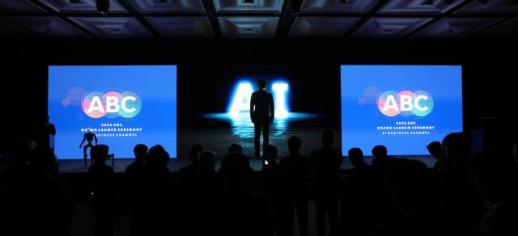 Aju Media launches AI-focused business channel as Korea pushes AI ambitions SEOUL, July 08 (AJP) - South Korean media company Aju Media Group launched what it described as the country's first television channel dedicated exclusively to artificial intelligence on Wednesday, seeking to establish a platform covering AI policy, business, investment and technology as competition in the sector intensifies. The company officially launched ABC (AI Business Channel) at an opening ceremony in Seoul, kicking off a two-day series of events bringing together government officials, business leaders, investors and academics to discuss the future of South Korea's AI ecosystem. The launch comes as South Korea steps up efforts to strengthen its competitiveness in artificial intelligence, which the government has identified as a strategic growth engine and a key driver of future industrial development. Aju Media said the new channel will provide specialized coverage of AI-related policies, technological advances, investment trends and industry developments. Wednesday's opening ceremony featured a joint presentation by a human anchor and an AI-powered robotic anchor, followed by opening remarks from Aju Media Group Chairman Kwak Young-gil and a congratulatory video message from President Lee Jae Myung. Guests also participated in a ceremonial launch marking the start of the channel's broadcasts. On Thursday, the company is scheduled to host an AI Innovation Forum under the theme, "A New Media Era: Industrial Transformation Driven by the AI Ecosystem." The forum will bring together policymakers, technology executives, investors and researchers to discuss South Korea's AI competitiveness and industrial strategy. Vice Minister of Science and ICT Ryu Je-myung is scheduled to deliver a keynote address outlining the government's ambition to make South Korea one of the world's three leading AI powers. Former professional Go player Lee Sedol, whose 2016 matches against Google's AlphaGo drew global attention, is also expected to speak about the impact of artificial intelligence a decade after the landmark contest. NVIDIA Korea Country Manager Jeong So-young is scheduled to present her outlook on AI-driven industrial transformation. Aju Media said it plans to expand its operations beyond newspapers, newswire services and digital platforms into television broadcasting through the new AI-focused channel. 2026-07-08 16:28:35