


Latest by
-
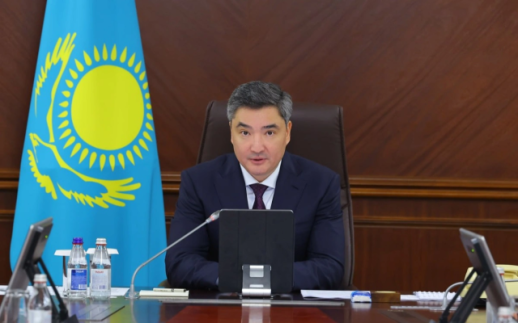 Kazakhstan tightens grip on flagship gas projects SEOUL, July 07 (AJP) - Kazakhstan has placed construction work at its three largest gas processing projects under weekly government monitoring, a step aimed at keeping the flagship developments on schedule as the country races to meet surging domestic demand and expand its role as a Eurasian energy supplier, the state news agency Qazinform reported Tuesday. The projects under watch sit at the heart of Kazakhstan's plan to lift marketable gas output to 34.6 billion cubic meters by 2030. Two plants at the giant Kashagan field in the Caspian Sea will process one billion and 2.5 billion cubic meters of gas per year, a facility at the Karachaganak field in the northwest will handle four billion cubic meters, and a plant in the western city of Zhanaozen will add 900 million cubic meters, according to Kazakhstan's Energy Ministry. QazaqGaz, the national gas company, has estimated the cost of the two Kashagan plants alone at up to $3.5 billion, and is building them jointly with UCC Holding of Qatar. Prime Minister Olzhas Bektenov issued the monitoring order at a government meeting on Tuesday, instructing the Energy Ministry, the Samruk-Kazyna sovereign wealth fund and QazaqGaz to track construction and installation work at the three sites every week. He tied the projects directly to Kazakhstan's energy security, its appeal to foreign investors and the quality of life of its citizens. "Economic growth is accompanied by steadily increasing demand for gas from both households and the industrial sector," Bektenov said. "We must ensure a long-term balance between the industry's resource capacity and the needs of the economy. Projects to expand gas transportation infrastructure, build gas processing plants, and extend gasification across the regions are being implemented consistently." The new plants are expected to increase commercial gas supplies for the domestic market and feed Kazakhstan's push into petrochemicals, an industry the government sees as a way to earn more from its hydrocarbons than raw exports allow. "These facilities are expected to increase commercial gas production for the domestic market and serve as key drivers of the petrochemical industry's development," Bektenov said, adding that gas infrastructure must be delivered on time to support new enterprises and strengthen the country's industrial base. The monitoring order reflects a broader campaign by Astana to turn its geography and resources into leverage. Kazakhstan, the largest economy in Central Asia, has invested heavily in the Trans-Caspian International Transport Route, known as the Middle Corridor, which carries goods and energy from Central Asia across the Caspian Sea and through the South Caucasus to Europe without passing through Russia. The route drew fresh attention in May when Turkish President Recep Tayyip Erdogan, visiting Astana, called it the present-day equivalent of the Silk Road and said Turkiye wanted to carry larger volumes of Kazakh oil to world markets, as KazMunayGas and Turkish state energy company TPAO signed agreements on joint oil and gas projects. The energy leg of that strategy is already moving. Kazakhstan is expanding its Caspian port of Aktau and plans to ship 2.2 million tons of oil through the Baku-Tbilisi-Ceyhan pipeline this year, while its parliament in March approved a green energy corridor with Azerbaijan and Uzbekistan that would send renewable electricity to Europe through cables laid on the Caspian seabed. At home, the government has paired export ambitions with a drive to connect more of its own people to gas. Gasification reached 62.4 percent of the population by the end of 2024, covering 12.6 million citizens, and the government has set a target of 12.8 million people this year, backed by 112.5 billion tenge in funding from the state budget and Samruk-Kazyna for 84 projects. Kazakhstan produced 59 billion cubic meters of gas in 2024 and plans to raise annual production to 74 billion cubic meters by 2030. 2026-07-07 19:28:04
-
 Concerns Over Power Supply as Energy Demand Surges for Mega Projects The government is accelerating mega projects centered around semiconductors and artificial intelligence (AI) data centers, but concerns about power supply are growing. These large-scale projects require substantial electricity, yet the infrastructure for generation and transmission is lacking.As a result, there is a strong possibility that additional nuclear power plants will be included in the 12th Basic Plan for Power Supply and Demand, which the government plans to establish by the end of the year. A comprehensive reassessment of the existing power mix is also expected.Stable Power Supply Essential for Semiconductor and Data Center ProjectsAccording to relevant government departments, the estimated power demand for the semiconductor cluster and AI data center being developed in the southwestern region is 24.7 gigawatts (GW), with 6.3 GW needed for the semiconductor cluster and 18.4 GW for the AI data center.This demand represents about a quarter of the maximum power demand of 98.8 GW projected by the Ministry of Environment and Energy for this summer. Given that the APR1400, a Korean-designed nuclear reactor developed by Korea Hydro & Nuclear Power, has a generation capacity of approximately 1.4 GW, there will be a need for an additional 18 reactors.Consequently, it is highly likely that the additional power demand will be included in the upcoming 12th Basic Plan. The government is expected to announce the plan, which will outline the direction for power demand and generation capacity expansion through 2040, later this year.The preliminary forecast for the 12th Basic Plan, released in April, projected the maximum power demand for 2040 to be between 131.8 GW and 138.2 GW, indicating a need for an additional 2.5 to 8.9 GW of capacity. However, with the announcement of mega projects, existing forecasts are likely to be revised upward.Additionally, the characteristics of semiconductor factories and AI data centers must be taken into account. Since a stable power supply is essential, it is difficult to rely solely on variable renewable energy sources. The government has indicated that it will pursue not only the early achievement of 100 GW of renewable energy by 2030 but also the use of nuclear power, small modular reactors (SMRs), energy storage systems (ESS), and thermal power generation, reflecting this pragmatic approach.Limits of Renewable Energy Highlight Need for New Nuclear Power DiscussionsThe extent to which new nuclear power plants will be incorporated into the 12th Basic Plan is a key issue. The 11th Basic Plan included two large nuclear reactors and one SMR, with new sites recently selected in Yeongdeok, Gyeongbuk, and Gijang, Busan. As securing power for mega projects becomes a prerequisite, there is a strong possibility that new nuclear plants will be added to the 12th Basic Plan.Kim Sung-hwan, Minister of Climate, recently stated on MBC Radio's 'Kim Jong-bae's Focus' that "we can build more reactors at existing sites without needing to find new locations," mentioning the Hanbit Nuclear Power Plant in Jeollanam-do and the Saeul Nuclear Power Plant in Ulsan. Adding two reactors at these sites could meet over 5 GW of power demand.However, constructing new nuclear plants requires significant time. The process involves site selection, securing community acceptance, obtaining permits, conducting environmental and safety assessments, and construction. The government believes that adding reactors at existing sites could reduce administrative procedures and shorten the construction period to about seven years.There is also interest in how much the share of nuclear power will increase in the energy mix. The semiconductor cluster and AI data centers are representative of high electricity-consuming facilities that operate 24/7. Therefore, it is likely that the proportion of stable nuclear power and SMRs will increase. Ultimately, there is a growing argument for establishing a realistic energy mix that can meet the power demands of advanced industries while maintaining carbon neutrality in the 12th Basic Plan.* This article has been translated by AI. 2026-07-07 19:24:00
-
Concerns Over Power Shortages Amid Mega Projects in Honam Region The South Korean government is accelerating its three major mega projects, which are expected to drive significant power demand, including semiconductor and artificial intelligence (AI) data centers. However, the expansion of transmission and substation networks has emerged as a critical issue. Without timely infrastructure development to transmit generated power to demand centers, there are concerns about potential "power bottlenecks" that could hinder these mega projects.According to industry sources, the Honam region, designated as a semiconductor production hub, is already facing saturation issues in its power system due to a concentration of renewable energy generation facilities.Korea Electric Power Corporation (KEPCO) has designated 205 substations nationwide as "system management substations" due to system saturation expected in 2024. All substations in Honam and Jeju are included in this designation. As a result, the connection of new renewable energy generation facilities in the Honam region is generally restricted until the expansion of transmission and substation facilities is completed in 2031.With the establishment of large-scale power demand centers such as semiconductor production sites and AI data centers, the need to restructure the power system in Honam has become even more pressing. The semiconductor production hub is expected to house four memory fabs, which are estimated to require 6.3GW of power just for factory operations.While the Honam region is not lacking in power generation capacity, with a total capacity of approximately 23.3GW as of 2025, significantly exceeding the local demand of about 5GW, the relatively low local demand has led to repeated issues of system saturation and renewable energy output control when attempting to transmit power to other regions. The anticipated establishment of large semiconductor production facilities could help alleviate the burden on the regional transmission network and output control by enabling a "local production for local consumption" effect.The key challenge lies in connecting the power generated in the region to the semiconductor industrial complex. Even with sufficient generation capacity, if the connection lines and substation facilities are not constructed in a timely manner, it will be difficult to supply the necessary power reliably.Moreover, the need for system reinforcement may increase further with the addition of large-scale power sources such as new nuclear power plants. To supply power generated from the Hanbit Nuclear Power Plant to the semiconductor production hub, it will be necessary to assess the existing system's capacity and build additional transmission and substation networks.Building a power network takes considerable time. According to KEPCO, the standard construction period for a 345kV transmission line is nine years. More than half of the planned transmission and substation projects are already delayed due to local opposition and permitting issues.There are calls to explore ways to reduce reliance on long-distance transmission networks and secure stable power sources near demand centers.Professor Kang Cheon-gu, a visiting professor at Inha University's Graduate School of Manufacturing Innovation, noted, "Even though there is a lot of renewable energy in Jeonnam, it cannot be brought to the metropolitan area due to transmission network issues. To bring power from Yeonggwang to Gwangju, the transmission network needs to be expanded, but there are various challenges, including community acceptance."He added, "AI data centers currently cannot be powered solely by renewable energy due to output and frequency stability issues. It is necessary to consider securing stable power sources near demand centers, such as deploying small modular reactors (SMRs) and gas combined heat and power generation at the Gwangju Airport site."* This article has been translated by AI. 2026-07-07 19:24:00
-
Hong Ui-rak Appointed as New President of Korea Gas Corporation Hong Ui-rak has been appointed as the new president of Korea Gas Corporation (KOGAS).KOGAS announced on July 7 that it will hold an extraordinary shareholders' meeting on the 23rd to vote on the appointment of Hong as president.If the shareholders approve the appointment, the final decision will be made by the president following a recommendation from the Minister of Trade, Industry and Energy. The new president will serve a three-year term.Born in 1955, Hong previously served as a member of the National Assembly during the 19th and 20th terms and held the position of Deputy Mayor for Economic Affairs in Daegu.KOGAS had initiated the process to appoint a new president at the end of last year, but the Ministry of Trade, Industry and Energy deemed all five final candidates unqualified, leading to the cancellation of the appointment. Following a re-application process, Hong was confirmed as the final candidate.KOGAS is a state-owned enterprise responsible for the import and supply of natural gas in South Korea, playing a crucial role in energy security and stable gas supply. The new president is expected to address challenges such as ensuring stable natural gas supply amid global energy price fluctuations, improving financial structure, and managing overseas resource development projects.Currently, KOGAS is still operating under the leadership of former president Choi Yeon-hye, whose term officially ended in December of last year.* This article has been translated by AI. 2026-07-07 19:20:00
-
Korean Agricultural Satellite 'Next-Generation Medium Satellite 4' Successfully Launched The 'Next-Generation Medium Satellite 4,' designed for agricultural and forestry management and monitoring forest changes, has been launched into space.According to Yonhap News Agency, the satellite was launched on July 7 at 4:12 PM Korea time (12:12 AM local time) from Vandenberg Space Force Base in California aboard SpaceX's Falcon 9 rocket.Next-Generation Medium Satellite 4 is a 500 kg standard platform agricultural satellite equipped with a domestically developed wide-area observation camera. It will capture images of the entire country every three days, aiding in crop growth monitoring, agricultural land analysis, and forest resource observation.Following the launch, the Falcon 9 completed first-stage separation approximately 2 minutes and 28 seconds after liftoff, and the satellite fairing was released about 3 minutes and 15 seconds later. The satellite successfully separated from the rocket at around 6:42 PM, approximately 2 hours and 30 minutes after launch.The satellite will operate in a sun-synchronous orbit at an altitude of about 888 km. The Korea Aerospace Research Institute announced that the first communication with the satellite is expected to occur about 23 minutes after its separation from the rocket, with the Svalbard ground station in Norway.Next-Generation Medium Satellite 4 was developed under the first phase of the Next-Generation Medium Satellite project, led by Korea Aerospace Industries (KAI). The satellite weighs 514 kg and features a 120 km observation width and a 5-meter spatial resolution optical payload, enabling it to perform crop yield assessments, agricultural land analysis, and forest resource observations.It is anticipated that the satellite's ability to capture images of the Korean Peninsula two to three times will enhance land observation efficiency and increase its utility in agricultural and forestry management. 2026-07-07 19:04:00
-
Restaurant Industry Accelerates Automation Amid Minimum Wage Pressures As negotiations for next year's minimum wage reach their final stages, the restaurant industry is increasingly turning to automation to alleviate rising labor costs. The scope of automation is rapidly expanding beyond simple ordering kiosks and table ordering systems to include cooking robots and AI-based store management systems.On July 7, the Minimum Wage Commission held its 12th plenary meeting at the Government Sejong Center to discuss next year's minimum wage, while the restaurant industry closely monitors the negotiation outcomes. With rising raw material prices, high exchange rates, and declining sales due to consumer sluggishness, any increase in labor costs, which constitute a significant portion of fixed expenses, could lead to inevitable declines in profitability.In response to these labor cost pressures, the industry is seeking solutions through the introduction of unmanned and automated facilities. Paris Baguette has launched a hybrid store model, the first of its kind in the bakery sector, featuring both staffed daytime and unmanned nighttime operations. After pilot operations began in October last year at two locations, the model has now expanded to 65 stores nationwide.Starbucks Korea, which has emphasized face-to-face customer service, introduced kiosks in over 20 stores, including locations in Myeongdong and Gangnam, marking the first such implementation in the country. While this move was aimed at enhancing convenience for foreign tourists, it is also seen as a symbolic representation of the automation trend in the industry.The recent automation trend is evolving beyond just ordering and payment processes to encompass entire kitchen operations. Kyochon Chicken has installed automatic dough-making equipment in some stores, while bhc operates an automated frying robot, 'TuiBot,' to enhance cooking efficiency and ensure consistent quality. Lotteria has also deployed robots in select company-owned stores to handle patty cooking and frying tasks, replacing repetitive manual labor with machines.AI-driven operational innovations are also gaining momentum. Mom's Touch is collaborating with AI service robot company XYZ to develop a 'fully unmanned robot store' that automates the entire process from ordering to cooking and menu delivery. Hanwha Galleria has introduced collaborative robots in the production line of its premium ice cream brand, Benson, allowing the factory to operate with only 50-60% of the usual workforce.Store automation is expected to accelerate in line with the trend of increasing minimum wages. A survey conducted by the Korea Federation of Small and Medium Businesses found that 77.6% of respondents from 994 small and medium enterprises reported that the current minimum wage level is burdensome for their operations. Furthermore, when asked about potential responses to an unmanageable increase in minimum wage, the most common answer was to reduce new hiring.However, there are concerns that automation may not be a universal solution for all restaurants. The initial investment costs can be significant, and many tasks related to kitchen and hygiene management are difficult to fully automate. Small business owners, in particular, may face a heavier burden from these costs, suggesting that automation will primarily spread among larger franchises for the time being.Seoyong Gu, a professor of business administration at Sookmyung Women's University, stated, "While AI and automation can enhance competitiveness for large franchises with capital, they may pose entry barriers for small businesses and self-employed individuals lacking investment capacity. Ultimately, there is a high likelihood that a significant gap centered around AI will emerge in the restaurant industry." 2026-07-07 19:00:00
-
K Car Accelerates Management Transition Ahead of KG Consortium Board Integration K Car is accelerating its management transition in preparation for the integration of board members from the KG Consortium. Once the process of changing the largest shareholder is completed, the company is expected to clarify its organizational operations and business strategies. However, the timeline for actual management integration and synergy creation may be prolonged due to pending tasks, including the Fair Trade Commission's review of the merger and the acquisition process of K Car Capital.According to industry sources, K Car held an extraordinary shareholders' meeting on July 7 to completely overhaul its board of directors. This move comes as the KG Consortium is in the process of acquiring K Car, with members from the consortium set to join the board.In late March, Hahn & Company signed a stock purchase agreement (SPA) to sell 72.19% of K Car's shares and 100% of K Car Capital to the KG Group and Cactus Private Equity (PE) consortium for approximately 750 billion won.The resolutions passed at this shareholders' meeting are seen as preliminary steps toward a significant management transition following the SPA. Specifically, the board will expand from six to seven members, with three individuals from the consortium joining: Woo Chi-goo, head of strategy planning at KG Steel; Kwon Kyo-won, head of the KGM business division; and Lee Jun-ho, vice president at Cactus PE.However, the newly restructured board will not be operational immediately, as it was approved conditionally, contingent upon the completion of the transaction. The effective operation of the new board will depend on when the acquisition process is finalized.Additionally, amendments to the articles of incorporation passed during the meeting reflect this shift. K Car is transitioning from a representative executive officer management structure to a representative director system. A K Car official stated, "This change is aimed at establishing a new management system following the change in the largest shareholder, clarifying the decision-making process, and enhancing responsible management."Ultimately, the remaining variable is whether the preconditions for finalizing the acquisition contract will be met. K Car must pass the merger review by the Fair Trade Commission and complete the acquisition process of K Car Capital by KG Inicis.KG Steel, the acquirer of K Car, recently changed the previously announced acquisition date for K Car shares from June 30 to "undetermined." While market speculation suggests that the final acquisition is unlikely to face significant obstacles, there are concerns that the timeline is delayed compared to initial expectations.Even if the acquisition process is completed, it is expected to take time before any substantial integration effects are realized. This is due to the need for internal organizational adjustments at K Car, alignment of business strategies, and the establishment of collaborative structures with existing affiliates of the KG Group. The key issue will be how quickly K Car can maintain its competitive edge in used car distribution while integrating with the automotive, finance, and payment capabilities of the KG Group.* This article has been translated by AI. 2026-07-07 18:32:00
-
Defense Acquisition Agency to Enhance Diplomatic Efforts for NATO Standards The failure to secure the Canadian Patrol Submarine Project (CPSP) has been attributed to NATO interoperability. Experts suggest that overcoming the security alliance blockade requires strategic defense diplomacy at the national level.Lee Yong-cheol, head of the Defense Acquisition Agency, spoke to reporters on July 7 following Canada's announcement that Germany's ThyssenKrupp Marine Systems (TKMS) was selected as the preferred bidder for the CPSP. He stated, "The decisive difference appears to be in NATO interoperability." While there were no significant differences in submarine performance or maintenance benefits, South Korea's delivery timeline was over a year faster. However, Canada opted for the NATO submarine system, which allows for training, maintenance, parts, and technology cooperation, including crew sharing.Earlier, Canadian Prime Minister Mark Carney cited submarine performance, job creation, maintenance base placement, and early delivery by conceding production slots to Norway as reasons for selecting TKMS. He noted that Germany plans to supply submarines to more than one-third of NATO allies and can facilitate crew sharing.Canada's strategic considerations for the CPSP include securing Arctic operational capabilities in light of climate change and increasing threats from Russia.TKMS's Type 212CD submarine is highlighted for its optimization for Arctic operations, and Germany has proposed participation in Arctic modernization projects as part of its industrial and technological benefits (ITB). This approach targets Canada's security interests in the Arctic, given its proximity to the region and shared concerns about Russian threats.The Defense Acquisition Agency has announced plans to enhance diplomatic efforts, including sharing NATO standards and logistics support agreements, to enter the NATO market and secure advanced technologies.Lee emphasized, "The bloc formation centered on security alliances and prioritization of domestic weapons is now constants in the defense market. We will support research and development for securing technological gaps and improve physical AI capabilities."Researcher Yoo Ji-hoon from the Korea Institute for Defense Analysis (KIDA) advised that it is essential to comprehensively identify the security environment, policy priorities, alliance structures, and industrial policies of counterpart nations to approach cooperation as a national-level package.* This article has been translated by AI. 2026-07-07 18:32:00
-
Ministry of Land to Support Exclusive Mortgages for Goyang Changneung S3 Pre-Applicants The Ministry of Land, Infrastructure and Transport has confirmed that it will provide the promised loan support for exclusive mortgages to pre-applicants of the Goyang Changneung S3 block without any delays.On July 7, the ministry issued a statement regarding loans for residents of the Goyang Changneung S3 block. Some media outlets had reported that details about the exclusive mortgage, which were provided during the pre-application process, were removed from the resident recruitment announcement, and that the status of the interim payment group loan was marked as undecided, potentially increasing the burden on pre-applicants.In response, the ministry explained that it plans to support the housing city fund's exclusive mortgage for pre-application winners, as initially promised, concerning the final payment loan that must be paid upon moving in.The exclusive mortgage will be available to all pre-application winners, regardless of the income criteria for the Didirimdol loan and housing price requirements, with a maximum limit of 500 million won. The loan conditions include an 80% loan-to-value (LTV) ratio, and the debt service ratio (DSR) will not apply.However, the specific loan conditions, such as interest rates and maturity, will be based on the Didirimdol loan requirements at the time of application, taking into account market fluctuations.Regarding interim payments, the first payment for the Goyang Changneung S3 block is scheduled for May 2027, and the ministry plans to pursue a group loan agreement for interim payments in the first quarter of 2027. Once the agreement is finalized, it will be communicated to the contractors.The ministry noted that typically, the Korea Land and Housing Corporation (LH) signs group loan agreements with commercial banks about three to four months before the interim payment deadline.As trust in the pre-application system is directly linked to housing demanders' financial planning, clear guidance on loan conditions and interim payment schedules is becoming increasingly important.The ministry also plans to reflect these matters in the recruitment announcements for upcoming New:Home shared and optional housing projects. 2026-07-07 18:08:00
-
Canada Chooses German Firm for Submarine Project, Leaving Hanwha Ocean Empty-Handed Canada's next-generation submarine project, valued at approximately 60 trillion won, has been awarded to Germany's TKMS, marking another setback for Hanwha Ocean in securing large overseas defense contracts. Following a similar disappointment with Poland's ORKA project, the export strategy led by Hanwha Group Vice Chairman Kim Dong-kwan is now under increased scrutiny.According to the defense industry on July 7, the Canadian government has selected TKMS as the preferred bidder for the CPSP, a project aimed at acquiring up to 12 new diesel submarines.The CPSP is intended to replace Canada's Victoria-class submarines, which are set to retire in the mid-2030s. The project involves constructing up to 12 submarines, and when factoring in maintenance, repair, and operational costs over the next 30 years, the total project value is estimated at around 60 trillion won, roughly three times the amount of South Korea's defense export contracts last year.South Korea made significant efforts to win this contract, including sending the submarine Dosan Ahn Chang-ho to Canada for demonstrations, with full support from both the public and private sectors.Hanwha Ocean, which led the project, proposed a rapid delivery timeline with the first submarine expected by 2032 and projected an economic impact of about 70 billion Canadian dollars (approximately 75 trillion won) by 2044. Kim Dong-kwan also participated in the G7 summit in Evian, France, as part of a government defense delegation to bolster support, but ultimately, the bid did not succeed.Industry analysts suggest that the outcome of this bidding process hinged more on political and diplomatic considerations than on technological capabilities. While TKMS offered the 212CD submarine, which is part of a multinational project and lacks operational deployment examples, South Korea showcased its latest operational submarines.Ultimately, the structural advantage of Germany being a NATO member played a significant role in the final decision. Canada has been pursuing a strategy to reduce its reliance on U.S. military equipment while enhancing security cooperation with European allies.In a statement, Hanwha Ocean acknowledged, "We approached this project with a diligent attitude, but ultimately could not overcome the high barrier of NATO alliances."This setback presents a considerable challenge for Vice Chairman Kim Dong-kwan, who has focused on expanding Hanwha's defense exports through Hanwha Aerospace and enhancing maritime defense capabilities via Hanwha Ocean.However, the consecutive losses in securing large overseas contracts highlight the urgent need for Hanwha Ocean to establish a solid reference in the global naval market. Currently, Indonesia remains the only country to have imported submarines from Hanwha Ocean.Experts agree that to consistently build export performance, the K-defense export strategy must evolve. They emphasize the need to move beyond competing solely on technology and price, advocating for a "package strategy" that considers the security environment, diplomatic relations, and industrial cooperation of the target countries.Nam Sung-wook, a professor at Korea University, stated, "Strategic weapons are heavily influenced by political and security judgments between countries. For weapon systems like submarines, where technology is similar, factors such as alliance relationships, security cooperation, and diplomatic trust often determine the final contract award." He added, "In the future, customized strategies that take into account the security environment and industrial cooperation needs of each country will be necessary. This outcome should not be viewed solely as a failure but rather as a realistic acknowledgment of the situation and a process of building overseas export performance and trust over the long term."* This article has been translated by AI. 2026-07-07 18:08:00