


Latest by
-
 Hamas Announces Dissolution of Gaza Governance Structure After 20 Years The Palestinian militant group Hamas has announced the dissolution of its governance structure in the Gaza Strip, which has been in place for nearly 20 years. The group has officially stated that it will transfer administrative authority to the National Committee for Gaza Administration (NCAG), a body composed of experts. On July 6, local time, Hamas declared that it would disband the emergency committee of the Gaza government and hand over administrative powers to the NCAG. Hamas stated, "Existing civil servants are prepared to continue providing administrative services under the NCAG system." The NCAG was established as part of a post-conflict administrative framework following a ceasefire plan mediated by U.S. President Donald Trump between Israel and Hamas. Ali Shas, the head of the NCAG, said, "We are ready to assume administrative responsibilities as soon as the necessary resources and conditions are in place." This move is interpreted as a signal that Hamas is relinquishing its official administrative authority in the Gaza Strip. Hamas has governed the territory since 2007, when it ousted the Fatah faction. However, it remains unclear whether the actual transfer of power will occur, as Hamas has not agreed to disarm. Trump's peace plan stipulates the disarmament of militant groups in Gaza, including Hamas, as a key condition for the region's demilitarization. Israel has downplayed Hamas's announcement as a formal gesture. Israeli Foreign Minister Gideon Sa'ar stated on X, "As long as Hamas retains its weapons, no civilian government can operate independently of Hamas's directives." The Peace Committee also acknowledged awareness of Hamas's announcement but emphasized that evaluations would be based on tangible actions rather than promises. They reiterated the principle of "one authority, one law, one weapon." * This article has been translated by AI. 2026-07-07 06:48:00
-
Musk Fails to Overturn Jury Verdict in Twitter Acquisition Fraud Case Elon Musk, CEO of Tesla, has failed to overturn a jury verdict that found he deceived investors during the acquisition of Twitter. The court upheld the ruling that Musk made false and misleading statements after the acquisition agreement.On July 6, U.S. District Judge Charles Breyer of the Northern District of California rejected Musk's request to nullify the jury's verdict. The court also denied a request to revoke the class-action status of the investor lawsuit.This lawsuit stems from a tweet Musk posted after signing a $44 billion deal to acquire Twitter in 2022. He stated on May 13 of that year that he would put the acquisition on hold until he could verify the percentage of fake and spam accounts on the platform. Following this tweet, Twitter's stock price dropped 18% over two days.Judge Breyer acknowledged the falsehood of Musk's May 13 tweet, noting that he did not actually instruct anyone to halt the transaction. He stated, “Even if one has a change of heart or feels regret about a deal, that anxiety does not justify lying to the investing public.”However, the court limited Musk's liability. It did not hold him accountable for a subsequent tweet on May 17, which suggested that the acquisition was difficult, as there was no confirmed market reaction to that statement.Musk's legal team argued that the jury's inclusion of a specific damage amount of $4.20 in their verdict, highlighted in blue, was a mocking gesture. The court dismissed this claim, stating that the jury deliberated for four days and ruled in Musk's favor on some issues.Attorneys for the plaintiffs estimate that Musk could face damages of up to $2.6 billion as a result of this case. Additionally, Musk is facing another investor lawsuit over allegations that he delayed disclosing his acquisition of Twitter shares to buy them at a lower price.* This article has been translated by AI. 2026-07-07 06:36:00
-
Korea and Singapore Hold Second Round of FTA Improvement Talks South Korea and Singapore are set to engage in their second official negotiations to modernize the trade norms of their free trade agreement (FTA), which marks its 20th anniversary this year. The discussions will focus on enhancing cooperation in new trade areas, including supply chains and the green economy, as well as strengthening collaboration in aviation maintenance, repair, and operations (MRO).The Ministry of Trade, Industry and Energy announced on July 7 that the second round of official negotiations for the Korea-Singapore FTA improvement will take place over two days in Seoul, concluding on July 8.Approximately 30 representatives from both countries will participate, led by Park Geun-o, Director of Trade Agreement Policy at the Ministry, and Tan Rui Hai, Director of Northeast Asia at Singapore's Ministry of Trade and Industry.The Korea-Singapore FTA, which came into effect in 2006, is the first FTA that South Korea signed with an ASEAN member. The two nations agreed to commence the FTA improvement negotiations during a summit in March, exchanging a joint declaration, and held the first official talks in Singapore in April.This round of negotiations aims to expand the scope of the existing agreement to reflect changes in the global trade environment over the past 20 years. The first round of talks focused on four main areas: supply chains, the green economy, aviation MRO, and trade facilitation.During the second round of negotiations, both countries plan to continue discussions in various sectors to strengthen their comprehensive trade cooperation. They aim to expand the cooperation framework to address global supply chain uncertainties and enhance collaboration in new trade areas, particularly in the aviation MRO sector.Singapore is South Korea's second-largest trading partner and investor among ASEAN countries, serving as a key gateway to the Southeast Asian market. The government aims to establish norms that reflect the changing trade environment through this FTA improvement, thereby broadening the foundation for domestic companies to enter the Singapore market.Park Geun-o stated, "Singapore is South Korea's second-largest trading partner and investor in ASEAN. We will do our utmost to achieve negotiation results that will assist our companies in entering the Singapore market through the modernization of trade norms in this improvement negotiation."* This article has been translated by AI. 2026-07-07 06:04:00
-
Trump Requests Review of Balogun's Suspension, Sparking World Cup Fairness Debate President Donald Trump has acknowledged that he requested the International Federation of Association Football (FIFA) to review the suspension of U.S. soccer forward Folarin Balogun, intensifying the debate over World Cup fairness. FIFA announced it would postpone Balogun's one-match suspension for a year just a day before the U.S. faces Belgium in the Round of 16, raising concerns in European soccer that the host nation's influence may have softened the penalty. According to reports from Reuters and other outlets, Trump spoke with reporters at the White House on July 6, stating, "I spoke with FIFA President Gianni Infantino and requested a review." He argued that Balogun's foul was not a foul, claiming, "It was just two players colliding while running at full speed." However, he emphasized, "I did not tell them what to do. The decision was made by FIFA's internal committee." Balogun received a red card for stepping on an opponent's ankle during the U.S. match against Bosnia and Herzegovina on July 2. Initially, this meant he would miss the match against Belgium on July 6. However, FIFA informed the U.S. Soccer Federation of its decision to postpone the suspension based on the disciplinary committee's judgment. While the red card remains on record, the restriction on Balogun's participation in the Belgium match has been lifted. The Wall Street Journal reported that this decision followed Trump's direct call and actions from the U.S. administration. Secretary of Commerce Howard Lutnick and Andrew Giuliani, head of the White House World Cup Task Force, reportedly discussed strategies immediately after the match, believing Balogun's absence could impact the U.S. team's chances of advancing to the quarterfinals. FIFA maintains that it can delay the enforcement of penalties under its regulations. Article 27 of FIFA's disciplinary code allows independent bodies, such as the disciplinary committee, to suspend sanctions for a certain period. In a media statement, Infantino denied allegations of political pressure, asserting, "FIFA's judicial bodies operate independently." He acknowledged the call with Trump but clarified that he merely explained that the process was ongoing. The European Football Association (UEFA) criticized FIFA, stating it has "crossed a red line." UEFA argued that the automatic one-match suspension following a red card is not a discretionary matter and described the decision as "unprecedented, incomprehensible, and unjustifiable." They emphasized that consistent application of rules is essential for maintaining trust in soccer, claiming this incident undermines that principle. The Royal Belgian Football Association also contended that FIFA pushed through the decision without adequate explanation. The association requested documentation and procedural guidance but claimed FIFA treated this as an appeal, hastily concluding the matter. Belgium has vowed to continue its response for the sake of fair competition and the integrity of soccer. The controversy has also resonated within the U.S. Some sports commentators and political figures have expressed concern that if the U.S. defeats Belgium with Balogun in the lineup, the victory may carry a "political interference" label. Even if the U.S. team wins on merit, doubts about the tournament's fairness are likely to persist. This situation has drawn attention to the close relationship between Infantino and Trump. Infantino has appeared at several official events and diplomatic occasions attended by Trump and has faced criticism for establishing the FIFA Peace Prize, awarded to Trump, suggesting political involvement in soccer administration. With the suspension of Balogun now in question, the debate over FIFA's independence and the trustworthiness of the World Cup is expected to continue for the foreseeable future.* This article has been translated by AI. 2026-07-07 06:04:00
-
President Yoon Begins Official Visits to Turkey and Mongolia 이재명 대통령이 7일부터 11일까지 튀르키예와 몽골 국빈 방문을 위한 4박 5일 간의 해외 순방에 나선다. 이 대통령은 이날 오전 출국해 오는 7~8일(현지시간) 튀르키예 앙카라에서 개최되는 2026년 나토(NATO·북대서양조약기구) 정상회의에 참석한다. 한국은 나토 회원국은 아니지만 나토가 최근 협력을 강화하고 있는 인도태평양 핵심 파트너국 IP4(한국·일본·호주·뉴질랜드) 일원으로 초청됐다. 이 대통령은 취임 후 첫 참석인 이번 나토 정상회의에서 방위산업 협력에 힘을 실을 전망이다. 우선 이 대통령은 오는 7일 튀르키예 앙카라에 도착해 마크 루터 나토 사무총장을 면담한 뒤 일본·호주·뉴질랜드 대표들과 소인수 회담을 갖는다. 이어 이 대통령은 나토에서 주관하는 방산포럼에 참석해 ‘공동의 가치, 더욱 강한 산업 기반’을 주제로 기조발언을 하고 토론에도 참석한다. 저녁에는 레제프 타이이프 에르도안 튀르키예 대통령 내외가 주최하는 공식 환영 만찬에 자리한다. 이튿날인 8일에는 주요 방산 수요국들과 양자회담을 잇따라 열고 K-방산 세일즈에 나설 계획이다. 청와대는 복수의 국가들과 연쇄 양자회담 일정을 조율 중인 것으로 전해졌다. 이후 이 대통령은 앙카라를 떠나 오는 9일 몽골 울란바타르에 도착, 11일까지 국빈 방문 일정을 갖는다. 이 대통령은 후렐수흐 몽골 대통령과의 정상회담을 계기로 ‘한·몽 관계의 황금시대’ 공동선언을 발표할 예정이다. 핵심광물 등 자원 부국이자 북한의 두 번째 수교국인 몽골과 구체적인 경제 협력 및 한반도 평화 협력을 위한 방안도 논의될 전망이다. 이 대통령은 같은 날 저녁에는 양국 정부 및 기업 인사들이 경제 협력 방안을 논의하는 ‘한·몽 비즈니스 포럼’에서 기조연설을 한다. 이어 10일에는 몽골에서 인술을 펼치며 독립운동을 지원한 이태준 열사 기념관을 찾은 뒤 몽골 교민들과 오찬 간담회를 진행한다. 이 대통령은 11일 몽골 최대 명절인 ‘나담축제’ 개막식에 주빈으로 참석하는 것을 마지막으로 이번 순방 일정을 마무리할 예정이다.* This article has been translated by AI. 2026-07-07 05:44:00
-
Canada Selects Germany's TKMS for Next Submarine Project, Hanwha Ocean Loses Bid Canada has officially designated Germany's ThyssenKrupp Marine Systems (TKMS) as the preferred bidder for its next submarine acquisition project. South Korea's Hanwha Ocean competed until the end but ultimately lost the bid.On July 6, Prime Minister Mark Carney held a press conference in Halifax to announce TKMS as the preferred bidder for the submarine project. The Canadian government will now enter detailed negotiations with TKMS regarding pricing, delivery timelines, local industry participation, and long-term maintenance and operational support.Carney described the project as "the largest procurement initiative in Canadian history." He noted that the competition between Hanwha Ocean and TKMS was a "difficult and closely contested decision between two qualified suppliers." However, the total project cost and the exact number of submarines to be acquired have not been disclosed. Canada aims to procure up to 12 next-generation submarines, with the final contract size expected to be confirmed through negotiations with TKMS.This project is a major defense initiative aimed at replacing the aging Victoria-class submarines of the Canadian Navy. Canada acquired four used Victoria-class submarines from the UK in 1998, but concerns have been raised about frequent maintenance issues and low operational availability. The new submarines are expected to enhance operational capabilities in the Arctic and the Atlantic and Pacific Oceans.The 212CD class proposed by TKMS is a diesel-electric submarine currently being jointly developed by Germany and Norway. It features non-magnetic steel and stealth design to reduce detectability. Both Germany and Norway are also pursuing the acquisition of similar submarines, and Canada's participation could enhance interoperability among NATO member countries in terms of training, maintenance, and operational cooperation.Hanwha Ocean competed with its KSS-III Batch-II submarine, emphasizing rapid delivery and local industry collaboration. The company claimed it could supply the first four submarines by 2035, which would help mitigate Canada's operational gaps.Ultimately, Canada chose TKMS as the preferred bidder. This announcement came as Prime Minister Carney prepared to attend a NATO summit in Turkey. The potential for submarine cooperation with Germany and Norway likely influenced the decision amid Canada's efforts to increase defense spending and strengthen NATO security collaboration.For Hanwha Ocean, the loss of the Canadian contract could pose challenges to its global submarine export strategy. The Canadian project not only represented a significant quantity of up to 12 submarines but also held symbolic value as a potential entry point into the large naval market within NATO. Nevertheless, Hanwha Ocean is expected to continue pursuing other international submarine projects, having highlighted the long-range operational capabilities and delivery competitiveness of the KSS-III during the bidding process.* This article has been translated by AI. 2026-07-07 05:40:00
-
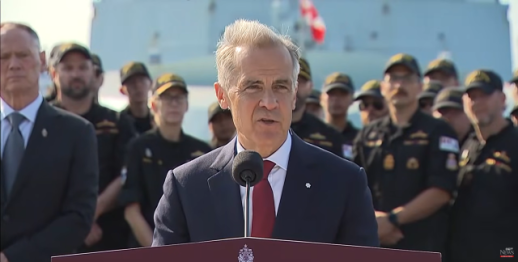 Canada names TKMS preferred bidder and Hanwha as reserve bidder for sub deal SEOUL, July 07 (AJP) - Canada on Monday named Germany’s TKMS as the preferred supplier for its "largest-ever" procurement to acquire up to 12 new submarines, selecting the Type 212CD over South Korea’s KSS-III Batch-II in what had been a "difficult and close decision," according to its state head. Prime Minister Mark Carney announced the choice that involved heavily government-backed competition between Germany and South Korea in Halifax, Nova Scotia, shortly before departing for a NATO leaders’ summit in Türkiye. “I’m pleased to announce that Canada has selected TKMS as the preferred supplier for Canada’s patrol submarines,” Carney said. South Korea’s Hanwha Ocean was designated as the reserve supplier and could be invited into negotiations if Canada fails to reach an agreement with TKMS. “We don’t expect that, but if they are unsuccessful, Canada retains the right to designate Hanwha Ocean, currently the reserve supplier, as the preferred supplier and enter into negotiations with them,” Carney said. He described the selection as a “difficult, close decision between two highly qualified suppliers,” saying both proposed submarines met the Royal Canadian Navy’s demanding capability requirements and were backed by strong industrial packages. He had a long discussion with South Korean President Lee Jae Myung over the weekend including the decision as he "understood the disappointment" of Seoul, but the two agreed to pick up other technologically complimentary areas when they meet at the NATO summit as Canada maintains Korea as a critical strategic partner. “In the end, this decision was about choosing the absolute best platform and partnership to meet Canada’s combined strategic, security and economic interests,” he said. The announcement does not immediately award TKMS a final contract. Ottawa will now enter detailed negotiations with the German shipbuilder over pricing, delivery, Canadian industrial participation, infrastructure, training and long-term maintenance that could take six to 18 months if not longer, Carney said, declining to specify the amount of the deal as not to "prejudice" the negotiations. He said the negotiations would remain commercially sensitive and that the government would not conduct them publicly in order to preserve Canada’s bargaining position. He said funding for the submarines had already been included in Canada’s fiscal framework and described the acquisition as the largest procurement in Canadian history. Canada has said it aims to award the final contract by 2028 and receive the first replacement submarine no later than 2035 to avoid a gap in its underwater capabilities. The Canadian Patrol Submarine Project is intended to replace the Royal Canadian Navy’s four aging Victoria-class boats with up to 12 conventionally powered submarines capable of operating across the Arctic, Atlantic and Pacific oceans. Canada identified TKMS and Hanwha Ocean as the project’s two qualified suppliers in August 2025 after assessing their designs, construction capacity and proposed delivery schedules. TKMS has offered to adjust delivery slots within existing German and Norwegian orders, allowing the first four Canadian submarines to be delivered by 2034, according to Carney. The outcome marks a major setback for Hanwha Ocean, which had mounted an extensive campaign emphasizing the KSS-III Batch-II’s long range, weapons capacity and faster delivery schedule. Despite the decision, Carney stressed that South Korea remained an important strategic partner and thanked both bidders and their governments for what he called thoughtful, comprehensive and cooperative proposals. 2026-07-07 05:28:15
-
Netanyahu Opposes Turkey's Return to F-35 Program Ahead of NATO Summit Israeli Prime Minister Benjamin Netanyahu has publicly opposed Turkey's return to the U.S. F-35 fighter jet program. His comments came just before President Donald Trump is set to attend a NATO summit in Ankara, reflecting a strong stance against Turkey.In a Fox News interview on July 6, Netanyahu stated, "We should not provide Turkey with F-35s or fighter jet engines." He criticized the Turkish government as a regime influenced by the Muslim Brotherhood, arguing that supplying advanced fighter jets could disrupt the military balance in the Middle East.Turkey, a NATO member, has been at odds with the U.S. since it acquired Russian S-400 missile defense systems in 2019. The U.S. believes the S-400 could be used to gather intelligence on the F-35's stealth capabilities, leading to Turkey's exclusion from the F-35 joint development program.The issue has resurfaced as the Trump administration considers the possibility of Turkey rejoining the F-35 program. Turkey is a key military power within NATO and the host of the upcoming summit.Israel fears that Turkey's acquisition of the F-35 could weaken its air superiority. Currently, Israel is the only country operating the fifth-generation stealth fighter in the Middle East. Netanyahu emphasized, "The balance in the Middle East is guaranteed by Israel's air superiority and the strategic posture of the United States."Netanyahu also directly targeted Turkish President Recep Tayyip Erdoğan, stating, "President Erdoğan has continued to make hostile remarks towards Israel and is clashing with NATO allies over issues related to Cyprus and Greece."* This article has been translated by AI. 2026-07-07 05:28:00
-
Canada Selects Germany's TKMS for Next-Generation Submarine Program Canada has chosen Germany's ThyssenKrupp Marine Systems (TKMS) for its next-generation submarine program, which could involve up to 12 vessels. South Korea's Hanwha Ocean competed until the end but did not secure the contract.On July 6, local time, Canadian officials announced TKMS as the preferred bidder for the new submarine acquisition project, according to reports from Reuters and The Guardian.TKMS proposed the 212CD class diesel-electric submarine, which is being jointly developed by Germany and Norway. Hanwha Ocean had been promoting its KSS-III Batch-II submarine in the competition.This project aims to replace Canada's aging Victoria-class submarines. Canada acquired four used Victoria-class submarines from the UK in 1998, but frequent maintenance issues and low operational availability have raised concerns about capability gaps. The new submarines are expected to enhance operations in the Arctic and the Atlantic and Pacific Oceans.Canada's decision to select TKMS is believed to be influenced by the interoperability among NATO member countries and the expansion of European defense cooperation. The 212CD class submarines are designed to be non-nuclear and feature low detectability due to the use of non-magnetic steel and stealth technology.Hanwha Ocean emphasized its quick delivery timeline and local industry collaboration, stating it could deliver the first submarine by 2032 and supply four by 2035, which would help mitigate Canada's capability gap.However, this selection does not finalize the contract. The Canadian government and TKMS will need to negotiate details regarding price, delivery timelines, local industry participation, and long-term maintenance and operational support. Reports suggest that it may take considerable time to finalize the contract.For Hanwha Ocean, this outcome could pose challenges for its global submarine export strategy. The Canadian project, with a potential order of up to 12 submarines, held significant symbolic value as a gateway to the NATO naval market. Hanwha Ocean is expected to continue pursuing other international submarine projects, leveraging the long-range capabilities and competitive delivery timelines of the KSS-III.* This article has been translated by AI. 2026-07-07 05:12:00
-
The Key to Survival in the Era of Technological Dominance: Trustworthiness in Materials and Components As the global supply chain undergoes restructuring and competition for technological dominance intensifies, South Korea's manufacturing sector stands at a pivotal juncture. The materials, components, and equipment (referred to as 'so-bu-jang') industry and the finished goods sector are intertwined, facing a collective crisis that requires a united response.Over the past 20 years, South Korea's so-bu-jang industry has worked diligently, with both government and private sectors collaborating to break free from a dependency-driven ecosystem and achieve technological independence. The government laid the groundwork for research and development with the enactment of the Special Measures Act for the Promotion of Parts and Materials Companies in the early 2000s. Following Japan's export restrictions in 2019, the establishment of the So-bu-jang Competitiveness Committee and legislative amendments created a robust institutional defense. Major private enterprises have also introduced mass production evaluations for supplier products and invested in cooperative efforts to drive the localization of key materials, transforming the trade balance of so-bu-jang into a solid surplus.Now, it is time to build new competitive advantages that can lead the global market, moving beyond the achievements of localization. While past policies focused on quantitative localization and price competitiveness, future survival hinges on securing the highest level of 'reliability' that global demand companies can adopt without hesitation. It is essential to clarify the essence of reliability. Reliability is not merely about meeting standard compliance on paper; it signifies a high-level suitability for use that performs its original function flawlessly without a single failure throughout its guaranteed lifespan in harsh real-world market conditions. No matter how innovative a new technology may be, if failures occur in the field, it cannot cross the threshold of commercialization, nor can it maintain global market dominance.In today's landscape, where a single quality incident can lead to massive recalls and a significant decline in brand value, post-facto responses centered on improving manufacturing processes have clear limitations. The paradigm must shift to 'Design for Reliability,' which eliminates potential risks from the planning and design stages of products. For South Korea's manufacturing sector to become an irreplaceable core pillar of the global supply chain, it must focus all its efforts on a qualitative leap that establishes a world-class reliability design and verification system, going beyond mere localization.The semiconductor industry exemplifies this need. Semiconductors for AI data centers and high-bandwidth memory (HBM) face challenges such as ultra-fine processes, high-density packaging, and severe heat issues, making long-term reliability a key competitive factor. For our so-bu-jang companies to enter the global supply chain, reliability data accumulated through accelerated life testing (ALT) and harsh environment validation from the design stage is essential. Localization that is not backed by data cannot guarantee sustainable competitiveness. Ultimately, reliability data serves as the technical language for entering the supply chain and the strongest evidence for gaining the trust of global customers.In the automotive industry, reliability is a core differentiator for South Korean manufacturing. Recently, China has rapidly grown based on its vast domestic market and government support, but decades of accumulated quality data and field experience cannot be acquired in a short time. As the industry transitions to electric vehicles (EVs) and software-defined vehicles (SDVs), the reliability of automotive semiconductors, batteries, and various electronic components is directly linked to human safety. The ability to withstand harsh impacts, heat, and vibration over extended periods is a significant barrier to entry. The competition in automotive so-bu-jang has shifted from 'Can it be made?' to 'How long can it safely endure?'The defense and shipbuilding industries are no exceptions. Systems operating in extreme environments such as polar regions, deserts, and deep seas demand even stricter reliability. If key components cannot ensure reliability and dependence on foreign supply chains persists, it could threaten not only industrial competitiveness but also national security. Therefore, securing independent reliability evaluation technologies and certification systems must be approached as a national strategic issue beyond mere industrial policy.Ultimately, reliability is a common denominator of competitiveness that permeates the entire South Korean manufacturing sector, including semiconductors, automobiles, defense, shipbuilding, power and electronics, and physical AI-based robotics. Reliability cannot be achieved through short-term investments alone; it is the product of accumulated testing data, field experience, and specialized personnel over time. Now, both the government and industry must focus more on building reliability verification infrastructure and standard systems beyond just technological development. When South Korea masters the science of reliability, the so-bu-jang industry can firmly maintain its irreplaceable status at the top of the global supply chain, outpacing competing nations that rely on massive government subsidies and domestic markets.* This article has been translated by AI. 2026-07-07 05:04:00