


Latest by
-
 Jeju Fuel Price Collusion Leads to $20.5 Million Fine for Agricultural Cooperatives Agricultural cooperatives and gas station associations in Jeju have faced penalties from fair trade authorities for colluding to fix fuel prices. The Fair Trade Commission (FTC) announced on July 6 that it would impose a total fine of 2.02 billion won (approximately $20.5 million) on Jeju City and Seogwipo City Agricultural Cooperatives for leading price increases and providing advance information to the association. Additionally, the Jeju branch of the Korean Gas Station Association was fined 30 million won for compelling its members to adhere to prices set by the cooperatives.The collusion took place from September 2022 to July 2024. The cooperatives provided the gas station association with the next day's fuel prices before they were publicly disclosed on Opinet. They also identified and reported businesses selling below the standard price to control low-price sales.The association, having received advance price information from the cooperatives, set this as the benchmark price and communicated it to gas stations through group chats on KakaoTalk and text messages, enforcing compliance.The involved parties were aware that their actions could violate fair trade laws. During sensitive periods, such as FTC investigations, they communicated price information through phone calls or in-person visits instead of group chats. They also requested that members delete price notifications and prevent external leaks.By exploiting the unique characteristics of Jeju's fuel market, which is difficult for outside competitors to enter, they profited excessively. Tourists using rental cars were particularly affected, as they tend to be less vigilant about price comparisons due to their one-time fuel purchases.The FTC deemed the violations serious, noting that normal price competition could have significantly benefited consumers. During the collusion period, the price of gasoline and diesel in Jeju was up to 83 won and 150 won higher per liter compared to the mainland average.As a result, the FTC imposed corrective orders along with fines of 987 million won and 1.033 billion won on Jeju Agricultural Cooperative and Seogwipo Agricultural Cooperative, respectively.An FTC official stated, "We will continue to strengthen monitoring of business associations that disrupt competition in the fuel market, which is closely related to the lives of citizens, and will take stricter measures if similar violations are detected in the future."* This article has been translated by AI. 2026-07-06 14:28:00
-
 KCM to Hold Wedding After 14 Years, Celebrating Promise to Wife KCM, a South Korean singer, announced he will hold a long-awaited wedding ceremony 14 years after the birth of his first daughter. According to A2Z Entertainment, KCM will marry on October 4 at the Floating Island in Seoul. In a statement, KCM expressed his joy at finally being able to fulfill a promise to his wife, saying, "I am happy to keep my promise to my wife after 14 years. I am grateful to my wife for enduring difficult times and to our three children for giving me courage every moment." He added, "The wedding will be a moment to express our commitment to live for our family and to show gratitude to those who have supported us. I sincerely thank the fans who have consistently cheered for me over the years." KCM and his wife, Bang Ye-won, welcomed their first daughter, Su-yeon, in 2012 but were unable to hold a wedding ceremony at that time due to KCM's military service and personal challenges, including business failures. They officially registered their marriage in 2021. KCM, who debuted in 2004 with his first album "Beautiful Mind," is known for hit songs like "Black and White Photo," "To Eun-young," and "Smile Again."* This article has been translated by AI. 2026-07-06 14:28:00
-
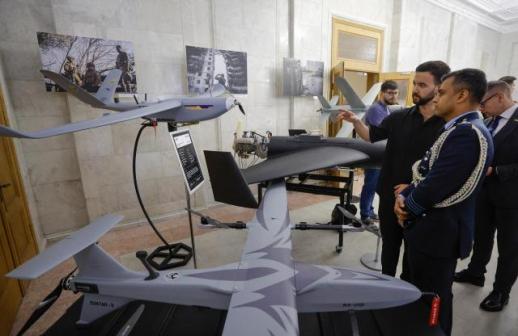 Ukraine Aims to Sign Drone Agreements with at Least 7 NATO Countries by Year-End Ukraine is aiming to sign drone agreements with at least seven NATO member countries by the end of this year, according to a report by The Guardian citing a senior Ukrainian official. In recent months, Ukraine has already signed drone agreements with six countries, including three from the Middle East—Saudi Arabia, the United Arab Emirates (UAE), and Qatar—as well as Azerbaijan, Latvia, and Lithuania, both NATO members. Middle Eastern nations have shown interest in Ukraine's experience in countering drone attacks, particularly following assaults by Iranian-made Shahed drones after the U.S.-Israel conflict with Iran this spring. David Aloyan, deputy secretary of Ukraine's National Security and Defense Council, stated, "While this initiative is called a drone agreement, it encompasses much more than just drones. More importantly, it provides access to the experience and knowledge accumulated in Ukraine, as well as all elements that make up the relevant systems." The Guardian also reported that some Middle Eastern countries have used expensive Patriot missiles to intercept Shahed drones. Ukraine has been tasked with evaluating operational and tactical systems necessary for weapon deployment in these nations. Mike Kaufman, a researcher at the Carnegie Endowment for International Peace in Washington, D.C., noted, "Ukraine can provide an ecosystem of products to organize air defense systems or develop offensive drone capabilities." However, the export of drones themselves is not yet included in the agreements. Ukraine's defense industry is under strict control, with production prioritized for domestic defense needs. Initially, Ukraine will provide expert assessments and operational reports, while partner countries will decide on future orders based on production capacity. Ukraine's drone diplomacy is expected to expand primarily among NATO member countries. Latvia signed a drone agreement with Ukraine after a Ukrainian long-range drone, affected by Russian electronic warfare, struck its oil storage facilities in May. Lithuania followed suit with a similar agreement. Aloyan mentioned that other NATO members have also expressed interest, and some agreements could be finalized during the NATO summit in Ankara, Turkey, on July 7-8. Meanwhile, Ukraine is also pursuing the development of a "European Patriot" system to counter Russian ballistic missiles, aiming to address the high costs and supply shortages associated with U.S. Patriot systems. Discussions are ongoing with European partner countries and major defense contractors.* This article has been translated by AI. 2026-07-06 14:24:00
-
 Hyundai Department Store Recognized as Top Corporate Sponsor of Arts in South Korea Hyundai Department Store has been recognized as the top corporate sponsor of cultural and artistic development in South Korea. On July 6, Hyundai Department Store announced that it ranked first among individual companies in the "2025 Corporate Support for Culture and Arts Survey" conducted by the Korea Mécénat Association. Since 2018, Hyundai has consistently been listed among the top three companies in terms of support for the arts. This survey included 737 companies, including the top 500 firms by revenue and corporate-sponsored cultural foundations. According to the Korea Mécénat Association, corporate support for culture and arts in South Korea totaled 196.879 billion won last year, a 7.4% decrease from the previous year. While the number of supporting companies rose to 728 and the number of support cases increased by 24% to 2,392, overall funding declined for the first time in three years due to reduced support for cultural infrastructure such as theaters and museums, as well as the arts and exhibitions. In this context of a shrinking cultural support environment, Hyundai Department Store achieved the top ranking among individual companies. Hyundai has utilized its department stores as cultural and artistic spaces. At The Hyundai Seoul, it operates the multi-cultural space "ALT.1," while the Pangyo branch features the Hyundai Children's Book Museum. Additionally, major stores host Gallery H, and cultural halls at the Apgujeong, Mia, and Jungdong locations regularly showcase exhibitions and performances. Since opening on the sixth floor of The Hyundai Seoul in 2021, ALT.1 has welcomed over 1.6 million paid visitors as of last month. The facility is equipped with climate control and security systems to host large-scale exhibitions. The Hyundai Children's Book Museum (MOKA), operating since 2015 at the Pangyo branch, is a government-registered first-class museum aimed at children. It conducts themed exhibitions and educational programs centered around picture books. MOKA also runs the "MOKA Moving Museum," which visits areas lacking cultural facilities, and the "Little Artist" program for children at local child centers. Since 2017, the "Un-Printed Ideas" project has been identifying emerging picture book authors. In September of last year, it hosted the "Tokyo Toy Museum Seoul Pop-Up" at the Cheonho branch, allowing visitors to experience eco-friendly wooden toys. A representative from Hyundai Department Store stated, "We will continue to present differentiated content that allows the public to enjoy culture and arts more closely and deeply, while also providing support for the development of the cultural and artistic community."* This article has been translated by AI. 2026-07-06 14:24:00
-
 Korea's Smart Factory Consortium Seeks Outstanding Case Studies The Korea Institute of Industrial Technology's Artificial Intelligence Innovation Division is recruiting companies to participate in the '2026 Smart Factory Support Program Outstanding Case Study Consortium.' According to the institute on July 6, this initiative aims to share the excellent achievements of companies involved in the Smart Factory Support Program and to promote successful models of digital transformation in manufacturing. Eligible participants are consortia that have successfully completed projects under the Smart Factory Support Program since 2021. Interested companies can apply through the Smart Factory Project Management System until July 24. Applicants will undergo a review of requirements and a written evaluation to be selected as candidates for outstanding case studies. Subsequently, the division will choose five final outstanding case study consortia through a public vote by the Smart Factory DX Mentoring Group. Evaluation criteria will include improvements in productivity and quality, management enhancements such as revenue and employment, solution utilization, and comprehensive technical documentation. Selected companies will receive awards from the Minister of Small and Medium Enterprises and Startups, along with benefits such as a global capability enhancement program, production of promotional videos for best practices, inclusion in a case study book, labor consulting, preferential low-interest loans, and cash rewards. Additionally, the division plans to create promotional content showcasing the achievements of selected companies to serve as representative success models for the Smart Factory Support Program. Previously, the institute held the '2026 AX Coaching Group Launch Ceremony' on June 12, announcing its commitment to support small and medium-sized manufacturing companies in establishing smart factory implementation strategies. Ahn Kwang-hyun, head of the Artificial Intelligence Innovation Division, stated, "We expect this to be an opportunity to widely share the experiences and know-how of companies that have achieved excellent results through smart factory construction." * This article has been translated by AI. 2026-07-06 14:24:00
-
 Gadi Eisenkot Emerges as Major Rival to Netanyahu Ahead of Israeli Elections Gadi Eisenkot, a former chief of staff of the Israel Defense Forces who lost his son in the Gaza war, has emerged as a leading challenger to Prime Minister Benjamin Netanyahu. Support for Eisenkot's centrist party, Yashar, has surged ahead of the Israeli elections expected by the end of October. The Wall Street Journal reported on July 5 that "Eisenkot's rise is shaking Netanyahu's path to re-election." Polls from Israel's public broadcaster indicate that both Yashar and Netanyahu's right-wing Likud party are projected to secure 23 seats each in the 120-member Knesset. In surveys regarding who would be a better prime minister, Eisenkot received 41% support compared to Netanyahu's 40%, indicating a tight race. This election will be the first national vote since Hamas's surprise attack on Israel in October 2023, which led to subsequent military conflicts involving Gaza, Lebanon, and Iran. Netanyahu, who has been in power for nearly 19 years, faces increasing political pressure due to the prolonged war, hostage situations, and deteriorating evaluations of the conflict with Iran. Eisenkot joined Netanyahu's wartime cabinet following the Hamas attack but resigned after eight months, criticizing Netanyahu for prolonging military operations and endangering the lives of hostages. Eisenkot's youngest son, Gal, was killed early in the Gaza war, and two of his nephews also died during the conflict. This personal experience sets him apart from Netanyahu, giving him a distinct image as a former military leader who has directly faced the consequences of war. However, Eisenkot is not classified as a moderate peacemaker. He is considered one of the architects of the "Dahiya Doctrine," a military strategy employed during the 2006 Lebanon War that involves using overwhelming force in urban areas to deter armed groups. Netanyahu's most significant vulnerability is the perception of security failures. A survey conducted by the Institute for National Security Studies in June revealed that 92% of Israelis believe Iran has either won or benefited from the recent conflict. This finding poses a challenge for Netanyahu, who has long relied on security leadership as a key political asset. International relations also present a challenge. Israel's plans to establish buffer zones along its borders with Gaza, Syria, and Lebanon have increased tensions with Western allies. Former President Donald Trump has also shown less consistent support for Netanyahu compared to the past. Israel operates under a multi-party system, making it difficult for any single party to achieve a majority. To form a government, at least 61 seats are needed out of the total 120. Even if Likud secures 23 seats, Netanyahu could remain in power if he collaborates with right-wing and religious parties to reach the majority. Conversely, if opposition parties like Eisenkot's Yashar gain a similar number of seats but fail to collectively reach 61, they will struggle to form a government. Netanyahu is exploiting this situation, arguing that Eisenkot and other opposition leaders would need cooperation from Arab parties to achieve a majority. If the opposition fails to establish a stable coalition, Netanyahu could remain as the head of a caretaker government while awaiting a new election.* This article has been translated by AI. 2026-07-06 14:20:00
-
 AI Drives Surge in South Korean Stock Market in First Half of 2026 This year, artificial intelligence (AI) has been at the center of the surge in South Korea's stock market during the first half of 2026. The benefits of AI have expanded beyond semiconductors to include power equipment and wiring infrastructure, leading to heightened attention on whether the optimism will translate into actual earnings as the second-quarter earnings season approaches. According to the Korea Exchange, from January 1 to July 3, companies related to semiconductors and electronic components, such as Samsung Electro-Mechanics, SK Hynix, LG Innotek, Daeduck Electronics, Hanmi Semiconductor, DB HiTek, and Samsung Electronics, ranked high in the KOSPI's performance. Additionally, firms involved in power equipment and wiring, including Gaon Cable, Korea Electric Wire, LS, LS ELECTRIC, Hyosung Heavy Industries, and HD Hyundai Energy Solutions, also made significant gains, reflecting the spillover effects of increased AI investments into the power infrastructure sector. The top-performing stocks in the first half can be categorized into four main groups. The most prominent were AI-related semiconductors and electronic components, followed by AI power infrastructure. Construction stocks, such as Daewoo Engineering & Construction and Kumho Industrial, benefited from expectations surrounding nuclear power and infrastructure investments. Holding companies like SK, Samsung C&T, and OCI Holdings were buoyed by anticipated corporate value enhancement policies, while financial stocks, including Mirae Asset Securities and Samsung Life Insurance, rose due to a booming stock market and increased trading volumes. Notably, the expansion of AI investment benefits from semiconductors to power equipment and wiring infrastructure is considered the most significant change in the stock market during the first half of the year. Analysts suggest that increased investment in AI data centers has not only boosted demand for semiconductor components like high-bandwidth memory (HBM) and multi-layer ceramic capacitors (MLCC) but has also raised expectations for demand in power infrastructure, including transmission and distribution equipment, transformers, and wiring, leading to strong performance in related stocks. Market observers note that attention is shifting from 'expectations' to 'actual results.' While the optimism surrounding AI investments lifted stock prices in the first half, the focus will likely turn to whether actual earnings can support this growth moving forward. Shin Eol, a researcher at Sangsangin Securities, stated, "The market is entering a phase where it maintains confidence in AI growth while demanding verification of performance over valuation. Recent results from Micron have confirmed the sustainability of the AI investment cycle, but now the market is paying more attention to whether AI translates into actual corporate earnings." He added, "As the earnings announcement season approaches, it is time for a more careful selection process rather than a liquidity-driven capital movement."* This article has been translated by AI. 2026-07-06 14:20:00
-
 KOSPI Rebounds Above 8,320 Before Retreating Amid Foreign and Institutional Selling The KOSPI initially surged over 2% to reclaim the 8,320 level but later surrendered those gains due to selling pressure from foreign and institutional investors. The index briefly fell below 8,000 but managed to recover some losses in the afternoon, trading near that threshold. As of 1:54 PM, the KOSPI was down 40.68 points (0.50%) at 8,047.66, according to the Korea Exchange. The index opened at 8,186.82, up 98.48 points (1.22%), and initially expanded its gains by surpassing 8,320. However, as selling by foreign and institutional investors intensified, the index reversed course and dipped below 8,000 at one point. In the securities market, individual investors were net buyers, purchasing 3.958 trillion won worth of stocks, while foreign and institutional investors sold a net 2.704 trillion won and 1.1439 trillion won, respectively, leading to the decline in the index. Among the top market capitalization stocks, Samsung Electronics (up 2.10%), Hyundai Motor (up 1.83%), Samsung Life (up 1.83%), Samsung C&T (up 3.69%), and Kia (up 5.53%) saw gains. Conversely, SK Hynix (down 1.90%), SK Square (down 5.35%), Samsung Electro-Mechanics (down 8.65%), LG Energy Solution (down 2.21%), and Samsung Biologics (down 0.99%) experienced declines. At the same time, the KOSDAQ index was down 21.81 points (2.51%) at 846.60. In the KOSDAQ market, individual investors were net buyers, acquiring 380.6 billion won, while foreign and institutional investors sold a net 225.8 billion won and 151.1 billion won, respectively, contributing to the index's decline. Most of the top market capitalization stocks, except for HLB (up 1.65%), were in the red. Stocks such as Alteogen (down 1.90%), EcoPro BM (down 2.57%), EcoPro (down 2.06%), Rainbow Robotics (down 1.83%), JUSUNG Engineering (down 4.93%), Kolon TissueGene (down 3.21%), Wonik IPS (down 5.63%), Rino Technology (down 5.22%), ABL Bio (down 4.79%), and PSK (down 7.41%) all declined. Kang Jin-hyuk, a researcher at Shinhan Investment Corp, noted, "The market is exploring direction, awaiting Samsung Electronics' preliminary results and the outcome of the U.S. next-generation semiconductor production program (CPSP). While there are positive factors such as Meta's AI semiconductor collaboration and Micron's large-scale memory investment plans, there is also a prevailing caution ahead of earnings announcements." He added, "As the concentration on semiconductors eases somewhat, the number of rising stocks is increasing, and the scale of foreign net selling is also shrinking compared to the early session. The market is also characterized by a rotation of investments beyond semiconductors into shipbuilding, defense, and nuclear power sectors."* This article has been translated by AI. 2026-07-06 14:20:00
-
 Controversy Surrounds MBC's Use of Gyeongsang Dialect in Programs The controversy surrounding the use of the Gyeongsang dialect ending "-no" continues, with MBC's drama and entertainment programs now under scrutiny, leading to accusations of double standards. On July 6, various online communities and social media platforms highlighted MBC's Friday-Saturday drama "Roh Moo-sah Roh Mu-jin" and the entertainment show "What Do You Do When You Play?" Netizens noted that the drama's protagonist, Roh Moo-sah Roh Mu-jin, evokes memories of former President Roh Moo-hyun, questioning whether MBC's marketing strategy is appropriate. Comments included, "Is this acceptable marketing by MBC?" and "If it's okay to use a borrowed name, why is the dialect 'no' not allowed?" Others remarked, "Isn't this just noise marketing?" and "Did a member from that site create this?" Many expressed frustration, saying, "They use it for marketing while framing only idols with Ilbe. There’s a limit to hypocrisy." The controversy intensified as it was revealed that the drama was initially scheduled to air on May 23. Additionally, scenes from MBC's flagship entertainment program "What Do You Do When You Play?" showed cast members naturally using the "-no" ending, further fueling the double standards debate. Moreover, the Gyeongnam MBC PD involved in the controversy was found to have used the "-no" subtitle in a regional program, amplifying the fallout. The issue began when Risen member One used the Gyeongsang dialect phrase "scary" in broadcasts and YouTube content. A Gyeongnam MBC PD from Busan expressed on social media that he felt upset seeing a female idol and a PD exchanging the "-no" ending. The PD later elaborated in a lengthy post, stating, "The current use of '-no' often does not conform to proper grammar," and warned that derogatory expressions are contaminating the dialect itself. He emphasized the need to reconsider its use if it causes harm to others. In response, the Korean Language Institute at Dong-A University explained that the historical use of the "-no" ending in southeastern dialects includes various applications beyond questions, such as exclamations and monologues. This led to counterarguments online asserting that linking regional dialects to Ilbe is excessive. Ultimately, the controversy spilled into the political arena. Former Justice Minister Cho Kuk claimed on social media that Ilbe users mechanically attach "-no" to standard language. In response, Lee Jun-seok, leader of the Reform Party, criticized the notion of judging ideology based on language use, stating, "The stigmatization continues despite explanations from linguists."* This article has been translated by AI. 2026-07-06 14:20:00
-
 KB Financial Supports Safety Devices for Elderly Drivers to Prevent Accidents KB Financial Group is taking steps to reduce traffic accidents involving elderly drivers by providing support for pedal misoperation prevention devices. On July 6, KB Financial announced that it will collaborate with the National Police Agency, the Korea Road Traffic Authority, and the Citizens' Safety Practice Alliance to implement a nationwide "Pedal Misoperation Prevention Device Support Project." This initiative is part of a broader effort by KB Financial and the National Police Agency to establish an integrated safety system aimed at enhancing public safety. According to traffic accident statistics from the National Police Agency and the Korea Road Traffic Authority, there were 45,873 traffic accidents involving elderly drivers last year, marking an 8.3% increase from the previous year. The number of fatalities also rose to 843, a 10.8% increase compared to the prior year. To address this issue, KB Financial will allocate a budget of 300 million won (approximately $250,000) to support the installation of pedal misoperation prevention devices. The program will target 740 licensed drivers aged 65 and older who have received counseling from the Korea Road Traffic Authority. These devices are designed to mitigate the risk of accidents by preventing sudden acceleration when abnormal pedal operation occurs. In addition to providing the devices, the program will include assessments of elderly drivers' capabilities and safe driving consultations. Data collected from participants using a virtual environment-based driving ability assessment system will be utilized for future research on enhancing traffic safety policies for elderly drivers and evaluating the effectiveness of the devices. A representative from KB Financial stated, "We will support a proactive safety system that reduces risks rather than focusing solely on post-incident responses. We aim to expand our support nationwide to create a safe traffic environment without leaving any regions behind, fostering coexistence with local communities."* This article has been translated by AI. 2026-07-06 14:16:00