


Latest by
-
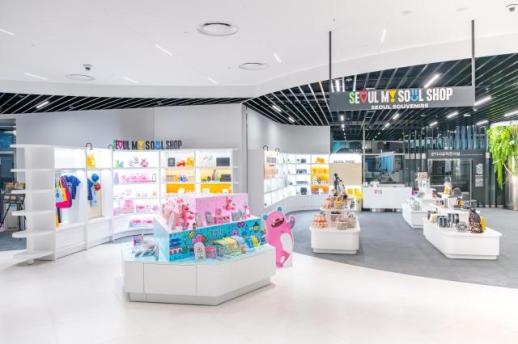 Seoul Tourism Foundation Launches Summer Campaign for Domestic and International Visitors Seoul Tourism Foundation is launching a marketing campaign targeting both domestic and international tourists in anticipation of the summer vacation season. The foundation will host special events at its official souvenir store, Seoul My Soul Shop, which has received positive feedback from visitors, while also expanding partnerships and communication benefits for the Discover Seoul Pass, aimed at enhancing travel convenience. From July 6 to August 31, the foundation will hold summer events at all six locations of Seoul My Soul Shop, situated in key areas such as City Hall, Myeongdong, Gwanghwamun, and Yeouido. Celebrating its second anniversary in June, Seoul My Soul Shop is a representative souvenir store that embodies Seoul's lifestyle. Customers who make purchases during the event will receive a limited edition sticker pack featuring the city brand logo and the official mascot, Haechi & Soul Friends. Specialized events tailored to the characteristics of each location will also be offered. At the Yeouido Hangang Park location, which attracts many families, customers accompanied by children will receive balloons, while the Sejong Center location, situated in a cultural and artistic hub, will host a lucky roulette event offering additional souvenirs. Additionally, the Seoul Tourism Plaza and Gangnam Station locations will hold special discount events on popular merchandise items such as towels and glass mugs, encouraging tourists visiting Seoul during the vacation period. In addition to merchandise marketing aimed at both domestic and foreign tourists, the Discover Seoul Pass will undergo service enhancements for individual foreign tourists (FIT). This initiative reflects recent travel trends that seek to experience the everyday lives and culture of Koreans, moving away from the traditional focus on famous tourist spots. The foundation has started operations for a total of 22 new partner facilities as of July 1, following a recruitment drive in the first half of the year. With the addition of facilities in the relaxation, shopping, and beauty sectors, the total number of partner facilities available for the Discover Seoul Pass has increased to 219. Notably, the foundation has expanded experiential content closely related to daily life, such as Korean-style jjimjilbang (spa), which has gained popularity among foreign tourists due to the K-content trend. Efforts to alleviate communication barriers, often cited as a major concern for foreign tourists, have also been included. The benefit of a free five-day SKT e-SIM data plan, previously available only to mobile pass purchasers, has now been extended to those who purchase a physical card pass. As a result, foreign tourists holding the Discover Seoul Pass can connect to mobile data immediately upon arrival at the airport without needing to go through a separate SIM card collection process. Kang Gi-yeon, CEO of the Seoul Tourism Foundation, stated, "We have prepared this event and service expansion to provide diverse enjoyment and convenience for domestic and international tourists visiting Seoul during the summer vacation. We will continue to introduce collectible Seoul-themed merchandise while developing tailored services that allow foreign tourists to conveniently experience the daily life of Seoul."* This article has been translated by AI. 2026-07-06 09:24:00
-
 KOSPI Rises Over 2% on Anticipation of Samsung Electronics Earnings and SK Hynix ADR Listing The KOSPI index rose more than 2% on expectations surrounding Samsung Electronics' second-quarter preliminary results and the listing of SK Hynix's American Depositary Receipts (ADRs), recovering above the 8,310 mark. As of 9:17 a.m. on July 6, the KOSPI was up 224.89 points (2.78%) at 8,313.23. The index opened at 8,186.82, up 98.48 points (1.22%), and continued to gain ground. In the securities market, individual investors have made a net purchase of 916.7 billion won, while foreign and institutional investors sold a net 733.9 billion won and 195 billion won, respectively. Among the top market capitalization stocks, Samsung Electronics rose 3.88%, SK Hynix increased by 1.44%, SK Square was up 3.96%, Hyundai Motor gained 0.30%, Samsung Life Insurance rose 2.09%, and Samsung C&T increased by 3.11%. Conversely, Samsung Electro-Mechanics fell by 1.26%, LG Energy Solution dropped by 1.10%, and Samsung Biologics decreased by 0.99%. At the same time, the KOSDAQ index recorded a decline of 7.08 points (0.82%), standing at 861.33. The index opened at 866.40, down 2.01 points (0.23%), and continued to widen its losses. In the KOSDAQ market, foreign and institutional investors sold a net 113.5 billion won and 18.2 billion won, respectively, while individual investors purchased a net 137.3 billion won. Among the top market capitalization stocks, Alteogen fell by 1.32%, EcoProBM decreased by 1.29%, Rainbow Robotics dropped by 0.30%, Wonik IPS fell by 4.58%, and Rino Technology declined by 3.18%. In contrast, EcoPro rose by 0.69%, JUSUNG Engineering increased by 1.61%, Kolon TissueGene gained 4.65%, HLB was up 4.24%, and PSK rose by 4.28%. Han Ji-young, a researcher at Kiwoom Securities, stated, "This week, the changing investment sentiment in semiconductor stocks and the sustainability of sector rotation are the market's primary concerns. While macro events, such as the minutes from the June Federal Open Market Committee (FOMC) meeting, are scheduled, the key events influencing market direction and volatility will be the preliminary results from Samsung Electronics and the listing of SK Hynix's ADRs." He added, "During these events, daily and intraday volatility may increase, but the valuation burden on the KOSPI has significantly decreased, falling below a forward price-to-earnings ratio (PER) of 7 for the first time since the financial crisis. It is appropriate to view the market direction as upward and respond accordingly throughout the week."* This article has been translated by AI. 2026-07-06 09:24:00
-
 SK hynix to List $44 Billion ADR on Nasdaq, Aiming to Attract Global AI Investors SK hynix is set to list its American Depositary Receipts (ADR) on Nasdaq on July 10, aiming to attract global artificial intelligence (AI) investors. Bloomberg reported on July 5 that this move could alleviate the company's undervalued stock price. The ADR listing is expected to total $29 billion (approximately 44 trillion won), potentially marking the largest issuance of U.S. stock by a foreign company in history. This listing is seen as a strategy to directly tap into the growing AI memory investment enthusiasm in the U.S. market. Historically, SK hynix has been valued lower than U.S. memory chip maker Micron. However, increasing investments in AI data centers and a surge in demand for high-bandwidth memory (HBM) are drawing more attention from global investors to SK hynix. For U.S. investors, direct investment in SK hynix has been challenging. Purchasing shares listed on the Korean stock market required trading outside regular U.S. hours, while non-sponsored ADRs traded in the over-the-counter market had limited liquidity. Bloomberg noted that the Nasdaq listing could resolve these accessibility issues and help mitigate the factors contributing to SK hynix's undervaluation. Market observers are keen to see if SK hynix can narrow the valuation gap with Micron through its U.S. listing. According to Bloomberg, SK hynix is currently trading at a price-to-earnings ratio (P/E) of about 6.2 times its projected earnings for the next 12 months. In contrast, Micron's P/E ratio has recently adjusted to around 7 times, down from over 11 times as of June 22. De Zhou, a portfolio manager at Sunberg Investment Management, stated, "This offering targets investors who find it difficult to access the Korean stock market. The Nasdaq listing for SK hynix provides a direct and frictionless investment opportunity in the AI memory cycle." Expectations for Index Inclusion The U.S. listing is also raising expectations for potential inclusion in major indices. If SK hynix is added to indices like the Nasdaq-100, it could attract buying demand from passive exchange-traded funds (ETFs) that track those indices. For instance, the Invesco QQQ Trust, which tracks the Nasdaq-100, has assets under management totaling $482 billion. However, the inherent volatility of the memory industry poses a concern. Memory semiconductors typically see rapid price and profit increases during periods of high demand, but they face price declines and inventory challenges when supply increases and demand wanes. Just three years ago, both Micron and SK hynix reported losses due to a slowdown in demand that caused memory prices to plummet. The U.S. listing is also expected to generate arbitrage opportunities. If price discrepancies arise between the Nasdaq-listed ADR and shares listed in Seoul, hedge funds may engage in trading to capitalize on these differences. Bloomberg noted that similar trading occurred during the U.S. listings of Alibaba and TSMC. It remains unclear whether conversions between SK hynix's ADR and its Korean-listed shares will be freely allowed. If conversions are unrestricted, price differences between the two markets may be limited. However, if restrictions are in place, the U.S. ADR could continue to trade at a premium. For instance, TSMC's ADR has traded at an average premium of over 21% compared to its local shares over the past year and currently maintains a premium of about 13%. Wall Street analysts believe that SK hynix's ADR has significant potential to absorb AI investment demand. Kim, Chief Investment Officer at Forest Boke Capital Partners, remarked, "Many investors have yet to enter this field. When SK hynix enters the market, it can attract those who have not yet invested."* This article has been translated by AI. 2026-07-06 09:24:00
-
 2.05 million movie discount vouchers to be distributed starting July 8 The Ministry of Culture, Sports and Tourism and the Korean Film Council announced on July 6 that they will distribute approximately 2.05 million movie discount vouchers worth 6,000 won each starting at 10 a.m. on July 8. These vouchers can be used at multiplex theaters including CGV, Lotte Cinema, Megabox, and CineQ through their websites and apps. Online members will automatically receive two vouchers per person in their respective coupon sections. The vouchers can be applied during the payment process for movie tickets. However, the vouchers will be distributed on a first-come, first-served basis. Once the allocated quantity is exhausted, the discount will no longer be available, and any unused coupons will automatically expire. Independent and art-house cinemas, as well as smaller theaters and senior cinemas, will not distribute vouchers in phases. Instead, they have been offering on-site discounts since May 13 on a first-come, first-served basis. A list of participating theaters and the status of funding for each can be checked on the Korean Film Council's website. This initiative aims to alleviate the cultural spending burden on citizens during the summer vacation and holiday season while increasing audience attendance in theaters that have seen a decline. Following the distribution of the first round of vouchers in May, nationwide box office revenue reached 15.9 billion won in the week after, marking an increase of approximately 48% compared to the period before the vouchers were issued. Additionally, discounts are available on-site for seniors and individuals with disabilities, but only for themselves. A dedicated phone service is also available for those who may not be familiar with using websites or apps.* This article has been translated by AI. 2026-07-06 09:24:00
-
 KDB Life Establishes Customized 'Quick Win' Strategy for Second Half of 2026 KDB Life is reviewing its sales strategy and enhancing its consumer protection framework to achieve its sales goals and strengthen market responsiveness in the second half of the year. The company announced on July 6 that it held its "Sales Strategy Meeting for the Second Half of 2026" on July 3. Participants reviewed the management performance from the first half of the year and shared strategies for each sales channel for the upcoming months. They also discussed challenges faced in the field and potential support measures. In his opening remarks, CEO Kim Byung-cheol addressed the volatility of the financial market and the uncertainties arising from new regulations. He commended the sales managers for achieving their Contract Service Margin (CSM) targets despite challenging conditions in the first half of the year, highlighting the collaboration between the field and headquarters. He also noted improvements in consumer protection evaluations and a reduction in complaints due to enhanced compliance and monitoring efforts. KDB Life plans to implement a tailored "Quick Win Strategy" for each sales channel in the second half of the year, aiming to improve short-term performance while laying the groundwork for sustainable growth. This strategy is designed not only to drive immediate results but also to facilitate necessary adjustments and sustainable development amid anticipated policy changes. A KDB Life representative stated, "This meeting will serve as an opportunity to closely align headquarters' strategies with field feedback, enabling us to develop detailed marketing strategies that enhance our execution capabilities in the second half of the year."* This article has been translated by AI. 2026-07-06 09:20:00
-
 Service Sector Grows 4%, but Hospitality and Food Services Struggle Amid Consumer Uncertainty Overall industrial production has increased, driven by the semiconductor and financial markets, but the hospitality and food services sector continues to face challenges. Rising prices and interest rates have hindered a recovery in consumer sentiment. According to an analysis by Yonhap News based on data from the National Data Agency's national statistics portal and industrial activity trends, the average industrial production index from January to May this year rose by 2.7% compared to the same period last year. The production in the service sector increased by 4.2%, while the growth rate for accommodation and food services was only 0.9%. Accommodation services saw a 2.7% increase, but the restaurant and bar sector's growth was limited to just 0.6%. A representative from the data agency noted, "The recent increase in foreign tourists, along with domestic consumption stimulus policies such as recovery coupons and support for high fuel prices, have contributed to the growth in service sector production. However, the decline in food consumption due to population decrease and changes in drinking and dining culture have restricted the growth of the restaurant and bar sector." In contrast, high-value-added industries have shown growth rates nearing 10%. The financial and insurance sectors grew by 8.7%, while professional, scientific, and technical services saw a growth rate of 9.5%. However, from January to May this year, production in the accommodation and food services sector has emerged from a decline. Previously, it recorded negative growth rates of -1.9% in 2024 and -2.5% last year. Quarterly, after recording a -2.0% decline in the second quarter of 2023, the sector saw nine consecutive quarters of decline until the second quarter of last year (-1.9%), followed by a 1.4% increase in the third quarter of last year. The fourth quarter of last year saw a growth rate of 0.0%, and the first quarter of this year recorded a 0.3% increase. The government believes that while the accommodation and food services sector has entered a recovery phase, rising inflation in the second half of the year could hinder the recovery of consumer sentiment. Currently, the exchange rate of the won to the dollar is in the 1,500 range, which is expected to increase consumer prices with a lag. Additionally, seasonal factors such as high temperatures and heavy rainfall could lead to volatility in agricultural prices, affecting dining and grocery costs. High interest rates are hitting small business owners hard. As of the end of the first quarter, the outstanding loans of self-employed individuals exceeded 1,100 trillion won, marking a record high. The amount of overdue loans for self-employed individuals reached 22.3 trillion won, with a delinquency rate surpassing 2%. If benchmark interest rates continue to rise, the repayment burden for self-employed individuals will increase, potentially worsening financial stability indicators. According to national tax statistics, the number of business closures among operators who have been in business for more than five years reached an all-time high last year, with closures of restaurants in operation for over 20 years also reaching a peak. The Bank of Korea emphasized in its financial stability report last month that the proportion of self-employed individuals in South Korea is higher than in major countries, making them a crucial part of the economy. Therefore, it is essential to assess financial soundness and potential risks from a financial stability perspective. The Bank of Korea analyzed that self-employed loans accounted for 28.5% of total financial sector loans at the end of the first quarter. It also noted that financial stability risks in the self-employed sector are concentrated among small and micro businesses, older self-employed individuals, and vulnerable borrowers, indicating that they could be more significantly affected by interest rate conditions and changes in the service sector's economic climate. 2026-07-06 09:12:00
-
 Toss Bank Surpasses 10 Million Check Card Users with 3.1 Billion Transactions Toss Bank has announced that the number of customers holding its check card has surpassed 10 million. As of June 30, the bank reported that it exceeded 10 million active check card users, marking a milestone achieved in approximately 4 years and 8 months since its launch in October 2021. The total number of transactions reached 3.1 billion, with 89.5% of payments made offline and 10.5% online. In terms of transaction categories, transportation, including city buses, subways, and taxis, accounted for the largest share at 24.2%. This was followed by convenience stores at 18.3%, online shopping and mobile payments at 10.5%, full-service restaurants at 7.0%, and coffee shops at 5.1%. By age group, users in their 20s made up the largest segment at 25.1%, followed by those in their 30s at 20.7%, 40s at 20.3%, 50s at 15.4%, teenagers at 11.2%, and seniors aged 60 and above at 7.3%. The oldest user recorded was 106 years old. Toss Bank explained that it expanded the eligibility for check card issuance to individuals aged 7 and older last month, resulting in an increase in the conversion rate from child accounts to check cards from approximately 50% to over 71%. For international transactions, Japan represented the highest share at 31.3%, followed by the United States at 12.5%, the United Kingdom at 7.1%, Vietnam at 5.9%, and China at 5.3%. The K-Pass check card, launched in February, has seen cumulative issuances reach 360,000, with new issuances exceeding 50%. The total cash back distributed to customers through the check card has amounted to 160 billion won, while donations accumulated through cash back reached 4.7 billion won. 2026-07-06 09:12:00
-
 Trump Intensifies Anti-Communism Rhetoric Ahead of Midterm Elections President Donald Trump is ramping up his anti-communism and cultural campaign ahead of the November midterm elections. He has labeled the rise of democratic socialism within the Democratic Party as a communist threat and has criticized historical exhibitions at major U.S. museums, framing the electoral landscape as an ideological battle. On the evening of July 4, coinciding with the 250th anniversary of the founding of the United States, the White House Domestic Policy Council released a report titled "Saving American History." The report criticized the National Museum of American History, part of the Smithsonian Institution, for treating American history as a divisive political tool rather than a shared national heritage. The report claimed that the museum has focused excessively on themes such as white supremacy, slavery, conquest, exclusion, racism, misogyny, and structural injustice. It asserted that the museum is dominated by radical activist ideologies and emphasized that American history should be taught as a national narrative worthy of passing on to future generations. This report follows an executive order from President Trump directing a review of Smithsonian exhibitions and academic activities. Trump has previously criticized museums and cultural institutions for leaning towards a progressive agenda that emphasizes discrimination and oppression over American achievements. In his speeches, Trump has prominently featured anti-communist messages. During his July 4 address in Washington, D.C., he likened communism to a "cancer," asserting, "America will never become a communist country." The day before, in a speech at Mount Rushmore in South Dakota, he warned that "the threat of communists is rising on our land" and vowed not to allow them to prevail. These actions are seen as a strategy to shift the midterm election narrative from economic and foreign policy issues to ideological confrontations. As some democratic socialist candidates have gained traction in Democratic primaries, Trump aims to connect this trend to a broader radicalization of the party, sending a warning message to Republican supporters and moderate voters. However, some critics argue that equating democratic socialism with communism is misguided. Democratic socialism advocates for expanding welfare, increasing taxes on the wealthy, and enhancing corporate regulations within a framework of democracy and market economy, while communism fundamentally seeks to abolish private property and establish a centrally planned economy.* This article has been translated by AI. 2026-07-06 09:08:00
-
 Meta Introduces Korean Real-Time Translation for Ray-Ban and Oakley AI Glasses Meta has announced that its AI glasses, Ray-Ban Meta and Oakley Meta, now support real-time translation in Korean. The company revealed this update on July 6, along with plans to expand its online and offline distribution channels in South Korea. The two products were developed in collaboration with global eyewear company EssilorLuxottica. They feature capabilities for photo and video capture, as well as audio playback through built-in Bluetooth speakers, allowing users to interact with Meta AI via voice commands. Users can receive responses through open-ear speakers. Meta explained that its AI can understand the surrounding context in real-time, providing a personalized AI experience. In addition to Korean, Meta has introduced 14 new languages for its real-time translation feature, including Russian, Mandarin Chinese, Japanese, Thai, and Hindi. The range of supported languages has expanded from six to 20, reflecting Meta's commitment to facilitating communication across borders. The translations are delivered audibly through the open-ear speakers embedded in the glasses, while users can also view the text in the Meta AI app. The speakers are positioned on the arms of the glasses, allowing users to hear translations while still being aware of their surroundings. Both Ray-Ban Meta and Oakley Meta are equipped with a 12-megapixel ultra-wide camera and 3K ultra HD capabilities. When capturing images or videos, an LED indicator on the front of the glasses automatically lights up to signal that recording is in progress. A Meta representative stated, "AI glasses redefine the way we interact with artificial intelligence. We plan to continue updating the software to enhance convenience for more users through Meta AI glasses." Meanwhile, AI glasses are gaining attention as the next-generation form factor for interacting with artificial intelligence, following smartphones. The global competition in the AI glasses market is intensifying, with major tech companies like Google and Apple reportedly exploring the development of similar devices. AI glasses are evolving into an AI hardware platform that combines real-time translation, situational awareness, and personal assistant functionalities.* This article has been translated by AI. 2026-07-06 09:08:00
-
 Hyundai's Atlas Robot Surprises at World Cup with Futuristic Performance Hyundai Motor Group's humanoid robot, Atlas, made a striking appearance at the 2026 FIFA World Cup, showcasing a successful soccer performance. The company highlighted its status as a leader in advanced robotics while offering a glimpse into the future of mobility for soccer fans worldwide. On July 6, during halftime of the Round of 16 match at New Jersey's MetLife Stadium, Atlas successfully demonstrated a performance in which it delivered the match ball to the referee. Atlas made its entrance just before halftime ended, performing celebrations inspired by global soccer stars such as Harry Kane, Erling Haaland, Matheus Cunha, and Son Heung-min, energizing the crowd. Notably, it completed a symbolic moment by delivering the match ball to the referee, signaling the start of the second half. The Atlas showcased during this performance is a prototype of the next-generation electric model, first unveiled at CES 2026 in January, which sparked curiosity about its movements. At that time, Boston Dynamics revealed various movements of the initial research model before presenting the design of the prototype for the first time. The movements of the prototype have been introduced through brand videos, and this World Cup stage marked its first live demonstration to the public. The performance illustrated the practical application of Hyundai's envisioned future robotics technology, as Atlas executed complex movements stably in the variable environment of a sports arena. The entire process of Atlas delivering the official match ball involved 'retargeting technology,' which reconstructs human movements to fit the robot's physical structure, reinforcement learning based on thousands of simulations, and full-body control technology that allows all joints to respond as a single system, resulting in balanced and natural movements. The movements showcased by Atlas were developed based on core competencies intended for real-world industrial applications, demonstrating that robotics can create new experiences beyond mere technical demonstrations, including in sports, entertainment, and operational settings. This performance is part of Hyundai's global brand campaign, 'Next Starts Now,' which has been active as a FIFA partner since 1999. In a campaign video released before the World Cup, titled 'School of Football,' Atlas learns soccer movements, intuitively showcasing the core technological capabilities of robotics and generating public interest. The main video of the 'Next Starts Now' campaign, released on June 1, featured Atlas entering the stadium with a ball, heightening expectations for Hyundai's vision of future mobility on the World Cup stage. Additionally, Hyundai plans to release a branded film titled 'Training Ground' in collaboration with the BBC on July 7, documenting the preparation and technical challenges of the World Cup robotics campaign, showcasing its ongoing journey toward realizing its vision for future robotics. Jisung Won, Vice President of Hyundai Motor's Brand Marketing Division, stated, "We aimed to show that the future is not just something to imagine, but is already beginning, through the Atlas performance on the World Cup stage watched by soccer fans worldwide. We will continue to connect human-centered technology with everyday life and present a new vision for future mobility that expands through robotics, showcasing how robotics can be a partner in human progress through diverse and creative brand experiences." Alberto Rodriguez, Head of Behavior Policy at Boston Dynamics Atlas, remarked, "It is meaningful that Boston Dynamics, Hyundai, and FIFA can collaborate to provide a new experience for soccer fans worldwide, drawing inspiration from the diverse dynamic movements of humans to expand the possibilities of robot technology. The performance by Atlas was implemented based on AI learning technologies applicable in real industrial settings, and we will continue to innovate so that more people can experience the potential and value of advanced robotics." 2026-07-06 09:08:00