


Latest by
-
 Taiwan's First Public Discussion on Governance After Unification with China A question that has long been considered taboo in Taiwan has surfaced in public debate: How would Taiwan be governed if it unified with China? The bold inquiry was raised by Li Qizhe, an associate professor at National Changhua University of Education, who began posting on Chinese social media on August 29.Li's premise was clear. He proposed to examine how much of Taiwan's democratic system, judicial framework, and economic structure could be preserved in the event of unification with China. He characterized his writings not as a call for unification but as a 'conditional institutional stress test.'In his initial post on August 29, Li presented a detailed proposal. He outlined the powers that would be exercised by the central government in Beijing and suggested that the remaining powers be retained by Taiwan. He advocated for maintaining direct elections and a multiparty system, ensuring that Taiwan's courts would have final jurisdiction, and prohibiting any regression of fundamental rights.Additionally, he proposed that no Chinese military forces be stationed in Taiwan during the initial stages of unification and that Taiwan maintain its own tax and foreign exchange systems. While diplomatic authority would be centralized, he emphasized that Taiwan's roles in international economic and cultural representation, as well as participation in international organizations, should remain intact.Particularly noteworthy was his concept of the 'four locks.' These included: 1) establishing a peace agreement for unification and high autonomy discussions between the two sides; 2) incorporating special provisions for Taiwan in the Chinese constitution; 3) having the National People's Congress enact a 'Basic Law for Taiwan'; and 4) allowing Taiwanese residents to approve an autonomy charter through a referendum. He also introduced 'three keys' that would be required to reduce democratic institutions, judicial finality, and fundamental rights: a supermajority in Taiwan's legislative body, a public referendum, and approval from the National People's Congress.Li's writings sparked significant interest in mainland China, garnering nearly 1,000 comments. Some netizens raised objections, particularly regarding the clause that enumerated central powers while assigning the rest to Taiwan. Critics argued that this could imply that Taiwan holds equal authority to the central government, which contradicts China's unitary state structure. Others questioned how to prevent Taiwan from maintaining military relations with foreign countries or reversing unification agreements due to changes in government.In response, Li published a second post acknowledging many of these concerns. He clarified that he recognized China as a unitary state and revised his stance to state that Taiwan's high autonomy would be granted by the Chinese constitution and the National People's Congress. He argued, however, that the scope of autonomy should be protected by law.The discussion also gained traction in Taiwan, with the Central News Agency reporting on Li's writings seven times and the Wang Bao newspaper publishing an editorial welcoming rational discussions on unification between the two sides.The significance of this discussion is clear. For the first time, academia in Taiwan, rather than the political sphere, is addressing the post-unification scenario using concrete institutional language that encompasses judicial finality and tax authority, rather than abstract slogans. Whether this dialogue will serve as a catalyst for broader discussions on unification between China and Taiwan or fade into obscurity remains uncertain. However, once such voices emerge, they are likely to resurface as long as there is a realistic demand for them. This debate carries considerable weight.* This article has been translated by AI. 2026-09-11 10:28:10
 -
U.S. Deploys Over 100 Military Advisors to Saudi Arabia to Support Houthi Operations The United States is simultaneously ramping up military and economic pressure on Iranian proxy forces. While expanding military support for Saudi Arabia's response to the Houthi rebels, the U.S. has also initiated additional sanctions targeting the funding networks of Shiite militias in Iraq and Hezbollah in Lebanon.CNN reported on September 10, citing multiple sources familiar with the operations, that more than 100 U.S. military advisors have been deployed to Saudi Arabia to provide intelligence and target selection support for Saudi military operations against the Iran-aligned Houthi rebels in Yemen.One U.S. official indicated that the number of American troops involved in this mission is around 200. These personnel have been active in a newly established joint military command in recent weeks, following indications that Iran was increasing its support for Houthi attacks against Saudi Arabia.The U.S. has reportedly provided tools similar to the Department of Defense's AI-based target identification system, known as 'Maven,' to help Saudi forces assess real-time battlefield situations. They are also offering target selection support using geospatial information for Saudi attacks against the Houthis.However, the U.S. is not directly participating in attacks against the Houthis. While sharing information with Saudi forces, sources noted that the U.S. is not providing direct operational support, such as air refueling for Saudi fighter jets, as it has in the past.The expansion of U.S. support comes amid growing concerns that the Houthis are intensifying their offensive against Saudi Arabia and could establish a 'second front' in the Red Sea region.This week, the Houthis launched missile and drone attacks on energy facilities in southern Saudi Arabia and seized the strategic port city of Mocha along the Red Sea coast. This gives them a foothold that could threaten the Bab el-Mandeb Strait, a crucial maritime transport route connecting the Red Sea and the Gulf of Aden.U.S. authorities currently believe that hundreds of officers from Iran's Islamic Revolutionary Guard Corps (IRGC) are operating alongside the Houthis in Yemen, assisting in the blockade of the Bab el-Mandeb Strait. U.S. Secretary of State Marco Rubio recently claimed that Iran is involved in Houthi attacks targeting Saudi energy facilities.Meanwhile, the U.S. is also intensifying economic pressure to cut off funding for Iranian proxy forces. The U.S. Treasury Department announced that it has added several Middle Eastern companies and individuals to its Specially Designated Nationals (SDN) list for allegedly supporting Shiite militias in Iraq and Hezbollah in Lebanon.The sanctions target entities and individuals operating in Turkey, the United Arab Emirates, Iraq, and Lebanon that have close ties to the IRGC and have supported or conducted transactions with Kata'ib Hezbollah in Iraq and Hezbollah in Lebanon.The Treasury Department's Office of Foreign Assets Control (OFAC) has stated that it is rejecting various requests for licenses to engage in transactions with Iran, except in exceptional cases, and is mostly denying pending requests related to Iran.U.S. Treasury Secretary Scott Bensent warned in a statement that the 'economic isolation operation' targets those who continue to side with the failing Iranian regime, stating, 'We will identify and block those who fund or launder money for terrorism and dismantle the networks that help Iran evade sanctions and sustain its regime.'* This article has been translated by AI. 2026-09-11 10:28:10
-
Gunpo Mayor Han Dae-hee Announces Major Organizational Restructuring to Implement Key Promises Han Dae-hee, the mayor of Gunpo, announced on September 11 that he will implement a significant organizational restructuring to enhance the execution of key promises from his administration and respond to rapidly changing administrative demands. The restructuring focuses on concentrating administrative efforts on major tasks outlined in the 9th elected term, including urban maintenance, youth policy, administrative innovation, and environmental management, according to Mayor Han. To facilitate this, the mayor has prepared related legislative proposals, including the 'Partial Amendment to the Gunpo City Administrative Organization and Staffing Ordinance,' which is currently under legislative notice. Key components of the restructuring include the establishment of an Urban Maintenance Bureau dedicated to redevelopment and reconstruction, as well as a Youth Empowerment Office directly under the mayor. The Urban Maintenance Bureau will include a newly created Redevelopment Strategy Division, along with divisions for urban planning, urban maintenance, housing, and construction. This bureau will oversee the redevelopment of the old downtown area and maintenance projects in the aging Sanbon New Town, as well as the designation of leading districts, thus taking charge of Gunpo's urban transformation. By elevating urban maintenance functions to a separate bureau, Mayor Han aims to focus administrative resources on what he sees as critical projects for the future competitiveness of Gunpo, particularly the revitalization of Sanbon New Town and the old downtown area. Youth policy will also be reinforced as a core aspect of the administration. Mayor Han plans to establish the Youth Empowerment Office to promote youth participation in policy-making and develop tailored policies related to housing and entrepreneurship, while also pursuing the designation of Gunpo as a youth-friendly city. This strategy aims to strengthen the foundation for creating a city that attracts and retains young people, rather than one from which they leave. The restructuring will also enhance administrative efficiency. The Daedong Festival, which has been held since 2015, will be abolished following consultations with the Ministry of the Interior and Safety, and the welfare and urban environment-related tasks and personnel previously managed by Gunpo 1-dong will be absorbed into the main office. By reorganizing tasks by function, the city aims to improve administrative expertise and inter-departmental connectivity, providing citizens with faster administrative services. In the environmental sector, the existing Waterworks Office will be expanded and reorganized into the Environmental Management Headquarters. This will consolidate functions related to climate, parks, water supply, sewage, and resource recycling to address carbon neutrality and sustainable urban environments. Following the restructuring, Gunpo will transition from its current structure of five bureaus, three offices, one business office, and one Daedong to a new structure of six bureaus, one headquarters, and four offices, with the number of departments expected to increase from 50 to 52. If the restructuring is implemented as planned, the 9th elected term of Gunpo's administration will shift its focus toward transforming the city, retaining youth, and reforming administration. As the public sector prepares for this large-scale restructuring, there is a mix of anticipation and tension. With the establishment of new departments and the transfer of responsibilities, changes in personnel and job assignments are expected, drawing significant interest from civil servants. Particularly, there is keen interest in which personnel will be assigned to key organizations such as the newly created Urban Maintenance Bureau and Youth Empowerment Office. At the same time, there is optimism that the dedicated organization will enhance policy implementation, especially for tasks requiring collaboration among multiple departments, such as redevelopment and reconstruction and the maintenance of Sanbon New Town. Mayor Han views this restructuring not merely as an administrative adjustment but as a framework to translate the promises of the 9th elected term into tangible results. Meanwhile, Mayor Han Dae-hee stated, “This organizational restructuring will serve as an opportunity for the organization and staff to become a 'One-Team' to promote the city's change and development.” He emphasized, “We will concentrate all our efforts to ensure that citizens can directly experience the rapid and certain changes in Gunpo.”* This article has been translated by AI. 2026-09-11 10:28:00
-
Navy Training Squadron Departs for 130-Day Mission to Seven Countries 해군사관학교 81기 사관생도 140여명을 태운 해군 순항훈련전단이 11일 출항해 130여일간 7개국 10개 항을 방문하는 군사실습과 군사외교 활동에 나선다. 해군은 이날 경남 창원시 해군사관학교 웅포강당에서 곽광섭 해군작전사령관 주관으로 순항훈련전단 출항 환송행사를 개최한다고 밝혔다. 올해 순항훈련에는 해사 81기 사관생도 140여명을 비롯해 승조원과 지원요원, 구간 편승 인원 등 총 390여명이 참가한다. 훈련함은 4500톤급 한산도함이다. 순항훈련전단은 내년 1월 22일까지 미국 하와이·펜사콜라·볼티모어·괌을 비롯해 과테말라 푸에르토케찰, 파나마 발보아, 페루 카야오, 칠레 발파라이소, 타히티 파페에테, 피지 수바를 차례로 찾는다. 한산도함은 지구 한 바퀴가 넘는 2만7000여 해리(약 5만㎞)를 단독 항해한다. 사관생도들은 항해 기간 전투배치와 손상통제, 장비 운용, 작전·전술 실습, 종합 전투훈련 등을 수행한다. 방문국의 주요 군부대와 전적지·사적지를 견학하며 초급장교에게 필요한 임무 수행 능력과 국제적 안목도 기른다. 전단은 하와이와 볼티모어 등 미국 내 4개 기항지에서 6·25전쟁 참전용사와 가족, 현지 교민을 함정으로 초청한다. 인공지능(AI) 기술로 색채를 복원한 6·25전쟁 사진전과 함상 리셉션, 현지 봉사활동 등도 진행한다. 미 해군 교육훈련사령부를 비롯한 주요 부대가 있는 펜사콜라에는 순항훈련 역사상 처음 기항한다. 해군은 현지에서 미 해군과 교류하며 한미동맹을 강화할 계획이다. 페루와 칠레 방문은 2012년 이후 14년 만이다. 전단은 한산도함에 설치된 방산홍보전시관에 국내 방산업체의 장비와 모형을 전시해 ‘K방산’을 알리고 정부의 방산 수출 지원 활동도 뒷받침한다. 한·프랑스 수교 140주년과 한·피지 수교 55주년을 기념하는 군사외교 행사도 마련된다. 각 기항지에서는 함상 리셉션과 함께 K팝, 사물놀이, 태권도 시범 등 문화공연을 선보인다. 김준엽 순항훈련전단장(준장)은 “올해 순항훈련은 정예 해군장교 양성과 품격 있는 군사외교 활동, 정부의 K방산 수출 지원 기여라는 세 가지 목표에 중점을 두고 준비했다”며 “전단 부대원 모두가 한마음으로 뭉쳐 안전하게 진해항으로 복귀할 때까지 주어진 임무를 충실히 완수할 것”이라고 말했다. 한편 이번 훈련에는 해군 학군교류 협력대학인 세종대·충남대·한양대 군사학과 4학년 학생 30여명도 구간 편승하며 과테말라 해군 장교 2명과 칠레 해군 장교 1명도 일부 항해에 동참한다.* This article has been translated by AI. 2026-09-11 10:28:00
-
Korea's National Tax Service Strengthens International Cooperation on Asset Recovery Im Kwang-hyun, head of Korea's National Tax Service, met with tax authorities from major Asia-Pacific countries to strengthen cooperation on recovering assets hidden overseas by tax delinquents and to expand efforts against offshore tax evasion.The National Tax Service announced on September 11 that Im attended the 55th Asia-Pacific Tax Administrators Meeting (SGATAR) held in Singapore on September 8-9, where he introduced Korea's artificial intelligence (AI) tax reform strategy and held bilateral meetings with key countries.During the meeting, the National Tax Service signed a memorandum of understanding (MOU) with New Zealand to enhance cooperation in asset recovery. This agreement aims to effectively address the issue of tax delinquents hiding assets abroad. Im expressed gratitude for New Zealand's prompt cooperation in recovering overseas hidden financial assets, which he noted would enhance the effectiveness of their asset recovery collaboration.With Mongolia, both sides agreed to sign a practical agreement on information exchange at the next meeting of the two countries' tax authorities. They acknowledged the importance of international cooperation in preventing offshore tax evasion. The National Tax Service also plans to provide capacity-building programs to Mongolian tax officials, sharing experiences in operating automatic financial information exchange.In discussions with Singapore, they agreed to strengthen cooperation on international tax issues, including mutual agreements and the implementation of a global minimum tax. They will also hold practical meetings to exchange experiences regarding Korea's inheritance tax and electronic tax invoice operations, as well as Singapore's taxation of virtual assets. According to the National Tax Service, Singapore taxes the disposal of virtual assets based on their business viability within the income tax framework.Im also met for the first time with Takano Aoki, the newly appointed head of Japan's National Tax Agency, to discuss ongoing cooperation in asset recovery and responses to tax crimes. In bilateral meetings with major countries, he requested support for Korean companies operating locally.The meeting was themed 'Designing the Future of Tax Administration through Technological Advancement, Trust Building, and Capacity Enhancement.' Im presented Korea's digital transformation strategy, focusing on risk management and human resource development in the AI era, including dedicated AI infrastructure and security measures.* This article has been translated by AI. 2026-09-11 10:28:00
-
Government Bond Integrated Account Surpasses 1.74 Quadrillion Won in Transactions The Korea Securities Depository (KSD) has marked the second anniversary of its government bond integrated account system, which has established itself as a key infrastructure for foreign investors accessing the domestic bond market. Since its launch, the cumulative transaction amount has exceeded 1.74 quadrillion won, with the custody balance expanding to 27.4 trillion won.On September 11, KSD announced that it held an industry meeting on August 28 to celebrate the second anniversary of the government bond integrated account system, sharing key operational achievements and future development directions over the past two years. The meeting was attended by over 60 officials from 27 institutions, including the Ministry of Economy and Finance, the Bank of Korea, domestic trading firms, and custodians.The government bond integrated account supports the custody and settlement of government bonds and monetary stabilization bonds for foreign investments in both domestic and international markets through a custody account established by the International Central Securities Depositories (ICSD) at KSD. Since the service began in June 2024, KSD has worked with the government, ICSD, and market participants to improve systems and regulations, including extending settlement deadlines and allowing domestic financial institutions to conduct offshore settlements through ICSD.As a result of these improvements, the scale of usage for the government bond integrated account has steadily increased. As of the end of the first half of 2026, the custody balance reached 27.4 trillion won, and the cumulative transaction amount has surpassed 1.74 quadrillion won since the service's launch.Notably, in March, ahead of the inclusion in the World Government Bond Index (WGBI), the settlement amount saw a significant increase. KSD explained that the continued high trading volume has positioned the integrated account as a crucial infrastructure supporting foreign investors' access to the domestic government bond market.KSD plans to further enhance the government bond integrated account service. This year, it aims to establish a 'government bond integrated account information platform' to allow domestic and foreign investors to easily access information related to the integrated account and government bond investments. KSD also intends to support the government's initiative to allow offshore borrowing transactions among foreign investors.KSD stated, 'We will continue to strive to enhance foreign investors' access to the Korean government bond market and expand the utilization of the government bond integrated account.'* This article has been translated by AI. 2026-09-11 10:24:00
-
Genesis Unveils GV90 and GV90 Neolun in South Korea Genesis has unveiled its first large flagship electric SUV, the GV90, to domestic customers for the first time.From September 11 to 27, Genesis will host a 'GV90 Special Exhibition' at Genesis Suji.The GV90, which was first revealed last month in San Francisco, features a design inspired by Korea's traditional moon jar. It includes the world's first independently opening hidden B-pillar coach door, known as the 'Neolun Arch Gate,' and the first-ever roof airbag.The exhibition will showcase one GV90 Neolun First Edition, three GV90 Neolun models, and three GV90 vehicles across all floors of Genesis Suji, along with various interactive experiences.A Genesis representative stated, "We have created this opportunity to present the GV90 to domestic customers ahead of its official sales launch. We hope they experience the design and innovative technology of the GV90, as well as Genesis's unique hospitality philosophy and differentiated spatial experience."* This article has been translated by AI. 2026-09-11 10:24:00
-
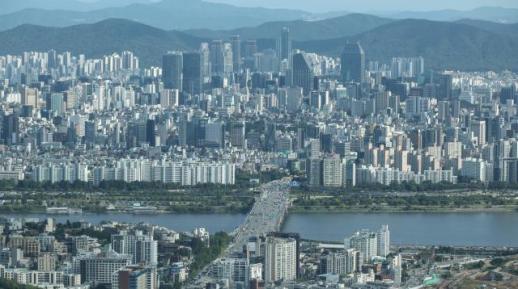 Korea's fiscal red shrinks to a 5-year low on chip boom SEOUL, September 11 (AJP) - South Korea's fiscal deficit thinned to a five-year low as of July as chip-driven corporate earnings and bigger employee bonuses along with brisk property and stock-market activity swelled tax receipts. The managed fiscal balance, a gauge of the government's underlying fiscal position that excludes social security funds, posted a deficit of 64.8 trillion won ($48.1 billion) in the January-July period, narrowing by 22 trillion won from an 86.8 trillion won shortfall a year earlier, according to the Ministry of Planning and Budget's September Monthly Public Finance report released Friday. The deficit was the smallest for the first seven months of a year since 2021, when it stood at 56.9 trillion won. Government revenue stretched 71.1 trillion won from a year earlier to 456.1 trillion won, substantially outpacing a 33.7 trillion won increase in expenditure to 476.2 trillion won. Tax revenue accounted for the bulk of the improvement, rising 41.4 trillion won to 274.0 trillion won. The improvement comes as South Korea's chip-driven earnings boom increasingly feeds through to corporate and household income while buoyant property and equity markets generate additional tax revenue. The ministry attributed a 12.2 trillion won increase in income-tax receipts to higher earned-income taxes following an increase in performance bonuses and stronger capital-gains tax revenue as property transactions increased. Corporate tax revenue rose 4.4 trillion won as company earnings improved. South Korea's semiconductor makers have been at the forefront of the earnings recovery, benefiting from soaring memory-chip prices and demand linked to artificial intelligence. Value-added tax receipts increased 8.1 trillion won, helped by stronger private consumption and higher imports. Asset-market activity delivered an additional boost to the government's coffers. Securities transaction tax revenue jumped 6.4 trillion won on heavier trading and the restoration of tax rates. The rate returned this year to 0.05 percent for KOSPI transactions and 0.20 percent for KOSDAQ trades after reductions in previous years. Revenue from the special tax for rural areas rose 8.5 trillion won, with the ministry citing increased KOSPI trading turnover. Total revenue also received support outside conventional taxes. Non-tax revenue rose 9 trillion won to 30.1 trillion won, while fund revenue increased 20.7 trillion won to 152.0 trillion won. The consolidated fiscal balance, which subtracts total spending from total revenue before excluding social security funds, posted a 20.1 trillion won deficit, improving by 37.4 trillion won from a 57.5 trillion won shortfall a year earlier. Social security funds recorded a 44.7 trillion won surplus. The government spending accelerated in line with the revenue growth. Government spending totaled 476.2 trillion won through July, up from 442.5 trillion won a year earlier. Government debt also continued to climb. Central government debt reached 1,354.2 trillion won at the end of July, up 15.7 trillion won from June and 86.1 trillion won from the end of 2025. Sovereign debt accounted for most of the increase. The government issued 21.2 trillion won of treasury bonds in August, bringing issuance for the first eight months to 162.3 trillion won, or 72.6 percent of the annual issuance ceiling. Foreign investors' holdings of Korean government bonds bonds fell by 3.4 trillion won during August to 323.3 trillion won. AJP Takeaways - Korea's managed fiscal deficit narrowed to 64.8 trillion won through July, the smallest January-July shortfall since 2021, as revenue grew more than twice as fast as spending. - Tax receipts jumped 41.4 trillion won to 274 trillion won, helped by stronger corporate earnings and bonuses alongside increased property transactions and stock trading. - Fiscal improvement has not stopped debt from rising, with central government debt reaching 1,354.2 trillion won at the end of July. 2026-09-11 10:21:33
 -
Small Modular Reactor Support System Launched with New Law and Regulations A special law and its enforcement regulations aimed at supporting the research, development, and demonstration of small modular reactors (SMRs) will take effect today. This initiative is designed to establish a comprehensive government support system to ensure that research outcomes lead to actual commercialization.On September 11, the Ministry of Science and ICT announced that the 'Special Law on the Promotion and Support of Small Modular Reactor Development' and its enforcement regulations will be implemented. The SMR special law was enacted in March.The demand for stable, carbon-free energy has been rising due to the recent expansion of artificial intelligence (AI), the increase in data centers, and the electrification of industries. Major countries around the world are also accelerating the development and commercialization of SMRs by advancing technology and refining regulations. The South Korean government has laid the institutional groundwork through the implementation of this SMR special law and its regulations.The government has identified SMRs as a key technology in the future clean energy sector alongside fusion and renewable energy through its 'Seven SEED Projects.' It aims to commercialize pressurized SMRs by 2035 and plans to begin construction of non-pressurized SMRs in the 2030s.While the SMR special law provides a broad framework for the development, demonstration, and industrialization of SMRs, the enforcement regulations specify the criteria and procedures necessary for the operation of the law, including the establishment of basic plans, the operation of promotion committees, public-private cooperation, and the designation of research and development special zones.According to the enforcement regulations, the Ministry of Science and ICT is required to establish a 'Basic Plan for SMR System Development' every five years. This plan will include policy objectives, implementation strategies, and details on technology development related to supply chains and the designation and operation of SMR system research and development special zones. The ministry will regularly assess the implementation status of the basic plan every five years and incorporate the results and corrective measures into the following year's implementation plan.A 'SMR System Development Promotion Committee' will also be established to deliberate on key matters related to SMR development. This committee will consist of more than ten private experts who will discuss and coordinate tasks related to technology development, demonstration, corporate collaboration, and the establishment of special zones for various types of SMRs.To strengthen the foundation for private-led SMR commercialization, the government will provide a basis for the establishment of companies jointly funded by private enterprises and public institutions. Based on submitted establishment, operation, and business plans, the government will be able to support these initiatives with budget allocations.Plans to designate 'SMR System Research and Development Special Zones' will also be detailed to promote research, demonstration, and corporate growth.With the implementation of the SMR special law, the government plans to actively advance technology development and regulatory improvements to eliminate barriers to SMR commercialization. In conjunction with the 'Seven SEED Projects,' the government plans to begin detailed design work for SMRs in collaboration with the private sector starting in 2027. For non-pressurized SMRs, the government aims to foster specialized companies for commercialization, including special purpose companies (SPCs) jointly funded by the public and private sectors, to ensure that domestic technology translates into actual business and global market opportunities.Minister of Science and ICT Lee Baek-hoon stated, "The implementation of the SMR special law and its enforcement regulations marks a starting point for connecting South Korea's accumulated nuclear research and development capabilities to demonstration and commercialization, expanding it into an industry. We will diligently pursue the SMR commercialization goals outlined in the Seven SEED Projects and work as a unified team with the government, research community, and industry to lead the global SMR market."* This article has been translated by AI. 2026-09-11 10:20:00
-
HD Hyundai Robotics Invests 13 Billion Won in Startup to Develop Robotic Hands HD Hyundai Robotics, a specialist in robotic solutions, is making a strategic investment to implement physical AI and secure a foothold in future markets.On September 11, HD Hyundai Robotics announced that it has acquired a stake in the robotics company Aiden Robotics for 13 billion won.This investment is expected to enhance HD Hyundai Robotics' core technology for humanoid robots and strengthen its competitiveness in the physical AI sector.Aiden Robotics specializes in developing sensor technology that precisely detects touch and force for robots. The company designs and manufactures capacitive force and touch sensors, which are key components for humanoid robots.As the ability to perceive physical environments and interact with them becomes a core competitive edge in the era of physical AI, the importance of sensing technology is highlighted.With this investment, both companies plan to develop products that combine HD Hyundai Robotics' robotic platform with Aiden Robotics' force and touch sensors and control technology. They also aim to create specialized robotic hands for shipbuilding and heavy industry to be integrated into HD Hyundai Robotics' humanoid robots.Additionally, they will continue to collaborate on surface treatment automation, enabling robots to perform tasks such as polishing and grinding that were previously done by humans. The two companies plan to jointly develop surface treatment automation solutions, starting in the shipbuilding and heavy industry sectors, and then expand their application to the broader domestic manufacturing industry, eventually targeting global markets, including U.S. shipyards.An official from HD Hyundai Robotics stated, "This investment is a strategic choice to combine the capabilities of both companies to develop robot solutions based on physical AI. We will continue to expand strategic collaborations with promising technology firms to enhance the global competitiveness of the domestic robotics industry and actively pursue opportunities in future markets."Meanwhile, HD Hyundai Robotics secured 180 billion won in investments from KDB Industrial Bank and KY PE last year, stating that the funds would be used for developing next-generation robot technologies based on physical AI, expanding into overseas markets, and future investments. 2026-09-11 10:12:10