


Latest by
-
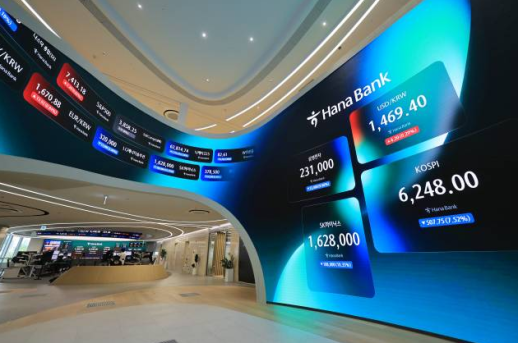 Seoul and Tokyo retreat nearly 3% on oil price and Treasury jitters SEOUL, September 11 (AJP) – Seoul and Tokyo stocks lost ground on soaring oil prices and U.S. Treasury yields on renewed Gulf tensions. The benchmark KOSPI stood at 6,847.74 as of 10:30 a.m., down 2.63percent from the previous session. The Nikkei 255 was also down 2.66 percent to 63,554.48. The KOSPI opened more than 3 percent lower at 6,802.50 before paring some of its losses in early trading as retail investors stepped in to buy shares. Retail investors bought a net 1.32 trillion won ($979 million) of KOSPI shares. Foreign investors sold a net 844.6 billion won, while institutions unloaded 760.1 billion won. The decline followed another weak session in New York as higher oil prices and bond yields weighed on risk assets. The Dow Jones Industrial Average fell 0.60 percent overnight and the S&P 500 lost 0.58 percent. The Nasdaq Composite dropped 0.65 percent. West Texas Intermediate crude surged 6.69 percent to $102.48 a barrel, while Brent crude jumped 6.34 percent to $107.63. Both benchmarks closed at their highest levels since May 19. WTI extended its gains for an eighth straight session, marking its longest winning streak in three years. The surge in oil prices added to inflation concerns, contributing to broader pressure on the bond market as U.S. Treasury yields moved sharply higher. The benchmark 10-year Treasury yield briefly rose above 4.95 percent, reaching its highest level since November 2023. The jump in yields weighed particularly on rate-sensitive technology shares, while investors remained cautious ahead of the U.S. August consumer price index due later Friday. Semiconductor stocks were hit particularly hard on Wall Street. Nvidia fell 2.26 percent and Micron Technology dropped 4.90 percent. The Philadelphia Semiconductor Index declined 2.66 percent. That weakness carried into Seoul, where major chip stocks led the morning decline. Samsung Electronics fell 3.53 percent to 259,500 won, while SK hynix dropped 3.62 percent to 1,786,000 won. Samsung Electronics preferred shares lost 4.43 percent to 194,000 won. Other semiconductor-related shares were also weaker. SK Square fell 4.23 percent to 1,087,000 won, while Samsung Electro-Mechanics bucked the trend and rose 0.86 percent to 1,412,000 won. Losses extended to other large-cap stocks. LG Energy Solution fell 1.37 percent to 360,000 won and Hyundai Motor dropped 2.25 percent to 380,250 won. Samsung Biologics slipped 0.84 percent to 1,411,000 won. Financial shares were mixed. KB Financial gained 1.01 percent to 175,150 won, while Samsung Life Insurance fell 2.91 percent to 300,500 won. Some industrial and construction shares, however, moved higher. GS E&C rose 3.49 percent to 38,550 won and HD Hyundai Heavy Industries advanced 2.54 percent to 465,000 won. Selling was broad across the main market. A total of 551 KOSPI-listed stocks declined, while 276 advanced and 67 were unchanged. The junior KOSDAQ also came under pressure, falling 1.72 percent to 822.55. Retail investors bought a net 158.1 billion won, while foreign investors sold 111.5 billion won and institutions offloaded 46.7 billion won. Losses were broad across major KOSDAQ names. Biotech company Alteogen fell 2.71 percent to 269,500 won, while battery materials makers EcoPro and EcoPro BM which specializes in cathode materials for rechargeable batteries dropped 2.76 percent to 84,500 won and 4.21 percent to 113,700 won, respectively. EcoPro BM specializes in cathode materials for rechargeable batteries. Semiconductor equipment and component shares were also weaker. Jusung Engineering slipped 0.23 percent to 220,500 won and Wonik IPS fell 5.47 percent to 112,300 won. EO Technics, a maker of semiconductor laser equipment, dropped 3.30 percent to 440,000 won. LEENO Industrial declined 4.04 percent to 66,500 won, while printed circuit board maker Simmtech lost 2.02 percent to 131,200 won. Robotics shares were mostly lower. Industrial robot maker Rainbow Robotics fell 2.23 percent to 439,000 won. Robotis was the only gainer among the major names shown, rising 0.46 percent to 325,000 won. Market breadth was firmly negative, with 1,126 KOSDAQ stocks declining, compared with 484 advancing and 112 unchanged. The Korean won weakened to 1,346.50 per dollar from 1,339.20 a day earlier. Investors are now focused on the U.S. August consumer price index, due later Friday, for clues on the Federal Reserve's rate outlook ahead of next week's policy meeting. Markets are currently pricing in about a 70 percent chance of a rate increase after August producer prices reinforced concerns over persistent inflation. AJP Takeaways - South Korea’s benchmark KOSPI fell below 6,900 on September 11, 2026, as surging oil prices and rising U.S. Treasury yields triggered broad risk-off selling and pushed semiconductor shares sharply lower. - The KOSPI traded at 6,861.44 as of 10:04 a.m. on September 11, down 2.45 percent, after opening more than 3 percent lower at 6,802.50. Retail investors bought a net 1.32 trillion won ($979 million), while foreign and institutional investors were net sellers. - West Texas Intermediate crude rose 6.69 percent to $102.48 a barrel and Brent crude climbed 6.34 percent to $107.63 on September 10, while the U.S. 10-year Treasury yield briefly exceeded 4.95 percent. Investors are awaiting the U.S. August consumer price index on September 11, 2026, for further clues on the Federal Reserve’s rate outlook. 2026-09-11 10:51:14
 -
 South Korea puts SMR law into force SEOUL, September 11 (AJP) - South Korea's small modular reactor law took effect, setting up state support to bring the technology to market as artificial intelligence and data centers drive up power demand. Enacted in March, the special act and its enforcement decree require the Ministry of Science and ICT to draw up a basic plan for SMR development every five years, backed by annual implementation plans and regular progress reviews. The plan taking effect Friday must address nuclear fuel supply chains, public acceptance, workforce training and regulatory reform. A promotion committee chaired by the science minister, including vice-minister-level officials from the energy, industry and defense ministries alongside private experts, will review key issues. The law allows the government to bankroll projects by companies co-invested by private firms and public institutions, within budget limits, and to back joint research consortia. Areas clustering universities, research institutes and companies can also be designated SMR research zones. The ministry said it will launch public-private detailed design work next year, aiming to commercialize a light-water SMR before 2035. It also plans to foster co-invested firms for non-light-water designs and explore maritime, defense and space applications. "The enforcement of the SMR special act and its decree is an institutional starting point for linking the nuclear research capabilities Korea has built up to demonstration and commercialization, and expanding them into an industry," said Bae Kyung-hoon, Deputy Prime Minister and Science Minister. AJP Takeaways - South Korea's special act on small modular reactor development and its enforcement decree took effect on Sept. 11, 2026, establishing a government-wide framework led by the Ministry of Science and ICT to move SMRs from research to commercialization. - The law requires the Ministry of Science and ICT to draw up an SMR development plan every five years, creates a promotion committee chaired by the science minister, and permits state funding for companies co-invested by private firms and public institutions. - The Ministry of Science and ICT aims to commercialize a light-water SMR before 2035, while the Nuclear Safety and Security Commission's review of the i-SMR design, filed in February 2026, has no fixed completion date. 2026-09-11 10:49:12
 -
 DB Insurance Launches 'Ordinary Day' Ad Campaign to Support Young People DB Insurance announced the release of a new advertisement themed "Ordinary Day" on September 11. The campaign aims to deliver a message of encouragement to those who live their lives diligently each day. The advertisement consists of two segments: "Youthful Steps" and "Pet Bliss." The "Youthful Steps" segment captures the daily lives of young people taking their first steps into society, conveying the message that simply living through the day is worthy of support. The "Pet Bliss" segment humorously depicts a dog enjoying a day of play with its family, extending the message of encouragement not only to people but also to the pets that share their daily lives. The campaign features actress Lim YoonA, who has been the face of DB Insurance for nine years, bringing a bright and friendly atmosphere to the advertisement's message. In addition to the TV ads, DB Insurance plans to roll out a digital short-form content series titled "Ordinary Day," which will explore the meaning of insurance through everyday stories. A representative from DB Insurance stated, "Insurance is not only needed when accidents occur, but it is also a promise to help customers live ordinary days like today. Through this campaign, we wanted to convey DB Insurance's commitment to supporting and safeguarding 'Ordinary Days.'" * This article has been translated by AI. 2026-09-11 10:48:00
 -
Baemin Shares 16 Years of Growth Insights at K-Startup Grand Challenge Baemin shared its 16 years of growth expertise with global startups.On September 10, Woowa Brothers, the operator of Baemin, held an exchange event with participants and stakeholders of the '2026 K-Startup Grand Challenge' at Baemin Startup Square in Pangyo, Seongnam.The 'K-Startup Grand Challenge' is a global startup support initiative organized by the Ministry of SMEs and Startups and managed by the Gyeonggi Creative Economy Innovation Center. It aims to attract outstanding global startups and develop Korea into Asia's leading startup business hub.Last year, Baemin began its startup support efforts by establishing Baemin Startup Square in the Second Pangyo Techno Valley. The company has provided a portion of this space to specialized institutions that support startups in areas such as investment, legal advice, and networking, offering a 10-year rent-free lease to help startups grow sustainably.Currently, over 60 early-stage startups in sectors like food tech, robotics, AI, and eco-friendliness are based there. These startups are enhancing their capabilities through regular seminars and expert consultations on legal, management, and accounting matters, as well as gaining investment opportunities through investor relations events linked with venture capital.During the event, 38 representatives from overseas startups participated. A tour of the 80-seat conference hall and open networking spaces for resident startups was also conducted.Kim Joo-yeon, head of the management strategy division at Woowa Brothers, stated, "We are pleased to be creating a startup nurturing ecosystem in collaboration with the Ministry of SMEs and Startups and the Gyeonggi Creative Economy Innovation Center. We will continue to strive to be a company that contributes to fostering a vibrant startup environment in our country through active public-private cooperation."* This article has been translated by AI. 2026-09-11 10:44:00
-
Samsung C&T's Rag & Bone Opens First Standalone Pop-Up in Seongsu Samsung C&T's Rag & Bone has expanded its menswear lineup with the opening of its first standalone pop-up store in Seongsu, Seoul.The pop-up will run at the cultural complex 'Stage 35 Seongsu' until September 20. This marks the brand's first large-scale pop-up outside the U.S. and its first flagship standalone pop-up in South Korea.Themed 'From SoHo to Seongsu,' the pop-up draws inspiration from the transformation of New York's SoHo from an industrial area to a cultural hub, paralleling the evolution of Seongsu.The pop-up spans two floors. The first floor features a loft-style space converted from a warehouse, showcasing the 2026 Fall/Winter collection. Live DJ performances will take place every Saturday.The second floor is dedicated to the Mirama product line, which utilizes a technology that realistically prints denim textures and patterns onto other materials. This technique is also applied to the walls and furniture, enhancing the immersive experience.Additionally, the pop-up will debut a limited edition Mirama collection, including products that replicate denim textures in velvet and a new 'Graysy Blue' setup.Jo Young-joo, team leader of Rag & Bone at Samsung C&T Fashion Division, stated, "We plan to showcase Rag & Bone's unique design and brand experience to a wider audience through this pop-up." In the first half of this year, Rag & Bone reported a 27% increase in cumulative sales compared to the same period last year, with a 45% rise in new customers. The company is enhancing its product competitiveness by expanding its offerings from women's wear to menswear. Last year, it also launched its first offline men's pop-up in South Korea.* This article has been translated by AI. 2026-09-11 10:40:10
-
Cheongsong Gohwari Baeksoktan Dolgae Hole Designated as Natural Monument A rare 'dolgae hole' formation in the Gyeongbuk region of Cheongsong will be designated as a natural monument.The Cultural Heritage Administration announced on September 11 that it plans to designate the 'Cheongsong Gohwari Baeksoktan Dolgae Hole' in Andeok-myeon, Cheongsong County, as a nationally designated natural heritage.A dolgae hole is a circular or cylindrical feature formed by the erosion of bedrock at the bottom of a river due to flowing water.What makes the dolgae hole in Cheongsong Gohwari special is the type of rock it is formed in. Typically, dolgae holes are found in igneous or metamorphic rocks that have cooled or undergone changes due to heat and pressure. In contrast, the dolgae hole in Gohwari has developed in sedimentary rock at the riverbed. This is a relatively rare occurrence in South Korea, and it is recognized for its geological uniqueness and conservation value.In addition to the dolgae hole, traces of sediment accumulation over a long period can also be observed. Notable features include 'stratification,' where sediments are stacked parallel, and 'cross-bedding,' where sediments are inclined according to water flow. These features provide insights into the sedimentary environment and river development in the area.The Cultural Heritage Administration plans to collect opinions from various sectors over the next 30 days before making a final decision on the designation of the natural monument after a review by the National Heritage Committee.* This article has been translated by AI. 2026-09-11 10:40:10
-
Robot Vacuum Confirmed as Source of Apgujeong Hanyang Apartment Fire During the fire at the Hanyang Apartment in Apgujeong, Seoul, on July 21, the robot vacuum identified as the source of the blaze has been confirmed to be a product of the Chinese company Ecovacs. Fire officials initially suspected that the fire started near the robot vacuum's charging station, but the exact cause has yet to be determined. A definitive cause is expected to be established later this month.According to industry sources, the robot vacuum used in the apartment during the fire was confirmed to be from Ecovacs. However, the specific model and whether it was officially distributed in South Korea remain unclear.The fire broke out at approximately 10:27 a.m. on July 21 in a fifth-floor unit of the Hanyang Apartment in Gangnam. About 20 residents evacuated, and three were rescued. The fire was completely extinguished by 12:04 p.m. the same day. Fire officials announced the following day that they suspected the charging station of the robot vacuum as the ignition point.Residents of the affected unit and nearby neighbors reported seeing sparks from the robot vacuum or indicated that the Chinese-made device had exploded. Some residents also stated that the robot vacuum was charging at the time of the fire, leading to suspicions about its role in the incident.As the brand of the product was initially unknown, inquiries flooded the robot vacuum industry immediately after the incident. Multiple industry representatives reported that customer service centers of major companies received numerous calls asking about the brand of the fire-affected product. Some companies experienced disruptions in normal customer service due to the volume of inquiries.The Gangnam Fire Department collected debris from the robot vacuum at the scene and sent it to the National Forensic Service for a detailed examination. The forensic agency has completed its analysis and recently reported its findings back to the Gangnam Fire Department. Based on this information, the fire department is expected to finalize the cause of the fire later this month. However, the Gangnam Fire Department has stated that it does not plan to issue a press release or hold a press conference regarding the findings.Robot vacuums operate using lithium-ion batteries, and the safety of these devices can be influenced by battery management and protection systems that control overcharging and overcurrent.Meanwhile, the exact model of the product, its distribution channels, and any issues with the battery or charging device are expected to be clarified in the fire department's final investigation results.An Ecovacs representative stated, "We understand that the fire authorities and the National Forensic Service are investigating the cause of the fire. Until the relevant facts are confirmed, we cannot comment on specific matters." 2026-09-11 10:40:10
-
LH Transfers Self-Developed BIM Technology to GH, Promotes Standardization in Public Sector The Korea Land and Housing Corporation (LH) is transferring its self-developed core Building Information Modeling (BIM) technology for urban development to the Gyeonggi Housing and Urban Corporation (GH) to enhance BIM utilization in the public sector.On September 10, LH announced that it signed a memorandum of understanding with GH to facilitate the transfer of BIM technology and establish a collaborative framework for various projects, including the third phase of new town development.BIM technology integrates three-dimensional modeling with construction information to manage and operate the information and processes needed throughout the entire construction process, from planning and design to construction and maintenance.LH has established BIM application guidelines as the first public institution to do so and has developed 'BIM design support core technology.' This software is designed to enhance productivity by supporting cost estimation, hydraulic calculations for water supply and drainage, and automation of earthwork design during the BIM design process.Under this agreement, LH will transfer its 'BIM application guidelines for urban development' and 'BIM design support core technology' to GH. This is expected to expand the use of BIM technology and collaboration among institutions in large-scale public land development projects, such as the third phase of new towns.LH aims to reduce redundant investments among institutions and unify BIM application standards to establish a standard system for BIM in the public sector. In August, LH also completed a technology transfer agreement with the Busan Urban Corporation for BIM technology.An LH official stated, "Following the Busan Urban Corporation and Gyeonggi Housing and Urban Corporation, we will continue to transfer technology to institutions that require BIM technology. By actively sharing the BIM technology that LH has independently developed and holds, we aim to lead the creation of a BIM technology ecosystem in the public sector."Additionally, LH has completed the development of 'AI-based earthwork design automation software' for BIM design support and has distributed it to the private sector.* This article has been translated by AI. 2026-09-11 10:32:00
-
Chungnam National University and Kongju National University Merger Faces Setback The merger initiative between Chungnam National University and Kongju National University is at risk of failing after a recent vote among their members. While Kongju University saw a majority in favor of the merger, Chungnam University faced overwhelming opposition from its students and staff, leading to the proposal's rejection. Both universities aimed for a merger to enhance their chances of being selected for the 'Glocal University 30' project, but they struggled to reach a consensus among their members, casting doubt on future project efforts. The voting took place from September 8 to 10, with Chungnam University reporting a rejection of the merger proposal. After applying the voting weight, the results showed 46.58% in favor and 53.42% against. In contrast, Kongju University received strong support across all member groups, indicating a significant divide in opinions between the two institutions. The primary reason for Chungnam University's rejection was the strong opposition from its students. Out of 24,346 members, 18,426 participated in the vote, achieving a turnout of 75.68%. Notably, 90.71% of undergraduate students (12,265) voted against the merger. Additionally, 67.29% of staff and teaching assistants opposed it, while 63.96% of faculty and 53.56% of graduate students supported the proposal, highlighting a clear disparity among different groups within the university. The final tally, which combined the voting weights of faculty (50%), staff and teaching assistants (30%), undergraduates (15%), and graduate students (5%), resulted in a rejection of the merger. Conversely, Kongju University experienced overwhelming support for the merger, with 11,824 out of 15,401 eligible voters participating, resulting in a turnout of 76.77%. Specifically, 71.56% of faculty (380), 62.34% of staff and teaching assistants (197), and 59.98% of students (6,584) voted in favor of the merger. The outcome of this vote raises concerns for the 'Glocal University 30' project, as member consent is a prerequisite for the merger application. A representative from Kongju University expressed disappointment over the results, suggesting that some members of Chungnam University may have felt satisfied with their current status after being selected for a support program aimed at creating ten universities like Seoul National University, leading to doubts about the necessity of a challenging merger. They also noted that ongoing issues, such as demands for improvements in the salary system from Chungnam University's union, likely contributed to the staff's opposition, while students appeared to harbor vague anxieties about the implications of a campus merger. A representative from Chungnam University acknowledged that the faculty's support rate was similar to that during the previous application for the Glocal project but expressed concerns that if the merger fails, it could lead to the withdrawal of support funds or cancellation of the project. Despite the rejection, both universities are not completely abandoning discussions about the merger. A representative from Kongju University stated, "Just because the proposal was rejected doesn't mean we will immediately cease discussions on the merger." They emphasized the need to better inform Chungnam University members about the benefits of the merger and the goals of the Glocal project, suggesting a follow-up process to clarify the opinions of those who opposed the merger. Chungnam University remains cautious, stating, "We do not have specific plans in place yet." Both universities plan to analyze the feedback from their members closely and will soon announce their official stance on future directions.* This article has been translated by AI. 2026-09-11 10:32:00
-
Taiwan's First Public Discussion on Governance After Unification with China A question that has long been considered taboo in Taiwan has surfaced in public debate: How would Taiwan be governed if it unified with China? The bold inquiry was raised by Li Qizhe, an associate professor at National Changhua University of Education, who began posting on Chinese social media on August 29.Li's premise was clear. He proposed to examine how much of Taiwan's democratic system, judicial framework, and economic structure could be preserved in the event of unification with China. He characterized his writings not as a call for unification but as a 'conditional institutional stress test.'In his initial post on August 29, Li presented a detailed proposal. He outlined the powers that would be exercised by the central government in Beijing and suggested that the remaining powers be retained by Taiwan. He advocated for maintaining direct elections and a multiparty system, ensuring that Taiwan's courts would have final jurisdiction, and prohibiting any regression of fundamental rights.Additionally, he proposed that no Chinese military forces be stationed in Taiwan during the initial stages of unification and that Taiwan maintain its own tax and foreign exchange systems. While diplomatic authority would be centralized, he emphasized that Taiwan's roles in international economic and cultural representation, as well as participation in international organizations, should remain intact.Particularly noteworthy was his concept of the 'four locks.' These included: 1) establishing a peace agreement for unification and high autonomy discussions between the two sides; 2) incorporating special provisions for Taiwan in the Chinese constitution; 3) having the National People's Congress enact a 'Basic Law for Taiwan'; and 4) allowing Taiwanese residents to approve an autonomy charter through a referendum. He also introduced 'three keys' that would be required to reduce democratic institutions, judicial finality, and fundamental rights: a supermajority in Taiwan's legislative body, a public referendum, and approval from the National People's Congress.Li's writings sparked significant interest in mainland China, garnering nearly 1,000 comments. Some netizens raised objections, particularly regarding the clause that enumerated central powers while assigning the rest to Taiwan. Critics argued that this could imply that Taiwan holds equal authority to the central government, which contradicts China's unitary state structure. Others questioned how to prevent Taiwan from maintaining military relations with foreign countries or reversing unification agreements due to changes in government.In response, Li published a second post acknowledging many of these concerns. He clarified that he recognized China as a unitary state and revised his stance to state that Taiwan's high autonomy would be granted by the Chinese constitution and the National People's Congress. He argued, however, that the scope of autonomy should be protected by law.The discussion also gained traction in Taiwan, with the Central News Agency reporting on Li's writings seven times and the Wang Bao newspaper publishing an editorial welcoming rational discussions on unification between the two sides.The significance of this discussion is clear. For the first time, academia in Taiwan, rather than the political sphere, is addressing the post-unification scenario using concrete institutional language that encompasses judicial finality and tax authority, rather than abstract slogans. Whether this dialogue will serve as a catalyst for broader discussions on unification between China and Taiwan or fade into obscurity remains uncertain. However, once such voices emerge, they are likely to resurface as long as there is a realistic demand for them. This debate carries considerable weight.* This article has been translated by AI. 2026-09-11 10:28:10