


Latest by
-
 South Korea's Per Capita Income Expected to Exceed $40,000 Amid Economic Disparities South Korea's per capita gross national income (GNI) is projected to surpass $40,000 for the first time this year. However, experts caution that this does not necessarily indicate an improvement in the standard of living for citizens. The surge in income is largely attributed to a boom in the semiconductor industry and a strong won, but disparities among industries, regions, and generations may widen as a result.According to a report by Aju Economy on September 10, experts believe the likelihood of achieving a $40,000 per capita GNI is high. However, they point out that the growth driven primarily by semiconductors and currency effects has limitations in enhancing the income levels that citizens actually feel.Excluding semiconductors, major manufacturing sectors such as automotive and petrochemicals are experiencing relative sluggishness, which could exacerbate growth disparities among industries. Additionally, fluctuations in the exchange rate can affect the per capita income level and ranking, making it difficult to assess improvements in the economic structure based solely on dollar-denominated indicators.Kim Jeong-sik, an emeritus professor of economics at Yonsei University, stated, "As semiconductor exports expand, the Bank of Korea has raised its current account surplus forecast to $450 billion and has also increased its economic growth outlook. With the exchange rate declining, achieving a $40,000 per capita income seems feasible." He emphasized the need to bolster competitiveness in industries beyond semiconductors to create jobs, particularly highlighting the urgent need to stimulate the construction sector, which is closely linked to domestic demand.Concerns have also been raised that disparities among industries could lead to regional and asset polarization. In the capital region, where semiconductor companies are concentrated, increased income and employment may stimulate housing demand, but other regions are less likely to benefit from such effects.Jeong Se-eun, a professor of economics at Chungnam National University, noted, "While areas around Samsung Electronics and SK Hynix may experience economic revitalization and rising housing prices, the resulting asset gap could lead to industrial and job polarization. Considering the possibility of a sharp downturn in the semiconductor market next year, it is crucial to devise ways to distribute the fruits of growth to other industries and regions."Addressing youth employment is also highlighted as a key policy challenge. Jeong expressed concern that with declining employment rates among young people and the transition to artificial intelligence (AI) potentially reducing existing jobs, the uncertainty surrounding the creation of new jobs could have long-term negative implications for the overall economy.Inflation concerns further complicate the positive assessment of achieving a $40,000 per capita GNI. Prolonged high prices may limit improvements in real purchasing power despite nominal income increases. Particularly, if both the price and real estate markets become unstable simultaneously, fiscal stimulus through government spending could inadvertently stimulate demand.There are calls to examine indicators related to income distribution alongside per capita income figures. Kim Sang-bong, a professor of economics at Hansung University, remarked, "Per capita income does not reflect the distribution of income. If $40,000 translates to approximately 60 million won, how many households earn 240 million won for a family of four?" He added that due to exchange rate influences, the figure of $40,000 should not be overemphasized.* This article has been translated by AI. 2026-09-11 07:48:00
 -
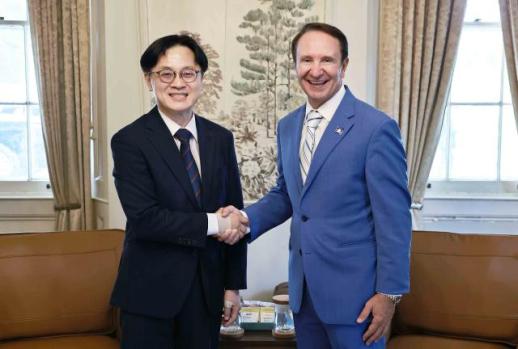 Seoul's industry min back in Washington for final push on US investment deal SEOUL, September 11 (AJP) -South Korean Industry Minister Kim Jung-kwan shuttled back to the United States from Europe after accompanying President Lee Jae Myung on his state visit to France earlier this week, making his second U.S. trip in little more than a week to finish the first action plans under Seoul's $350 billion investment commitment. Kim traveled to the United States after completing his European schedule via Belgium and is due to remain there through Saturday. He is expected to meet U.S. Commerce Secretary Howard Lutnick and other officials as the two sides seek to pin down investment size, financing, returns and risk-sharing ahead of a planned closed-door briefing to South Korea's National Assembly on Sept. 17. The accelerated diplomacy comes as reports on the investment blueprint have cascaded from South Korean media to The Wall Street Journal, often running ahead of what either government is prepared to confirm. The Wall Street Journal reported Thursday that Seoul and Washington were nearing an agreement on U.S. energy projects potentially worth more than $100 billion, centered on financing for as many as eight nuclear reactors and a roughly $20 billion natural gas-fired power project in Texas supplying electricity to artificial intelligence data centers. The newspaper said the first reactors could use technology from U.S.-based Westinghouse Electric, while some later units could involve Korean technology. It also said Seoul could provide an initial payment of more than $2 billion before the end of September if negotiations proceed as planned. Neither government has confirmed those details. South Korea's Ministry of Trade, Industry and Resources said investment plans remain under negotiation, while a White House official told Reuters that reports of an agreement should be regarded as "baseless speculation" unless formally announced. The cautious responses follow a week of increasingly specific reports at home. Some local media reported that a combined-cycle gas power project in Encinal, Texas, had effectively been selected as Korea's first investment. The project has been reported at about $22 billion to $23 billion with generation capacity of roughly 6.3 gigawatts. The ministry immediately pushed back, saying no first project had been finalized and that an announcement would come only after consultations with Washington and procedures required under Korean law. The ministry also denied a Hankyoreh report that candidate investments had narrowed to a Texas gas project estimated at $23.3 billion, a framework for eight U.S. nuclear reactors worth about $120 billion and a roughly $67 billion Alaska LNG project. It also reported that Seoul was considering an investment in Westinghouse and could make its first U.S. remittance late this month. But it added nuclear cooperation was also still being negotiated and no specific arrangement had been reached. A separate report Tuesday raised an even more politically sensitive issue by saying Washington was pressing Seoul for investments exceeding the $350 billion promised under last year's tariff agreement. A lawmaker, citing a ministry briefing, said the combined amount sought by Washington for the Texas power project, nuclear plants and Alaska LNG could exceed the $200 billion set aside for strategic investment. The ministry issued an unusually categorical denial. It said it was not true that the United States had requested investment exceeding the overall $350 billion commitment or that Korea's strategic investment would exceed the agreed $200 billion. Under the memorandum signed by Seoul and Washington last November, Korea agreed to provide up to $200 billion for investments in strategic sectors including energy, semiconductors, pharmaceuticals, critical minerals and artificial intelligence. Actual funding is capped at $20 billion in any calendar year and is to be called according to project milestones. The remaining $150 billion is earmarked for shipbuilding cooperation and can include Korean corporate direct investment, guarantees and ship financing rather than government cash alone. The original agreement also built in safeguards sought by Seoul after months of negotiations over how much financial risk Korea would shoulder. Only projects deemed commercially reasonable — capable of generating sufficient cash flow to repay principal and interest — are supposed to qualify. An umbrella investment vehicle was designed to pool returns from individual projects so losses at one could potentially be offset by gains elsewhere. Before repayment of principal and interest, investment returns were to be divided equally between Korea and the United States. Commercial viability has been Seoul's consistent red line, particularly for large projects with long construction periods and uncertain returns, which partly can explain why implementation has moved more slowly than Washington wanted. Almost a year after the investment package was agreed, Korea has yet to commit money to its first project, while Japan has already unveiled projects under its own U.S. investment agreement. U.S. frustration has grown, and Trump earlier threatened to restore higher tariffs on Korean goods over delays in implementing the deal. AJP Takeaways - Industry Minister Kim Jung-kwan returned to the United States to finalize implementation plans for South Korea’s $350 billion U.S. investment commitment. - Media reports have floated more than $100 billion in energy projects, including nuclear plants and a Texas gas-fired power project, but Seoul says no specific project or funding timetable has been finalized. - The ministry has denied that Washington is seeking commitments beyond the agreed $350 billion, including the $200 billion ceiling for strategic investments. 2026-09-11 07:41:39
 -
Kim Jong-kwan Arrives in the U.S. to Finalize Investment Negotiations On September 10, Kim Jong-kwan, the Minister of Trade, Industry and Energy, arrived in the United States.According to Yonhap News, Kim stated at a press conference at Newark Liberty International Airport near New York, "I have come to finalize the ongoing investment negotiations with the U.S.," adding, "My schedule is focused on wrapping up the negotiations during this process." Regarding the negotiation atmosphere, he remarked, "Negotiations are neither easy nor difficult; I believe they are ongoing until the final signatures are made." Kim is expected to remain in the U.S. until September 12, meeting with U.S. officials, including Secretary of Commerce Howard Lutnick, to continue discussions on investment matters.On the same day, The Wall Street Journal reported that the South Korean government is nearing an agreement to invest over $100 billion (approximately 134 trillion won) in energy projects, including eight nuclear power plants and natural gas initiatives, as the first phase of its investment in the U.S.Citing multiple sources, the WSJ noted that both South Korea and the U.S. are in the final stages of reaching an agreement on this plan, which could be announced next week.In response to these developments, Kim stated, "I cannot confirm specific details yet, but I will provide information once the final results are available."* This article has been translated by AI. 2026-09-11 06:12:00
-
Incheon Bridge Named Best Among Private Highways in Korea Incheon Bridge has been recognized as the best private highway in South Korea following an evaluation of operational performance among 23 private highways nationwide.On September 11, the Ministry of Land, Infrastructure and Transport announced that Incheon Bridge received the highest rating in the assessment of operational performance for 2025. Four other highways, including Ok-san O-chang, Gwangju-Wonju, Yongin-Seoul, and Seo-Suwon Pyeongtaek, were also recognized for their excellence.The ministry conducts annual evaluations of private highways that have been open for more than a year to enhance user convenience, safety, and management efficiency. This year's assessment involved experts from the fields of road, traffic, and safety, as well as representatives from civic groups related to trucks and buses, who directly inspected road conditions, cleanliness, and amenities such as rest areas and service stations.Incheon Bridge, which received the top rating, was praised for enhancing its safety management capabilities by developing and deploying its own accident prevention radar sensors to prevent rear-end collisions involving autonomous vehicles.The ministry plans to address any shortcomings identified in this evaluation and share best practices with other private highways. Operators who received high ratings will also be awarded commendations and monetary rewards from the Minister of Land, Infrastructure and Transport.Kim Hyo-jung, head of the ministry's Road Bureau, stated, "We plan to enhance road safety and convenience through proactive road maintenance and cleaning systems, ensuring that private highways can be used with confidence by the public while continuously improving operational and management standards."* This article has been translated by AI. 2026-09-11 06:04:00
-
Korean Hotel Market Holds Vast Growth Potential Through Building Conversions "The growth potential of the Korean hotel market is still limitless. Recently, the trend of converting existing buildings into hotels has become a new norm," said Jo Min-sook, Vice President for Accor's Korea operations.Jo believes there is ample room for growth in the domestic hotel market, especially as the popularity of K-pop and Korean content has led to an increase in foreign tourists. Additionally, the movement towards hotel conversions is accelerating instead of building new hotels.Conversion Over New Construction: "Korean Hotel Market Has Plenty of Room to Grow"During a meeting on August 28 at the Pullman Ambassador Seoul Eastpool in Gwangjin-gu, Jo noted, "Typically, it takes about three to four years to acquire land, design, and construct a hotel. Recently, there has been a growing interest in conversions that allow for quicker commercialization."However, not every building can be converted into a hotel. It must meet certain operational requirements, such as having service elevators and various facilities. Jo stated, "While there are buildings that are realistically feasible for conversion and those that are not, if the conditions are right, there is significant potential to expand branded hotels nationwide. The possibilities in the Korean market remain substantial."Her optimism about the Korean hotel market is backed by over 30 years of experience in the field.Jo entered the hotel industry in 1993, starting in sales and marketing before expanding into hotel operations. She has experience with Accor's economy, midscale, premium, and luxury brands, including Ibis, Novotel, Sofitel, and Pullman.In 2011, she was selected for Accor's first general manager training program in Asia, where she received 18 months of training. She later served as the general manager of Ibis Ambassador Seoul Gangnam and oversaw the opening of Ibis Styles Ambassador Seoul Myeongdong. She also led the openings and initial operations of Novotel Ambassador Seoul Dongdaemun Hotel & Residence, Sofitel Ambassador Seoul Hotel & Serviced Residence, and Pullman Ambassador Seoul Eastpool.From Sales to General Manager: "The Answers Are in the Field"Her background in sales and marketing continues to influence her management style.Jo explained, "Those who have only worked in operations tend to focus on the guests who enter the hotel, but I have spent 12 years in sales attracting customers. I can see how to bring in guests and what the hotel should offer them."After taking on her role in Korea, her first priority was to visit the field. In her first two and a half months, she visited all 27 Accor hotels in the country. She plans to continue visiting each hotel to assess operations and service quality."Guests pay to stay at hotels. They should receive services that match, or ideally exceed, the price they paid to encourage them to return. If quality is not maintained, no hotel can last long," she emphasized.Jo's focus on the field is not about grand changes. For instance, instead of simply increasing the variety of breakfast items, she prefers to serve kimchi in Korean pottery and label chicken gangjeong as a 'Korean signature' dish. She believes it is more important for foreign guests trying Korean food for the first time to easily recognize and choose from the menu."I advise against just increasing the number of breakfast items. Changing the presentation can significantly alter how customers perceive it," she said, adding, "Ultimately, it comes down to details and communication."When asked about Accor's competitive edge, Jo again pointed to the importance of field insights. She highlighted 'flexibility' as a key strength, explaining that while global brands have clear standards, they also provide operational know-how tailored to local markets and owners.As the head of operations in Korea, she sees her role as facilitating rapid communication with owners and addressing their needs with headquarters as development increases in the country.Luxury and Value Divergence: Lifestyle Hotels on the RiseJo identified 'polarization' and 'lifestyle' as the next changes in the domestic hotel market.As labor costs and prices continue to rise, luxury hotels are expected to elevate both pricing and service, while the economy and midscale markets, which emphasize reasonable pricing, are likely to grow. In between, lifestyle brands that highlight regional and hotel uniqueness could create new demand."Recently, there has been a shift towards soft brands over standardized hard brands," Jo noted, suggesting that unique midscale lifestyle hotels could emerge in areas with distinct local characteristics like Seongsu, Hongdae, and Gangnam.Accor's 'Handwritten Collection' aligns with this trend. Although it has not yet entered the Korean market, this midscale soft brand emphasizes individuality and personalized service at each hotel. Jo sees a strong potential for such brands to establish themselves in Korea.The demand supporting the hotel market has also changed. With the global spread of K-content, perceptions of Korea abroad have shifted, according to Jo."In the past, when I mentioned I was from Korea at international events, the reactions were different than they are now. Post-COVID, many people say Korea is one of the countries they most want to visit," she said.She added, "I truly feel that Korea's status has risen significantly," noting that Accor views Korea as a market with substantial growth potential. Currently, Accor operates 27 hotels in the country.However, simply increasing the number of hotels does not equate to growth. Throughout the interview, Jo emphasized the importance of not only how many new hotels are opened but also how long and stably existing hotels are operated.“Value Must Match Price”: Ensuring Sustainability for Hotels and PeopleSimilar considerations are present in the environmental sector. Accor is promoting the expansion of the 'Green Key' eco-certification for its hotels in Korea and is tracking energy and water usage through its 'Gaia' system. The data collected over time is used to identify energy-saving measures, and performance is reflected in general manager evaluations. The Pullman Ambassador Seoul Eastpool is also preparing a carbon-reducing menu.However, Jo noted that it is not easy to directly apply the global headquarters' environmental standards to local hotels.For instance, switching from plastic to glass bottles for in-room water requires facilities and space for washing the bottles. Hotels with many rooms face increased labor costs due to the need to collect hundreds or thousands of bottles daily."Sustainability is a priority for Accor, but considering Korea's labor costs and hotel structures, there are practical issues to address. We must continue to find methods that suit the Korean market," she said.For Jo, the sustainability of hotels ultimately ties back to consistently delivering 'value for the price.'"Novotel must be Novotel, and Ibis must be Ibis. There is no need for Ibis to provide luxury hotel services. However, the standards that match the brand and price must be maintained. If customers can affirm that the value matched the money they spent today, then it is a good hotel," she explained.She also cautioned against excessive service. If a general manager raises service levels significantly while in charge, but the quality drops after they leave, it can lead to customer disappointment. In a context of rising labor and energy costs, maintaining profitability while consistently delivering the quality promised by the brand is more important."Field management comes first. There should be no over-service or service below standards. Regardless of who the general manager is, the quality of the hotel must be maintained," Jo stated.Her concept of 'sustainability' also includes people. As hotels grow, opportunities for employees to advance arise, and paths for department heads to become general managers open up, according to her.For Jo, who has risen from sales and marketing to general manager and now oversees operations in Korea, her career serves as a testament to this potential."I believe the Accor brand has nurtured me. Now, I want to pass on what I have learned to the next generation. My role is to ensure that hotels operate well for 10 or 20 years and that new general managers continue to emerge from within," she concluded.* This article has been translated by AI. 2026-09-11 00:04:00
-
Changwon Danggam Theme Park to Host Family Events This Fall Changwon Danggam Theme Park will transform into a family experience space where children and parents can taste, create, and enjoy Danggam this fall.The city of Changwon announced on September 10 that it will host the 'Danggam Children’s Family Pangpang' event at the Danggam Complex Cultural Space in Changwon Danggam Theme Park over four days, from September 12-13 and 19-20.The event will feature experiential programs, cultural performances, and a flea market centered around Danggam, a representative agricultural product of Changwon.At the Danggam Complex Cultural Space, family visitors can participate in programs such as making Danggam picnic lunch boxes, Danggam makgeolli, and Danggam cream cheese. The activities are designed for participants of all ages to enjoy various food and processing experiences using Danggam.Reservations for the experiential programs can be made in advance through the Changwon Danggam Theme Park website.In the afternoons, performances including fantasy musical fairy tales and classical trios will take place. A Danggam flea market showcasing local products and various attractions will also be held along the Danggam Path in the park.In the Danggam Drawing Yard, children will have the opportunity to express the scenery and autumn landscape of Changwon Danggam Theme Park through their artwork.The city of Changwon aims to provide family visitors with not only Danggam-related experiences but also performances and cultural programs to enjoy together.Kang Jong-soon, head of the Changwon Agricultural Technology Center, stated, “We have prepared this event so that children and parents can experience the taste and charm of Danggam through their senses while enjoying various activities and performances. We hope to create joyful memories and enjoy the autumn atmosphere at Changwon Danggam Theme Park.”* This article has been translated by AI. 2026-09-10 23:28:00
-
South Korea Exports 18 Chunmoo Rocket Launchers to Croatia South Korea will export 18 Chunmoo multiple rocket launchers to Croatia in a deal worth 640 billion won, marking the country's first defense export to Croatia. The two nations also signed a memorandum of understanding (MOU) on defense cooperation, establishing a framework for regular collaboration.According to the Ministry of National Defense, Minister An Kyoo-baek attended the signing ceremony for the Chunmoo procurement contract in Zagreb, Croatia, on September 10, local time, hosted by Prime Minister Andrej Plenković.Attendees included Minister An, Croatian Deputy Prime Minister and Defense Minister Ivan Anušić, Defense Acquisition Program Administration head Lee Yong-cheol, and Hanwha Aerospace President Lee Boo-hwan, among other government and industry representatives from both countries. The contract was signed by President Lee and Minister Anušić.In his remarks, Minister An emphasized the shared history and values of freedom and peace between the two nations in the face of external threats. He stated, “The Chunmoo will significantly enhance Croatia's military capabilities and serve as a catalyst for deepening defense and security cooperation between our countries.”Prime Minister Plenković praised South Korea's defense industry capabilities, noting that the Chunmoo will be a crucial strategic asset for strengthening Croatia's defense capabilities. He expressed hope that this contract would lead to a mutually beneficial partnership between the two nations.Minister An also explored further defense cooperation possibilities, including the merits of the Cheongung air defense system, during meetings with Prime Minister Plenković and key government officials.On the same day, Minister An and Minister Anušić signed the defense cooperation MOU between their respective ministries. This agreement is the culmination of discussions that began during a defense ministerial meeting in September of last year regarding comprehensive defense cooperation.Based on this MOU, the defense authorities of both countries plan to hold regular consultations on defense policy and discuss specific cooperation measures. 2026-09-10 22:16:00
-
U.S. Producer Prices Rise 0.4% in August Amid Soaring Energy Costs U.S. producer prices rose 0.4% in August, marking the largest increase in three months due to a surge in energy costs. The rise in international oil prices is expected to increase inflationary pressures ahead of next week's Federal Reserve monetary policy meeting. According to the U.S. Bureau of Labor Statistics (BLS), the final demand producer price index (PPI) increased by 0.4% from the previous month. This aligns with market expectations but is a significant jump from July's 0.1% increase. Year-over-year, the PPI rose 5.4%, slightly above the anticipated 5.3%. Commodity prices led the overall increase in producer prices, with an 1.1% rise in August. Notably, diesel prices surged 24.1% in just one month, while gasoline, jet fuel, and heating oil prices also saw significant increases. In contrast, residential electricity prices fell by 0.5%. The recent escalation of conflicts in the Middle East has contributed to the rapid rise in international oil prices, which are now above $100 per barrel for Brent crude, raising concerns about energy-driven inflation. Service prices remained relatively stable, with increases in freight trucking, air passenger services, and legal services contributing to a 0.1% rise from the previous month. Excluding the volatile food and energy sectors, the core PPI rose 0.3%, matching market expectations. The year-over-year increase for the core PPI was also 4.7%, consistent with forecasts. Market analysts are closely watching the implications of the rising producer prices on the Federal Reserve's interest rate decisions. A Reuters survey indicates that expectations remain strong for the Fed to hold rates steady during its meeting on September 15-16. However, the recent spike in oil prices and inflation concerns have led to an increasing number of experts predicting additional rate hikes later this year. Attention will now shift to the Consumer Price Index (CPI) for August, set to be released on September 11. If consumer prices also come in stronger than expected, it could heighten concerns about further tightening by the Federal Reserve.* This article has been translated by AI. 2026-09-10 22:00:00
-
International Oil Prices Near $110 Amid Rising Geopolitical Tensions in the Middle East International oil prices surge as Middle East tensions escalate Geopolitical tensions in the Middle East are driving international oil prices sharply higher. The price of Dubai crude, a benchmark for Middle Eastern oil, has surpassed $100 per barrel for the first time in four months, raising concerns in the domestic industry. Prolonged high prices could lead to increased costs for fuel, raw materials, energy, and logistics, thereby straining corporate budgets. As of September 10, industry sources report that international oil prices have been rising rapidly this week. The price of Dubai crude, which serves as the basis for domestic oil imports, jumped 4.43% to $109.75 per barrel, marking a five-month high. Brent crude, the global oil price benchmark, also crossed the $100 mark. On the London ICE Futures Exchange, November Brent crude closed at $101.21 per barrel, up 3.36% from the previous trading day. This is the first time since July 23 that oil prices have exceeded $100. The primary driver of rising oil prices is the geopolitical instability in the Middle East. Tensions between Iran and the United States have escalated ahead of the U.S. midterm elections, causing disruptions in shipping through the Strait of Hormuz. According to Reuters, as of September 9, only seven vessels passed through the Strait, down from 12 the previous day and half the average of 14 vessels over the past ten days. Finance Minister: $40,000 per capita income achievable with structural reforms Finance Minister Koo Yun-cheol stated that the possibility of achieving a gross national income (GNI) of $40,000 per capita this year has increased. He emphasized the need to design policies that allow citizens to feel the economic recovery and to strengthen the growth foundation through structural reforms in key industries such as steel. During a meeting at the Government Seoul Building, Koo noted, "The recovery of our economy is becoming more evident," adding that the second quarter's current GDP increased by 26.4% compared to the same period last year, marking the highest growth rate in 47 years. He also highlighted that employment in August increased by 184,000 compared to the same month last year, recovering to a growth rate in the late 100,000s for the first time since the outbreak of the Middle East conflict. Koo pointed out that income levels improved across all demographics, particularly for lower-income groups. President Yoon directs revisions to the prosecution office's organizational plan President Yoon Suk Yeol has instructed the Ministry of Justice to revise the organizational and personnel management plan for the upcoming prosecution office. He believes that the current staffing levels and the name of the department handling non-prosecution cases, labeled 'Judicial Control Division,' do not align with the intent of prosecutorial reform. Upon returning from a state visit to France, President Yoon received a report on the draft for the 'Prosecution Office and Affiliated Institutions Organization' and the 'Prosecutor Staffing Law Enforcement Ordinance,' requesting modifications and enhancements. It is reported that President Yoon emphasized the need for a more thorough design of the organization, personnel, and department names during the establishment of the prosecution office. This reflects a recognition that the government has inadvertently sparked unnecessary controversy over detailed organizational issues while pursuing its key national agenda of prosecutorial reform. The first item under review is the staffing levels for prosecutors. According to the plan prepared by the Ministry of Justice, the total staffing for the prosecution office is set at 8,412, including 2,292 prosecutors and 6,120 general staff. While the overall personnel count is about 20% lower than the current level, the number of prosecutors is proposed to remain unchanged. Government reviews military contributions in the Strait of Hormuz The government has reaffirmed its cautious stance regarding potential military contributions in the Strait of Hormuz, stating that specific methods have yet to be determined. In response to concerns surrounding the U.S.-South Korea alliance, the government announced plans for a foreign ministers' meeting this month to address these issues, while reiterating its focus on establishing a peace regime over economic cooperation in inter-Korean relations. During a government Q&A session in the National Assembly, Prime Minister Han Seung-soo stated that no practical contribution plans have been finalized regarding the Strait of Hormuz. However, he noted the importance of freedom of navigation and the significance of securing oil through the Strait in terms of global supply chains, indicating that various scenarios are being considered. This suggests a comprehensive evaluation of energy security, the safety of South Korean vessels, and international cooperation without specifying deployment or mission parameters.* This article has been translated by AI. 2026-09-10 21:48:00
-
ECB Raises Interest Rates Again Amid Rising Inflation Pressures The European Central Bank (ECB) has raised interest rates for the second time this year to combat rising energy prices and inflation pressures stemming from conflicts in the Middle East. On September 10, local time, the ECB held a monetary policy meeting in Frankfurt, Germany, and decided to increase the deposit rate from 2.25% to 2.50%, marking a 0.25 percentage point rise. This follows an increase in June, making it the second hike in three months. The main refinancing rate was raised from 2.40% to 2.65%, and the marginal lending rate increased from 2.65% to 2.90%, each by 0.25 percentage points. The new rates will take effect on September 16. This decision aligns with market expectations. A prior survey conducted by Reuters indicated that all economists anticipated the ECB would raise the deposit rate to 2.50% at this meeting. After concluding its easing policy last year, the ECB had kept rates steady until June, when it shifted to a tightening stance by raising the deposit rate from 2.00% to 2.25%. With this latest increase, rates have risen a total of 0.50 percentage points this year. The backdrop for this increase is the renewed inflationary pressure due to worsening conditions in the Middle East. Concerns have grown that rising international oil prices could destabilize inflation in the eurozone. In August, the eurozone's consumer price index (CPI) rose 3.3% compared to the same month last year, exceeding the ECB's inflation target of 2%. This increase is higher than the previous month's rate of 2.9% and represents the highest level since September 2023. Notably, the rate of increase in energy prices surged from 10.3% in July to 14.3% in August. In a statement, the ECB noted that the conflict in the Middle East continues to exert upward pressure on prices, indicating that inflation is likely to remain above target for the foreseeable future. The decision reflects the ECB's commitment to returning inflation to its medium-term target of 2%. However, concerns about economic slowdown persist. The ECB slightly raised its growth forecast for the eurozone from 0.8% to 0.9% for this year but acknowledged significant uncertainty surrounding economic projections. The average inflation rate is expected to be 3.0% this year and 2.5% next year.* This article has been translated by AI. 2026-09-10 21:44:00