


Latest by
-
 Global Automakers Urge U.S. Congress to Block Chinese Car Market Entry Major automakers, including Hyundai, Toyota, and Volkswagen, are calling on U.S. lawmakers to enact legislation that would prevent the entry of Chinese-made vehicles and related technologies into the American market. This proactive measure aims to establish regulatory barriers before Chinese automakers fully penetrate the U.S. market.According to industry sources, the Alliance for Automotive Innovation (AAI) recently sent an official letter to Congress requesting the passage of a bill that would permanently block the entry of Chinese vehicles and connected vehicle software and hardware into the U.S. market by the end of the year.AAI represents major global automakers that sell vehicles in the U.S., including Hyundai, General Motors, Ford, Toyota, Volkswagen, Honda, and Stellantis. The organization conveys the collective stance of the American automotive industry to Congress and the administration, influencing regulations related to trade, environment, safety, and technology.AAI claims that Chinese automakers, backed by U.S. government subsidies, are dumping vehicles and software and hardware globally, raising concerns that sensitive information related to U.S. automotive and consumer data could be collected in the process. The data collection and transmission through software and hardware in connected cars could pose a national security threat by providing access to critical infrastructure and sensitive information.This initiative is seen as a preemptive effort to block the potential entry of Chinese automakers into the U.S. market. Currently, high tariffs and stringent regulations have effectively halted the official sale of Chinese-made vehicles in the U.S. However, Chinese companies are rapidly expanding their market presence through bases in neighboring Canada and Mexico.Legislation is currently underway in Congress. In July, the Senate Commerce Committee unanimously passed a bill aimed at strengthening regulations on Chinese connected vehicles and related technologies. The bill is now awaiting review by the full Senate.* This article has been translated by AI. 2026-09-09 15:56:10
 -
Jeon Hyun-hee Proposes Bill to Expand Handling of Complaints to All Investigative Agencies Jeon Hyun-hee, a member of the National Assembly's Legislative and Judiciary Committee, introduced a bill on September 9 aimed at expanding the scope of the Anti-Corruption and Civil Rights Commission's complaint investigations from just police to include all investigative and audit agencies, such as the Serious Crime Investigation Agency and the Prosecutor's Office.Her office stated, "In light of growing public concerns regarding the police, particularly following recent incidents like the 'Jang Yoon-gi case' and the 'Jeju missing person case,' it is essential to establish effective external oversight mechanisms to protect citizens from potential illegal activities during investigations." This prompted the introduction of the amendment to the Act on the Establishment and Operation of the Anti-Corruption and Civil Rights Commission.Jeon emphasized that the core of the amendment is to enhance the Ombudsman function of the commission, stating, "With the upcoming implementation of the Criminal Procedure Act, which assigns police as the primary investigators, and the establishment of the Serious Crime Investigation Agency and the Prosecutor's Office, there is a pressing need for external oversight mechanisms."The proposed amendment clarifies the legal framework for handling complaints and expands the scope to include all investigative bodies, such as the Prosecutor's Office, the Corruption Investigation Office for High-Ranking Officials, the Serious Crime Investigation Agency, and the Audit Office.Additionally, it establishes a legal basis for the commission to request criminal justice information from relevant agencies to facilitate prompt and effective investigation of complaints.Jeon stated, "To restore public trust in the police amid a series of misconduct incidents, internal oversight alone is insufficient. As the powers of investigative agencies expand, it is crucial to have external protective measures in place."She added, "If the Ombudsman function of the commission is strengthened through this amendment, it will serve as an external oversight mechanism that operates at the level of public expectations. We will continue to establish institutional safeguards to prevent violations of citizens' rights."* This article has been translated by AI. 2026-09-09 15:56:10
-
Debate Over Constitutional Reform Heats Up in South Korea Discussions on constitutional reform have resurfaced as a central issue in South Korean politics. Voices within the ruling party are calling for a swift push for reform, reigniting debates in the National Assembly. However, significant differences remain between the ruling and opposition parties regarding the timing and direction of power restructuring, suggesting that any actual discussions may face considerable challenges. The future of changing the constitutional framework, which has been in place for nearly 40 years since 1987, ultimately depends on how much common ground the parties can find.According to political sources on September 9, the ruling party is considering key proposals, including a four-year presidential term and the decentralization of presidential powers. The aim is to enhance accountability in governance by allowing the president to seek re-election and to ensure continuity in long-term policy initiatives. While the opposition acknowledges the need for reform, they advocate for a cautious approach regarding the timing and specifics of the discussions. They argue that any reform should not be driven by the interests of a particular administration or political faction, emphasizing the necessity for extensive public discourse and bipartisan agreement.Earlier, President Lee Jae-myung stated in a written interview with the French daily Le Monde on September 7 that constitutional reform is necessary to strengthen presidential accountability and better distribute power. He also mentioned the possibility of transitioning from the current five-year single term to a four-year term with re-election, indicating he would consider shortening his own term if needed.Kim Min-seok, leader of the Democratic Party, also brought up the topic of constitutional reform during a speech at the National Assembly. He stated, "We will pursue a feasible constitutional amendment that reflects the changes of the times and the demands of the people while adhering to the procedural spirit of the current constitution and laws." Recently, the chair of the National Assembly's negotiation group, Cho Jeong-sik, sparked controversy by stating that a constitutional amendment regarding the re-election of the sitting president is a matter for the public to decide, suggesting that Kim's emphasis on public consensus regarding the speed and scope of reform is significant.In contrast, the People Power Party has made it clear that it will not participate in discussions on constitutional reform during this administration's term. While the ruling party is attempting to ignite discussions ahead of next year's local elections, the main opposition party's declaration to refuse negotiations has led to an immediate standoff. Floor leader Jeong Jeong-sik criticized President Lee's mention of a re-election amendment, stating, "I will never say, 'I won't seek re-election' or 'I will face trial.' This implies an intention to extend the term through constitutional reform and delay legal proceedings." He firmly stated, "There will be no constitutional reform under this government," expressing opposition to the initiative.Ultimately, the key question is whether the ruling and opposition parties can reach an agreement that transcends political self-interest. In the past, conflicts surrounding power structure and term issues have repeatedly arisen whenever the need for reform was raised, yet these discussions have not led to actual amendments. This time, despite a general consensus on the broader framework, there is a high likelihood that specific details will lead to direct clashes of interest.Particularly, the differences in positions regarding power structure reform are seen as the most significant variable. Various proposals are being discussed, ranging from maintaining the presidential system while changing to a four-year term with re-election, to a decentralized presidential system that distributes powers to the National Assembly and the government, as well as parliamentary or dual executive systems. The procedural hurdles are also considerable. A constitutional amendment requires the approval of at least two-thirds of the National Assembly members and must subsequently go to a national referendum. Without cooperation between the ruling and opposition parties, it will be challenging to even bring a reform proposal to the National Assembly.A political insider remarked, "This is not merely a matter of adjusting the presidential term; it involves changing the entire framework of governance. It should not be pursued based on the political interests of specific parties or administrations. If each party begins to advocate for constitutional amendments that favor their own interests, it will likely end up in the same contentious debates as in the past." They added, "Rather than rushing to set a timeline, we should engage in thorough discussions to create a constitutional amendment that the public can accept, starting with how to adjust presidential powers and the role of the National Assembly."* This article has been translated by AI. 2026-09-09 15:56:00
-
Gwacheon City Council Approves Key Agenda Items, Modifies Supplementary Budget On September 8, the Gwacheon City Council held its second plenary session of the 302nd regular meeting, processing a total of 13 agenda items, including the approval of the 2025 fiscal year settlement and various ordinance proposals and agreements for private consignment. According to the council, key items discussed and approved during the session included the 'Approval of the Integrated Settlement and Expenditure of Contingency Funds for the 2025 Fiscal Year.' Among the ordinances proposed by council members, three were approved as originally submitted: the 'Ordinance for Enhancing Integrity and Preventing Corruption in Gwacheon City' and the 'Ordinance for Supporting Lifelong Education for Slow Learners in Gwacheon City.' Additionally, seven other items, including the 'Agreement for Private Consignment of the Gwacheon Commercial Revitalization Center's Operations,' were processed as originally proposed. In contrast, the 'Third Supplementary Budget for 2026' was modified during the review process. Regarding the agenda items, citizens expressed that the city council should carefully examine the appropriateness of budget execution and strengthen institutional support in areas directly related to citizens' lives, such as integrity, education, and welfare. Moreover, with the supplementary budget being modified, there are calls for ongoing monitoring to ensure that the adjusted budget is effectively used to improve citizens' lives and address local issues. The council plans to conduct an administrative audit from September 9 to 17. Through this audit, the council will review the administration's major projects, budget execution, and overall administration, with plans to hold the third plenary session on the afternoon of the 17th to vote on the audit report. This will conclude the 16-day schedule of the 302nd regular meeting.* This article has been translated by AI. 2026-09-09 15:52:10
-
Middle East Conflict Drives Commodity Investments Over Defense Stocks The ongoing conflict between the U.S. and Iran in the Middle East is drawing attention to commodity-related investments. However, rather than expanding, the conflict appears to be stabilizing at a similar scale, limiting the performance of defense stocks.As of September 9, the Korea Exchange reports that key commodity-related products, including crude oil exchange-traded notes (ETNs), are on the rise. The Meritz Securities West Texas Intermediate (WTI) crude oil futures ETN has increased by 27.70% over the past month. Other products, such as the Samsung Bloomberg WTI crude oil futures ETN and the Shinhan WTI crude oil futures ETN, have also risen by 20.44% and 19.86%, respectively.The surge in crude oil ETNs is attributed to the prolonged nature of the U.S.-Iran conflict, which is lasting longer than initially expected. On the same day, U.S. forces attacked an Iranian small oil tanker near the island of Hargh, and the Islamic Revolutionary Guard Corps (IRGC) navy has warned of retaliation.The overall rise in oil prices has also made refining stocks an attractive investment option. The destruction of refining facilities near the Strait of Hormuz has contributed to this trend. Consequently, refining margins—the profit made from processing crude oil into products—have significantly increased. Market expectations for refining margins in the second half of the year are projected to reach $30 per barrel, three times the $10 per barrel seen in the fourth quarter of last year, prior to the conflict.Domestic refining companies have seen their stock prices soar, reflecting strong market optimism. SK Innovation and S-Oil have risen by 41.34% and 32.58%, respectively, compared to a month ago, while GS has increased by 23.58% during the same period. Securities firms are raising their target prices for refining stocks in response to the rising oil prices.As the war continues, agricultural ETNs, including soybeans and corn, are also experiencing upward trends. The Meritz representative agricultural futures have risen by 13.58% compared to a month ago, while Shinhan soybean futures have increased by 11.7%. This is attributed to rising international oil prices, which have drawn attention to bioethanol as a potential substitute. With production expected to decline due to extreme heat in various regions of the Northern Hemisphere, increased demand is also a factor.However, despite the prolonged conflict, the focus on defense stocks remains limited as the frontlines have not expanded. Leading defense companies, such as Hanwha Aerospace and LIG Defense and Aerospace, have seen their stock prices drop by 0.66% and 4.56%, respectively, over the past month. Hyundai Rotem has also fallen by 12.55% during the same period.The demand for commodity-related securities is expected to continue in the near term due to the ongoing war. Samsung Securities stated, "There are no clear downward factors for oil prices, and upward pressure from inventory depletion is expected to persist. Saudi Arabia and the UAE's crude oil exports in August have plummeted to levels seen at the beginning of the war in March. Even if the Strait of Hormuz reopens and supply chains normalize, shortages of petroleum products will continue."* This article has been translated by AI. 2026-09-09 15:52:10
-
Tofu Industry Faces Crisis Due to Severe Shortage of Imported Soybeans “Tofu factories, which are a staple food for the public, are on the verge of stopping production due to a lack of soybeans for tomorrow.”Choi Seon-yun, chairman of the Gangwon Special Self-Governing Province Food Cooperative, made this statement on September 9 during a press conference at the Korea Federation of Small and Medium Businesses in Yeongdeungpo, Seoul. He emphasized that domestic tofu factories require at least 250,000 tons of imported soybeans annually to operate normally, but the government's supply plan for this year falls short by 30,000 tons, providing only 220,000 tons.The industry is calling for the implementation of a 0% tariff quota on processing soybeans and the abolition of import profit sharing, which increases the burden on companies. They also stressed the need to transition from a state-run trade structure centered around the Korea Agro-Fisheries & Food Trade Corporation (aT) to a private, self-directed direct import system focused on actual demand.Choi argued that domestic and imported soybeans should be managed separately due to differences in price, consumer base, and processing characteristics. He insisted that to resolve the recurring supply and demand instability, supply guidelines should be established based on a practical demand of over 250,000 tons annually.“If we use domestic soybeans, which are 3 to 4 times more expensive than imported ones, we would have to sell tofu, currently priced at 1,000 won, for 3,000 to 4,000 won,” he pleaded.Kim Seok-won, chairman of the Gwangju-Jeonnam Food Industry Cooperative, stated, “The tofu processing industry is facing an unprecedented crisis that may force factories to halt operations. If the government delays its decision, the consequences will lead to the closure of small businesses and an increase in living costs for ordinary citizens.”* This article has been translated by AI. 2026-09-09 15:52:10
-
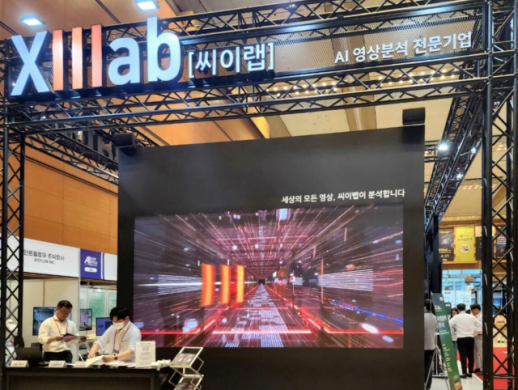 XIIlab rises after winning NVIDIA-backed AI vision challenge SEOUL, September 9 (AJP) - South Korean artificial intelligence startup XIIlab rose nearly 5 percent Wednesday after winning a computer vision competition that tested whether models trained on synthetic images could perform effectively in real-world conditions. Shares traded at 11,760 won ($8.46) as of 2:09 p.m. on the KOSDAQ, up 4.91 percent from the previous close of 11,210 won. The stock opened at 11,800 won and climbed as high as 12,690 won during the session before giving back part of its gains. “For physical AI to work in the real world, models trained in virtual environments need to perform reliably in real-world settings,” Chief Technology Officer Eugene Song said. “We will continue to advance technologies combining virtual and field data to support the real-world deployment of physical AI.” The advance came after the company said its team took first place in Track four of the 10th AI City Challenge, an international computer vision competition whose winners were announced at the 19th European Conference on Computer Vision (ECCV 2026) in Malmö, Sweden. The final results were confirmed after organizers completed code, eligibility and reproducibility reviews. The competition, organized by NVIDIA, focuses on technologies for intelligent transportation, smart cities and large-scale video analysis. A major theme is synthetic-to-real (Sim2Real) learning, which examines whether models trained on artificial data can retain their performance when applied in real world settings. For Track four, participants trained their models using more than 1.01 million synthetic images showing normal and abnormal human behavior. They were then evaluated using 1,978 text queries and a gallery of real images, with the task requiring models to find specific people based on descriptions of their appearance, actions and surroundings. XIIlab's team recorded a mean average precision score of 99.3020 percent, ranking first in the final results. The challenge is closely tied to physical AI, which enables machines such as robots, autonomous vehicles and industrial equipment to perceive and respond to their surroundings. Training such systems often relies on simulations and synthetic data before they are deployed in factories, logistics centers and other physical environments. XIIlab plans to apply the technology to its computer vision and digital twin businesses. The company aims to use digital replicas of physical spaces to generate training data, train AI models and test them before deploying them at actual sites. Founded in 2010, XIIlab develops AI software that analyzes video to identify people, objects and events. It also creates synthetic data for AI training and develops GPU-based software used in AI computing systems. The company listed on the KOSDAQ in February 2021. AJP Takeaways - South Korean artificial intelligence startup XIIlab rose 4.91 percent to 11,760 won ($8.46) on the KOSDAQ as of 2:09 p.m. on September 9, 2026, after winning a computer vision competition focused on synthetic-to-real AI performance. - XIIlab took first place in Track 4 of the 2026 AI City Challenge, with the final result announced at the 19th European Conference on Computer Vision (ECCV 2026) after organizers reviewed the team's code and eligibility. - In Track 4, participants trained models on more than 1.01 million synthetic images and tested them on real-world images, with XIIlab recording a mean average precision score of 99.3020 percent. 2026-09-09 15:49:11
 -
Korean Won Stabilizes at 1300, Impacting Automotive and Airline Stocks The won-dollar exchange rate has sharply fallen to the 1300 range, leading to mixed fortunes across different sectors. While airline stocks, which are heavily impacted by foreign currency payments for fuel and aircraft leasing, have continued to rise, automotive stocks, which rely heavily on exports, have seen their values cut in half over the past three months. The market anticipates that the strength of the won will persist, suggesting that the fortunes of these two sectors will remain divergent for the foreseeable future.As of September 9, Korean Air shares rose to 29,800 won, an 11% increase from the closing price of 26,850 won on August 10. Compared to the closing price of 23,550 won on March 31, when the exchange rate and oil prices surged due to the U.S.-Russia conflict, this marks a 27% increase over six months. Similarly, Asiana Airlines shares increased from 6,930 won to 8,000 won, a 15% rise during the same period.The airline industry is sensitive to exchange rates, as a significant portion of its key expenses, such as fuel and aircraft leasing, are paid in dollars. A sustained strong dollar can dampen travel demand, severely affecting core operations. With the normalization of previously soaring exchange rates, there is hope for recovery in the industry and a reduction in foreign currency debt. As of the end of the second quarter, Korean Air's foreign currency debt stood at $5.6 billion (7.5 trillion won). The company noted that for every 10 won decrease in the exchange rate, its book debt decreases by 56 billion won.In contrast, the automotive sector, a key export industry, has struggled for several months. Hyundai Motor's shares closed at 388,000 won, down 5% from 409,000 won a month ago. Although Hyundai saw a surge in global vehicle sales and a renewed focus on its future robotics business, which led to a record high of 787,000 won on June 2, the subsequent stabilization of the exchange rate, U.S. tariffs on automobiles, and production disruptions due to strikes have caused the stock price to plummet by over 50% in three months. Kia's shares also fell to 126,800 won, a 6% decrease from 135,200 won a month ago, and down 25% from the closing price of 169,200 won in May.Analysts predict that the decline in the exchange rate will visibly impact the export profitability of automotive companies starting in the third quarter. If the won continues to strengthen, the dollar revenue earned from exports will convert to a lower amount in won, negatively affecting performance. Yuanta Securities estimated that the increase in operating profit for Hyundai and Kia due to the exchange rate from the first quarter of 2023 to the second quarter would be approximately 3.7 trillion won and 4.3 trillion won, respectively. The Hyundai Motor Group has previously offset U.S. tariffs with favorable exchange rates, making the current downward trend in the exchange rate a burden on performance.Meanwhile, as of 3:30 PM on the same day, the exchange rate of the won against the dollar in the Seoul foreign exchange market was recorded at 1,336 won, down 4.90 won from the previous day. This represents a 12% decrease compared to the weekly closing price of 1,549.4 won at the end of June. The exchange rate started the year in the mid-1400 won range, peaked above 1,560 won in early June, marking the highest level since the financial crisis, but has shown a steady decline since July. Analysts suggest that the exchange rate may continue to trend downward into the low 1300 won range for the time being.* This article has been translated by AI. 2026-09-09 15:48:20
-
Mirae Asset Securities' Park Hee-chan: Time to Pause Aggressive Investments The stock market in September is showing mixed trends. The momentum that pushed indices toward 10,000 has long dissipated, with factors such as war, interest rates, and exchange rates contributing to increased volatility. In this chaotic environment, experts are offering various investment strategies.Park Hee-chan, head of the product support division at Mirae Asset Securities, provided a clear diagnosis: "Now is the time to pause aggressive investments." He noted that while the domestic stock market has risen rapidly, driven by artificial intelligence (AI) and semiconductors, high interest rates and corporate investment burdens are likely to sustain volatility for the foreseeable future.In a recent interview, Park, who has over 20 years of experience in macroeconomics and asset allocation at Mirae Asset Securities, emphasized the need for a balanced investment strategy. "Rather than focusing on specific themes, it is essential to invest in indices centered around the U.S. and appropriately divide investments between stocks and bonds," he said. He clarified, "This does not mean avoiding stocks altogether; within stocks, preference should be given to indices over individual themes, mixing various strategies to reduce volatility."Korean Stock Market's High Dependence on Semiconductors and AIPark highlighted the "high dependence on semiconductors" in the domestic stock market. He pointed out that while the U.S. S&P 500 and Nasdaq are also influenced by the performance of AI and semiconductors, their volatility is significantly lower compared to the Korean market. "The U.S. has a diverse industrial and corporate structure, whereas in Korea, large-cap semiconductor stocks like Samsung Electronics and SK Hynix have an overwhelmingly large impact on the index," he explained.He added, "Even if sectors like cosmetics or biotech show positive trends, they cannot offset the volatility of Samsung Electronics and SK Hynix. Ultimately, the movements of large-cap semiconductor stocks are crucial for the Korean stock market."Demand for AI is not expected to decline immediately, with memory demand likely to continue beyond 2027. However, Park emphasized that what determines stock prices is not just the absolute level of demand but the growth rate.Concerns surrounding the AI industry are also reflected in companies' funding methods. He noted that while big tech companies managed large-scale capital investments using their cash flows in 2023-2024, interest in funding has increased since the second half of last year, particularly following Oracle's example. "As big tech companies begin to raise funds for AI investments through bond issuance and borrowing, the market is starting to evaluate how quickly these investments can translate into profits," he explained.Park warned that by 2026, Google's free cash flow could turn negative, and by 2027, more companies may follow suit. In a high-interest environment with increasing borrowing, the profitability of AI investments will become critical. He anticipates that discussions about whether AI has peaked will intensify after next year.Sustainability of Earnings More Important Than ValuationPark believes that the current stock market valuation does not appear overly burdensome. Based on projected earnings for 2026-2027, the price-to-earnings ratio (PER) is not excessively high.The concern lies beyond that period. He stated, "While the current valuation looks fine, the market is curious whether earnings can remain at this level in 2028 and 2029." He cautioned that it is not enough to feel secure just because valuations are low in the presence of actual earnings. Ultimately, the sustainability of future profits must be assessed.His preference for U.S. stocks in asset allocation stems from this reasoning. It is not merely about return expectations but also about the higher level of 'trust' in the market. Park remarked, "There is a belief that even if something goes wrong in the U.S. market, it will eventually recover. Therefore, it is advisable to focus long-term asset allocation around the U.S."Foreign Investors Likely to Rebalance at KOSPI 7000-8000Regarding foreign investment, Park does not expect significant net buying in the short term. As the domestic stock market has risen rapidly, the proportion of Korean stocks in global portfolios has increased, leading foreign investors to sell for rebalancing.He noted, "Currently, at the KOSPI 6000-7000 level, foreign investors are in a balanced state, neither buying aggressively nor selling significantly. However, if the index rises to 7000-8000, the situation could change." He explained that as the proportion of Korean stocks increases again, foreign investors may sell to rebalance their portfolios.Park added, "Since the Korean stock market has already risen significantly, it will be difficult for foreign investors to increase their holdings unless other countries also rise, causing the relative weight of Korean stocks to decrease." This implies that for foreign investment flows to change direction, the global stock market must rise in tandem with the domestic market.High Interest Rates Favor Short-Term Bonds Over Long-TermInterest rates are also a crucial variable in future investment strategies. Park cited the expansion of fiscal deficits by developed countries and increased global investment as reasons for rising global interest rates.He explained that AI-related capital investments are absorbing global liquidity. When big tech and related companies issue bonds for AI investments, more funds become tied up in the market for extended periods, which can burden the bond market.Consequently, not all sectors benefit from rising interest rates. In a high-interest environment, growth stocks must also prove the profitability of large-scale investments. Park emphasized, "I do not foresee a major crisis like a financial meltdown occurring immediately, but now is not the time for aggressive investments."Among sectors, he expressed a relative preference for consumer goods, which have strong defensive characteristics. Companies that do not require explosive growth may be more stable in a high-interest and volatile environment. In bonds, he favored short-term bonds over long-term ones, as rising interest rates could increase price volatility for long-term bonds.ELS, Gold, and Brazilian Bonds as Diversification ToolsIn a volatile market, equity-linked securities (ELS) can also serve as an investment alternative. As volatility increases, the conditions for ELS, such as coupons, may improve. He noted, "Recently, some ELS linked to Samsung Electronics and SK Hynix have formed conditions with high coupons and significant levels of price decline tolerance." However, he cautioned that "ELS can also incur principal losses if the underlying asset prices fall significantly, so it is essential to examine the structure carefully, and the investment proportion should not be too large."Gold and Brazilian bonds were also suggested as alternatives. Park stated, "While the potential for U.S. interest rate hikes may pose a concern, global central banks, especially those in emerging markets, continue to reduce their dollar asset holdings and increase gold purchases." He mentioned that Brazilian bonds offer high interest rates of around 15% with no taxes, but they are also considered high-risk products.He advised, "A good strategy might be to maintain a 60-40 split between stocks and bonds or adjust to a 50-50 ratio depending on market conditions. In a volatile environment like this, it is necessary to adopt an approach that grows assets steadily, even if it means lowering expected returns." 2026-09-09 15:48:10
-
Aekyung Industry Sponsors Georg Baselitz Exhibition to Expand Cultural Engagement Beauty company Aekyung Industry is expanding its consumer engagement in the cultural and artistic fields by sponsoring an exhibition of contemporary art master Georg Baselitz.Aekyung Industry announced on September 9 that it will serve as the official sponsor of the Georg Baselitz exhibition at Sehwa Museum.This exhibition at Sehwa Museum is a retrospective showcasing approximately 60 years of work by Georg Baselitz, a leading figure in German Neo-Expressionism. It features 46 pieces, including early works from the 1960s and the 'Gold Painting' series, with many pieces being publicly displayed in South Korea for the first time. The exhibition will run until December 27.Aekyung Industry has set up brand booths in the lobby of Sehwa Museum, showcasing its makeup brands AGE20'S and LUNA. Visitors will have the opportunity to experience the products before and after viewing the exhibition.Through this sponsorship, Aekyung Industry aims to broaden its brand experience in the cultural and artistic sectors and enhance connections with international visitors.An Aekyung Industry representative stated, "Beauty is also a cultural experience that adds new inspiration to consumers' daily lives and emotions, which is why it intersects with art. We wanted visitors to experience Aekyung Industry's diverse beauty brands alongside world-class art pieces."Meanwhile, Aekyung Industry established a hair care division in April to target the hair loss and scalp care market. The company plans to strengthen its presence in overseas markets, including North America and Europe, while enhancing its competitiveness in the domestic market through product line expansion and the selection of new models. 2026-09-09 15:48:00