


Latest by
-
 Mirae Asset Securities' Park Hee-chan: Time to Pause Aggressive Investments The stock market in September is showing mixed trends. The momentum that pushed indices toward 10,000 has long dissipated, with factors such as war, interest rates, and exchange rates contributing to increased volatility. In this chaotic environment, experts are offering various investment strategies.Park Hee-chan, head of the product support division at Mirae Asset Securities, provided a clear diagnosis: "Now is the time to pause aggressive investments." He noted that while the domestic stock market has risen rapidly, driven by artificial intelligence (AI) and semiconductors, high interest rates and corporate investment burdens are likely to sustain volatility for the foreseeable future.In a recent interview, Park, who has over 20 years of experience in macroeconomics and asset allocation at Mirae Asset Securities, emphasized the need for a balanced investment strategy. "Rather than focusing on specific themes, it is essential to invest in indices centered around the U.S. and appropriately divide investments between stocks and bonds," he said. He clarified, "This does not mean avoiding stocks altogether; within stocks, preference should be given to indices over individual themes, mixing various strategies to reduce volatility."Korean Stock Market's High Dependence on Semiconductors and AIPark highlighted the "high dependence on semiconductors" in the domestic stock market. He pointed out that while the U.S. S&P 500 and Nasdaq are also influenced by the performance of AI and semiconductors, their volatility is significantly lower compared to the Korean market. "The U.S. has a diverse industrial and corporate structure, whereas in Korea, large-cap semiconductor stocks like Samsung Electronics and SK Hynix have an overwhelmingly large impact on the index," he explained.He added, "Even if sectors like cosmetics or biotech show positive trends, they cannot offset the volatility of Samsung Electronics and SK Hynix. Ultimately, the movements of large-cap semiconductor stocks are crucial for the Korean stock market."Demand for AI is not expected to decline immediately, with memory demand likely to continue beyond 2027. However, Park emphasized that what determines stock prices is not just the absolute level of demand but the growth rate.Concerns surrounding the AI industry are also reflected in companies' funding methods. He noted that while big tech companies managed large-scale capital investments using their cash flows in 2023-2024, interest in funding has increased since the second half of last year, particularly following Oracle's example. "As big tech companies begin to raise funds for AI investments through bond issuance and borrowing, the market is starting to evaluate how quickly these investments can translate into profits," he explained.Park warned that by 2026, Google's free cash flow could turn negative, and by 2027, more companies may follow suit. In a high-interest environment with increasing borrowing, the profitability of AI investments will become critical. He anticipates that discussions about whether AI has peaked will intensify after next year.Sustainability of Earnings More Important Than ValuationPark believes that the current stock market valuation does not appear overly burdensome. Based on projected earnings for 2026-2027, the price-to-earnings ratio (PER) is not excessively high.The concern lies beyond that period. He stated, "While the current valuation looks fine, the market is curious whether earnings can remain at this level in 2028 and 2029." He cautioned that it is not enough to feel secure just because valuations are low in the presence of actual earnings. Ultimately, the sustainability of future profits must be assessed.His preference for U.S. stocks in asset allocation stems from this reasoning. It is not merely about return expectations but also about the higher level of 'trust' in the market. Park remarked, "There is a belief that even if something goes wrong in the U.S. market, it will eventually recover. Therefore, it is advisable to focus long-term asset allocation around the U.S."Foreign Investors Likely to Rebalance at KOSPI 7000-8000Regarding foreign investment, Park does not expect significant net buying in the short term. As the domestic stock market has risen rapidly, the proportion of Korean stocks in global portfolios has increased, leading foreign investors to sell for rebalancing.He noted, "Currently, at the KOSPI 6000-7000 level, foreign investors are in a balanced state, neither buying aggressively nor selling significantly. However, if the index rises to 7000-8000, the situation could change." He explained that as the proportion of Korean stocks increases again, foreign investors may sell to rebalance their portfolios.Park added, "Since the Korean stock market has already risen significantly, it will be difficult for foreign investors to increase their holdings unless other countries also rise, causing the relative weight of Korean stocks to decrease." This implies that for foreign investment flows to change direction, the global stock market must rise in tandem with the domestic market.High Interest Rates Favor Short-Term Bonds Over Long-TermInterest rates are also a crucial variable in future investment strategies. Park cited the expansion of fiscal deficits by developed countries and increased global investment as reasons for rising global interest rates.He explained that AI-related capital investments are absorbing global liquidity. When big tech and related companies issue bonds for AI investments, more funds become tied up in the market for extended periods, which can burden the bond market.Consequently, not all sectors benefit from rising interest rates. In a high-interest environment, growth stocks must also prove the profitability of large-scale investments. Park emphasized, "I do not foresee a major crisis like a financial meltdown occurring immediately, but now is not the time for aggressive investments."Among sectors, he expressed a relative preference for consumer goods, which have strong defensive characteristics. Companies that do not require explosive growth may be more stable in a high-interest and volatile environment. In bonds, he favored short-term bonds over long-term ones, as rising interest rates could increase price volatility for long-term bonds.ELS, Gold, and Brazilian Bonds as Diversification ToolsIn a volatile market, equity-linked securities (ELS) can also serve as an investment alternative. As volatility increases, the conditions for ELS, such as coupons, may improve. He noted, "Recently, some ELS linked to Samsung Electronics and SK Hynix have formed conditions with high coupons and significant levels of price decline tolerance." However, he cautioned that "ELS can also incur principal losses if the underlying asset prices fall significantly, so it is essential to examine the structure carefully, and the investment proportion should not be too large."Gold and Brazilian bonds were also suggested as alternatives. Park stated, "While the potential for U.S. interest rate hikes may pose a concern, global central banks, especially those in emerging markets, continue to reduce their dollar asset holdings and increase gold purchases." He mentioned that Brazilian bonds offer high interest rates of around 15% with no taxes, but they are also considered high-risk products.He advised, "A good strategy might be to maintain a 60-40 split between stocks and bonds or adjust to a 50-50 ratio depending on market conditions. In a volatile environment like this, it is necessary to adopt an approach that grows assets steadily, even if it means lowering expected returns." 2026-09-09 15:48:10
 -
Aekyung Industry Sponsors Georg Baselitz Exhibition to Expand Cultural Engagement Beauty company Aekyung Industry is expanding its consumer engagement in the cultural and artistic fields by sponsoring an exhibition of contemporary art master Georg Baselitz.Aekyung Industry announced on September 9 that it will serve as the official sponsor of the Georg Baselitz exhibition at Sehwa Museum.This exhibition at Sehwa Museum is a retrospective showcasing approximately 60 years of work by Georg Baselitz, a leading figure in German Neo-Expressionism. It features 46 pieces, including early works from the 1960s and the 'Gold Painting' series, with many pieces being publicly displayed in South Korea for the first time. The exhibition will run until December 27.Aekyung Industry has set up brand booths in the lobby of Sehwa Museum, showcasing its makeup brands AGE20'S and LUNA. Visitors will have the opportunity to experience the products before and after viewing the exhibition.Through this sponsorship, Aekyung Industry aims to broaden its brand experience in the cultural and artistic sectors and enhance connections with international visitors.An Aekyung Industry representative stated, "Beauty is also a cultural experience that adds new inspiration to consumers' daily lives and emotions, which is why it intersects with art. We wanted visitors to experience Aekyung Industry's diverse beauty brands alongside world-class art pieces."Meanwhile, Aekyung Industry established a hair care division in April to target the hair loss and scalp care market. The company plans to strengthen its presence in overseas markets, including North America and Europe, while enhancing its competitiveness in the domestic market through product line expansion and the selection of new models. 2026-09-09 15:48:00
-
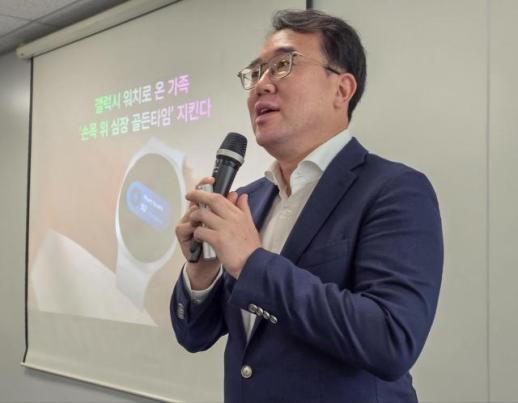 Samsung deepens Galaxy Watch heart-health push SEOUL, September 09 (AJP) - The smartwatch is no longer merely a supplement to a smartphone. Samsung Electronics is pushing its latest Galaxy Watch deeper into preventive health care, seeking to turn a device once used mainly for checking messages and counting steps into an always-on health monitor capable of spotting changes before users themselves notice them. The effort also puts Samsung in a more direct contest with Apple, which has steadily transformed the Apple Watch into a health platform with electrocardiograms, irregular heart rhythm alerts, sleep apnea detection and, more recently, notifications for signs of chronic hypertension. Samsung on Wednesday held a press briefing in Seoul to highlight a suite of heart and health-monitoring functions built around its Galaxy Watch9 and Galaxy Watch Ultra2, unveiled in July. At the center of the latest upgrade is Heart Health Score, a Samsung Health feature that combines sleep, physical activity, body composition and vascular stress trends into a single assessment of factors affecting cardiovascular health. Rather than simply displaying individual measurements, the feature is designed to tell users how their everyday habits may be influencing their long-term heart health and provide personalized guidance on what they could change. Another new feature, Vitals, continuously looks for deviations from an individual's normal physiological patterns. After a user wears the Galaxy Watch during sleep for at least seven nights, it establishes a personal baseline using five biometric signals — heart rate, heart rate variability, respiratory rate, skin temperature and blood oxygen saturation. The watch can then flag measurements that move outside the user's normal range. The concept illustrates the direction in which the wearable industry is moving. The competition is increasingly less about how many physiological measurements a watch can collect and more about whether software can convert those measurements into information that a user can understand and act upon. Apple has been pursuing much the same approach. Its Vitals app, introduced with watchOS 11 in 2024, also establishes a user's typical overnight ranges and can issue a notification when multiple metrics fall outside them. Apple monitors heart rate, respiratory rate, wrist temperature, blood oxygen where available and sleep duration. Samsung's Vitals therefore represents less an entirely new category than an attempt to build a more comprehensive Samsung Health alternative around the same emerging idea of personalized baseline monitoring. Where Samsung is trying to put more distance between itself and Apple is in what it can measure — and how those measurements are combined. Galaxy Watch9's Heart Health Score incorporates factors including body composition, an area where Samsung has had a hardware advantage for several generations. Galaxy Watches equipped with bioelectrical impedance analysis, or BIA, can estimate body fat, skeletal muscle, body water, body mass index and other body-composition indicators directly from the wrist. The measurements are intended for general wellness rather than medical diagnosis. The information also feeds into Samsung's Fitness Index, which combines body composition, exercise records and other indicators to assess a user's fitness level and recommend goals. Blood pressure provides an even clearer point of distinction. Samsung's Galaxy Watch can estimate blood pressure after being calibrated against a conventional upper-arm cuff, with recalibration required every 28 days. The capability, previously limited by regulatory approval in some markets, became available to eligible U.S. Galaxy users in March this year. The Galaxy Watch9 goes a step further with a blood-pressure trend feature that can provide an estimate of morning blood pressure after users wear the calibrated watch overnight. Apple has taken a different route. Apple Watch Series 9 and later models and Apple Watch Ultra 2 and later can analyze cardiovascular patterns over a 30-day period and warn users when the data suggest possible chronic hypertension. The Apple feature does not provide a conventional systolic-and-diastolic blood-pressure reading. Users who receive a hypertension notification are instead advised to measure their blood pressure with a separate cuff for seven days and take the results to a medical professional. Apple introduced the hypertension notification feature in South Korea in January this year. The difference highlights two competing approaches to turning consumer electronics into health devices. Samsung is placing more measurement tools directly on the wrist, while Apple has often focused on detecting longer-term patterns that may warrant further medical examination. Neither approach turns a smartwatch into a doctor. Samsung and Apple repeatedly caution that their watches are not substitutes for professional diagnosis or treatment, an increasingly important distinction as consumer devices move closer to areas traditionally occupied by medical equipment. Choi Jong-min, vice president of Samsung Electronics' Digital Health Team, said continuous monitoring is one of the biggest advantages wearable devices can bring to preventive health care. Samsung has been developing heart-monitoring technology for its wearable devices for more than a decade. Its Gear 2 and Gear Fit, released in 2014, included optical photoplethysmography, or PPG, sensors for measuring heart rates. The company later added electrocardiogram measurement, blood-pressure monitoring and irregular heart rhythm notifications. Its irregular heart rhythm notification, designed to identify rhythms suggestive of atrial fibrillation, has received clearance from both South Korea's Ministry of Food and Drug Safety and the U.S. Food and Drug Administration. Sleep has become another area where the two companies have steadily converged. Samsung received the first FDA De Novo authorization for a smartwatch sleep apnea feature in 2024 and has upgraded the latest version to analyze breathing disruptions during sleep using artificial intelligence. Apple introduced its own sleep apnea notifications later in 2024. Its system uses the accelerometer to detect small wrist movements associated with breathing disturbances and evaluates the pattern over 30 days before alerting users to possible moderate-to-severe sleep apnea. Apple's sleep apnea notification became available in South Korea in September 2025, meaning both companies now compete over many of the same medically sensitive functions in Samsung's home market. For Samsung, however, the objective is increasingly to connect those individual functions into something closer to an early-warning system. The company cited cases in which alerts from Galaxy Watches prompted users to seek medical help. One user in Jordan received repeated irregular heart rhythm notifications and later sought medical attention, leading to the discovery of atrial fibrillation, according to Choi. Another user in Brazil recorded an electrocardiogram after noticing an abnormal heartbeat and shared the result with a doctor before receiving treatment. "The most important thing is that these people were able to detect the signs before reaching a critical moment and receive treatment in time," Choi said. Samsung is also trying to extend that monitoring beyond the person wearing the device. Samsung Health allows users to share information such as heart rate, stress, blood oxygen, sleep and body composition with family members, allowing relatives to follow changes remotely. Samsung said the capability could be particularly useful for families monitoring elderly parents who live alone or apart. Samsung views the Galaxy Ring and Galaxy Watch as complementary rather than competing form factors, with the lighter ring suited to continuous and overnight monitoring and the watch offering a display, exercise functions and broader interaction. When both are used, health information is brought together through Samsung Health. Users can also alternate between the devices while charging them, reducing gaps in monitoring, while Samsung says wearing both can extend the Ring's battery life by up to 30 percent by allowing the Watch to take over some overlapping measurements. When asked how Galaxy Watch differentiates itself from smart rings such as Oura Ring in markets including the United States, Choi said the two form factors serve somewhat different purposes. He characterized rings as more lifestyle-oriented devices, while watches offer broader functionality, particularly for sports and exercise, on top of health monitoring. The strategy gives Samsung something Apple does not yet have — a first-party ring feeding data into the same health ecosystem as its smartphone and watch. But Samsung still has considerable ground to defend in the smartwatch market. Apple, despite slipping behind Huawei globally in the second quarter, still accounted for 20 percent of worldwide smartwatch shipments and recorded the fastest year-on-year growth among the five largest brands, according to Counterpoint Research. The pressure is particularly visible in North America, an important premium market. Apple smartwatch shipments there rose 13 percent from a year earlier in the second quarter, while Samsung's fell 13 percent. AJP Takeaways - Samsung is expanding Galaxy Watch beyond fitness tracking with Heart Health Score and continuous monitoring features aimed at preventive health management. - The company's wearable health push builds on more than a decade of heart-monitoring technology, ranging from PPG sensors to ECG and irregular heart rhythm notifications. - Samsung sees Galaxy Watch and Galaxy Ring as complementary devices as it seeks to strengthen its health ecosystem and compete across different wearable form factors overseas. 2026-09-09 15:47:59
 -
Kioxia Dismisses Semiconductor Production Partnership with SK Hynix Kioxia, a Japanese NAND flash manufacturer, has dismissed rumors of a semiconductor production partnership with SK Hynix, as mentioned by SK Hynix Chairman Choi Tae-won.In an interview with Bloomberg News on September 9, Kioxia CEO Hiroo Ota stated that joint production with SK Hynix could violate antitrust laws and would be difficult to reconcile with Kioxia's current collaboration with SanDisk.This response follows Choi's comments in an Asahi Shimbun interview on September 2, where he described joint production with Kioxia as "one option" and praised Kioxia as a company with many strengths. He also indicated that various forms of collaboration, including R&D and supply chain sharing, could be possible.While Kioxia is currently producing key products in partnership with SanDisk, Choi's remarks opened the door to potential new collaborations with SK Hynix. He noted, "If SK Hynix is part of Kioxia's future strategy, I am open to being a partner at any time."Ota also commented on the possibility of a tripartite collaboration among Kioxia, SK Hynix, and SanDisk, stating, "It is not as simple as saying, 'Let’s produce together.' I cannot speculate on why he made those comments."SK Hynix became Kioxia's largest shareholder last month, leading to ongoing discussions about potential collaboration. Choi, who has advocated for economic cooperation between South Korea and Japan, has raised interest in the feasibility of joint production with Kioxia. Kioxia sources some of the DRAM used in its solid-state drives (SSDs) from SK Hynix.However, Bloomberg reported that an SK Hynix executive indicated that Choi's comments about joint production were made in a general context.The discussion of joint production arises amid a global shortage of memory supplies driven by the surge in artificial intelligence (AI) demand. Kioxia, the world's third-largest NAND flash manufacturer, saw its average NAND sales price rise by 70% in the second quarter compared to the previous quarter, and its stock price has surged 18-fold over the past year, making it the top company by market capitalization on the Japanese stock market in June.In response to concerns that rising prices could dampen investment enthusiasm in the AI sector, Ota instructed his sales team not to significantly increase prices. He emphasized the need for alternative solutions to address the soaring prices of memory semiconductors, stating, "(NAND) prices have already risen sufficiently. If we excessively raise prices, we will ultimately harm our own market."Additionally, Ota expressed his commitment to focusing on developing technological capabilities that companies seek, rather than merely pursuing market share, in anticipation of competition from China's largest memory semiconductor company, YMTC (Yangtze Memory Technologies Co.). 2026-09-09 15:44:20
-
Younger Consumers Shift to Premium Single Malt Whisky The frequency of drinking has decreased, but more consumers in their 20s and 30s are opting for higher-quality alcohol. Instead of drinking more often, this demographic is embracing a trend of 'selective drinking,' prioritizing taste, quality, and rarity in premium beverages. This shift is reflected in the growth of single malt whisky in the market. According to data from the Korea Customs Service on September 9, whisky imports in South Korea from January to July this year totaled 10,658 tons, a 24.0% decrease from 14,026 tons during the same period last year. The total annual import volume also fell by 17.7% compared to the previous year. However, the quality of consumption has changed. In the first half of this year, single malt whisky became the top-selling category on GS25's alcohol smart order platform, Wine25Plus, surpassing all other types, including wine and blended whisky. Single malt whisky now accounts for 61% of whisky sales, up 15 percentage points from the previous year. Notably, sales of premium single malts priced over 100,000 won increased by 126%. Conversely, the sales share of blended whisky, commonly used in highballs, has decreased by about 30%. Products meant to be enjoyed neat, such as Balvenie 12 and 14 years, Glenfiddich 15 years, and Kavalan Solist, have risen to the top of sales rankings. GS25's analysis indicates that while highballs once served as an introduction to whisky, more consumers are now enjoying the flavors and aromas of the spirit directly. The most significant increase in single malt sales at GS25 over the past two years has been among men in their 20s, with a growth rate of 75%. This group accounted for 56% of the total alcohol spending on Wine25Plus, the highest among all age groups. While middle-aged consumers still represent a larger absolute purchasing amount, the trend of expanding whisky consumption to younger demographics is evident. Changing drinking habits among the 2030 generation support this trend. A survey conducted by Open Survey last month among 2,000 men and women aged 20 to 39 found that the percentage of those who drank alcohol in the past month was 67.2%, down 4.9 percentage points from 2024. The average monthly drinking frequency also decreased by 0.64 to 6.4 times. The primary reasons for reducing alcohol consumption were health concerns (28.6%), economic burden (27.9%), and increased alternative leisure activities (18.8%). Despite drinking less, interest in high-quality beverages remains strong. Among recent drinkers, 62.6% preferred to drink good alcohol occasionally rather than frequently. Additionally, 53.9% expressed a willingness to pay more for better taste and quality. A significant 67.9% reported that they prefer to drink at their own pace rather than matching others, and 66.9% stated they try to stick to a set drinking limit. New products tried among imported beverages have focused on premium whisky, sake, and imported beer. Whisky's presence is also growing in large supermarket alcohol sections. Lotte Mart reported a 2.3% increase in liquor sales in the first half of this year compared to the same period last year. Spirits have now surpassed wine to become the second-largest category in alcohol sales, following domestic beer. This marks a shift in the ranking that had remained unchanged for three years. While the mid-range price segment is shrinking, the share of high-end products is increasing. Sales of whiskies priced between 30,000 and 100,000 won at E-Mart fell by 19% compared to the previous year, while sales of whiskies priced between 100,000 and 200,000 won rose by 34%, and those over 200,000 won increased by 28%. At Lotte Mart, the share of premium whiskies priced over 100,000 won rose from 42.9% in 2024 to 49.0% last year. This trend makes it difficult to view the overall decline in whisky import volumes as a sign of market stagnation. As whisky consumption becomes more segmented, global companies are emphasizing rarity and experience in the South Korean market. Balvenie recently unveiled its '1931 Collection,' distilled in 1931 and aged for 88 years, in Seoul's Seongsu-dong, marking its global debut. Only 17 bottles of this product were produced. Jim No, the representative of William Grant & Sons Korea, described South Korea as “one of the most important markets for Balvenie.” Single malt brand Bunnahabhain also launched its limited edition '21-Year Cask Strength' in South Korea this year, selling out its initial stock within an hour. Bunnahabhain Master Blender Julieann Fernandez, who visited South Korea on September 7, noted, “As whisky culture matures in Korea, consumers have become very discerning and are seeking high-quality products.” A new limited edition product is expected to be introduced next month. Meanwhile, the trend of seeking non-alcoholic products is also gaining momentum. Open Survey found that the experience rate of non-alcoholic beverages among the 2030 generation rose from 64.2% in 2024 to 77.4% this year. The percentage of those who consumed non-alcoholic products in the past month doubled from 16.6% to 33.3%. An industry insider stated, “The recent whisky market is characterized by a trend toward premiumization and segmentation rather than an overall increase in sales volume. The 2030 generation is reducing their drinking frequency but is increasingly discerning about brands, aging methods, and rarity when they do choose to drink, indicating that demand for single malts and premium products will continue for the foreseeable future.”* This article has been translated by AI. 2026-09-09 15:44:10
-
Samsung Securities Receives Approval for Issuing Commercial Paper, Intensifying Competition Among Brokerages Samsung Securities has finally received approval to issue commercial paper. This marks the first time since being designated as a comprehensive financial investment business operator with over 4 trillion won in capital in 2017. With Samsung Securities joining the market, the competition in the commercial paper sector has expanded to eight firms, following Kiwoom Securities, Hana Securities, and Shinhan Investment Corp. last year. The commercial paper market has grown significantly, nearing 56 trillion won in the first half of this year, leading to intensified competition among brokerages for funding.On September 9, the Financial Services Commission held its 15th regular meeting and approved Samsung Securities' application for short-term financial business (commercial paper) under Article 360 of the Capital Markets Act. As a result, Samsung Securities can now utilize funds raised through commercial paper for corporate finance and venture capital investments.Commercial paper is a short-term financial product that can be issued by large investment banks (IBs) with over 4 trillion won in capital, subject to approval from financial authorities. For brokerages, it serves as a key funding tool to raise capital from clients for corporate finance and venture capital investments.According to the financial investment industry, the outstanding balance of commercial paper issued by domestic brokerages was recorded at 55.9291 trillion won as of the end of the second quarter of this year. This represents an increase of 11.538 trillion won, or 26.0%, compared to 44.3912 trillion won at the end of the second quarter last year. Korea Investment & Securities had the largest outstanding balance at 22.468 trillion won, followed by KB Securities at 11.031 trillion won, Mirae Asset Securities at 10.5776 trillion won, and NH Investment & Securities at 8.7752 trillion won. These four firms accounted for nearly 52 trillion won of the total market.Kiwoom Securities, which received approval for commercial paper issuance last year as the fifth firm in the industry, expanded its outstanding balance to 1.816 trillion won by the end of the second quarter this year. Hana Securities reported an outstanding balance of 999.3 billion won, while Shinhan Investment Corp. recorded 289.9 billion won. Both Hana Securities and Shinhan Investment Corp. received approval for commercial paper issuance from the Financial Services Commission at the end of last year.As more brokerages, including Meritz Securities, seek to enter the commercial paper market, competition is expected to intensify further. Analysts suggest that the entry of new players could lead to increased competition in interest rates and products among brokerages. Although Daishin Securities has not disclosed its plans to enter the commercial paper market, it also has over 4 trillion won in capital.However, there are concerns that the expansion of the market may increase the burden of fund management for brokerages. Since funds raised through commercial paper must achieve a certain level of profitability, managing the balance between funding rates and investment returns will become increasingly important as competition intensifies. Additionally, there may be growing pressure to continuously secure appropriate investment opportunities, such as venture capital.A financial investment industry official stated, “The profitability of commercial paper can vary significantly with changes in market interest rates and funding rates, so simply increasing the scale of funding will not guarantee stable profits. Ultimately, the key will be how efficiently funds are raised at lower costs and how effectively they are managed.” 2026-09-09 15:44:00
-
 KRX to halt overnight derivatives trading over Chuseok SEOUL, September 9 (AJP) - Overnight trading for derivatives will be suspended during Chuseok or Korean thanksgiving, the Korea Exchange (KRX) said on Wednesday. The suspension, which comes to reduce risks for investors, will be effective from 6 p.m. on Sept. 23 to 6 a.m. the following day. Overnight transactions are normally settled together with the ones from the following day's regular session. However, because the market will be closed for one of the country's biggest holidays, trades made on the night of Sept. 23 will not be settled until regular trading resumes on Sept. 28. KRX said the long holiday closure could leave investors exposed to sharp price swings, increasing the risk of margin calls, forced position closures and liquidity shortages. It could also make it harder for investors and brokerages to manage any risks until trading resumes. The suspension will cover all products available for overnight trading on the KRX including KOSPI 200 and Mini KOSPI 200 futures and options tied to the country's benchmark large-cap index, as well as KOSDAQ 150 futures and options linked to major growth stocks. They also includes weekly options on the KOSPI 200 and KOSDAQ 150, U.S. dollar futures and three-year and 10-year government bond futures. KRX said the measure is in line with practices at other major Asian exchanges including those in Hong Kong and Taiwan, which also suspend such trading ahead of extended holidays. AJP Takeaways - The Korea Exchange will suspend all overnight derivatives trading from 6 p.m. on Sept. 23, 2026, to 6 a.m. on Sept. 24, 2026, ahead of South Korea's Chuseok holiday. - Trades that would normally be settled with the following regular session will not be processed until Sept. 28, 2026, when daytime trading resumes after the holiday break. - The Korea Exchange said the suspension is intended to reduce exposure to sharp price swings, margin calls, forced position closures and liquidity shortages during the extended market closure. 2026-09-09 15:43:55
 -
Mokpo University President and Students Call for Reassessment of Jeonnam National Medical School Selection National Mokpo University has raised concerns about the fairness and expertise of the selection process for the new Jeonnam National Medical School, calling for a government-level reassessment.On September 9, President Song Ha-cheol of Mokpo University and Student Council President Kwon Beom-seok held a press conference at the National Assembly with lawmakers Kim Won-i and Seo Mi-hwa, arguing that the government should review the selection process and evaluation results for the new medical school.According to Mokpo University, the Jeonnam-Gwangju Integrated Special City designated the Jeonnam Research Institute as the evaluation agency on August 26. Mokpo University and Suncheon University submitted their medical school establishment plans on August 28. Following evaluations on August 29, results were announced on August 30, showing Suncheon University with 89.15 points and Mokpo University with 87.85 points, a difference of 1.30 points.During the press conference, President Song highlighted key issues in the evaluation, including the securing of the medical school site, plans for the construction of a teaching hospital, and the expertise of the evaluation committee.President Song specifically questioned the allocation of 5 points for 'certainty of site acquisition.' Mokpo University proposed a plan for securing state-owned land, while Suncheon University suggested a plan for free leasing of land owned by local governments. Despite these differences, both universities received the same score of 4.83 points in this category, according to Mokpo University.“A fair evaluation should be based on the plans submitted at the time of evaluation,” President Song stated, arguing that any potential improvements raised after the evaluation should not serve as justification for the initial results.He also criticized the evaluation of the teaching hospital construction plans. Mokpo University presented a phased construction plan for a 500-bed teaching hospital over 84 months, including a plan for a temporary teaching hospital to provide clinical education before the new hospital's completion. In contrast, Suncheon University estimated a construction period of about 60 months but did not provide a detailed timeline, according to President Song.Despite this, Mokpo University received a score of 17.63 points for the teaching hospital, while Suncheon University received 17.80 points.Concerns were also raised about the expertise of the evaluation committee. According to documents released by Mokpo University, of the eight committee members, seven were from the medical field, and one was a financial expert, with no facility or construction experts included. Mokpo University argued that the timely establishment of the medical school and university hospital directly impacts medical education and accreditation, necessitating verification of the appropriateness of the committee's composition.“The final results for the entire proposal were only 1.30 points apart,” President Song said. “If a qualified evaluation committee had assessed the proposals accurately, the scores could have led to a different selection of candidate universities.” He urged the government to verify the issues in the evaluation process and the appropriateness of the implementation plans and take reasonable actions.President Song, who expressed his intention to resign from his position, shared his feelings alongside students at the press conference. “I plan to stand with the school community and local residents until this unfairness and its consequences are rectified,” he said, adding, “I will do my best to ensure I am not ashamed in front of the students.”Kwon Beom-seok, the Student Council President, also appealed for thorough verification by the government.Kwon emphasized, “The establishment of the medical school is not just a matter for one university; it is a significant issue concerning the health rights of residents in the southwestern region and the future and educational opportunities for local youth. What we want is not preferential treatment for Mokpo University, but a fair evaluation based on proper review.”He further urged the government to ensure that those who adhere to principles and prepare thoroughly do not suffer setbacks.Through this press conference, Mokpo University demanded that the government temporarily halt the final confirmation process for the new medical school and reassess the selection process and results. They also called for a public re-evaluation involving experts from various fields related to the establishment of the medical school and hospital.It remains to be seen whether the controversies surrounding the site acquisition methods, hospital construction timelines, and the expertise of the evaluation committee will lead to further scrutiny at the National Assembly and government levels.* This article has been translated by AI. 2026-09-09 15:40:00
-
Republican Party Holds First-Ever Midterm Convention Amid Trump Dilemma The first-ever midterm convention of the Republican Party is taking place on September 9-10 in Dallas, Texas. Ahead of the November 3 midterm elections, the party is expected to focus on delivering messages to rally support in key battleground areas.This convention, planned by President Donald Trump, is being held at the American Airlines Center in downtown Dallas. Trump will serve as a key speaker, delivering the keynote address on the first day and closing remarks on the second day.Within the Republican Party, there are calls to highlight the party's achievements in governance while avoiding turning the convention into a personal political event for Trump. Politico reported on September 8 that there are concerns the event could devolve into a 'Trumpapalooza.'The Republican Party aims to emphasize the Democrats' recent victories by progressive and socialist candidates in their primaries, portraying the party as 'radical.' They plan to contrast this with their own policies on border control and tax cuts, which they present as 'common-sense and practical solutions.'Riley Moore, a Republican congressman from West Virginia, described the convention as a platform to present a 'battle between communism and common sense,' stressing the need to clearly show voters what is at stake in the upcoming midterm elections.This comes amid a challenging political environment for Trump and the Republican Party, with the president's approval ratings struggling and the political landscape in key battlegrounds shifting. Voters are expressing dissatisfaction not only with issues like war with Iran and immigration policy but also with rising costs of living, including tariffs, gas prices, and housing expenses.On the other hand, Democrats are leveraging anti-Trump sentiment to regain support, aiming to attract independent voters dissatisfied with the Trump administration's policies in hopes of reclaiming control of Congress.Currently, the Republican Party holds a slim majority in both the House and Senate. However, recent polls suggest that the Democrats have a strong chance of regaining the House, and the Senate is also shaping up to be a competitive battleground for Republicans.Democrats are expanding their campaign efforts into traditionally competitive states like Georgia and Republican strongholds such as North Carolina, Iowa, Texas, Ohio, and Alaska.NPR has reported that Democratic candidates are raising more campaign funds than their Republican counterparts in key battlegrounds, indicating that the outcome of the midterm elections will ultimately hinge on 'messaging and money.'The Republican Party is also expected to mobilize significant campaign funds. NPR noted that the Republican National Committee and Trump's supporting super PAC, MAGA, have secured hundreds of millions of dollars for a large-scale advertising campaign. MAGA recently committed $10 million to support Texas Republican Senate candidate Ken Paxton.Additionally, the convention plans to raise more campaign funds to widen the gap with Democrats. According to Fox News, the event includes opportunities for donors to take photos with President Trump at a private roundtable in exchange for contributions exceeding $88,000.Meanwhile, key officials from the Trump administration are set to attend the convention, including Attorney General Todd Blanchard, Health and Human Services Secretary Robert F. Kennedy Jr., Medicare and Medicaid Services Administrator Dr. Mehmet Oz, Housing and Urban Development Secretary Scott Turner, former White House Press Secretary Caroline Levitt, and Donald Trump Jr., who is popular among MAGA supporters. 2026-09-09 15:40:00
-
Hospital Non-Covered Medical Expenses Approach 750 Billion Won in Second Half of Year In September of last year, non-covered medical expenses at hospital-level medical institutions approached 750 billion won. In the medical field, expenses for single rooms and physical therapy, along with dental implants, dominated the non-covered medical expenses. The government plans to significantly strengthen management of non-covered items suspected of excessive treatment.The Ministry of Health and Welfare and the National Health Insurance Service (NHIS) released the results of their analysis on the '2025 Non-Covered Reporting System' on September 9. According to the analysis, the total medical expenses for 1,251 non-covered items in September 2025 amounted to 749.9 billion won, an increase of 63.5 billion won compared to the first half of the year (March), which recorded 686.4 billion won. This increase is attributed to the addition of 98 more medical institutions participating in the report and an average increase of 11.38 million won in non-covered medical expenses per institution.87.7% of Total Non-Covered Expenses Concentrated in Medical SectorWhen examining the non-covered medical expenses by type of medical institution, hospitals accounted for the largest share at 3.122 trillion won (41.6%), followed by general hospitals at 1.587 trillion won (21.2%) and advanced general hospitals at 1.084 trillion won (14.5%).By medical field, the medical sector dominated with 6.577 trillion won (87.7%), followed by dentistry at 728 billion won (9.7%) and traditional medicine at 194 billion won (2.6%).Analyzing the expenses by item, the largest expense in the medical field was for 'single room charges' at 561 billion won (8.5%). Physical therapy also accounted for 552 billion won (8.4%), while 'soft tissue reconstruction materials' used in spinal and joint surgeries ranked third at 281 billion won (4.3%).In the dental field, 'dental implants (per tooth)' accounted for 352 billion won (48.4%), nearly half of the total dental non-covered medical expenses. This was followed by 'crowns' at 194 billion won (26.6%) and 'orthodontics' at 73 billion won (10.0%). In traditional medicine, 'herbal medicine and herbal preparations' accounted for 144 billion won (73.9%), the largest share.Surge in Spinal and Joint Treatment MaterialsThe analysis also observed a significant increase in expenses for specific treatment materials. Among the top items, expenses for soft tissue reconstruction materials and epidural adhesion prevention agents saw substantial growth. Additionally, expenses related to non-covered items for cancer patients, such as 'Thymosin Alpha 1,' used in immune injections, also increased significantly, particularly in convalescent and traditional medicine hospitals.The government plans to tighten management of non-covered items that increase the financial burden on citizens. Earlier, the Ministry of Health and Welfare transitioned physical therapy, the second-largest non-covered medical expense in the medical field, to 'managed benefits' starting July 1 of this year through the establishment of pricing and treatment standards. Furthermore, for extracorporeal shock wave therapy, a framework for managing treatment frequency, intervals, and indications was established through voluntary corrections by the medical community.Yoo Joo-hun, Director of the Health Insurance Policy Bureau, stated, "We will strengthen management through continuous monitoring of excessive non-covered items that impose a burden on citizens' medical expenses beyond medical necessity. We will also work to expand the provision of non-covered information using reporting data to ensure the public's right to know."Meanwhile, detailed information on item prices and treatment costs, including the results of this non-covered reporting analysis, can be found on the NHIS website's 'Non-Covered Information Portal.'* This article has been translated by AI. 2026-09-09 15:36:00