


Latest by
-
 Samsung SDS Expands Robot Transformation Business, Validating Over 1,000 Production Lines Samsung SDS is intensifying its robot transformation (RX) business by expanding the realm of artificial intelligence transformation (AX) into physical AI-based manufacturing environments. The company plans to validate the performance and quality of general-purpose robots across more than 1,000 production lines established within Samsung affiliates before applying these solutions to over 430 external manufacturing clients. It also aims to penetrate global markets, including the United States.During the 'Real Summit 2026' held at COEX in Seoul on September 8, Samsung SDS CEO Lee Jun-hee stated, "Samsung SDS aims to extend the stage of AX into both digital and physical realms. To implement RX, it is essential to continuously enhance the tasks performed by robots on-site and elevate their quality to human levels."Samsung SDS is expanding its AX business by leveraging a 'multidimensional AI full stack' that combines AI infrastructure, platforms, and solutions. In the workplace, it is broadening its application areas by integrating AI agents and front-deployment engineers (FDE), as well as combining AI with robots in manufacturing settings.In RX, the focus is on applying robots to actual production lines rather than manufacturing them in-house. Samsung SDS is currently implementing RX across over 1,000 production lines within Samsung affiliates. After validating the technology in various manufacturing environments, the company plans to expand its business to external clients.Samsung SDS Vice President Ahn Dae-jung noted, "The primary market we are focusing on is Samsung's manufacturing affiliates. While some have high levels of automation, many still rely heavily on manual labor." He explained that the company is examining how general-purpose robots can replace tasks previously performed by existing workers on production lines. Adjustments to the robots' movements and work methods are also underway to align with specific process conditions.Externally, the company will initially target the 430 manufacturing clients where its subsidiary Miracom I&C has established manufacturing execution systems (MES). The goal is to replace dangerous or repetitive tasks currently performed by humans with robots.Ahn added, "We have 430 manufacturing clients where Miracom I&C has implemented MES. We will focus on clients looking to replace hazardous or manual tasks with automation."Internationally, the U.S. market is the primary target. With the trend of reshoring manufacturing facilities back to the U.S., there is expected to be an increased demand for automation. The plan is to combine existing MES operations with robots to secure local manufacturing clients.Samsung SDS is also collaborating with robotics and physical AI companies in South Korea, China, and the U.S. The approach involves integrating the robot hardware, learning data, models, and simulation technologies from external companies with Samsung SDS's manufacturing experience for application in actual production lines.Ahn emphasized, "Korea has strengths in integrating robots into production lines to validate performance and tune them to achieve human-level quality. Samsung SDS is focusing on this aspect while pursuing partnerships in Korea, China, and the U.S."The role of coordinating multiple robots and production equipment in actual processes will be handled by a robot orchestration platform. Samsung SDS plans to launch a platform in 2027 that will coordinate the tasks and collaboration of different robots within a single system to facilitate autonomous manufacturing.Lee stated, "While the robots themselves are important, it is crucial for companies and factories to ensure that multiple robots can operate together through cooperation and coordination. Samsung SDS's robot orchestration platform will fulfill this role." 2026-09-08 14:56:00
 -
Germany's Far-Right AfD Party Achieves Historic Victory in Saxony-Anhalt The far-right Alternative for Germany (AfD) party secured 43.8% of the vote in Saxony-Anhalt, marking a significant victory. This raises the possibility of a far-right party governing in Germany for the first time since the Nazi era.Italy's Brothers of Italy party continues to hold power, setting a post-war record for longevity. Additionally, the National Rally in France has seen a surge in seats, the Freedom Party in Austria has become the leading party, and the Reform Party in the UK is gaining momentum, indicating a widespread rise of far-right sentiment across Europe.While anti-immigrant sentiment has intensified, it is not the sole factor. This trend appears to be a global phenomenon coinciding with the decline of the free trade era. A sentiment of prioritizing national interests through tariffs and border controls is spreading across the continent. Before questioning 'why the far-right?', it is essential to accept that this is becoming the new normal.David Autor, an economist at MIT, argues that the 'China Shock' has had detrimental effects at the national level. Regions heavily exposed to competition from Chinese imports have higher unemployment rates and lower wage growth. In the UK, there was overwhelming support for Brexit, while in the U.S., fervent Trump supporters are concentrated in similar areas. In Italy, support for far-right parties has surged in regions affected by the textile industry's decline.Frustration has taken root in areas where jobs have been lost, and this anger often targets immigrants as convenient scapegoats. Germany is no exception. The median net worth of households in the former East Germany is only a quarter of that in the West, and Saxony-Anhalt's unemployment rate exceeds the national average. This indicates that the issue is not solely ideological; the widening wealth gap has become a new backdrop for the rise of far-right politics.South Korea is not immune to this trend. The youth employment rate for those aged 15 to 29 has dropped by 2.4 percentage points to 43.8% over the past year, while the youth unemployment rate has risen to 7.2%. The number of small business closures has surpassed one million annually, reaching a record high. The income disparity ratio has increased to 6.59 times, the highest since 2020. The Gini coefficient for net assets has worsened from 0.584 in 2017 to 0.625 in 2025.The proportion of households in their 20s and 30s with both net assets and income in the bottom 20% has nearly doubled from 7.9% to 15.2% over five years. Jobs have disappeared, and intergenerational wealth gaps are solidifying.However, South Korea's situation differs from that of the U.S. and Europe. Even if the world closes its doors with tariffs and borders, South Korea cannot follow the same path. Choosing protectionism in an export-driven economy with one of the highest trade dependencies would be nearly self-destructive. Therefore, the country must navigate a more challenging path.As closing off to right-wing extremism is not feasible, South Korea must maintain openness while ensuring that benefits are widely circulated. The surplus tax revenue generated from large export companies, such as those in the semiconductor sector, should be wisely utilized to address polarization. Reforms aimed at narrowing the wage gap between large and small businesses could be a starting point for helping young people build assets.The era of chasing growth at any cost is over. Countries that cannot close their doors must now plan how to share the benefits within. Otherwise, there is a risk that forces representing that anger will emerge in new forms. 2026-09-08 14:52:10
-
Korea and France Launch $1.6 Billion Investment in Film and Video Industry Korea and France have joined forces to shape the future of the film and video industry. On September 7, during the Lumiere Summit held in France, the two countries announced the launch of the 'Lumiere Partnership,' committing to invest a total of 1.6 trillion won (approximately 1.6 billion euros) in the film and video sector over five years, from 2027 to 2031. Each country will contribute 500 million euros annually, with plans to first invest in their own industries before expanding cooperation through joint investments and productions.This partnership comes at a critical juncture for Korea's film and video industry. Following the COVID-19 pandemic, theater attendance has declined, and global OTT platforms like Netflix have become central to content distribution. Additionally, generative artificial intelligence (AI) is transforming production methods, making it challenging for domestic production environments despite the global prominence of K-content.The key to success lies not just in the 800 billion won investment but in how and where it is utilized. Funding should not be limited to supporting production costs and increasing the number of projects. It is essential to ensure that capital flows throughout the industry, from planning and development to production, distribution, and international expansion, creating a structure where creators and production companies can share in the results. A critical factor will be whether domestic production companies can secure and nurture their intellectual property (IP), which is a core asset of content.Joint productions with France should be evaluated with the same criteria. Korea boasts production capabilities that attract global attention, while France has a robust film industry foundation and connections to the European market. The collaboration between the two countries should extend beyond sharing production costs to include the expansion of Korean content into Europe and the enhancement of investment and distribution networks. This could also help alleviate the over-reliance of K-content on specific global platforms for international expansion.Government cooperation should not end with one-time events or a few joint production successes. It is crucial to eliminate systems and practices that hinder joint production and to create pathways for continuous interaction between production companies and creators from both countries. A collaborative network that extends beyond investment and production to include distribution and exhibition is also necessary, as connecting with audiences is as important as creating works. If Korean content can establish a foothold in the European market through France, and French content can enter the Asian market through Korea, this partnership could present new opportunities for both nations. The five-year period should be used to lay the groundwork for these long-term benefits rather than seeking short-term results.Support for independent and artistic films, as well as emerging creators, should not be overlooked. In challenging market conditions, capital tends to gravitate toward projects with higher box office potential. Policy investments provide opportunities for challenges and experiments that the market may hesitate to undertake. This is essential for nurturing the next generations of filmmakers like Bong Joon-ho and Park Chan-wook.Establishing principles suitable for the AI era is also urgent. While it is impossible to prevent the use of AI, issues surrounding actors' likeness and voice rights, copyright, training data, and fair compensation for creators must not be neglected. Korea and France need to take the lead in creating standards that balance technological innovation with creator protection.K-content has already proven its competitiveness in the global market. It is now time to transform the success of a few works into the strength of the entire industry. In five years, the measure of success should not be how much of the 800 billion won was spent, but rather how many creators and production companies have grown, how much IP has been secured, and how many new markets have been opened. For the Lumiere Partnership to live up to its name, the execution from this point forward must demonstrate these outcomes. 2026-09-08 14:52:10
-
Shinhan Bank Issues €600 Million Green Covered Bonds with Strong Demand Shinhan Bank announced the issuance of €600 million (approximately 944.4 billion won) in green covered bonds with a maturity of three and a half years on September 8.Covered bonds are securities backed by high-quality assets held by the issuing institution, giving investors priority claims on the collateral and dual recourse against the issuer.The bonds received top credit ratings of 'Aaa' from Moody's and 'AAA' from Fitch. The coupon rate is set at 3.4116% per annum.The final issuance rate was determined by adding 19 basis points to the mid-swap rate (MS), the benchmark interest rate for euro-denominated bonds. The MS is used to convert floating rates into fixed rates.Prior to the issuance, Shinhan Bank conducted a roadshow in major European cities, including London, Munich, Luxembourg, and Copenhagen. The bank presented its financial status, covered bond program, and ESG strategy to local investors to gauge demand.Initially, Shinhan Bank aimed to raise €500 million, but following the demand forecast after the roadshow, orders reached approximately €1.9 billion, nearly 3.8 times the target amount. Consequently, the bank increased the final issuance size to €600 million.A Shinhan Bank official stated, "Amid ongoing market volatility and uncertainty, we confirmed strong interest in Shinhan Bank through direct communication with investors during the European roadshow. We will continue to issue ESG-linked bonds to expand our global investor base."* This article has been translated by AI. 2026-09-08 14:52:00
-
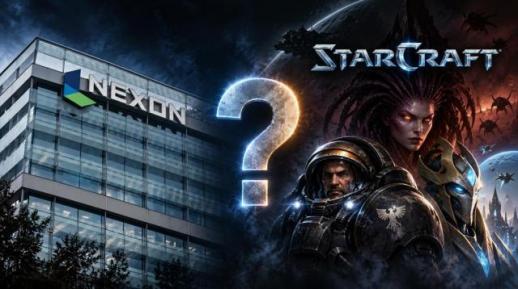 Will Korea's most-loved game StarCraft become a K-game? SEOUL, September 08 (AJP) - South Korean game publisher Nexon is moving to bring the iconic StarCraft franchise under its arm through a licensing deal with Blizzard Entertainment, aiming to roll out the first new mainline installment of the battle game loved for nearly three decades in 16 years. The Chosun Ilbo reported that the deal was "on the verge of being finalized," after which Nexon would hold development rights to a successor to the existing series. "We can't say anything at all about anything related to StarCraft," a Nexon spokesperson said when asked about the report. The California-based Blizzard has not commented publicly. Yet Blizzard's official StarCraft website has begun behaving strangely. Text reading "Transmission Failure!" flickered across the site, background art distorted and the screen turned red as if sending a hidden message to its global fan base. The kind of malfunction that arrives suspiciously close to BlizzCon, which opens Sept. 12. Fans pulled the site apart. A Reddit user posting as beyond1sgrasp dug eight hidden messages out of the developer console, and the community decoded them within hours. They read like the opening reel of a horror film: a Terran unit called Theta Squadron is en route to the Roxara Lunar Mining Complex, carrying cargo described as pivotal to research. One message is dated Aug. 8, 2575, roughly 70 years after the events of StarCraft II: Legacy of the Void, the latest major installment in the series apart from the remastered original. Roxara is not new. The moon appears in older StarCraft lore tied to Dominion bioweapon experiments and StarCraft: Ghost, the shooter whose development effectively ground to a halt in 2006. And the clues all seem to point toward BlizzCon at the Anaheim Convention Center. The published main-stage schedule leaves a conspicuous one-hour gap between the first World of Warcraft panel and the Diablo developer update, giving fans another opening for speculation over a possible StarCraft announcement. Blizzard has reportedly also been incubating a StarCraft shooter under Dan Hay, the Ubisoft veteran who previously ran the Far Cry franchise before joining Blizzard as a vice president. In April, Blizzard posted a job opening for a design director for an unannounced AAA open-world shooter being built in Unreal Engine, a notable departure for a studio known for developing much of its technology in-house. For Nexon, a deeper Blizzard partnership would not come out of nowhere. The two companies have already tested the commercial logic through Overwatch. Nexon signed a Korean PC publishing agreement with Blizzard in March and took over the Korean PC service on Aug. 12, handling localized services and live operations while Blizzard retains the intellectual property and leads development. Walter Kong, Blizzard's senior vice president and head of development for live games and mobile, said at a news conference in Busan on Aug. 23 that the groundwork for the partnership had been laid as far back as 2022. Nexon scored highly against Blizzard's checklist for live-service operating experience, genre expertise and familiarity with Korean players, he said. "The whole goal of this partnership is to get closer to our fans," said Ben Bell, executive producer and senior vice president for Overwatch. Nexon's reach among Korean PC players, he said, lets Blizzard listen more closely to what would make the game better in the region. Media reports have suggested since April 2025 that Nexon emerged as the preferred bidder for StarCraft rights after competing with Krafton, Netmarble and NC. Founded in South Korea by Kim Jung-ju in 1994, Nexon moved its headquarters to Tokyo in 2005 and listed on the Tokyo Stock Exchange in 2011. Its main development and operating base remains deeply rooted in South Korea. Korea is also where StarCraft never really died. StarCraft arrived in 1998 alongside the country's broadband boom, filled its PC bangs and helped turn competitive gaming into a professional occupation years before esports became a global industry. After StarCraft: Remastered, Blizzard gave the Korean server its own warning. "The Land of the Calm Dawn has mastered the art of war, and emerged as home to the most renowned StarCraft players on Earth. Do not arrive idle to this melee." Korean players often describe StarCraft as a folk game — one that has survived long enough to be played across generations, from older players who discovered it in the late 1990s to their children and younger relatives. "It’s just one of those games you can play together with your nephews or relatives on national holidays like Chuseok," said Kim Jong-chul, a 55-year-old businessman. "Plus, the computer requirements are quite low, so any kind of computer or laptop can run it. Gather round any computers on a holiday, and you’re set." That audience is Nexon's biggest asset if it gets StarCraft. It is also the risk. Nexon has taken on major outside franchises before without always turning them into lasting successes. Its planned mobile adaptation of Final Fantasy XI, announced with Square Enix in 2015, was ultimately cancelled. Blizzard itself has an even longer history of struggling to expand StarCraft beyond its real-time strategy roots, cancelling or shelving at least two shooter projects. A new StarCraft therefore would arrive carrying more than the expectations normally attached to a sequel. For Korean players who have kept the original alive for nearly three decades, whoever takes control of StarCraft's next chapter would inherit not merely a valuable game license, but one of the country's most enduring pieces of gaming culture. AJP Takeaways - Nexon is nearing a licensing deal with Blizzard Entertainment for development rights to a new StarCraft title, the Chosun Ilbo reported on Sept. 2, citing a senior games industry official. Blizzard and parent Microsoft would retain ownership of the intellectual property. - Blizzard's official StarCraft website began displaying deliberate glitch effects, and fans decoded eight hidden lore messages set in the year 2575, nine days before BlizzCon 2026 opens in Anaheim, California, on Sept. 12. - Nexon took over Korean PC publishing of Blizzard's Overwatch on Aug. 12 under a March 29 agreement, and was named preferred bidder for StarCraft rights over Krafton, Netmarble and NCSoft in 2025. - A Nexon spokesperson declined to discuss anything related to StarCraft when asked about the report, and Blizzard has not commented publicly. No title, genre, platform or release window has been announced. 2026-09-08 14:41:41
 -
Consumers Misled by App Mimicking Official Insurance Service Instances have emerged of a mobile app collecting consumer personal information under a name similar to the official insurance inquiry service operated by the insurance associations, which is then used for insurance sales. With confirmation that the service has passed the internal compliance review of a general insurance agency (GA), there are calls to address the regulatory gaps in insurance advertising.According to the financial sector on September 8, a mobile app is circulating under a name similar to the official insurance inquiry service 'Naebumchajum,' which is operated by the Life Insurance Association and the Property and Casualty Insurance Association.The app is registered as 'Naebumchajum: OOO.' While it adds phrases like 'insurance inquiry' after the official name, the main screen prominently features 'Naebumchajum,' which could mislead consumers into thinking it is the official service.In fact, after entering personal information into the app, a GA-affiliated agent called to offer free insurance remodeling. The agent stated, 'The customer database has been transferred,' and suggested canceling existing insurance and signing up for new policies, also requesting consent for the use of personal information. When asked if they were contacted by financial authorities or the insurance association, the agent did not provide a clear answer.The app operator has been confirmed as a GA. It has been determined that the app was released after passing the GA's internal compliance review, which concluded that using the name 'Naebumchajum' posed no issues.Similar sales tactics are also being conducted through phone calls. Recently, cases have emerged where entities claiming to be 'Insurance Check Centers' or 'Insurance Analysis Centers' demand personal information by stating, 'You have unclaimed insurance money' or 'You qualify for a premium discount.' This method uses names that could easily be mistaken for public institutions or official insurance organizations to lure consumers into insurance sales.The customer database obtained through this process is utilized for insurance remodeling sales. Insurance remodeling, which involves canceling existing contracts and switching to new products, may primarily focus on securing new contracts to recover costs incurred in obtaining the database. Consumers should be cautious, as canceling existing insurance could result in losses in surrender benefits or the reapplication of waiting periods and reduced coverage on new contracts.The issue lies in the fact that if a GA indicates it has passed its internal compliance review, the association finds it difficult to filter out such advertisements in advance. The Life and Non-Life Insurance Associations stated that they have not received any related reports and have not conducted separate investigations or reviews of the app. It is challenging to verify the use of a name similar to the official service until a consumer reports it directly.A financial sector official noted, 'Advertisements marked as having received approval from internal compliance officers lack sufficient mechanisms for external filtering unless reports are received.' They added, 'The industry faces limitations in managing all insurance agency advertisements individually.'A representative from the financial authorities stated, 'Even if a GA has received approval from its internal compliance officer, if it mimics an official service, the mere fact of having undergone internal review does not resolve the issue.' They emphasized the need to review applicable legal grounds and discuss with the associations. 2026-09-08 14:40:10
-
 New bridge connects North Korea and Russia amid deepening ties SEOUL, September 8 (AJP) - A new road bridge across the Tumen River now connects North Korea and Russia, signaling a deepening economic and strategic partnership between the two countries. The North's state-run Korean Central News Agency (KCNA) reported Tuesday that the motor bridge's opening ceremony was held simultaneously the previous day in North Korea's northeastern city of Rason and Russia's Khasan in Primorsky Krai, with North Korean premier Pak Thae-song and Russian Prime Minister Mikhail Mishustin attending the event virtually from Pyongyang and Moscow, respectively. The bridge, which stretches about 5 kilometers, was part of projects agreed upon during a summit between North Korean leader Kim Jong-un and Russian President Vladimir Putin in Pyongyang in June 2024. Construction began the following year, and the bridge was completed in about 495 days. Named after Yakov Novichenko, a Soviet army officer who KCNA says saved the life of North Korea's regime founder Kim Il-sung in 1946, the bridge has two lanes, allowing vehicles to travel in both directions. Until now, the only land route between the two countries was a railway bridge over the Tumen River. KCNA called the new bridge a symbol of growing friendship, saying it would facilitate trade and help boost tourism and exchanges between the two countries. Pak said the bridge would provide fresh momentum to bilateral cooperation, while Mishustin said the two countries would continue working together for what he described as an "unprecedentedly high level of comprehensive strategic partnership." The Unification Ministry here said it is closely monitoring developments, as the opening of the new bridge could further increase cross-border trade and exchanges amid North Korea's growing military ties with Russia following its deployment of troops to support Russia's war in Ukraine. AJP Takeaways - North Korea and Russia opened a new 5-kilometer road bridge across the Tumen River on Sept. 7, 2026, creating the first road connection between the two countries and adding to their existing railway link. - The new Yakov Novichenko Bridge is designed to increase North Korea-Russia trade, tourism and cross-border exchanges, with two lanes allowing vehicles to travel in both directions between Rason, North Korea, and Khasan, Russia. - The bridge opening underscores the deepening strategic partnership between North Korea and Russia, following the June 2024 summit between North Korean leader Kim Jong-un and Russian President Vladimir Putin and amid growing military cooperation linked to Russia's war in Ukraine. 2026-09-08 14:40:10
 -
Jung Jeom-sik Criticizes 820 Trillion Won Budget and Corporate Regulations Jung Jeom-sik, the floor leader of the People Power Party, intensified his criticism of the Lee Jae-myung administration's key economic policies on September 8. He labeled the Honam semiconductor cluster and next year's budget as 'plunder' and described the government's real estate policies as 'promise fraud.' During his speech at the National Assembly, Jung stated, "The government is infringing on the people's rights to life, safety, participation, and property." He characterized the government's push for the Honam semiconductor cluster as 'corporate plunder,' asserting, "The worst corporate plunder committed by the government is the Honam semiconductor project," and criticized the disregard for procedural fairness. In this context, the government is promoting the new semiconductor cluster in the Honam region as a key project among its 'three mega-projects.' The day before, Kim Min-seok, the leader of the Democratic Party, emphasized the passage of a special law to support mega-projects as a top legislative priority during his speech. Jung also criticized the proposed budget of 820 trillion won, calling it 'populism.' He remarked, "Managing finances with a 'live for today' mentality shifts the burden of debt onto future generations. This is not future preparedness but future plunder. The state is deceiving the people with a shell game." Regarding real estate policies, he labeled them as 'promise fraud' and called for their complete abolition. He stated, "The president promised during the campaign not to use taxes to control real estate, but the policies implemented after taking office are the opposite. This is 'promise fraud.' I urge the complete abolition of real estate policies that plunder the lives of the people." Jung also proposed alternatives for real estate at the party level, stating, "We will eliminate regulations on private redevelopment and reconstruction to significantly increase housing supply," and added, "We will ensure that single-homeowners do not have to worry about taxes." He further announced plans to reduce acquisition taxes for first-time homebuyers and support ultra-low-interest loans for young couples. Additionally, regarding the constitutional amendment mentioned by Kim the previous day, Jung made it clear that "there will be no amendments under this government." During the speech, there were several interruptions due to loud exchanges among lawmakers. National Assembly Speaker Cho Jung-sik intervened, urging cooperation to maintain a respectful atmosphere for the proceedings, after which Jung continued his remarks. Following his speech, Jung reiterated on his Facebook that he presented the People Power Party's alternatives to correct the government's mismanagement and improve the lives of the people, emphasizing that they would be implemented through legislation, policy, and budget.* This article has been translated by AI. 2026-09-08 14:40:00
-
Ruling Party Criticizes Opposition Leader's Speech as Extremist Rhetoric On September 8, the Democratic Party criticized Jung Jeom-sik, the floor leader of the People Power Party, for his speech during the representative address at the National Assembly, where he called for the revival of supplementary investigative powers and the resumption of President Lee Jae-myung's trial. The party described his remarks as "provocative incitement typical of far-right YouTubers" and claimed he is part of the same faction as Representative Jang Dong-hyuk, known for his alignment with former President Yoon Suk-yeol.Park Sung-jun, the party's chief spokesperson, held a press conference at the National Assembly and stated, "Today’s speech by the floor leader reflects the current and future state of the People Power Party. It appears to be nothing more than provocative incitement from far-right YouTubers." He criticized the speech for lacking responsibility as the leading opposition party, saying it was a failure to provide alternatives and merely referred to itself as a minority party.Park emphasized that Jung's speech lacked even a minimum level of dignity, filled only with curses, asserting, "No one will pay attention to the behavior of the People Power Party." He further characterized Jung as part of the faction that follows former President Yoon, urging him to engage in cooperation."He still seems unable to awaken from the delusions of Yoon Suk-yeol. Yoon fell from power while filling the government with the language of curses, intoxicated by far-right YouTubers," Park said. He added, "Jung must choose whether he wants to be the floor leader of the first opposition party or follow the path of far-right YouTubers."Park concluded by stating, "It is not too late. I hope he will restore politics and open the door to coexistence rather than conflict."Earlier that day, during his address at the National Assembly, Jung reiterated calls for the revival of the prosecution's supplementary investigative powers and the resumption of President Lee's five trials. He stated, "The Democratic Party opened the gates of hell by abolishing supplementary investigative powers out of hatred and vengeance against the prosecution," and appealed to the judiciary, saying, "I urge you to immediately resume the five trials of President Lee."* This article has been translated by AI. 2026-09-08 14:36:00
-
K-Bio Targets Middle East: South Korea's FDA Collaborates with UAE for Export Opportunities The Ministry of Food and Drug Safety (MFDS) is partnering with regulatory agencies in the United Arab Emirates (UAE) to support the expansion of K-Bio into the Middle East. On September 8, the MFDS announced it will hold a meeting with a delegation of seven members, including Fatima Al Kaabi, head of the UAE's medical product regulatory agency (EDE), to assist domestic bio companies in entering the UAE market. The MFDS stated, "We are strengthening regulatory cooperation in the biopharmaceutical sector with the UAE while creating practical opportunities for domestic companies looking to enter the Middle Eastern market by facilitating direct communication with EDE." The meeting will include An Young-jin, head of the MFDS's Bio-Pharmaceutical Bureau, and representatives from four domestic companies: BioSolution, Corestem ChemOn, Cha Bio & Diostech, and Organoid Science.Domestic companies will present their key products and technologies, as well as their plans for entering the UAE market, directly to EDE. They will also engage in a Q&A session regarding the regulatory procedures and requirements for market entry in the UAE. Additionally, the EDE delegation plans to visit cell and gene therapy (CGT) research facilities after the meeting. They will examine the research environment, key facilities, and equipment related to cell therapy research and development, assessing the technological level of South Korea's advanced biopharmaceuticals. The MFDS emphasized, "We will continue to actively promote field-oriented regulatory diplomacy that connects our cooperation network with foreign regulatory agencies to create practical export opportunities for our companies and support the global market entry of K-Bio." Previously, the MFDS was officially recognized as a reference agency in the medical product sector by the UAE's EDE. This recognition allows the MFDS to submit applications for UAE approvals without needing approvals from the United States or Europe, streamlining the certification process and reducing the time required. Currently, the countries recognized by the UAE as reference agencies include the United States, Europe, the United Kingdom, Canada, Japan, Australia, and the GCC.* This article has been translated by AI. 2026-09-08 14:36:00