


Latest by
-
 Gwangju Mayor Park Kwan-yeol Requests Support for 30,000 Smart City Units and National Industrial Complex Park Kwan-yeol, the mayor of Gwangju, is proactively responding to the changes brought by the establishment of the Yongin semiconductor industrial complex and is developing a cooperative strategy to turn this into a new opportunity for regional development. On September 4, Mayor Park visited the Gyeonggi Provincial Office and presented a proposal to Gyeonggi Governor Choo Mi-ae outlining a cooperative plan for Gwangju to ensure the successful establishment of the Yongin semiconductor industrial complex. He requested active support and collaboration from the province to build a foundation for future growth in Gwangju. The core of this proposal is the concept of a 'self-sufficient city Gwangju' linked to the semiconductor industry. With the establishment of the Yongin semiconductor industrial complex, significant changes are expected in Gwangju, including an influx of population and businesses, as well as increased traffic. Mayor Park envisions transforming Gwangju from a simple hinterland into a self-sufficient city with residential, job, industrial, and commercial functions. To achieve this, he has requested Gyeonggi Province to support the creation of a smart city with 30,000 housing units and the establishment of a national industrial complex. In particular, he proposed the introduction of special provisions in the 'Public Housing Special Act' to improve various regulations that hinder the development of smart cities. The strategy aims to create a self-sufficient city that integrates residential, job, industrial, and commercial functions, thereby attracting businesses and revitalizing the local economy in connection with the Yongin semiconductor industrial complex. Additionally, Mayor Park suggested the prompt formation of a 'government-wide cooperation committee' involving the central government, Gyeonggi Province, and relevant agencies to ensure that Gwangju's cooperative plan is reflected in actual policies rather than remaining a mere declaration. Gyeonggi Province has expressed its agreement with Gwangju's direction and indicated its willingness to support the initiative. Governor Choo Mi-ae stated, "I agree on the necessity of developing Gwangju as a self-sufficient city and will actively consider support measures for the creation of 30,000 smart city units and the national industrial complex." She also expressed her intention to actively consult with relevant agencies regarding the formation of the government-wide cooperation committee. Mayor Park Kwan-yeol emphasized, "We must ensure that the national project of establishing the Yongin semiconductor industrial complex becomes a new growth engine for Gwangju." He added, "I will continue to discuss key issues, including the creation of 30,000 smart city units and the national industrial complex, with the central government, Gyeonggi Province, and relevant agencies to connect them to tangible regional development that citizens can feel." Meanwhile, attention is focused on whether Mayor Park can elevate Gwangju from being a simple hinterland of the Yongin semiconductor industrial complex to a self-sufficient city where industry, housing, and jobs grow together. 2026-09-08 15:04:10
 -
Moody's Evaluates South Korea's 2024 Budget for Fiscal Health and Growth Balance International credit rating agency Moody's has assessed South Korea's 2024 budget, noting a balance between fiscal health and securing future growth potential. The Ministry of Finance explained the budget and the achievements in issuing foreign currency stabilization bonds, as well as the government's policy direction to improve access to foreign exchange and capital markets.On September 8, Moon Ji-sung, the International Economic Management Director at the Ministry of Finance, met with Maria Lee, Moody's Global External Relations Head, to share insights on the upcoming budget and recent economic conditions. The meeting also included Moon and Park Chang-hwan, the Budget Coordination Director at the Ministry of Strategy and Finance.During the introduction of the budget, Moon and Park emphasized the focus on enhancing potential growth rates through three major mega-projects and investments in artificial intelligence (AI), while also addressing social stability to mitigate polarization.They highlighted that despite the largest fiscal expenditure in history, the management fiscal balance is at its best level in 20 years, underscoring the ability to achieve both economic growth and fiscal health.The direction for the Future Response Fund was also discussed. The government plans to use additional tax revenue for strategic investments rather than simple consumption, and to reinforce fiscal stability when necessary.Notably, they announced that 12.5 trillion won (approximately 8%) of the total resources would be used to reduce new bond issuance, aiming to alleviate future debt burdens.Moody's acknowledged that the 2024 budget and the establishment of the Future Response Fund seek to balance fiscal health with future growth potential. They also expressed a positive outlook on South Korea's economic growth prospects.The two sides exchanged views on this year's foreign currency bond issuance achievements and the government's future response direction. This year, the South Korean government issued $3 billion in U.S. dollars and €1.7 billion in euros in foreign currency bonds. The euro bond's spread was lower than the previous record low in 2025, with 3-year bonds at 15 basis points and 7-year bonds at 24 basis points lower.Moody's congratulated South Korea on the successful issuance of foreign currency bonds this year and expressed interest in the outcomes and future government responses. Moon noted that despite unstable market conditions, they achieved the lowest spread for euro-denominated foreign currency bonds without additional premiums. He also mentioned significant participation from high-quality investors, including major central banks and international organizations.The government plans to diversify maturities and currencies while continuously seeking new investors. Additionally, they aim to enhance the role of foreign currency bonds as a benchmark interest rate for foreign currency procurement in South Korea.Discussions also covered measures to improve access to foreign exchange and capital markets. Moody's praised the South Korean government's recent efforts to enhance market accessibility and inquired about future plans to expand participation from global investors.Moon explained the progress in reforming the foreign exchange market, including improvements to the foreign financial institution (RFI) system. He also outlined the roadmap for internationalizing the won to allow for free holding, trading, and procurement overseas.* This article has been translated by AI. 2026-09-08 15:04:10
-
National AI Strategy Committee Enhances AI Action Plan and Strengthens Interagency Coordination The National Artificial Intelligence (AI) Strategy Committee announced plans to further enhance the 'Korea AI Action Plan' and provide new growth opportunities through AI for regions and youth. The committee also stated it would strengthen coordination and collaboration between policies and projects to effectively implement large-scale AI initiatives across multiple government agencies, including three mega-projects and seven SEED projects.On September 8, the committee held a performance report meeting at Seoul Square to present key policy achievements from the past year and outline future activities. Attendees included Ha Jung-woo, the new executive vice-chairman, Lee Hae-min, chief of AI future planning, National Assembly member Lim Moon-young, heads of ten subcommittees, chairs of two special committees, task force leaders, private sector members, and other stakeholders.Reflecting on the past year, the committee announced its commitment to continuously enhance the Korea AI Action Plan, supporting AI transformation across all sectors of the nation.In the technology innovation and infrastructure subcommittee, a review and decision-making system for the AI Data Center (AIDC) will be established by March. The committee will also enhance the management system for real-time operation status of computing resources, such as graphics processing units (GPUs), to support the efficient use of national AI infrastructure.In the science sector, the committee will support follow-up measures for the K-Moonshot initiative and the research data law, while monitoring the development and application of specialized AI foundation models in fields such as biotechnology, data, and healthcare.Particularly in healthcare, the committee plans to assess the demonstration and expansion of a one-stop AI platform to secure golden time for emergency patients and the AI transformation of public hospitals.The industry and ecosystem subcommittee will review the implementation status of existing strategies in manufacturing AI, autonomous driving, and humanoid robots. It will also support the establishment of the '2030 Global AI Decacorn Development Plan' in the third quarter and the 'AI Transformation Plan for Transportation and Logistics Centered on Autonomous Driving' in the fourth quarter to bolster AI transformation across industries.The public sector subcommittee will focus on promoting a rapid development system for public sector AI and establishing public sector guidelines.The data subcommittee will specify ways to link and cooperate on national AI, data, and technology policies.The social subcommittee will advance plans for 'AI Welfare and Care Innovation,' 'Comprehensive Response Plan for AI Crime Prevention,' and 'Cultural Future Strategy in the AI Era' in the third quarter. In the fourth quarter, it will announce the 'Basic Society Promotion Plan for AI for All,' gradually strengthening the policy foundation for inclusive, human-centered AI.In the defense and security sector, the committee plans to sequentially open five defense AI hubs and support the development of defense-specific AI based on independent AI foundation models, as well as the establishment of a defense AI data center. It will also back the swift enactment and implementation of the Defense AI Act proposed in January.The global cooperation subcommittee will finalize the national AI standardization governance system in the third quarter. It aims to respond comprehensively to AI agendas at major multilateral meetings, including the APEC summit in November and the G20 summit in December.The education and talent subcommittee will support the establishment of an ISP for specialized AI in education. It plans to collaborate with the National Education Commission to specify ways to integrate AI across all academic fields in higher education.The AI democracy subcommittee will finalize and announce the 'K-Democracy in the AI Era: Vision and Action Plan' by March 2027. It will also promote the demonstration of AI public forums on five key topics, including labor and education, and enhance the 'K-Democracy AI Platform.' Additionally, it aims to lead global discussions on AI democracy by proposing 'Norms for Democracy in the AI Era' during South Korea's hosting of the G20 summit in 2028.The committee will also pursue the integration of security systems across various sectors and ministries to respond to advanced cyber hacking. This includes establishing a K-AI cybersecurity framework that ensures international interoperability among ISMS, N2SF, and CSAP.Finally, the legal task force will formalize the 'Korea AI Legislative Framework' through consultations with relevant ministries. It will continue to support the drafting and revision of sector-specific AI laws based on this framework.Ha Jung-woo, the executive vice-chairman, stated, 'The past year has laid the groundwork for Korea's AI transformation. Moving forward, the committee will firmly support the realization of 'AI for All,' ensuring that every citizen can share in the opportunities and benefits of AI as we strive to become an 'indispensable global AI supply chain nation.'Ha was appointed as the new executive vice-chairman on August 30.* This article has been translated by AI. 2026-09-08 15:04:10
-
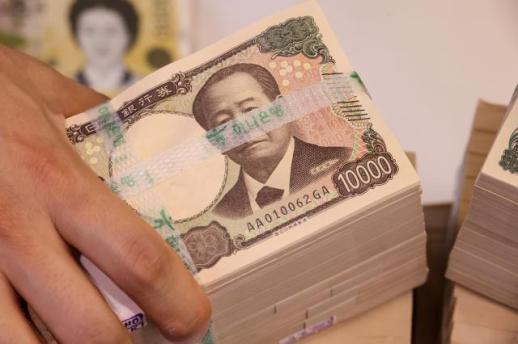 Japanese yen and bonds rally as BOJ tightening bets build SEOUL, September 08 (AJP) - The Japanese yen and long-dated government bonds rallied together Tuesday as investors priced faster tightening by the Bank of Japan (BOJ) alongside lower longer-term inflation risks. The yen strengthened as far as 152.89 per dollar, its strongest level since Feb. 17, before returning to around 153.3. Japan's 10-year government bond yield fell 4 basis points to 2.890 percent in morning trading. Ataru Okumura, senior rate strategist at SMBC Nikko Securities Inc., said underlying inflation was already around 2 percent and the BOJ was increasingly expected to accelerate the pace of rate hikes. The simultaneous gains in the currency and bonds reflected different expectations at the short and long ends of Japan's rate market. The 20-year Japanese government bond (JGB) yield fell 5 basis points to 3.695 percent, while the 30-year yield dropped 5.5 basis points to 3.965 percent. The policy-sensitive two-year yield declined a smaller 1.5 basis points to 1.835 percent, flattening the yield curve. Expectations of another BOJ rate increase strengthened after economic data suggested Japan could withstand tighter monetary policy. Japan's economy expanded at an annualized 1.4 percent rate in the second quarter, revised up from 1.1 percent. Real wages rose 2.4 percent from a year earlier in July, their strongest increase since May 2021. Markets were pricing about a 97 percent probability that the BOJ would raise its policy rate by 25 basis points next week. Expectations of further tightening were also building. A stronger yen meanwhile reduced longer-term inflation pressure by lowering the local-currency cost of imported energy, raw materials and other goods. JGB futures rose in early Tokyo trading as investors focused on the stronger currency's potential to ease inflationary pressure even as expectations for BOJ tightening remained intact. Japan's current yield levels have also changed the incentives that helped sustain years of yen weakness. The 10-year yield briefly exceeded 3 percent earlier this month, reaching its highest level in about three decades before retreating toward 2.9 percent this week. Higher Japanese yields reduced the appeal of yen-funded carry trades, giving investors less incentive to borrow cheaply in Japan and shift funds into higher-yielding overseas assets. Cross-border yen borrowing reached 360 trillion yen in March, leaving a large pool of positions potentially exposed to a rapid appreciation of the currency. Previous BOJ rate increases and foreign-exchange intervention had failed to provide lasting support for the yen. The latest move instead combined tightening expectations with potential capital repatriation and an unwind of carry trades. Japan and the United States have also maintained a more explicit focus on the currency since their joint intervention in July. Japanese Finance Minister Satsuki Katayama said Tuesday that Tokyo and Washington remained aligned on maintaining stable foreign-exchange markets and continued to communicate closely on currency policy. Positioning accelerated Tuesday's move as traders closed bearish yen bets after USD/JPY broke key support levels, helping push the exchange rate briefly into the 152 range. The shift also reached South Korean markets, although domestic factors remained important. The won traded at 1,338.95 per dollar in late-morning Seoul trading after touching 1,336.3. Exporter dollar selling, foreign equity purchases and yen strength added downward pressure on USD/KRW. Korean government bonds strengthened across the curve at the morning session close. The three-year yield fell 2.4 basis points to 3.876 percent, while the 10-year yield declined 2.3 basis points to 4.362 percent. The 20-year yield fell 2.1 basis points to 4.546 percent, while the 30-year yield dropped 2.4 basis points to 4.607 percent. Won strength was also supported by semiconductor exports and exporter dollar selling, while Korean bonds continued to reflect domestic monetary-policy and government-bond supply expectations. Tuesday's moves reflected more than a simple rise in expectations for higher Japanese policy rates. Investors increasingly distinguished between tighter BOJ policy at the short end and lower longer-term inflation risk, allowing the yen and long-dated JGBs to strengthen together while adding support to neighboring Korean markets. AJP Takeaways - Japanese yen strengthened to 152.89 per dollar Tuesday, its strongest level since Feb. 17, as BOJ tightening expectations and short-position unwinding accelerated. - Japanese government bonds rallied at the long end as yen appreciation reduced imported-inflation pressure despite expectations for another BOJ rate increase. - South Korean markets moved in the same broad direction, with the won strengthening into the 1,330 range and Korean government bond yields falling through the 30-year maturity. 2026-09-08 15:03:30
 -
Matthew Turtle: The Future of AI Data Centers Lies in Space "The construction of data centers in the U.S. has already faced significant political resistance and limitations. Ultimately, AI data centers will be built in space, presenting a massive investment opportunity," said Matthew Turtle, founder and CEO of Turtle Capital Management (TCM), during a press conference in Yeouido, Seoul, on September 8.Turtle emphasized that Elon Musk's plan to build data centers in space is both valid and realistic, stating, "I do not bet against Elon Musk's moves as an investor."Key to AI Growth: Addressing Bottlenecks in Photonics and SpaceTurtle identified bottlenecks as the primary factors hindering the growth of the AI industry. He explained that companies solving these constraints will be the key investment opportunities leading the market.The three main areas Turtle highlighted for resolving AI bottlenecks are: 1) memory semiconductors (HBMX, DRMP, etc.), 2) photonics, which uses lasers to transmit ultra-fast data instead of copper wires, and 3) the space industry (SPAX, SPCI) that aims to overcome the limitations of data centers.He noted, "If data centers are built in space, related industries such as space power, transportation, logistics, and mining will experience explosive growth. Many key companies in this sector are still private, so a thematic ETF approach that identifies beneficiaries along the value chain is necessary."Critique of Traditional Investment Strategies: Introducing H.E.A.T.Turtle criticized traditional Wall Street investment methods while explaining his operational framework, H.E.A.T. (Hedge, Edge, Asymmetry, Theme). He stated, "Government debt levels in the U.S. and worldwide are unsustainable, and interest rates will continue to rise. With the real inflation rate in the U.S. reaching 11-12%, traditional hedging instruments like bonds are completely uninvestable."He also pointed out the shortcomings of covered call products, which have gained popularity among Korean investors. He argued that applying covered calls to high-growth themes like AI and space limits upside potential. As an alternative, he proposed income strategies based on put credit spreads (DRMP, SPCI, MEMY, etc.) that aim for target returns of 25-35% while fully capturing stock price increases.Korean Investment Represents 25% of TCM's AssetsFounded in 2012, TCM manages approximately $5 billion in assets and over 70 active ETFs. Turtle explained that about 25% of the funds managed come from Korean individual investors, making Korea a crucial market for the firm.In response to recent claims by some financial authorities that single-stock leveraged ETFs are a cause of market volatility, Turtle disagreed. He stated, "Investor interest and volatility in specific stocks increased first, leading to the creation of leveraged ETFs. Even without them, investors would have sought other forms of investment, such as options or futures."Finally, he emphasized the importance of having a unique edge and risk management in investing, stating, "Investing is about having strengths that others do not, while relying on luck is gambling. It is crucial to provide proper education to understand the characteristics of leveraged ETFs, which reset daily."* This article has been translated by AI. 2026-09-08 15:00:10
-
Kim Ji-yong, Nominee for Chief of Major Crimes Investigation Agency, Vows to Prevent Injustice Kim Ji-yong, the nominee for the inaugural chief of the Major Crimes Investigation Agency (MCIA), expressed his commitment to swiftly establish the organization to ensure there are no gaps in the nation's response to serious crimes. On September 8, as he arrived for his first day at the confirmation hearing preparation office in the government complex in Jongno, Seoul, Kim shared his thoughts with reporters about his nomination and plans for the agency's operation.President Lee Jae-myung, currently on a trip to Europe, nominated Kim as the first chief of the MCIA based on a recommendation from Minister of the Interior and Safety Yoon Ho-jung.Kim stated, "I feel a heavy responsibility being nominated for the newly established MCIA amid significant changes in the criminal justice system. For now, I will diligently prepare for the upcoming confirmation hearing." He added, "During this critical time, I will do my utmost to ensure the MCIA is established promptly so that the public has no concerns. In particular, I will work hard to prevent any innocent citizens from suffering during investigations." Kim's remarks underscore the urgency of stabilizing the agency and establishing its investigative framework ahead of its official launch on October 2.However, Kim remained cautious when addressing personal allegations against him and sensitive issues regarding the agency's operational direction. When asked about the 'non-residential one-household' allegation related to his apartment in Bundang, Seongnam, which he rented out while living in a different area, he responded, "I believe the public may be curious. However, since today is my first day, I prefer not to elaborate." Regarding the controversy over accepting the MCIA chief position despite opposing the complete removal of prosecutorial investigative powers during his tenure as a prosecutor, he stated, "I will clarify this during the confirmation hearing." Additionally, he emphasized the importance of ensuring the agency's political neutrality and investigative independence, stating, "Fairness, neutrality, and procedural justice are crucial aspects for the MCIA," and promised to present specific measures during the hearing.Starting today, Kim will report daily to the confirmation hearing preparation office as he begins serious preparations for the hearing. The preparation team will be composed mainly of personnel from the MCIA establishment preparation team and the Ministry of the Interior and Safety, with support from related agencies such as the prosecution.Kim, originally from Buyeo, Chungcheongnam-do, graduated from Gongju National University of Education and studied law at Sungkyunkwan University. He passed the 38th National Judicial Examination in 1996 and completed the Judicial Research and Training Institute in 1999. He was appointed to the prosecution the same year, starting as a prosecutor at the Daejeon District Prosecutors' Office and later serving in various roles, including head of the Inspection Division at the Supreme Prosecutors' Office and chief prosecutor at the Western District Prosecutors' Office in Busan.In 2020, he was promoted to chief prosecutor and served as the deputy chief prosecutor at the Seoul High Prosecutors' Office. The following year, he became the chief prosecutor at the Chuncheon District Prosecutors' Office and was appointed head of the Criminal Division at the Supreme Prosecutors' Office. In 2022, he was appointed as the deputy chief prosecutor at the Gwangju High Prosecutors' Office and left the prosecution in 2023 after nearly 24 years of service.With extensive experience in investigation, inspection, and trial, Kim's background is seen as a significant asset. After the upcoming National Assembly confirmation hearing, President Lee will make the final appointment. 2026-09-08 15:00:00
-
Former Soccer Player Kim Young-gwang Supports Singer Im Young-woong Former soccer player Kim Young-gwang showed his support for singer Im Young-woong.On September 8, Kim posted a photo with Im on his social media, stating, "I always feel this, but Young-woong, you are someone who is bound to succeed."He added, "Not only your singing but also your sincerity on stage, your humble attitude towards people, and your character show why so many people love you."Kim continued, "Success is not just about talent, but you have both skill and sincerity, along with respect for others. That’s why you have done well so far, and I believe you will continue to succeed in the future."He concluded, "I naturally expect to see you rise even higher, and I will always support you."Meanwhile, according to Yonhap News and Im Young-woong's agency, Fish Music, the singer held his second stadium concert, 'I’m Hero - The Stadium 2,' at Goyang Sports Complex from September 4 to 6, attracting approximately 95,000 attendees over three days.Having debuted in 2016, Im Young-woong is celebrating his 10th anniversary this year, marking a milestone of nearly 1 million cumulative concert attendees.During the concert, he performed various hit songs, including his debut track 'I Hate You,' 'Love Always Runs Away,' 'Grains of Sand,' 'Rainbow,' and 'Moments Like Eternity.'He also premiered new songs from his upcoming special digital album 'I’m Hero 10,' set to be released on September 8, including 'Tto Tto,' 'New York,' and 'Please Be Happy.'* This article has been translated by AI. 2026-09-08 14:56:20
-
China Urged to Intensify Birth Policies Amid Population Decline Jin Chanrong, a prominent international relations scholar at Renmin University, has called for stronger birth policies in China. Since September 5, Jin has been emphasizing the seriousness of China's population decline through several posts on his official social media account, according to Singapore's Lianhe Zaobao on September 8. His comments have sparked significant discussion online. Jin defined population as a core strategic asset for the nation, arguing that China's competition is not just with the United States and its population of over 300 million, but with the entire Western world, which has about 1 billion people. He countered the perspective that fewer people lead to more resources per capita, citing examples of population outflow in Northeast China. He stressed that the issue of population should not be oversimplified, as a large population is a key source of talent and engineering expertise. He noted that a significant drop in student numbers does not guarantee the cultivation of more talented individuals, even with sufficient teaching staff. While acknowledging that demographic changes are gradual and their effects may not be felt for years, Jin pointed out that the current situation is urgent. He warned that if the issue is not addressed promptly, future responses will be even more challenging. He urged government agencies at all levels to adopt a sense of urgency in their thinking, enhance policy intensity, and focus efforts on mitigating the trend of population decline. Jin agreed with the government's policy on fostering new quality productivity but called for more resources and capabilities to be directed toward addressing population issues. In response to Jin's assertions, some netizens expressed skepticism. One user remarked, "While the idea of competing with 1 billion in the West is a grand discourse, I am facing three major challenges: mortgage loans, tuition fees, and childcare costs." Another user commented, "The reason people are not having children now is not that they don't want to, but because they can't. Even if they do have children, they cannot provide a good life for them, and their own circumstances are worsening." Meanwhile, the number of newborns in China last year was 7.92 million, a decrease of 1.62 million from 9.54 million in 2024. The birth figures have shown a continuous decline over the past seven years, dropping from 18.83 million in 2016 to 9.02 million in 2023, with a slight increase in 2014 to 9.54 million before plummeting again last year. The number of births last year was less than half of that in 2016.* This article has been translated by AI. 2026-09-08 14:56:10
-
Two Supreme Court Justice Vacancies Continue as Chief Justice Remains Silent on Reappointment With two Supreme Court justice positions vacant, Chief Justice Cho Hee-dae remains silent regarding the Blue House's request for reappointment of candidates.On the morning of September 8, as he arrived at the Supreme Court in Seocho-gu, Seoul, Cho responded briefly to reporters' questions about the reappointment decision, saying, "I will speak if there is something to announce."He did not answer questions regarding the new composition of the Supreme Court Justice Candidate Recommendation Committee or communication with the Blue House before entering the court building.The Supreme Court has been operating with two vacancies for the second consecutive day. Following the retirement of former Justice Noh Tae-ack in March and Justice Lee Heung-gu the previous day after completing their six-year terms, the court's roster has been reduced to 12 out of 14 justices.Notably, the Supreme Court's third division is now down to only two justices, as Justice Noh Kyung-pil was appointed as the head of the Court Administration Office in July, leaving the division with only two of its four positions filled. Since decisions require the agreement of at least three justices, the vacancies are expected to disrupt judicial operations.Previously, Chief Justice Cho had recommended Judge Son Bong-ki of the Daegu District Court as a candidate to succeed former Justice Noh Tae-ack. However, the Blue House has requested reappointment, citing a failure to adhere to the customary pre-consultation process during the appointment of justices.Judge Kim Sung-soo of the Seoul High Court, nominated to succeed Justice Lee, is set to face a National Assembly confirmation hearing on September 14. However, even if the hearing and the adoption of the confirmation report proceed as scheduled, it may take considerable time before he officially takes office.* This article has been translated by AI. 2026-09-08 14:56:10
-
Using 3 Days of Leave for a 9-Day Break During Chuseok This year's Chuseok holiday spans four days, prompting many employees to start planning their leave.Chuseok falls on Friday, September 25, 2026. The official holiday period runs from Thursday, September 24, to Saturday, September 26, with Sunday, September 27, included, providing a total of four days off.Employees are particularly interested in how to maximize their time off with just one day of leave. The timing of leave can significantly extend the actual break, as the placement of leave days around weekends and holidays affects the total time off.By taking leave from Monday, September 21, to Wednesday, September 23, employees can enjoy a total of nine consecutive days off, starting from the previous weekend on September 19 and 20, through to the last day of the Chuseok holiday on September 27. This means that three days of leave can effectively stretch the holiday to nine days.While the short four-day Chuseok holiday may seem insufficient for international travel, combining it with three days of leave creates a more appealing nine-day vacation. This extended break allows for not only domestic travel but also short trips to Japan and Southeast Asia, and potentially longer trips to Europe or North America, depending on individual schedules.Travel industry analysts report a 35% increase in demand for international flight bookings around the September Chuseok holiday compared to the same period last year. The proximity of Chuseok to the October holiday has led to increased consideration among employees regarding their leave usage for long-distance travel.Ultimately, the experience of this year's Chuseok holiday will depend significantly on how effectively employees can plan their leave. This has sparked a 'leave war' among workers at major companies, public institutions, and small businesses, as employees vie for the best dates to take off. The structure of leave approval often requires that colleagues do not have overlapping schedules, making the days before and after the holiday particularly competitive.Notably, September 21 to 23 are weekdays just before Chuseok, which could lead to staffing shortages if multiple team members request leave simultaneously. In roles where one person's absence necessitates coverage by another, coordination among team members becomes essential.In workplace communities, discussions frequently arise about who will request leave first, how to gauge team dynamics, and when to approach supervisors about time off. While the calculation of 'three days of leave equals nine days off' is possible, not all employees will be able to take the full nine days due to company policies, team workloads, and colleagues' leave schedules.This year, with opportunities to use leave for extended vacations in October following Chuseok, employees are expected to engage in even more intense planning regarding their remaining leave days.* This article has been translated by AI. 2026-09-08 14:56:00