


Latest by
-
 Gimhae Offers 5% Cashback for Payments at Affordable Price Businesses The city of Gimhae is offering a 5% cashback on payments made with the Gimhae Love Gift Certificate at affordable price businesses. To alleviate the financial burden on citizens due to rising prices and to encourage the use of affordable price businesses, Gimhae announced a cashback initiative that will run until the end of the year. When citizens pay at affordable price businesses in Gimhae using the Gimhae Love Gift Certificate, they will receive an additional 5% cashback on top of existing discount benefits. This initiative will utilize a total of 20 million won in additional national funding for local love gift certificates. The total amount eligible for cashback is set at 400 million won, and the program will end once the budget is exhausted. Notably, under the conditions of national funding, the cashback will be retroactively applied to payments made starting in August. The cashback will be distributed around the 20th of the following month after the payment is made.Currently, there are 128 affordable price businesses in Gimhae, with 109 of them registered as Zero Pay merchants. A list of participating businesses can be found on the Gimhae city website or through smartphone map applications.Additionally, the Gimhae Future Talent Scholarship Foundation is accepting applications until the 18th for 20 scholarships aimed at local youths employed by regional companies and medical students. This scholarship program for the second half of the year will select 20 recipients across two categories: employment-linked scholarships and scholarships donated by the Gimhae Medical Association, with a total of 56 million won in funding. The scholarships can be used for living expenses rather than just tuition.The employment-linked scholarship is aimed at young individuals who have graduated from universities in Gimhae and are employed by local companies.Eligible candidates must have graduated from one of four universities in the Gimhae area—Inje University, Gimhae University, Kaya University, or Busan Presbyterian University—in 2024 or 2025, and must have been employed at a small or medium-sized enterprise in Gimhae for at least one month. They must also have a cumulative GPA of 3.0 or higher on a 4.5 scale.The foundation will select 10 recipients in this category, providing each with 3.6 million won annually, distributed in quarterly payments of 900,000 won. The scholarship from the Gimhae Medical Association is available to students who have graduated from high schools in Gimhae and are currently enrolled in medical schools nationwide.First-year students and those on leave are excluded, and applicants must have achieved a GPA of 3.5 or higher in their last two semesters and belong to the bottom 80% of income brackets. A total of 10 recipients will be selected, with each receiving 2 million won. Both scholarships require that the applicant or their guardian has been a resident of Gimhae for at least one year as of the announcement date, which was the 1st of this month.Application documents can be submitted directly to the Gimhae City Hall's Talent Development Division or sent by registered mail. The foundation will conduct a document review and select the final scholarship recipients in October, with funds to be disbursed by the end of the month.Detailed eligibility requirements and submission documents can be found on the Gimhae Future Talent Scholarship Foundation's website.* This article has been translated by AI. 2026-09-04 08:20:00
 -
Xiaomi Showcases AI Chips, Home Appliances, and Electric Vehicles at IFA 2026 Xiaomi made a strong debut at IFA 2026, presenting a business model that encompasses smartphones, home appliances, electric vehicles, and its own artificial intelligence (AI) semiconductors and models. This shift aims to reshape the perception of the Chinese company from one focused on price competitiveness to an 'ecosystem company' that connects core technologies to finished products in the AI era.On September 3, Xiaomi held its keynote address in Berlin, unveiling its 'Human × Car × Home' strategy. As the company's first participation in IFA, it showcased over 380 products, including smartphones, home appliances, electric vehicles, and robots, in a booth spanning approximately 3,300 square meters, the largest ever for Xiaomi at an international exhibition.Notably, the focus was on the foundational technologies that power these products. Following the introduction of its self-developed 3-nanometer system-on-chip (SoC) 'XRING O1' last year, Xiaomi has expanded its semiconductor portfolio with the flagship AI SoC 'O3', the AI accelerator 'O100', and the intelligent driving chip 'D100'. Both O100 and D100 have completed development and validation, with plans to integrate them into products starting in 2027. This marks a significant expansion of Xiaomi's semiconductor in-sourcing from smartphone chips to AI and automotive applications.The company is also integrating AI software into its ecosystem. The large language model (LLM) 'MiMo', 'HyperAI', and the operating system 'HyperOS' will connect smartphones, home appliances, and vehicles through XRING semiconductors. Xiaomi President Lu Weibing stated, "We will extend AI into the physical world, providing a globally integrated Human × Car × Home ecosystem to users everywhere."In the home sector, Xiaomi highlighted its smart appliance brand Mijia, which aims to connect over 2,000 products across more than 130 categories into a single smart home ecosystem. Examples include a triple-drum washing machine that separates different fabrics for washing and an air conditioner that operates based on user location and habits. Currently, Xiaomi's AIoT platform connects over 1.16 billion devices worldwide.The next area of expansion is the automotive sector. Xiaomi announced that it has delivered over 700,000 electric vehicles, including the SU7 and YU7, within two years of their launch. The company is currently validating vehicle performance at seven major testing centers in Europe and on real roads, with plans to enter the European automotive market in 2027. Collaborations with local dealers to establish sales and service networks are also underway.Xiaomi's debut at IFA is significant as it reflects a shift in the competitive landscape of Chinese home appliances. The company is moving away from selling inexpensive smartphones and appliances individually, instead securing its own semiconductors, AI models, and operating systems, and connecting them to home appliances and vehicles. As Samsung and LG expand device connectivity through 'AI Living' and 'AI Home', Xiaomi is also integrating its technology and diverse product range, broadening the scope of global competition in home appliances to encompass the entire AI ecosystem.* This article has been translated by AI. 2026-09-04 08:16:00
-
Bitcoin Surpasses $80,000 Amid U.S. Stock Market Gains and Eased Rate Hike Concerns Bitcoin has regained the $80,000 mark. The significant drop in U.S. Treasury yields and reduced concerns over further interest rate hikes by the Federal Reserve have revived investor sentiment. As of 8 a.m. on September 4, Bitcoin was trading at $81,238, up 5.28% from the previous day, according to global cryptocurrency market site CoinMarketCap. Major altcoins also showed strong performance. Ethereum rose 4.97% to $2,498.91, while Ripple (XRP) increased by 7.94% to $1.45. Solana was up 4.52% at $104.12, and Binance Coin (BNB) climbed 5.37% to $723. Market analysts attribute the recovery in investor sentiment to the calming of the recent surge in U.S. Treasury yields and dovish comments from Federal Reserve officials, which have eased fears of additional interest rate hikes. On September 3, Christopher Waller, a Federal Reserve governor, indicated that he would support keeping interest rates steady if inflation pressures show signs of easing in upcoming price indicators, according to Reuters. On the same day, John Williams, president of the New York Federal Reserve Bank, commented that the recent spike in U.S. Treasury yields reflects a strong economic situation rather than a malfunction in market functions, emphasizing the need to monitor price trends carefully. Following these remarks, market apprehension regarding further rate hikes has diminished. According to the CME FedWatch tool, the likelihood of the Federal Reserve maintaining its current interest rate in September rose from 36.8% to 49.5% in the futures market. The recent surge in U.S. Treasury yields has also seen a decline for two consecutive days. As of 3 p.m. on September 3, the yield on the benchmark 10-year U.S. Treasury note was recorded at 4.761%, down 3 basis points from the previous session. Investor sentiment in the cryptocurrency market is rapidly recovering. As of today, the CoinMarketCap 'Fear and Greed Index' stands at 78, indicating a state of 'greed.' Meanwhile, as of 8 a.m., Bitcoin was trading at 110.69 million won ($80,479) on the domestic exchange Bithumb, reflecting a 0.21% increase from the previous day. The 'Kimchi Premium' is at 0.56%, indicating that domestic Bitcoin prices are slightly higher than those overseas.* This article has been translated by AI. 2026-09-04 08:16:00
-
Nepal Intensifies Search for Survivors Trapped in Hydropower Plant Tunnels As the massive flooding that struck the Himalayan mountainous region along the Nepal-China border enters its ninth day, rescue authorities are focusing their efforts on locating dozens of missing individuals trapped in a hydropower plant.According to Yonhap News Agency and Reuters on September 3, Nepali rescue teams are attempting to search four tunnels at hydropower plants where hundreds of employees are missing.Notably, there is a possibility that around 90 employees may be alive and trapped in two of these tunnels.Amshu Kiran Shahi, a director at the Nepal Electricity Authority, stated, "There is air remaining in these two tunnels, making it most likely to find survivors. Some tunnels have facilities for communication and rest, and it appears there may still be food and water available. I am very confident that there are survivors inside the tunnels," he told Reuters.He added, "In the case of the Trishuli 3A power plant, oxygen pipes have been installed, so we expect oxygen is flowing inside the tunnel."A Nepali army official involved in the search operations said, "We are searching all the tunnels and will continue rescue operations as long as there is hope of finding survivors. Even if there are no survivors, we will recover the bodies."Meanwhile, the Nepal Disaster Management Authority has reported that the death toll from the flooding in Nepal has risen to at least 1,252.Deaths in China have also increased to at least 21, bringing the total death toll to 1,273.The number of missing persons stands at 4,216 in Nepal and 541 in China, totaling 4,757.* This article has been translated by AI. 2026-09-04 08:12:00
-
 UPDATE: Korea's H1 C/A surplus second only to China *Updated with additional information and comments SEOUL, September 04 (AJP) - South Korea's current account surplus ranked second only to China's among major economies in the first half and will likely to keep up the rank rest of the year as July delivered the second-largest monthly surplus on record, the central bank said Friday. The July surplus came to $42.08 billion, down from June's record $49.73 billion but above $40 billion for a second month, extending the surplus run to 39 consecutive months, preliminary Bank of Korea (BOK) data showed. Yoo Seong-wook, head of the BOK's Financial Statistics Department, said Korea's first-half surplus of $191.01 billion trailed only China's and exceeded those of Germany, Japan and Taiwan. Official data for the same period put China's surplus at $379.4 billion, Germany's at the equivalent of roughly $124 billion, Taiwan's at $121.03 billion and Japan's at about $110 billion. The January-July surplus nearly quadrupled to $233.09 billion from $59.82 billion a year earlier and was already about 1.9 times the $123.05 billion recorded in all of 2025. The BOK last week raised its 2026 current account surplus forecast to $450 billion from $250 billion, citing stronger semiconductor exports and a wider goods surplus. Yoo said the annual surplus was likely to come broadly in line with the forecast if monthly surpluses averaged about $43.4 billion over the remaining five months, with the final outcome hinging largely on the semiconductor cycle. He said the won's recent appreciation would have only a limited impact on exports because the increase was being driven mainly by structural AI-related demand for semiconductors rather than exchange-rate competitiveness. The unresolved Middle East conflict remained another risk because higher prices for crude oil and other raw materials could increase Korea's import bill, Yoo said. The goods account logged its second-largest surplus of $40.43 billion as exports rose 65.3 percent from a year earlier to $100.45 billion, while imports increased 21.7 percent to $60.02 billion. Yoo said exports and the goods surplus often decline from June to July because companies tend to concentrate shipments in June when managing their first-half export performance. On a seasonally adjusted basis, the current account surplus declined 8.0 percent to $40.89 billion from $44.43 billion, compared with a 15.4 percent drop in the unadjusted figure. Customs-cleared exports reached $98.96 billion as information technology shipments jumped 140.6 percent and non-IT exports increased 18.3 percent. Semiconductor exports surged 176.3 percent to $41.17 billion, accounting for 41.6 percent of total customs-cleared exports. Raw material imports increased 29.1 percent on higher purchases of crude oil, gas and coal, while capital goods imports rose 36.7 percent on increased purchases of semiconductors and chipmaking equipment. Consumer goods imports fell 3.0 percent, marking their first decline in 15 months. The services account deficit widened to $1.97 billion from $1.29 billion as the travel balance swung to a $340 million deficit from a $440 million surplus. The BOK attributed the reversal to the peak summer travel season and increased outbound travel following the designation of Constitution Day as a temporary public holiday. The primary income surplus increased to $4.35 billion from $3.27 billion as the dividend income surplus reached $3.83 billion. Park Seong-gon, head of the BOK's Balance of Payments Team, attributed the increase mainly to higher dividend receipts following improved earnings at semiconductor companies' overseas sales subsidiaries. The financial account recorded its second-largest net asset increase of $40.32 billion. Foreign direct investment in Korea decreased by $780 million in July, reflecting reductions in intercompany trade credit and other transactions, according to the BOK. Foreign portfolio investment in Korean securities increased by $8.17 billion as equity investment rose by $5.98 billion and debt investment gained $2.19 billion, although bond inflows slowed as arbitrage incentives narrowed. Foreign equity investment turned positive for the first time in six months after falling by a record $31.61 billion in June. Yoo said the rebound reflected SK hynix's American depositary receipt issuance and reduced selling of domestically issued shares, adding that more data were needed to determine whether the improvement would continue. Despite the July rebound, foreign equity portfolio investment in Korea remained down a cumulative $100.30 billion in the first seven months. A $19.72 billion increase in foreign investment in Korean debt securities partly offset the equity outflow, leaving total foreign portfolio investment in domestic securities down $80.58 billion over the period. Korean residents increased their overseas equity investment to $12.33 billion from $7.53 billion in June, more than twice the foreign investment in Korean equities during July. Overall portfolio investment recorded a $5.40 billion net asset increase, while other investment posted a $27.56 billion increase as loan assets rose and borrowing liabilities declined. AJP Takeaways - South Korea's current account surplus reached $42.08 billion in July, the second-largest monthly figure on record, while its $191.01 billion first-half surplus trailed only China's among major economies. - The BOK expects the annual surplus to broadly meet its upgraded $450 billion forecast if monthly surpluses average about $43.4 billion over the remaining five months. - The BOK expects the won's appreciation to have a limited export impact because AI-related semiconductor demand remains the dominant driver, although the chip cycle and raw material costs remain key risks. - Foreign equity investment rebounded by $5.98 billion in July after six months of declines but remained down a cumulative $100.30 billion in the first seven months. 2026-09-04 08:04:57
 -
South Korea Posts $42.1 Billion Current Account Surplus Amid Strong Semiconductor Exports South Korea recorded a current account surplus of $42.1 billion in July, driven by robust semiconductor exports. This marks the second consecutive month that the surplus has exceeded $40 billion, achieving the second-largest surplus on record.According to preliminary statistics released by the Bank of Korea on September 4, the current account surplus for July was estimated at $42.08 billion (approximately 57.14 trillion won).On a monthly basis, this follows the previous record of $49.73 billion set in June, continuing a trend of surpluses above $40 billion. The cumulative current account surplus for the year up to July reached $233.09 billion, nearly five times the surplus of $49.73 billion recorded during the same period last year.The Bank of Korea has revised its annual current account surplus forecast significantly upward, projecting it to reach $450 billion, up from the previous estimate of $250 billion. This figure would be 3.7 times larger than the previous record of $123.1 billion set in 2025.In terms of components, the goods surplus for July was $40.43 billion, marking the second-highest on record, just below the $47.89 billion surplus recorded in June.Exports totaled $100.45 billion, a 65.3% increase compared to the same month last year. After surpassing the $100 billion mark for the first time in June, exports have remained above this threshold for two consecutive months, driven by strong demand for both IT and non-IT products.By category, significant increases were seen in exports of computer peripherals (SSD, up 344.5%), semiconductors (up 176.3%), and wireless communication devices (up 51.2%). Other categories such as petroleum products (up 35.7%), chemical products (up 19.1%), and steel products (up 11.3%) also showed positive growth.Imports rose to $60.02 billion, a 21.7% increase, but this growth rate was lower than that of exports. The increase in imports was driven by raw materials (up 29.1%) and capital goods (up 36.7%), while consumer goods saw a decline of 3.0%, marking the first decrease in 15 months.Imports of capital goods and raw materials, including semiconductor manufacturing equipment (up 60.1%), semiconductors (up 56.7%), crude oil (up 54.2%), gas (up 46.8%), and coal (up 36.0%), also increased.The services account recorded a deficit of $1.97 billion, slightly larger than the $1.93 billion deficit from the same month last year. The travel balance turned negative with a deficit of $340 million, influenced by an increase in outbound travelers during the peak summer travel season and the designation of a public holiday for the Constitution Day.The primary income account surplus expanded from $3.27 billion in June to $4.35 billion in July, driven by an increase in dividend income, which rose to $3.83 billion from $2.56 billion the previous month.The net financial account (assets minus liabilities) increased by $40.32 billion, although the growth rate was lower than the previous month, it still marked the second-largest increase on record.Direct investment saw an increase of $3.36 billion in domestic investments abroad, while foreign direct investment in South Korea decreased by $780 million.In securities investment, domestic investments abroad increased significantly by $13.57 billion, primarily in stocks, compared to an increase of $3.56 billion the previous month. Foreign investments in domestic securities turned positive with an increase of $8.17 billion.Foreign investments in domestic stocks amounted to $5.98 billion, marking a return to net buying for the first time in six months, following a record drop of $31.61 billion the previous month.Investments in foreign debt securities increased from $5.29 billion in June to $2.19 billion in July, although the growth rate slowed.* This article has been translated by AI. 2026-09-04 08:00:20
-
First Company Delisted Under New Regulations: Coiz Faces Exit Amid Market Warnings ◆Aju Economic Major News▷Coiz becomes the first company to be delisted under new regulations; 84 firms warned of potential exit- Following the tightening of delisting criteria for companies with low market capitalization and penny stocks in July, Coiz has been confirmed as the first company to be delisted and began its final trading on September 3.- Financial authorities have strengthened the criteria for maintaining listings, designating companies with a market capitalization below 30 billion won on the KOSPI or 20 billion won on the KOSDAQ for 30 consecutive trading days, or those with stock prices below 1,000 won for the same period, as management items.- Following Coiz, companies such as Wonpung Mulsan, Shilla SG, KM Pharmaceutical, Susung Webtoon, and Gold & S have also been in a state of low market capitalization, increasing the likelihood of delisting this month.- As concerns over delisting grow, these stocks saw significant declines on the same day, with Wonpung Mulsan dropping 7.99%, Shilla SG 15.27%, KM Pharmaceutical 18.15%, Susung Webtoon 28.70%, and Gold & S 27.12%.- According to the Korea Exchange, as of that day, 84 listed companies have been designated as management items due to low market capitalization or penny stock criteria, and the exit of underperforming companies under the strengthened regulations is expected to expand by the end of the year.◆Major Reports▷Natural Gas: Focus on Weather Anomalies and Europe for Next Year - U.S. natural gas prices have continued to struggle despite the transition to October contracts reflecting winter heating demand, due to forecasts of a warm winter influenced by El Niño.- However, El Niño is expected to peak between October and January before weakening, likely transitioning to neutral conditions by next summer, which could eliminate the discount factors for natural gas prices.- In Europe, extreme heat has led to a significant drop in the Rhine River's water levels and hydropower generation, while rising river temperatures have reduced output from nuclear power plants, resulting in increased demand for natural gas amid power supply instability.- Particularly, if El Niño transitions to neutral next year, reduced precipitation in Western and Central Europe could exacerbate disruptions in nuclear and hydropower generation, worsening the power shortage situation in Europe.- Considering the past instance in 2020 when the transition from El Niño to neutral led to a shift in European power demand towards natural gas, creating a price supercycle, there remains an optimistic outlook for natural gas prices next year, despite current sluggishness, drawing attention to energy investments.◆Major Disclosures After Market Close (September 3)▷LIG Acuvue signs a supply contract worth 29.1 billion won with LG Uplus▷Micro Digital changes its largest shareholder due to forced sale of stock collateral◆Fund Trends (as of September 2, excluding ETFs)▷Domestic Equity: -45.6 billion won▷Overseas Equity: -2.2 billion won◆Key Schedule for Today (September 4)▷United States: Employment Report (August)* This article has been translated by AI. 2026-09-04 08:00:20
-
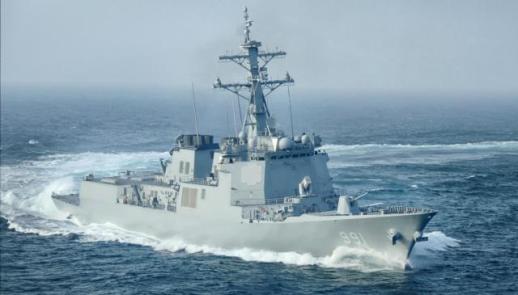 Seoul readies possible Hormuz deployment: report SEOUL, September 04 (AJP) - South Korea under repeated pressure from U.S. President Donald Trump for military contribution to the U.S. operations in the Strait of Hormuz, is making concrete preparations to deploy naval assets including P-8 Poseidon maritime patrol aircraft, an explosive ordnance disposal team and a logistics support ship to the Persian Gulf, a report said. The Defense Ministry spokesperson, however, denied the report Friday, saying it was "not true" and that the report had gone too far ahead. The spokesperson also noted that the presidential office had already rejected the report a day earlier. A senior Defense Ministry official told SBS that preparations were underway to dispatch naval forces to the strategic waterway. "We are making specific preparations to deploy naval forces to the Strait of Hormuz," the official was quoted as saying. The planned package would include P-8 Poseidon maritime patrol aircraft, a Navy logistics support ship and an explosive ordnance disposal, or EOD, team, according to the report. The presidential office however rejected reports that the government had settled on sending forces to the region. It said Seoul has been discussing with the international community ways to make a practical contribution toward restoring freedom of navigation through the Strait of Hormuz and promoting peace and stability in the Middle East. If deployed, the P-8 aircraft would monitor submarines and surface vessels posing potential threats in and around the waterway. The EOD personnel would come from the Navy Special Warfare Flotilla and could participate in operations alongside foreign naval forces, SBS reported. The logistics support ship would provide rear-area support for the aircraft and EOD unit. Deployment of the aircraft and support vessel would also require access to overseas ports and airfields for refueling, maintenance and logistical support. A senior military official told SBS that consultations with countries hosting possible ports of call and operational bases were believed to be underway. The move would mark a shift from Seoul's earlier position that it would consider a Hormuz deployment after the U.S.-Iran conflict ended. Fighting has continued despite efforts toward a ceasefire, while tensions around the strait remain elevated. Trump has repeatedly criticized South Korea for not doing enough to support the United States during the conflict with Iran, publicly arguing that Seoul has benefited from U.S. security support without providing sufficient assistance in return. Any actual deployment would still require political approval. Under South Korea's Constitution, the National Assembly must consent to the deployment of the country's armed forces overseas. SBS reported that the government could submit a deployment motion to parliament as early as this month following deliberations through the National Security Council and Cabinet. The Strait of Hormuz is one of the world's most strategically important shipping routes, linking the Persian Gulf with the Gulf of Oman and the Arabian Sea and serving as a major artery for global oil and liquefied natural gas shipments. AJP Takeaways: South Korean military reportedly preparing P-8 patrol aircraft, EOD personnel and a Navy logistics support ship for possible deployment to Strait of Hormuz Presidential office says no final decision has been made as Seoul weighs contribution amid repeated pressure from U.S. President Donald Trump Any overseas troop deployment requires National Assembly consent, with a proposal potentially reaching parliament as early as September 2026-09-04 07:50:35
 -
Search for Missing Crew Members from Capsized Tugboat in Busan Faces Challenges Search efforts for six crew members missing after a tugboat capsized off the coast of Busan have been hampered by adverse weather conditions, according to the Coast Guard.As of September 4, the Coast Guard began nighttime search operations at 6 p.m. the previous day but has yet to locate any of the missing individuals.The Coast Guard planned to deploy 14 vessels to search a 30-kilometer by 49-kilometer area, focusing on the site where the tugboat TNS Catcher sank, taking into account predicted drift zones.Additionally, one Coast Guard aircraft and two Air Force planes were scheduled to drop approximately 270 flares for nighttime visibility. However, strong winds prompted a wind advisory for the waters off Busan, complicating the search efforts.A Coast Guard official stated, "Due to poor weather conditions, the helicopters and aircraft designated to fire flares have suspended operations. The adverse weather is making the search difficult, but we will mobilize all available personnel and equipment to find the missing crew members."The 286-ton tugboat TNS Catcher capsized around 1:29 p.m. on September 2, approximately 9 kilometers east of Oryukdo, and completely sank by 3:27 p.m.There were eight crew members on board, including six South Koreans and two Indonesians. One Indonesian crew member was rescued by a passing merchant vessel, while a South Korean was found unconscious inside the tugboat and later died after being transported to a hospital.* This article has been translated by AI. 2026-09-04 07:20:00
-
Nepal Army Provides Two Helicopters for Search Efforts Amid Bad Weather The international emergency rescue team (KDRT) dispatched to Nepal attempted aerial searches on September 3 for nine missing South Koreans in the Nuwakot region, but had to turn back due to poor weather conditions.According to Yonhap News, a KDRT official stated via video link from the base camp in Batar, Nuwakot, that they received two helicopters from the Nepalese Army after a meeting with the local military commander.The commander asked what the South Korean team needed, to which the KDRT explained the areas of interest for the families of the missing individuals.However, the KDRT had to abort the search as rain and strong winds made conditions unsafe for flying. The official noted, "We were unable to secure visibility of even one meter while trying to enter the search area, so we returned. We plan to conduct another search with the two helicopters in the same area tomorrow and will discuss long-term search plans with Nepalese authorities afterward."The local military commander expressed frustration, stating, "The Nepalese Army has conducted five to six precise searches. Why can't South Korea trust us? I will not allow reckless actions in dangerous operational areas."Meanwhile, the recent flooding has resulted in 1,273 fatalities and 4,757 missing persons across Nepal and the neighboring Tibet Autonomous Region of China as of today.* This article has been translated by AI. 2026-09-04 06:08:00