


Latest by
-
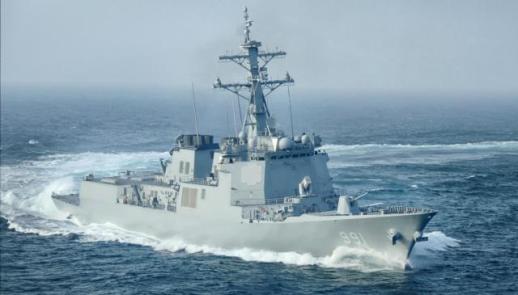 Seoul readies possible Hormuz deployment: report SEOUL, September 04 (AJP) - South Korea under repeated pressure from U.S. President Donald Trump for military contribution to the U.S. operations in the Strait of Hormuz, is making concrete preparations to deploy naval assets including P-8 Poseidon maritime patrol aircraft, an explosive ordnance disposal team and a logistics support ship to the Persian Gulf, a report said. The Defense Ministry spokesperson, however, denied the report Friday, saying it was "not true" and that the report had gone too far ahead. The spokesperson also noted that the presidential office had already rejected the report a day earlier. A senior Defense Ministry official told SBS that preparations were underway to dispatch naval forces to the strategic waterway. "We are making specific preparations to deploy naval forces to the Strait of Hormuz," the official was quoted as saying. The planned package would include P-8 Poseidon maritime patrol aircraft, a Navy logistics support ship and an explosive ordnance disposal, or EOD, team, according to the report. The presidential office however rejected reports that the government had settled on sending forces to the region. It said Seoul has been discussing with the international community ways to make a practical contribution toward restoring freedom of navigation through the Strait of Hormuz and promoting peace and stability in the Middle East. If deployed, the P-8 aircraft would monitor submarines and surface vessels posing potential threats in and around the waterway. The EOD personnel would come from the Navy Special Warfare Flotilla and could participate in operations alongside foreign naval forces, SBS reported. The logistics support ship would provide rear-area support for the aircraft and EOD unit. Deployment of the aircraft and support vessel would also require access to overseas ports and airfields for refueling, maintenance and logistical support. A senior military official told SBS that consultations with countries hosting possible ports of call and operational bases were believed to be underway. The move would mark a shift from Seoul's earlier position that it would consider a Hormuz deployment after the U.S.-Iran conflict ended. Fighting has continued despite efforts toward a ceasefire, while tensions around the strait remain elevated. Trump has repeatedly criticized South Korea for not doing enough to support the United States during the conflict with Iran, publicly arguing that Seoul has benefited from U.S. security support without providing sufficient assistance in return. Any actual deployment would still require political approval. Under South Korea's Constitution, the National Assembly must consent to the deployment of the country's armed forces overseas. SBS reported that the government could submit a deployment motion to parliament as early as this month following deliberations through the National Security Council and Cabinet. The Strait of Hormuz is one of the world's most strategically important shipping routes, linking the Persian Gulf with the Gulf of Oman and the Arabian Sea and serving as a major artery for global oil and liquefied natural gas shipments. AJP Takeaways: South Korean military reportedly preparing P-8 patrol aircraft, EOD personnel and a Navy logistics support ship for possible deployment to Strait of Hormuz Presidential office says no final decision has been made as Seoul weighs contribution amid repeated pressure from U.S. President Donald Trump Any overseas troop deployment requires National Assembly consent, with a proposal potentially reaching parliament as early as September 2026-09-04 07:50:35
 -
 Search for Missing Crew Members from Capsized Tugboat in Busan Faces Challenges Search efforts for six crew members missing after a tugboat capsized off the coast of Busan have been hampered by adverse weather conditions, according to the Coast Guard.As of September 4, the Coast Guard began nighttime search operations at 6 p.m. the previous day but has yet to locate any of the missing individuals.The Coast Guard planned to deploy 14 vessels to search a 30-kilometer by 49-kilometer area, focusing on the site where the tugboat TNS Catcher sank, taking into account predicted drift zones.Additionally, one Coast Guard aircraft and two Air Force planes were scheduled to drop approximately 270 flares for nighttime visibility. However, strong winds prompted a wind advisory for the waters off Busan, complicating the search efforts.A Coast Guard official stated, "Due to poor weather conditions, the helicopters and aircraft designated to fire flares have suspended operations. The adverse weather is making the search difficult, but we will mobilize all available personnel and equipment to find the missing crew members."The 286-ton tugboat TNS Catcher capsized around 1:29 p.m. on September 2, approximately 9 kilometers east of Oryukdo, and completely sank by 3:27 p.m.There were eight crew members on board, including six South Koreans and two Indonesians. One Indonesian crew member was rescued by a passing merchant vessel, while a South Korean was found unconscious inside the tugboat and later died after being transported to a hospital.* This article has been translated by AI. 2026-09-04 07:20:00
 -
Nepal Army Provides Two Helicopters for Search Efforts Amid Bad Weather The international emergency rescue team (KDRT) dispatched to Nepal attempted aerial searches on September 3 for nine missing South Koreans in the Nuwakot region, but had to turn back due to poor weather conditions.According to Yonhap News, a KDRT official stated via video link from the base camp in Batar, Nuwakot, that they received two helicopters from the Nepalese Army after a meeting with the local military commander.The commander asked what the South Korean team needed, to which the KDRT explained the areas of interest for the families of the missing individuals.However, the KDRT had to abort the search as rain and strong winds made conditions unsafe for flying. The official noted, "We were unable to secure visibility of even one meter while trying to enter the search area, so we returned. We plan to conduct another search with the two helicopters in the same area tomorrow and will discuss long-term search plans with Nepalese authorities afterward."The local military commander expressed frustration, stating, "The Nepalese Army has conducted five to six precise searches. Why can't South Korea trust us? I will not allow reckless actions in dangerous operational areas."Meanwhile, the recent flooding has resulted in 1,273 fatalities and 4,757 missing persons across Nepal and the neighboring Tibet Autonomous Region of China as of today.* This article has been translated by AI. 2026-09-04 06:08:00
-
Trade Chief: Concerns for Agriculture and Fisheries Considered in CPTPP Membership Park Jeong-seong, head of the Trade Negotiation Headquarters at the Ministry of Trade, Industry and Energy, stated on September 4 that "the burdens on sectors such as agriculture and fisheries, which are concerned about potential damage, must be adequately considered." He emphasized that he would listen to the concerns of the agricultural community and take their voices into account during the review process.Park made these remarks while presiding over a 'CPTPP Expert Advisory Meeting for the Agriculture and Fisheries Sector,' attended by experts from academia, research institutions, and related organizations.He highlighted that the Comprehensive and Progressive Agreement for Trans-Pacific Partnership (CPTPP) is not merely about market opening but is directly linked to the long-term benefits of the economy, including supply chain stability, economic security, and the expansion of export markets.During the meeting, participants discussed the anticipated impacts of CPTPP membership on the agriculture and fisheries sectors, key considerations, ways to enhance competitiveness, domestic supplementary measures, and strategies to leverage new opportunities for increasing exports of agricultural and fishery products. They also exchanged views on future communication strategies with the agricultural community.The Ministry plans to continue its communication with the agricultural sector in collaboration with relevant departments and experts. It intends to arrange direct meetings with industry representatives soon to gather detailed opinions by sector and product and incorporate them into the CPTPP membership review process.* This article has been translated by AI. 2026-09-04 06:04:00
-
The Rise of Red Tech: A Warning for South Korea Walking through the streets of Shenzhen, one encounters a constant stream of unfamiliar cars. It is often difficult to identify the manufacturer just by looking at the emblem, indicating the fierce competition among numerous automotive brands in a limited market. The bright lights illuminating the corporate headquarters of major companies in Shenzhen late into the night reflect the impact of 'Red Tech' on the automotive industry.The rapid growth of Chinese electric vehicles, which are releasing new models and technologies at an astonishing pace, is driven by intense labor demands and fierce competition for talent. Considering the clear results produced by the manufacturing sector, the current growth of Chinese cars seems inevitable. However, this success comes at the cost of sacrifices made by young workers in China.One source I met in Shenzhen expressed concern, saying, "By their mid to late 30s, people start worrying about job security." In South Korea, those in their 30s are often seen as candidates for layoffs. There is even a saying about the 'curse of turning 35,' suggesting that many return to their hometowns before reaching their 40s. Their positions are filled by the influx of new graduates each year. As of last year, the average weekly working hours in China reached 48.6 hours.While China maintains its demanding work culture, South Korea has seen a steady decline in working hours. According to the 'Social Trends in Korea 2025' report published by the National Statistical Office, South Korea's average weekly working hours peaked at 55.8 hours in 1988 and fell to 37.7 hours by 2024. This shift reflects a growing emphasis on work-life balance and job security.The era in which China was merely catching up to South Korea has ended. Now, there are increasing areas where South Korea must catch up to China. A survey conducted by the Korea Economic Association last year revealed that 62.5% of responding companies identified China as their primary competitor. In five sectors, including automotive and parts, China's competitiveness was rated higher than South Korea's. By 2030, it is projected that China will surpass South Korea in all ten major industries.What we need to focus on is not just China's working hours but their speed and intensity. The rapid pace at which they develop technology, produce products, and bring them to market, along with the competitive ecosystem of electric vehicles where capital and talent flow to successful companies, is a significant concern for South Korean industries.This is not a call to return to the past. However, it is essential to embrace the speed, technology, and bold investments that have fueled their competitiveness. South Korea's automotive industry must find ways to enhance productivity while maintaining its current strengths. There is a need to expand hybrid technologies and sports utility vehicles (SUVs), which are recognized for their competitiveness in the global market compared to China. Exploring ways to increase productivity is crucial. Hyundai Motor's emphasis on utilizing artificial intelligence (AI) across the company, rather than limiting it to specific areas, can be seen as a move to enhance both productivity and operational efficiency.During a recent CEO Investor Day, José Munoz, the president of Hyundai, stated that the company aims to boost productivity through partnerships with global firms. Amid rising raw material costs and increasing demand for advanced specifications, the company is looking to achieve economies of scale. As Hyundai cannot escape the challenges of labor, its focus on 'AI' and 'partnerships' may provide a solution to counter China's aggressive competition.* This article has been translated by AI. 2026-09-04 06:04:00
-
Financial Supervisory Service Warns of Investigations into Insurance Companies Over 1200% Rule Violations The Financial Supervisory Service (FSS) has warned that it will investigate not only corporate insurance agencies (GAs) but also primary insurance companies if violations or circumventions of the 1200% rule are confirmed. This warning comes amid concerns that practices aimed at bypassing commission caps, such as providing additional support payments of up to 800% of monthly premiums in the 13th month after contract signing, are continuing. According to the financial sector on September 4, the FSS gathered executives from life and non-life insurance companies the previous day to announce that if any signs of violating or circumventing the 1200% rule are found, both GAs and primary insurance companies will be subject to investigation. The FSS also urged insurance companies to refrain from excessive competition. Although two months have passed since the implementation of the 1200% rule, ongoing complaints have led the agency to send a warning message to the insurance industry. The 1200% rule limits the commission that GAs can pay to agents for contracts signed within the first year to a maximum of 12 times the monthly premium. In recent years, the competition to secure agents has intensified, leading to rampant excessive advance commissions. Some products have been criticized for offering first-year commissions that soar to 1500% to 2000% of the monthly premium, distorting the market. To address this issue, the financial authorities applied the 1200% rule to GAs starting in July of this year. However, reports indicate that some companies are delaying high commission payments until after the 13th month. While delaying the payment itself does not directly violate regulations, if it is merely a tactic to avoid commission caps, it could be considered a circumvention. In fact, one major insurance company-affiliated GA has introduced a policy this month to provide additional support payments based on agents' sales performance. If a customer maintains their contract, the additional payment is made in the 13th month. This structure allows the company to maintain high commission rewards by postponing payment until after the first year. For protection insurance, an additional payment of 200% of the monthly premium is made in the 13th month. For example, if an agent sells a product with a monthly premium of 1 million won, they would receive an additional 2 million won in the 13th month. The additional support rate for a 10-year whole life insurance policy can reach 300% to 500%, with a maximum of 800% depending on the payment period. The concern is that such high additional support payments could encourage excessive sales competition. Agents may prioritize the size of rewards over customer needs, leading them to push products with more incentives. This could result in fraudulent contracts aimed at securing commissions or unfairly persuading customers to cancel existing contracts and switch to new products. An agent affiliated with the GA stated, “To receive the additional payment in the 13th month, we must focus on selling specific products like whole life insurance,” adding, “The company has been planning this compensation structure since before the 1200% rule was introduced.”* This article has been translated by AI. 2026-09-04 06:04:00
-
U.S. Companies Secure $2 Billion Investment to Strengthen Semiconductor and Clean Energy Supply Chains 미국 기업들이 반도체 소재·장비와 디스플레이용 첨단소재, 해상풍력 등 국내 첨단산업 분야에 총 20억 달러 규모의 투자를 신고했다. 정부는 이번 투자가 한미 간 첨단산업 공급망 협력을 강화하고 국내 산업 경쟁력을 높이는 데 기여할 것으로 기대하고 있다. 산업통상부는 현지시간 3일 미국 워싱턴DC에서 대한무역투자진흥공사(KOTRA)와 함께 미국 투자신고식 및 라운드테이블을 개최했다고 밝혔다. 김정관 산업부 장관이 참석한 가운데 열린 투자신고식에서는 에어프로덕츠(Air Products), 엑셀리스(Axcelis), 코닝(Corning), 퍼시피코 에너지(Pacifico Energy) 등 미국 기업 4곳이 총 20억 달러 규모의 외국인직접투자(FDI)를 신고했다. 산업부는 최근 공급망 재편 등 불확실한 경제·통상 환경 속에서도 한미 간 투자 협력이 견고하게 이어지고 있음을 보여주는 사례라고 평가했다. 특히 반도체와 첨단소재, 재생에너지 등 전략산업을 중심으로 양국 간 공급망 협력이 한층 강화될 것으로 내다봤다. 산업용 가스 분야 글로벌 기업인 에어프로덕츠는 경기 평택에서 반도체용 가스 공급시설 증설을 추진한다. 이번 사업은 에어프로덕츠의 한국 진출 이후 최대 규모 프로젝트다. 반도체용 초고순도 가스 시설과 함께 미세공정에 사용되는 희귀가스 설비도 구축할 예정이다. 반도체 이온주입 장비업체 엑셀리스는 국내 제조시설 증설에 나선다. 엑셀리스는 2021년부터 미국 외 지역에서는 유일하게 한국에서 이온주입기를 직접 생산하고 있다. 이번 투자를 통해 국내 생산능력을 확대하고 한국을 아시아·태평양 지역 이온주입기 공급을 위한 수출 거점으로 강화할 계획이다. 첨단소재 기업 코닝도 국내 제조 역량 확대에 나선다. 디스플레이용 특수유리 등을 생산하는 코닝은 1973년부터 50년 이상 한국에 투자해 온 대표적인 외국인투자기업이다. 이번 투자를 계기로 차세대 모바일 기기와 반도체 분야의 첨단소재 관련 설비 도입을 확대할 예정이다. 재생에너지 개발기업 퍼시피코 에너지는 전남광주 지역에서 추진 중인 3.2GW 규모 해상풍력 발전단지 구축 프로젝트에 속도를 낸다. 퍼시피코 에너지는 미국을 비롯해 일본과 베트남 등 아시아·태평양 지역에서 풍력·태양광 발전사업을 개발·운영하고 있다. 투자신고식에 이어 김 장관은 4개 기업 관계자들과 라운드테이블을 갖고 한국 내 투자 현황과 건의사항을 청취했다. 이 자리에서는 향후 한미 간 투자 협력을 확대하기 위한 방안도 논의됐다. 김 장관은 "앞으로 한미 산업 협력을 발전시킬 주인공은 다름 아닌 기업인 여러분"이라며 "한국이 기업인 여러분의 사업을 한 단계 더 발전시키는 매력적인 투자 목적지이자 글로벌 시장으로 나아가는 통로가 될 수 있도록 적극 지원하겠다"고 밝혔다. 한편 산업부는 지난 1일 미국 샌프란시스코에서 국내 스타트업 8개사와 현지 글로벌 투자자를 연결하는 '한-미 CVC·VC 포럼'을 열고 투자 상담을 지원했다. 산업부는 이번 행사에서 구축된 네트워크를 기반으로 후속 협의를 이어가 실질적인 투자 협력으로 연결할 수 있도록 지원할 방침이다.* This article has been translated by AI. 2026-09-04 04:00:20
-
Work-Life Balance Initiative Boosts Employee Satisfaction in South Korea In a society that values work-life balance, a culture of taking time off has become an important welfare asset for companies. This shift has been particularly significant in small and medium-sized enterprises (SMEs) and small business sectors, where the Ministry of Culture, Sports and Tourism and the Korea Tourism Organization have played a crucial role through their Employee Vacation Support Program.According to a survey by the Korea Employers Federation released in July, the average vacation days for large companies this summer was 4.6 days, while SMEs averaged 3.7 days. The percentage of companies offering summer vacation bonuses has decreased to 53% from 54% last year, even as the demand for time off has grown. A vacation survey conducted by the Ministry in December revealed that the annual leave utilization rate reached 79.4%, the highest since the survey began in 2018. Travel accounted for 35% of the reasons for taking leave, maintaining the highest rate since 2022.The Employee Vacation Support Program has gradually changed the vacation culture over the past eight years, bridging the gap between limited welfare budgets and increased vacation demand. As of August 19 this year, 12,7856 employees from 11,873 companies participated, surpassing last year's total of 120,740.◆Launched in 2014 as a Pilot ProgramThe Employee Vacation Support Program began in 2014 in response to growing social demands for improved vacation culture and conditions. The program, modeled after the Korean-style check vacation system, was piloted by the Korea Tourism Organization with 2,526 employees from 180 SMEs participating. The pilot program transitioned to a full-scale initiative in 2018, aimed at improving the poor vacation culture and encouraging employees to take time off, while also boosting domestic travel.The program operates on a cost-sharing model where employees contribute 200,000 won, and both the company and the government provide 100,000 won each. The total of 400,000 won is returned to employees in the form of credits that can be used to purchase domestic travel products from a dedicated online store, which offers around 270,000 items including accommodations, transportation, and admission tickets. Companies often cite cost savings (48.7%) as a primary reason for participation.Since the new government took office last year, the program has been expanded. The national policy initiative to create a tourism environment accessible to all includes expanding employee vacation opportunities. This year, the recruitment target has increased from 100,000 to 145,000 due to supplementary budget allocations.◆790,000 Participants and 724.7 Billion Won in Domestic Tourism SpendingFrom 2018 to last year, 790,000 employees and over 80,000 companies participated in the Employee Vacation Support Program. This year, 70,522 employees from medium-sized companies (55.2%) participated, followed by 25,383 from small businesses (19.9%) and 16,810 from micro-enterprises (13.1%). A total of 408 organizations have participated continuously since 2018.During this period, participating employees spent approximately 724.77 billion won on domestic tourism. According to last year's performance analysis, the average spending per participant was 954,837 won, which includes the 400,000 won credit and an additional 554,837 won from their own funds, marking a 4.5% increase from the previous year. The government support of 100,000 won was leveraged 9.5 times. Notably, 97% of participants spent more than 300,000 won of their credits, with an average credit usage of 394,403 won.Additionally, the program has generated new travel demand. A survey of 1,014 participating employees by the Korea Tourism Organization found that 53.3% took trips they had not originally planned. Among new participants, 83.7% reported an increase in domestic travel frequency, and 60.7% noted higher travel expenses. There has also been a positive change in annual leave usage, with a utilization rate of 87.4% among participants, compared to 79.4% for the general workforce. The average number of trips taken was 2.4, with an average duration of 4.3 days.In a survey of 300 participating companies and 1,014 employees conducted last year, overall satisfaction rates were 82.0% and 81.0%, respectively. The intention to participate again was the same for both groups at 86.0%. Notably, satisfaction among returning companies was higher at 87.8%, with a re-participation intention of 92.3%, exceeding new participants by 14.7 and 15.8 percentage points, respectively.Companies cited reasons for participation as follows: cost savings (48.7%), employee demand (45.3%), and a high preference for travel-related benefits (42.0%). Employees primarily mentioned reduced financial burden (90.1%) as their reason for participation. Companies identified the benefits of participation as improved employee satisfaction (80.0%), enhanced welfare systems (72.0%), and increased motivation (71.7%). Some also noted benefits such as securing talent (38.7%) and reduced turnover rates (35.0%).A co-growth support program, which allows public institutions, private companies, and local governments to cover the contributions of SME employees, has been in operation since 2020. The number of participating companies has grown from 163 companies and 1,650 employees in its first year to 3,079 companies and 20,698 employees last year. The Korea Tourism Organization conducted 30 promotions from January to August this year, a 67% increase from 18 during the same period last year, and provided additional points to 44,476 local employees as of August 31.◆Results Sharing Event Scheduled for October 10The Korea Tourism Organization will hold the '2026 Employee Vacation Support Program Results Sharing Event' on October 10 at Signiel Seoul. Over 200 representatives from participating companies, responsible personnel, and related organizations will attend. The event will expand from a workshop focused on awards and best practices to a networking and results-sharing format.Winning companies were selected from 92 applicants following evaluations conducted on July 29. The Minister of Culture, Sports and Tourism Award will be presented to Big Tech Plus Co., Ltd. and Good Runner Company. The President of the Korea Tourism Organization Award will go to Human Metrics Co., Ltd., Service Co., Ltd., Easy Care Tech Co., Ltd., and Soha Aram Ilteo. The Co-Growth Award will be given to Gangwon Land Co., Ltd. and the Korea Real Estate Agency. Five organizations will receive appreciation plaques. Able Co., Ltd., recognized for its long-term participation over the past four years, will receive the Companion Giant Award, while Gyeryong Construction Industry Co., Ltd., noted for its excellent participation outside the capital region this year, will receive the Local Love Award. A-Pact Co., Ltd., recognized for its outstanding new participation this year, will receive the Vacation Seed Award. IBK Industrial Bank and the Construction Workers Mutual Aid Association, which had the top two budgets for the co-growth model last year, will also receive appreciation plaques.The Korea Tourism Organization is preparing to refine the program as it approaches its 10th year next year. Kwak Jae-yeon, head of the National Tourism Support Team at the Korea Tourism Organization, stated, "Next year, we plan to change the name to 'Laborer Vacation Support Program' to align with the government's new direction. We also aim to expand the program to include various job types, reducing support gaps and developing effective vacation support systems that reflect on-site demands so that more workers can enjoy their vacations."* This article has been translated by AI. 2026-09-04 00:04:00
-
Yongin Semiconductor Community Coalition Launches, Calls for Fair Development Citizens of Gwangju are urging for the establishment of regional coexistence development measures related to the Yongin Semiconductor National Industrial Complex.On September 3, the Yongin Semiconductor Gwangju Coexistence Development Coalition held its launch ceremony at Gwangju City Hall, where they announced their founding statement and joint resolution.The coalition stated, "We will cooperate with national projects for the success of South Korea's semiconductor industry," but firmly opposed any initiatives that would lead to unilateral sacrifices by Gwangju.They highlighted that approximately 27 kilometers of the total 46.9-kilometer water supply pipeline for the Yongin Semiconductor National Industrial Complex is expected to pass through Gwangju, potentially impacting transportation, the environment, and residents' quality of life.In response, the coalition asserted that "practical coexistence measures are necessary to address the traffic, environmental, and quality of life damages that may arise during construction, as well as the various regulations that Gwangju has endured, such as the water source protection area." They called on the government to officially recognize Gwangju as a coexistence cooperation area for the Yongin Semiconductor National Industrial Complex and to develop it as a supporting city for the semiconductor industry in the metropolitan area.Additionally, they demanded the establishment of an industrial complex for semiconductor materials, parts, and equipment, expansion of transportation networks including regional railways and roads, improvement of overlapping regulations in water source protection areas, and enhancement of infrastructure for industry, research, education, and housing.The coalition also proposed the creation of a semiconductor coexistence belt connecting Pangyo, Gwangju, Yongin, and Icheon, along with the establishment of a permanent cooperation body involving the government, Gyeonggi Province, Gwangju City, and Yongin City.The coalition emphasized, "We are not opposing the success of the Yongin Semiconductor National Industrial Complex, but rather demanding practical coexistence development measures that correspond to the burdens placed on Gwangju by national projects."They added, "As the water supply pipeline passes through Gwangju, industry, jobs, transportation infrastructure, and investment must also progress alongside Gwangju. The government must respond to the region's legitimate demands with responsible coexistence measures." Meanwhile, the coalition plans to raise awareness of their demands through a citizen signature campaign and will continue to urge the government, the National Assembly, and relevant agencies in Gyeonggi Province for the establishment of coexistence development measures.* This article has been translated by AI. 2026-09-03 21:56:00
-
Insurance Companies Receive Additional Household Loan Quotas Amid New Guidelines 3일 금융권에 따르면 금융감독원은 지난주부터 생명·손해보험사에 수정된 가계대출 관리 목표를 안내하고 있다. 당초 목표를 초과한 보험사부터 우선 통지하고 있으며 이들 회사에도 일정 규모의 추가 한도를 인정한 것으로 확인됐다.이는 금융당국이 지난달 13일 발표한 부동산 금융 대책을 통해 올해 금융권 가계대출 증가율 관리 목표를 기존 1.5%에서 3.0%로 높인 데 따른 조치다. 목표 상향으로 금융권 전체에 명목상 약 30조원의 추가 대출 여력이 생겼지만 올해 들어 이미 늘어난 가계대출 등을 고려하면 실제 활용할 수 있는 규모는 6조~8조원에 그칠 것으로 전망된다.보험업권에 배분되는 추가 한도는 크지 않은 것으로 알려졌다. 올해 6월 말 보험계약대출 잔액은 72조8000억원으로 지난해 말보다 2조원 증가했다. 보험계약대출은 보험계약자가 해지환급금 범위 안에서 받을 수 있는 대출이다. 소득 증빙이나 신용심사 없이 이용할 수 있어 급하게 생활자금이 필요할 때 주로 활용된다.금감원은 보험업권의 가계대출 규모가 은행권보다 작은 점과 향후 대출 상환에 따라 잔액이 줄어들 가능성 등을 고려해 기존 목표를 초과한 보험사에도 추가 한도를 배정한 것으로 전해졌다. 다만 추가 한도 중 상당 부분이 이미 초과한 대출액을 상쇄하는 데 쓰이는 만큼 신규 대출 확대 효과는 크지 않을 것으로 보인다. 금감원은 추가 한도를 받은 보험사에 가계대출 모니터링을 강화할 것도 주문했다.First Company to Face Delisting Under New Regulations: Coiz3일 금융투자업계에 따르면 광학필름 코팅 제조업체인 코이즈는 시가총액 미달 사유로 상장폐지가 확정돼 이날부터 정리매매에 들어갔다. 지난 7월 상장유지 요건이 강화된 이후 첫 상폐 사례다. 정리매매 첫날인 이날 코이즈는 34.72% 떨어진 329원에 거래됐다. 코이즈는 오는 11일까지 7거래일간 정리매매를 진행한 뒤 14일 최종 상장폐지될 예정이다.앞서 금융당국은 지난달부터 코스피는 시가총액 300억원, 코스닥은 200억원에 미달하는 상태가 30거래일 연속 이어지면 관리종목으로 지정하도록 규정을 강화했다. 동시에 ‘동전주’ 상장폐지 요건 또한 새로 시행됐는데, 주가가 30거래일 연속 1000원 미만이면 관리종목으로 지정된다. 관리종목으로 지정된 이후 90거래일 안에 45거래일 이상 시가총액 기준을 넘기거나 주가를 연속 1000원 이상으로 유지하지 못할 경우 상장폐지 절차를 밟는다.코이즈를 시작으로 부실기업 퇴출이 줄줄이 이어질 전망이다. 다음 퇴출 후보로는 원풍물산, 신라에스지, 케이엠제약, 수성웹툰, 골드앤에스 등이 꼽힌다.원풍물산은 지난 7월 3일 시가총액 미달을 이유로 관리종목으로 지정된 이후 41거래일째 시총 기준을 밑돌고 있다. 현재 상태가 이어진다면 오는 8일 상장폐지 사유가 발생할 것으로 예상된다. 신라에스지와 케이엠제약은 지난달 31일 장 마감 후 시가총액 미달에 따른 상장폐지 우려 관련 안내가 나왔고 수성웹툰과 골드앤에스 또한 지난 2일 장 마감 후 같은 내용의 공시가 나왔다.Foreign Exchange Reserves Reach $442.3 Billion in August3일 한국은행에 따르면 8월 말 기준 우리나라의 외환보유액은 4422억8000만 달러로 전월 말(4279억5000만 달러) 대비 143억3000만 달러 늘었다. 지난 6월부터 3개월 연속 증가세다.한은 관계자는 "금융기관의 외화예수금이 크게 늘어난 데다, 운용수익 및 기타통화 외화자산의 미 달러 환산액 증가 등이 더해지며 큰 폭으로 늘었다"고 설명했다.자산별로는 유가증권(3870억7000만 달러)가 70억7000만 달러 증가했다. 예치금(303억 달러)도 71억7000만 달러가 늘었다.특별인출금(SDR·157억7000만 달러)과 IMF 포지션(43억4000만 달러)은 각각 6000만 달러, 3000만 달러씩 증가했다. 금은 매입 당시 가격으로 표시하기 때문에 47억9000만 달러를 유지했다.다만 한은은 이번에 그동안 매달 제공해온 국가별 외환보유액 순위 자료를 제외했다. 한은이 월별 자료에서 우리나라 세계 순위를 별도 항목으로 제시하지 않은 것은 2001년 2월 말 이후 25년 6개월 만에 처음이다.Tving Data Breach Exposes 39.54 Million Accounts3일 과학기술정보통신부(과기정통부)는 지난 5월 발생한 티빙 개인정보 유출 사고에 대한 민관합동조사단(조사단)의 조사 결과를 발표했다. 조사단 관계자는 "중복을 포함한 약 3954만개 계정이 유출됐다"고 밝혔다.조사단에 따르면 유출 계정은 활성 계정 2206만3021개, 1년 이상 접속하지 않은 휴면 계정 850만 2679개, 회원 탈퇴로 비활성화된 계정 886만 8174개, 테스트 계정 10만 6823개 등 총 3954만697개다.이번 사고로 외부 SNS의 개인정보까지 함께 유출되거나 해당 서비스에 접근할 가능성은 없다고 판단했다. 조사단 관계자는 "SNS 간편가입 과정에서 티빙으로 넘어간 이름·이메일 주소, 일부 출생연도·성별 등이 유출된 것"이라며 "외부 SNS의 개인정보까지 함께 유출된 것은 아니다"고 말했다.다만 티빙이 본인확인 과정에서 별도로 수집한 휴대전화 번호와 연계정보(CI)·중복가입확인정보 등은 유출 대상에 포함됐다.조사단 관계자는 "티빙이 성장하는 과정에서 가입 경로 간 중복 여부를 초기에 확인하지 않은 것으로 판단된다"며 "자체 가입과 CJ ONE, 네이버·카카오 등 여러 경로를 통해 동일인이 반복해서 가입할 수 있었고, CI를 기준으로 확인한 결과 한 명이 최대 13개 계정을 보유한 사례도 있었다"고 밝혔다.National Assembly Passes 17 Livelihood Bills, Including Itaewon Special Law여야는 3일 국회 본회의에서 10·29 이태원참사 진상규명과 재발방지를 위한 특별조사위원회의 활동 기간을 1년 연장하는 '이태원 참사 특별법 개정안' 등 민생 법안 17건을 통과시켰다. 아울러 네팔 수해 피해 복구를 위한 구호기금을 의원 수당에서 갹출하기로 했다.국회는 이날 본회의를 열고 이태원 참사 특별법 개정안을 재석 231인 중 찬성 220인, 반대 5인, 기권 6인으로 가결시켰다. 이에 따라 오는 16일 종료될 예정이었던 특조위는 내년 9월 16일까지 활동을 이어가게 됐다.아울러 네팔 수해 구호기금 모금을 위해 국회의원 9월분 수당에서 3% 상당액을 의연금으로 각출하는 안건도 가결했다. 조정식 의장은 "1000명이 넘는 사상자와 막대한 피해로 슬픔에 잠긴 네팔 정부와 네팔 국민에게 깊은 애도와 연대의 뜻을 전한다"며 "실종된 우리 국민의 무사 귀환도 간절히 기원한다"고 했다.이어 "네팔에서 발생한 홍수로 인해 막대한 인명 및 재산피해를 입은 네팔 국민을 위로하고 피해 복구를 돕기 위해 국회 차원에서 의연금을 모금하고자 한다"며 의연금 각출 안건을 설명했다.이날 본회의에서는 정부의 내년도 예산안도 보고됐다. 앞서 정부는 지난 1일 국무회의에서 821조원 규모의 내년도 예산안을 승인하고 이날 국회에 제출했다. 내년도 예산안은 상임위원회별 예비 심사와 예산결산특별위원회 종합심사, 본회의 심의 및 의결을 거쳐 확정된다.* This article has been translated by AI. 2026-09-03 21:48:00