


Latest by
-
 Korea Zinc Refutes Claims of Fund Investment Losses by MBK Partners and Youngpoong Korea Zinc has rebutted concerns raised by MBK Partners and Youngpoong regarding potential losses related to the company's fund investments, stating on September 3 that it is considering legal action against what it claims are false assertions.The company argued that MBK and Youngpoong's claims of 'uncertainty in recovery' and 'risk of loss' regarding specific funds it has invested in are unfounded, as there have been no recorded evaluation losses compared to the acquisition cost.Korea Zinc also noted that the investment examples provided by MBK and Youngpoong for comparison are not directly comparable due to differences in acquisition timing and costs. The assertion that a specific individual's investment faced a loss and led to a withdrawal of funds was also denied.The company explained that it invests a portion of its surplus funds in financial products such as funds for financial investment purposes, following relevant laws and internal procedures for investment decisions. It added that it has realized profits from some investments.Furthermore, Korea Zinc clarified that it is a limited partner (LP) in the fund, and the selection of specific investment targets and fund execution is led by the general partner (GP). It emphasized that viewing its investments as direct selections of individual companies differs from the fund management structure.Korea Zinc plans to provide information regarding its investment status to shareholders and the market. It will also consider legal measures if it determines that false claims have harmed the reputation of the company and its management or its corporate value.Meanwhile, a shareholders' meeting is scheduled to take place on September 9 at 10 a.m. at the Mondrian Hotel in Yongsan, Seoul.* This article has been translated by AI. 2026-09-03 16:16:00
 -
Banana-Flavored Milk and Other IP Goods Generate 10.7 Billion Won in Funding Wadiz reported that its intellectual property (IP) goods funding has surpassed 10.7 billion won. Familiar brands like banana-flavored milk, Ssangssangbar, and Butter Ring are transforming into entirely different products, garnering consumer interest. Wadiz announced on September 3 that the cumulative funding for goods utilizing brand and character IP over the past two years has reached approximately 10.7 billion won. Among this, funding for food and beverage-related projects that reinterpret food packaging into tableware and electronic devices has exceeded 3.4 billion won. The standout product is a five-piece tableware set modeled after the iconic container of Binggrae's banana-flavored milk. The familiar container shape has been reimagined into rice bowls, soup bowls, and plates. Before the project was publicly launched, over 24,000 people signed up for notifications, and the actual funding amount reached 650 million won. Notifications from overseas users in the United States, Japan, and Singapore also continued. The combination of food IP and tech products is also receiving positive responses. A product that turns Haitai Ice's Ssangssangbar into a power bank raised 680 million won in its initial funding and has proceeded to a second round. A MagSafe charger modeled after Haitai's Butter Ring recorded 420 million won in funding. Other products like O Yes, Cham Bungeoppang, and wafers have expanded their product range to include power banks and hand warmers. On September 17, a power bank utilizing Dongwon Tuna can design will be unveiled, with over 8,500 pre-notification sign-ups currently. These products stand out not just for attaching brand logos or characters. They maintain the shape and color of the original packaging, allowing consumers to immediately recall the existing brand while adding new functionalities like tableware, chargers, and power banks. Wadiz views the ability to gauge initial consumer reactions through funding as a factor in expanding the use of brand IP. Before mass production, it allows brands to see how much consumers are willing to spend on specific IP and product combinations, and if the response is positive, they can expand into follow-up products or other categories. The influx of overseas consumers into Wadiz is also increasing the potential for international expansion of IP goods. In the first half of this year, Wadiz recorded actual funding payments from 25 countries based on overseas shipping addresses, with Japan, the United States, and Hong Kong being the top three. In May, the monthly active users (MAU) reached 10.82 million, and supporter participation, including notifications, payments, and shares, totaled 7.32 million. A Wadiz representative stated, “For brands and makers, this can be an opportunity to broaden the appeal of existing IP into new product lines, creating additional product opportunities. We hope this initiative leads to more diverse brands and makers.” 2026-09-03 16:16:00
-
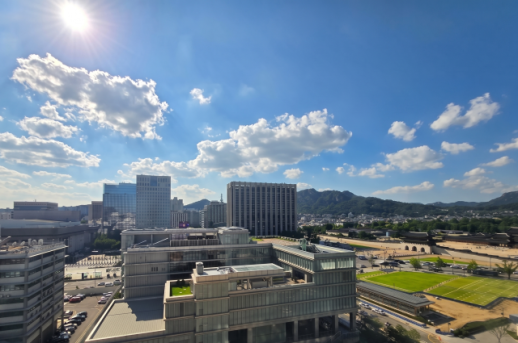 S. Korea to move ministries and state bodies out of Seoul SEOUL, September 03 (AJP) - Central government ministries and about 350 public institutions will start leaving the Seoul metropolitan area in 2027, advancing a project the Constitutional Court forced South Korea to scale back more than two decades ago. Prime Minister Han Seong-sook said Thursday the government would publish its list of institutions to be moved in the fourth quarter of this year and begin relocating them the following year. The list will be built under what she called a principle of minimum retention, meaning an institution stays in the capital region only if there is a compelling reason to keep it there. The 350 figure covers public institutions, a South Korean category running from state-owned energy and housing corporations to research institutes and small licensing bodies. About 525 exist nationwide with an authorized headcount of roughly 432,000. Han said they would be placed in clusters rather than parceled out across provinces. "We will avoid a share-the-spoils distribution and instead gather the energy of regional growth like a bonfire, concentrating institutions around the innovation cities to maximize the strength of regional hubs," she said at Government Complex Seoul. Innovation cities are planned districts built outside the capital region from 2005 to house institutions moved out of Seoul in the first relocation round. The ministries are the harder half of the announcement, because moving them requires changing the law. Interior and Safety Minister Yun Ho-jung said the Ministry of Justice and the Ministry of Gender Equality and Family would go to the central city of Sejong from the first half of 2027, ahead of other ministries, because their size and the ripple effects of their departure are large. Both are currently barred from moving. Article 16 of the Special Act on the Construction of the Multifunctional Administrative City in the Yeongi-Gongju Area, the 2005 law that created Sejong, names five ministries as excluded from relocation. They are Foreign Affairs, Unification, Justice, National Defense, and Gender Equality and Family. All five were held in the capital region on the argument that their work is bound tightly to the president, the National Assembly, and the judiciary. Yun said the government would push an amendment striking those ministries from the exclusion list. "We will also pursue a revision of the act that deletes the relevant institutions from the list of bodies excluded from relocation," he said. The route has been used before. The Interior and Safety Ministry was itself written into the exclusion list in a 2014 revision, removed by a further amendment in 2017, and relocated to Sejong afterward. Yun said the Ministry of Foreign Affairs and the Ministry of Unification would be considered for relocation in step with the presidential office move in 2030 and the opening of the National Assembly's Sejong chamber in 2033. That leaves the Ministry of National Defense as the only one of the five with no timetable attached to it. Agencies needing purpose-built accommodation will move later. Yun said the indictment agency and the serious crime investigation agency, along with the Korean National Police Agency, would relocate only after new buildings are finished. The first two launch on Oct. 2, when Korea abolishes its 78-year-old prosecution service and splits investigation from indictment. Institutions left unnamed on Thursday, including the Financial Services Commission, have not been ruled out. Yun said the final list would be confirmed and formally notified during the fourth quarter. The plan closes a fight running since the late President Roh Moo-hyun campaigned in 2002 on moving Cheong Wa Dae, the presidential office, and the ministries to the Chungcheong region in the center of the country. His New Administrative Capital Act was promulgated on Jan. 16, 2004. Ten months later, on Oct. 21, the Constitutional Court voided it, holding that Seoul's status as the capital forms part of an unwritten customary constitution built on some 600 years of practice, and that moving it would require a constitutional amendment or a national referendum. The Roh government returned in 2005 with a version that left the president in Seoul and sent the ministries alone. That became Sejong, and that is the version the court allowed to stand. President Lee Myung-bak tried to undo it. His government abandoned the ministry relocation in January 2010 and proposed converting Sejong into a self-sufficient education and business city. The National Assembly rejected the revision on June 29, 2010. Of 275 members present, 105 voted for it and 164 against, with six abstentions. Prime Minister Chung Un-chan, who had led the effort, resigned weeks later. Sejong launched as a special autonomous city on July 1, 2012, with a population of about 100,700. The presidential office planned there is due for completion in August 2029, nine months earlier than the original target, with groundbreaking set for 2027. The National Assembly's Sejong chamber is scheduled for 2033. Land, Infrastructure and Transport Minister Kim Yun-duk said the second round would not repeat the pace of the first, which took more than seven years from announcement to actual relocation. Institutions will move into leased private buildings starting next year rather than wait for new complexes to be finished. Kim said the criteria used to justify staying in Seoul during the first round would be reviewed in full, and that support would be weighted toward institutions that move farther and move sooner. He also said the first round failed to pull anchor companies and research institutes along with the relocated institutions, and that the second would group them by the strategic industry of the innovation city receiving them. Han said the government would cover relocation and housing costs for staff and improve schools and hospitals in the receiving areas. She acknowledged the plan would meet resistance. "It will not be without some disagreement and walls of competing interests," she said, promising to listen to local governments and labor groups. The government argues the concentration itself is the problem. Han said the capital region is saturated with people, capital, companies and infrastructure while other regions face depopulation. "Balanced growth is not a matter of choice. It has become a survival strategy for a sustainable Republic of Korea," she said. Seoul and the surrounding region will be redirected toward economic, cultural and international exchange functions, Han added. Kim set out the standard the fourth-quarter list will be measured against. "Unless an institution absolutely must remain, we will include it in the relocation in principle," he said. AJP Takeaways ● South Korea will start moving central government ministries and about 350 public institutions out of the Seoul metropolitan area in 2027, with the relocation list published in the fourth quarter of this year. ● The Ministry of Justice and the Ministry of Gender Equality and Family go first, from the first half of 2027, but the National Assembly must first amend the 2005 law that bars them from moving. ● That law exempted five ministries from relocation. Foreign Affairs and Unification are now tied to the 2030 presidential office move and the 2033 National Assembly Sejong chamber, leaving National Defense as the only one without a timetable. ● The plan revives a project the Constitutional Court struck down in October 2004, ruling that Seoul's status as capital is part of an unwritten customary constitution. ● Institutions will move into leased private buildings rather than wait for new complexes, after the first relocation round took more than seven years to get underway. 2026-09-03 16:12:15
 -
Generations Unite in Song at KBS Hall Choral Festival on September 19 High school alumni and college students from different generations will come together to sing on stage. The Korea High School Alumni Choir announced that it will hold the '2026 Korea High School Alumni Choir Festival - Shoulder to Shoulder, Youth and Vitality' on September 19 at 5 p.m. at KBS Hall in Yeouido, Seoul. Performers will include the Korea High School Alumni Choir, college student choirs from across the nation, the Hanyang University cheerleading team, and the Shoulder to Shoulder Band. This year's theme is 'Youth' and 'Vitality.' The event aims to bridge the cultural and perceptual gaps between middle-aged and younger generations through music. It has been selected for support by the Ministry of the Interior and Safety's public activity program for non-profit organizations, with backing from the Ministry of Gender Equality and Family. The performance will explore various aspects of youth through seven stages, addressing themes of love and heartbreak, life’s struggles, fears about the future, and the hope and joy that overcome these challenges. The program will feature nostalgic songs, pop hits, and the latest K-pop and dance tracks, showcasing music that spans generations. In addition to the large choir, there will be performances by college cheerleading teams and band music. At the end of the event, all performers will take the stage together to convey the message that 'youth is not about age, but the energy of the heart' through a final chorus. Ahn Hee-dong, chairperson of the Korea High School Alumni Choir, stated, “I believe that creating a network among college choirs and having a space for communication through choral music can help alleviate the fragmentation in consciousness and culture between generations. Each time we hold the festival, I am reminded of the power of choral music as I witness the enthusiastic response from the younger generation and the natural empathy that arises during rehearsals.” The 'Shoulder to Shoulder' event began in 2024. Last year, a choral festival was held to commemorate the 80th anniversary of Korea's liberation, and this year marks the third event, focusing on intergenerational harmony. The performance is free of charge and open to those aged 8 and older.* This article has been translated by AI. 2026-09-03 16:12:00
-
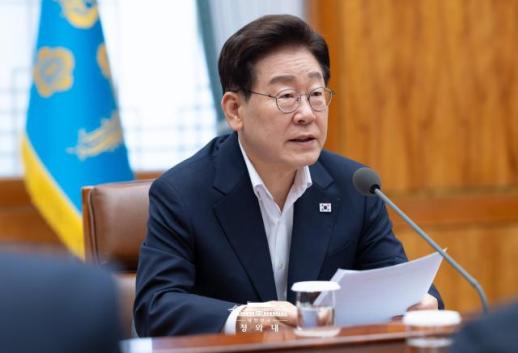 Lee meets Hyundai chief in latest private talks with business leaders SEOUL, September 3 (AJP) - President Lee Jae Myung met with Hyundai Motor Group chairman Chung Eui-sun at an undisclosed location in Seoul earlier this week, according to industry sources on Thursday. Their private, closed-door meeting was reportedly held the previous day, although Cheong Wa Dae declined to confirm details, saying it was difficult to verify the president's private schedule. The two apparently discussed the automaker's planned investment worth 9 trillion won (about US$6.6 billion) in Saemangeum, North Jeolla Province, announced in February this year, where the conglomerate plans to build a major hub for projects in robotics, artificial intelligence (AI), and hydrogen energy. The project is part of the Lee administration's three mega projects, which aim to build an AI industry ecosystem by linking semiconductors, physical AI and AI data centers, while creating new high-tech industrial hubs in provincial areas to promote balanced regional development. Lee and Chung may have also discussed infrastructure and regulatory support for the projects, as well as ways to secure skilled workers. They also likely discussed trade issues and U.S. tariff pressure, as Hyundai Motor Group tries to balance heavy investment in South Korea with the expansion of its production and supply chains in the U.S. Lee's meeting with Chung is part of a series of informal gatherings with leaders of major conglomerates, following talks with SK Group Chairman Chey Tae-won on Aug. 20 and Samsung Electronics Chairman Lee Jae-yong about a week later. AJP Takeaways • President Lee Jae Myung met Hyundai Motor Group chairman Chung Eui-sun on Sept. 2, 2026, in Seoul for a private meeting reportedly focused on Hyundai Motor Group's domestic investment plans, trade issues and U.S. tariff pressure. • Hyundai Motor Group plans to invest 9 trillion won (about $6.6 billion) in Saemangeum, North Jeolla Province. The project includes a major hub for robotics, artificial intelligence and hydrogen energy and is part of the Lee administration's three "mega projects" aimed at developing South Korea's AI industry and regional high-tech hubs. • The meeting was part of President Lee Jae Myung's recent private talks with major business leaders. Lee also met SK Group chairman Chey Tae-won on Aug. 20, 2026, and Samsung Group chairman Lee Jae-yong about a week later, as the government seeks closer coordination with major conglomerates on investment and industrial policy. 2026-09-03 16:07:39
 -
 AI spending binge steepens Korea's bond curve SEOUL, September 03 (AJP) - As the race for AI supremacy sends government and corporate spending into the stratosphere, investors are demanding more to lend for decades — a shift showing up starkly in South Korea, where yields have risen progressively faster toward the long end of the government bond curve. The yield chart over the past year shows an increasingly steep repricing toward longer maturities. The 30-year yield has climbed the most, touching a record 4.751 percent in August, while shorter-dated yields remain below peaks reached during the global tightening shock of 2022. The pattern matters because the far end of the curve says more than where traders think the Bank of Korea will set interest rates over the next year or two. It reflects what investors demand to lock up money for decades amid rising capital needs, uncertainty over inflation and fiscal policy, and questions over who will absorb long-term debt. Korea adds a domestic wrinkle to that global story. Insurers, historically some of the country's most dependable buyers of ultra-long government bonds, have less structural need to keep accumulating them after reducing mismatches between long-term assets and liabilities under new accounting and capital rules. The combination is making Korean bonds cheaper, but not yet cheap enough to bring those long-term buyers back in force. Government bonds staged a modest recovery Thursday after a broad selloff a day earlier. The three-year Korean government bond yield fell 2.0 basis points from Wednesday's close to 3.910 percent in morning final quotations from KOFIA. The benchmark 10-year yield declined 3.7 basis points to 4.381 percent, while the 30-year eased 1.8 basis points to 4.639 percent. The pullback did little to change the broader picture. The three-year yield has risen about 96 basis points from 2.95 percent at the end of 2025, while the 10-year has climbed about 99 basis points from 3.39 percent. The move becomes much larger at the far end. The 30-year yield has surged about 138 basis points from 3.258 percent at the end of last year, reaching an all-time high of 4.751 percent on Aug. 18 before easing. The KOFIA chart makes the shift particularly visible. All four maturities have moved higher over the past year, but the spread between shorter and longer yields has widened as the selloff increasingly concentrates at the far end of the curve. That is different from a simple policy-rate shock. During the 2022 global tightening cycle, investors rapidly repriced expectations for aggressive rate increases by the BOK and U.S. Federal Reserve. The Korean three-year yield jumped 34.9 basis points in a single session on Sept. 26, 2022, to 4.548 percent, while the 10-year gained 22.3 basis points to 4.335 percent. The 10-year later reached 4.632 percent on Oct. 21, while the three-year stood at 4.495 percent. Today's three-year yield remains clearly below that period's peak. The 10-year has returned to similar territory, while the 30-year has gone further and set a record. The contrast suggests today's repricing is less concentrated on the next few BOK decisions and more heavily influenced by the price investors place on holding duration for decades. Kim Myung-sil, an analyst at iM Securities, said the recent market has been notable because yield increases have been concentrated at longer maturities rather than spread evenly across the curve. Supply and demand have played a larger role in the bear steepening than monetary policy alone, she said. Global borrowing gets more expensive Korea's move forms part of a much broader reassessment of long-term debt. Governments are spending heavily on defense, energy security and industrial policy, while the global AI race is demanding extraordinary investment in semiconductor plants, data centers, electricity generation, transmission networks and other infrastructure. Technology companies are simultaneously committing vast amounts of capital to AI computing capacity, adding private-sector demand for long-term financing to already-heavy public borrowing. Bond investors are being asked to provide more capital just as persistent inflation uncertainty has made them less willing to assume that interest rates will eventually return to the exceptionally low levels of the pre-pandemic era. That pressure has shown up most visibly in long maturities. The U.S. 10-year Treasury yield eased to around 4.78 percent in Asian trading Thursday after retreating from a multiyear high reached a day earlier. Japan's 10-year government bond yield fell 4.5 basis points to 2.965 percent after moving above 3 percent earlier this week for the first time since 1996. Korea and Japan, however, have experienced considerably larger increases this year than the United States. Korea's 10-year yield is about 99 basis points above its end-2025 level. Japan's has climbed roughly 89 basis points from 2.075 percent, compared with an increase of around 60 basis points in the U.S. 10-year Treasury from 4.18 percent. Japan matters well beyond its own market. For decades, low domestic yields encouraged Japanese banks, insurers and asset managers to send capital abroad in search of returns. Higher yields at home reduce that incentive, potentially weakening a major source of marginal demand for U.S. Treasuries and other overseas bonds. That in turn adds to the competition facing Korea. When U.S. and Japanese bonds offer increasingly attractive returns, Korean debt must compete harder for global capital, particularly at maturities where investors assume greater interest-rate and currency risk. Renewed Middle East tensions have intensified those pressures this week. Higher oil prices have revived concern that energy costs could keep inflation elevated, helping push government borrowing costs to multiyear or multidecade highs across several major markets before Thursday's partial recovery. Korea's traditional buyer retreats Global forces alone, however, do not explain why Korea's far end has moved so aggressively. The structure of domestic demand has changed. Korean insurers have traditionally been natural buyers of 20- and 30-year government bonds because their liabilities — particularly life insurance obligations — can stretch decades into the future. Ultra-long bonds allowed them to better match the duration of those liabilities with their assets. The introduction of IFRS 17 and the Korean Insurance Capital Standard, or K-ICS, in 2023 accelerated that adjustment. As insurers made progress in reducing their asset-liability duration mismatches, their need to continuously add ultra-long government debt weakened. That removes a buyer that historically purchased long bonds partly because of balance-sheet requirements rather than simply because yields looked attractive. The implication is straightforward: as structural demand weakens, prices may need to fall further — and yields rise further — before more price-sensitive investors step in. Tuesday's 30-year bond auction illustrated that tension. The government offered 2.5 trillion won ($1.8 billion) of 30-year bonds, 300 billion won less than the previous month's competitive offering. Bids totaled 5.417 trillion won, equivalent to 216.7 percent of the planned amount, and the full amount was awarded at 4.630 percent. The auction was comfortably covered but failed to generate lasting relief for the long end. That distinction matters. The issue is not whether an individual bond sale can attract enough bids, but the yield required for investors to absorb long-duration debt consistently. Bigger budget, but not a classic supply shock South Korea's fiscal expansion has added another layer of uncertainty, although the numbers make it difficult to blame the selloff on a straightforward flood of new government borrowing. The Cabinet this week approved an 820.9 trillion won ($600 billion) spending plan for 2027, up 12.8 percent from this year's original budget. The expansion comes as the government seeks to invest heavily in growth industries and support the economy, helped by booming semiconductor-related tax receipts. National tax revenue is projected at 584.4 trillion won. Despite the larger budget, the government plans to reduce Korean government bond issuance next year. Gross issuance is projected to fall to 222.8 trillion won from 225.7 trillion won, while net issuance is expected to decline more sharply to 96.3 trillion won from 109.4 trillion won. That makes today's selloff different from a conventional supply shock in which an announcement of sharply higher borrowing immediately overwhelms bond demand. What matters for the long end is broader. A 30-year investor is not merely assessing next year's bond issuance. The investor is taking a view on decades of future spending, tax revenue, inflation, economic growth and the amount of compensation required to accept the risk that those assumptions change. The surge in government and corporate spending worldwide therefore matters even when Korea itself is not immediately issuing more debt. President Lee Jae Myung acknowledged the higher cost of capital during a Cabinet meeting at the Blue House on Tuesday. "The rise in interest rates is unavoidable now," Lee said, urging fiscal policy to limit the burden on vulnerable households and prevent damage to growth potential. His remarks did not trigger the bond selloff. Global yields and pressure at Korea's long end were already building. Not another 1997 The scale of the increase has inevitably invited comparisons with previous periods of Korean financial stress, but the similarities are limited. During the 1997-98 Asian financial crisis, the three-year government bond yield averaged 12.26 percent in 1997 and 12.94 percent in 1998, according to National Assembly Budget Office data based on Bank of Korea statistics. A comparable 10-year benchmark did not yet exist. Those double-digit rates accompanied a collapse in external financing and severe currency stress. The 2008 global financial crisis produced another different pattern. Once recession and financial-stability risks overtook inflation concerns, aggressive policy easing ultimately pushed government bond yields lower. Neither dynamic describes today's market. The won closed Thursday's daytime trading at 1,359.3 per dollar, 9.4 won stronger than Wednesday's close of 1,368.7, despite the sharp rise in Korean bond yields a day earlier. That makes it difficult to characterize the bond selloff as a broad loss of confidence in Korean assets. Domestic inflation offers only a partial explanation as well. Consumer prices rose 3.1 percent in August from a year earlier, but the government estimated that inflation would have been around 2.5 percent without a temporary base effect caused by mobile-phone fee discounts a year earlier. Rather than a currency crisis or sudden domestic inflation shock, the market is increasingly pricing the cost of committing capital for a long period in a world where that capital is in greater demand. What matters next That makes the 20- and 30-year segments important gauges of whether the pressure is beginning to ease. Shorter yields could decline if investors become confident that the BOK's tightening cycle is approaching an end. The long end requires more. A sustained recovery would likely need some combination of stabilization in U.S. and Japanese long-term rates, greater confidence over Korea's long-run fiscal and inflation trajectory and stronger demand from insurers and other institutional investors. Adjustments to the government's ultra-long issuance mix could also help. Until then, falling bond prices alone may not be enough to bring traditional buyers back. The question facing Korea is increasingly not simply how high its central bank will take interest rates, but how much investors must be paid to finance an era of increasingly expensive ambitions — from AI and industrial policy to infrastructure and defense — for decades to come. AJP Takeaways Korea's three-, 10- and 30-year government bond yields have risen about 96, 99 and 138 basis points from end-2025 levels, with the selloff becoming more pronounced toward longer maturities. The rise reflects a broader global repricing of long-term debt as governments and companies compete for capital amid heavy spending on AI, infrastructure, defense and energy security. Weaker structural demand from Korean insurers has added pressure at the far end of the curve after new accounting and capital rules reduced their need to keep accumulating ultra-long government bonds. The selloff differs from past Korean financial crises: the won remains firm and external-funding stress is absent, pointing more to long-duration repricing than a broad loss of confidence in Korean assets. 2026-09-03 16:06:43
 -
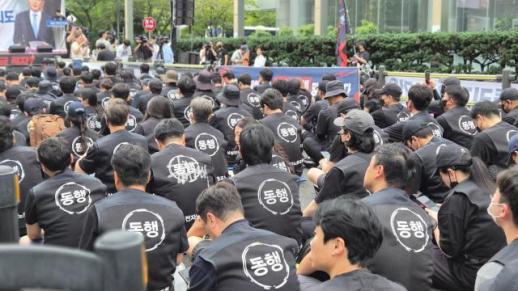 Seoul draws line on labor strikes over profit and capex SEOUL, September 03 (AJP) -South Korean unions can no longer strike over demands for bonuses pegged to a share of operating profit or over opposition to new plants, under government guidelines that side with employers as labor unrest spreads across the country's largest companies. The guidelines shown Thursday follow the so-called Yellow Envelope Act, the revised Trade Union Act that widened the grounds for bargaining and industrial action. They also come after a year in which labor activism spread beyond South Korea's traditionally union-heavy auto, shipbuilding and manufacturing sectors into semiconductors and information technology, as workers sought a larger share of windfall profits generated by the global AI boom. Samsung Electronics narrowly averted an 18-day strike in May after agreeing to a special bonus pool equivalent to 10.5 percent of semiconductor operating profit. At SK hynix, where workers last year secured bonuses funded by 10 percent of operating profit, production workers in August rejected a new wage agreement amid disputes over how the payouts would be made. The trend has spread into IT. Kakao workers staged the company's first-ever strike in June and later took coordinated leave after demanding that roughly 13 to 14 percent of operating profit be distributed as performance incentives. The ministry said demands that curb the rights of shareholders and others or that hinge on a mere possibility of changing working conditions fall outside that scope. At issue are demands popularized by a pay dispute at Samsung Electronics, where the union sought a bonus pegged to a percentage of operating profit. The ministry said such demands may be negotiated voluntarily but cannot trigger mediation or a lawful walkout. Operating profit is earned before interest, taxes and dividends and funds research and capital spending, the ministry said, and carving it out first for bonuses could fundamentally restrict a company's freedom to operate. Bonuses fixed as a share of salary or a flat sum remain open to bargaining. "Large-scale projects such as new plants take a long time from announcement to actual operation, so their impact on working conditions is uncertain in the early stages," the ministry said, adding that a possibility of future transfers alone does not create a duty to bargain. The measures will fall into the chip plants to be built in the Honam region, where Samsung's umbrella union sought to make the new plant a bargaining item over staff redeployment. Bargaining becomes mandatory only once layoffs, restructuring or transfers are confirmed and changes to working conditions are objectively expected. The same test applies to the introduction of artificial intelligence and new technology, such as Hyundai Motor Group's deployment of the Atlas robot. Employers who reject such demands will not be deemed to have committed unfair labor practices, the ministry said, and labor authorities may recommend that unions soften unreasonable claims or face administrative guidance akin to a court dismissal. AJP Takeaways • South Korea's Labor Ministry issued binding guidelines on Sept. 3, 2026, barring unions from making profit-linked bonus demands or opposition to new plant construction the basis for mandatory bargaining or legal strikes. • The guidelines interpret the revised Trade Union Act, known as the Yellow Envelope Act, and target disputes raised at Samsung Electronics over operating-profit bonuses and a planned chip plant in the Honam region. • Employers refusing such demands will not be found to have committed unfair labor practices, and the National Labor Relations Commission may direct unions toward administrative guidance rather than granting the right to strike. 2026-09-03 16:05:34
 -
Han Seong-sook: Directly Addressing Housing Supply Bottlenecks Han Seong-sook, the Prime Minister of South Korea, stated on September 3 that she will not only receive reports on housing supply policies but will also regularly monitor the progress. She emphasized her commitment to directly oversee any bottlenecks until tangible results in housing supply are achieved.During the second inter-agency meeting on rapid housing supply held at the Government Seoul Complex, she remarked, "I will closely examine the factors causing delays in permits, project execution, and financial support at each stage."This meeting was convened to assess whether the housing supply and financial measures discussed in the first meeting are being implemented as planned. Representatives from the Ministry of Land, Infrastructure and Transport, the Financial Services Commission, the Ministry of Economy and Finance, the Ministry of National Defense, the Ministry of Agriculture, Food and Rural Affairs, and the Korea Land and Housing Corporation (LH) attended.Han pointed out that managing tasks separately by each ministry has limited the ability to grasp the overall housing supply situation and respond promptly to inter-ministerial delays. She announced plans to strengthen a management system where relevant agencies gather to identify and discuss the causes of project delays and solutions.She also stressed the need to improve the communication of policies on the ground. Referring to her recent visit to the private redevelopment site in the Jangwi 14 district of Seoul, she noted, "Despite the announcement of key measures like easing relocation loan regulations, there were areas where the association leaders and residents did not fully understand the details."Han added, "No matter how good the measures are, they must be explained in clear terms on-site, and we must actively ensure that related policies reach the ground level." She urged for better communication on how businesses and citizens in need of financial support can benefit from these measures.She concluded by stating, "Housing supply and financial measures are interconnected," and called for cooperation among relevant ministries, local governments, public institutions, and financial institutions as a unified team. She noted that while some areas have begun construction more quickly than expected, statistics reveal that others are lagging. Additional support will be provided to regions where projects are progressing smoothly, while joint solutions will be sought for those facing difficulties.* This article has been translated by AI. 2026-09-03 16:04:10
-
Amorepacific's Primera Seeks Participants for Third 'Creative Crew' Program Amorepacific's cosmetics brand Primera is recruiting participants for the third round of its brand supporter program, 'Creative Crew.' The initiative aims to expand customer-engaged content and strengthen connections between the brand and consumers.Primera announced on September 3 that it will accept applications for the 'Creative Crew' until September 13. Anyone interested in Primera and beauty trends, and who can create short-form content for social media, is encouraged to apply. Details about the recruitment can be found on Primera's official Instagram and Linkareer, with successful candidates to be notified individually by September 23.The selected crew members will be active from October to April of the following year, for approximately six months. They will receive new products and bestsellers from Primera each month to create short-form content, with outstanding works featured on Primera's official social media channels.This third round will include both individual and team missions, providing opportunities for collaboration among participants. Practical feedback for content creation and regular collaboration programs will also be offered, and after the program concludes, outstanding individuals and teams will be recognized with Korean Air gift cards, laptops, and filming equipment.The Primera Creative Crew is a customer engagement program that has been running for three years. It allows customers to experience products firsthand and create content from their unique perspectives.A Primera representative stated, 'The Creative Crew is a representative customer engagement program that allows us to create content and communicate with customers who love Primera. We look forward to many applications from those who want to gain content creation experience and express their creativity with Primera.'Meanwhile, Primera launched its pore-cleansing product, '3C-Hyaluronic Acid Sparkling Pack Foam,' last month. This product is designed to remove impurities and sebum from pores with fine bubbles, making home care convenient.* This article has been translated by AI. 2026-09-03 16:00:20
-
Special Monitoring of School Meals to Prevent Food Poisoning in Busan As schools in Busan resumed meals for the second semester, the Busan Metropolitan Office of Education began on-site inspections to prevent food poisoning and other hygiene-related incidents.In addition to school visits by education officials, joint inspections are being conducted with the Busan Food and Drug Administration and local government agencies, examining both meal facilities and food suppliers.On the morning of September 3, Busan Education Superintendent Kim Seok-jun visited the cafeteria at Yeogochon Elementary School in Dongnae District to assess the management of ingredients and the cooking and serving processes. This visit was part of a special monitoring initiative for school meals at the start of the academic year. After reviewing the hygiene conditions of the cooking and serving processes, Superintendent Kim listened to feedback from meal service staff and participated in serving and tasting the meals.The education office plans to continue visits to school meal facilities by senior officials, including the deputy superintendent, throughout the month. These visits will focus on inspecting ingredient verification, cooking and serving processes, and the overall hygiene management of the cafeterias. In addition to these special monitoring efforts, joint inspections of meal facilities and food supply stages are ongoing with relevant agencies.Since August 24, the Busan Education Office has been conducting food poisoning prevention inspections at kindergartens, school meal facilities, food suppliers, and catering companies in collaboration with the Busan Food and Drug Administration and local governments, which will continue until September 11.With the resumption of large-scale meal services right after the start of the school year, the management of cooking facilities and the storage and transportation of ingredients are crucial for ensuring meal safety. It is essential that the education office's on-site monitoring is effective and not just a one-time check.Superintendent Kim stated, “We will raise awareness of the importance of meal hygiene management and reflect various opinions from the field to provide safe and high-quality school meals for students in their growth years.”* This article has been translated by AI. 2026-09-03 16:00:20