


Latest by
-
 Super El Niño Hits the Pacific as Three Hurricanes Form Simultaneously As the likelihood of an exceptionally strong El Niño developing by the end of the year increases, the Pacific is experiencing an unusual phenomenon with three powerful hurricanes and tropical depressions occurring simultaneously.Concerns are rising that El Niño, which accelerates global warming and influences storm development, could lead to significant changes in global temperatures and precipitation patterns this winter and beyond.The World Meteorological Organization (WMO) reported on September 3 that there is a 100% probability of El Niño conditions from September to November this year. The organization also forecasts a 100% chance that El Niño will continue from December through February of next year. The WMO stated, "There is no expectation of a return to neutral or La Niña conditions," predicting that the intensity of El Niño will gradually increase, peaking at a very strong level by the end of the year. A very strong El Niño could lead to greater variability in temperatures and precipitation worldwide.Indeed, the Pacific has already seen a series of strong storms influenced by El Niño. According to Yonhap News, on September 2 (local time), Category 4 hurricanes Lowell and Karina, along with a tropical depression named Mari that could develop into a hurricane, were observed simultaneously in the Pacific.The U.S. National Hurricane Center (NHC) expects Lowell and Karina to pass near the Hawaiian Islands. Notably, Lowell may approach the westernmost islands of Hawaii, drawing attention to its future path. Mari is strengthening south of Baja California, Mexico, and the NHC predicts it could develop into a hurricane.Experts attribute the simultaneous occurrence of these unusual storms to warmer ocean waters. Warm seawater provides energy for storms, and El Niño reduces the difference in upper and lower winds over the Pacific, creating favorable conditions for hurricane development.A climate scientist from the University of Michigan told AFP, "It is indeed rare to see three tropical depressions forming in succession," explaining that the warming caused by El Niño has created an environment conducive to powerful storms. Similar occurrences were noted during the strong El Niño of 2015, when multiple typhoons and hurricanes formed simultaneously in the Pacific.The intensity of El Niño is also noteworthy. Yonhap News reported that, according to the WMO, sea surface temperatures in the El Niño and La Niña monitoring area were 1.5 degrees Celsius above average from May to July, and in July, they were 2.0 degrees higher than normal. Additionally, from late July to mid-August, the difference reached 2.2 to 2.6 degrees. The meteorological agency also reported that from August 23 to 29, temperatures were 2.6 degrees above average.When sea surface temperatures exceed 2 degrees above average, it is informally referred to as a "super El Niño." Some climate prediction models anticipate that by November, sea surface temperatures in the monitoring area could be as much as 3.9 degrees higher than average. The U.S. National Oceanic and Atmospheric Administration (NOAA) also estimates a 69% chance that this year's El Niño will be the strongest on record.The concern is that El Niño can trigger not only storms but also widespread extreme weather, including heatwaves and droughts. The WMO forecasts an 86% chance that one of the next five years, from 2023 to 2030, will break the record for the hottest year, with next year being the most likely candidate for this record.South Korea may also be affected. When El Niño occurs, the country tends to experience higher temperatures and increased precipitation during the peak winter season. However, the country's temperature and precipitation are influenced by various factors, including sea surface temperatures in the Indian Ocean and western Pacific, as well as Arctic sea ice, making it difficult to attribute weather changes solely to El Niño.* This article has been translated by AI. 2026-09-03 16:56:00
 -
 Trump renews pressure on Korea, Japan over Alaska LNG SEOUL, September 03 (AJP) - U.S. President Donald Trump renewed pressure on South Korea and Japan on Wednesday (local time) to participate in Alaska energy development, again speaking as though the two Asian allies were already moving toward involvement in one of his administration’s signature energy projects. “You have Japan, you have South Korea, you have all these people now going to Alaska to load up with fuel, load up with oil, build pipelines, everything else,” Trump said at the White House on Sept. 2 while discussing Alaska and Republican Sen. Dan Sullivan, whom he plans to campaign for ahead of the November midterm elections. Although Trump did not explicitly name the Alaska LNG project in those remarks, they came against the backdrop of his administration’s sustained push for South Korea and Japan to invest in, supply equipment for and purchase gas from the massive project. The Alaska LNG project is designed to bring natural gas from Alaska’s North Slope across the state to Nikiski on the Kenai Peninsula, where it would be liquefied and shipped primarily to Asian markets. The roughly $44 billion project includes a pipeline running about 800 miles, or 1,300 kilometers, across Alaska and an LNG export terminal with planned capacity of 20 million metric tons a year. Glenfarne Group, which owns a 75 percent stake in the project, has targeted a final investment decision on the pipeline in 2026 and another on the export terminal in early 2027, with LNG exports expected to begin in 2031. The project has gained new momentum amid disruptions to Middle Eastern energy supplies. Glenfarne said in March that it had lined up preliminary commitments covering about 13 million tons of LNG annually and needed agreements for another 3 million tons before reaching the 16-million-ton threshold — 80 percent of capacity — it wants covered by binding contracts to support financing. Japan’s JERA and Tokyo Gas have reached preliminary agreements to buy a combined 2 million tons of LNG annually, while Glenfarne has said buyers in South Korea, Japan, Taiwan and Thailand have all signed up for volumes. Trump’s latest comments marked his second public reference in 2026 linking both South Korea and Japan to the Alaska project. At a White House briefing marking the first anniversary of his second term on Jan. 20, Trump touted the Alaska pipeline as a project aimed at exporting natural gas to Asia and said trade agreements with South Korea and Japan had provided unprecedented levels of funding. Alaska Gov. Mike Dunleavy subsequently highlighted Trump’s claim that South Korea and Japan would provide funding as he promoted progress on the project. But the January remarks were not Trump’s first-ever attempt to draw the two Asian allies into the project. “My administration is also working on a gigantic natural gas pipeline in Alaska,” Trump told a joint session of Congress on March 4, 2025, adding that “Japan, South Korea and other nations want to be our partner.” He claimed at the time that the countries would make investments worth “trillions of dollars each.” Trump continued to raise the idea in the months that followed. In April 2025, after speaking by phone with then-South Korean acting President Han Duck-soo, Trump said the two sides had discussed a “large-scale purchase of U.S. LNG” and South Korea’s proposed joint venture with Japan in an Alaska pipeline. He returned to the subject during South Korean President Lee Jae Myung’s White House visit on Aug. 25, 2025. “We’re dealing with South Korea, as you know, in Alaska, and we’re going to be making a deal, a joint venture with South Korea,” Trump said, adding that Japan was “also very strongly involved.” South Korean experts said Seoul should exercise caution in participating in the project. "Given the time frame and costs involved, the Alaska LNG project falls considerably short in terms of commercial viability," said Kang In Soo, a trade expert and professor of economics at Sookmyung Women's University. "It would not be desirable for Seoul to participate in the project simply because it is being pressured by Washington," Kang said. "A detailed feasibility study should come first." "South Korea should not participate in this project," said Rep. Kim Joon-hyung of the Rebuilding Korea Party. "The project would not yield significant benefits for South Korea and also lacks commercial viability," Kim said. "For the project to become commercially viable, substantial infrastructure investment from the U.S. side will also be necessary, so I hope companies and governments in South Korea, the United States and Japan will engage in close consultations and produce productive results," said Rep. Kim Gunn of the People Power Party. "At a time when energy security is increasingly important, I understand that South Korean companies are also showing interest in the project," Kim added. AJP Takeaways U.S. President Donald Trump renewed pressure on South Korea and Japan to participate in Alaska energy development, again suggesting on Sept. 2 that the two Asian allies were moving toward involvement in the Alaska LNG project. The $44 billion Alaska LNG project would transport North Slope gas through an 800-mile pipeline to an export terminal in Nikiski, with Glenfarne targeting LNG shipments to Asian markets from 2031. South Korean experts and lawmakers remain divided over participation, with critics questioning the project’s commercial viability while others say closer U.S.-South Korea-Japan cooperation could strengthen energy security. 2026-09-03 16:55:42
 -
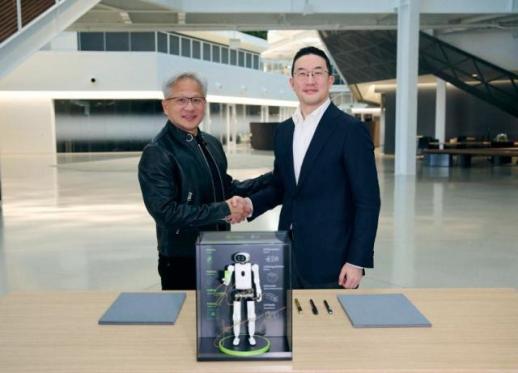 Court tells LG dynasty to work out family feud SEOUL, September 03 (AJP) -A bitter feud inside the founding family of LG, South Korea's fourth-largest conglomerate, deepened Thursday after a court rejected the late chairman's widow's bid to sever her legal mother-son relationship with Koo Kwang-mo, the nephew adopted more than two decades ago to preserve the Koo family's tradition of male succession. The Seoul Family Court dismissed the petition filed by Kim Young-sik, widow of former LG Group Chairman Koo Bon-moo and adoptive mother of the current chairman. The court did not disclose the reasoning for its decision. “I do not believe Koo Kwang-mo and I can continue our relationship as mother and son,” Kim told reporters after the ruling. She said she hoped they could return to their separate lives and would continue seeking a way to legally end their relationship. The extraordinary attempt to dissolve the adoption adds another layer to a family fight over an arrangement that once appeared to settle LG's succession for a generation. LG has traditionally passed control through the eldest son of the Koo family. Founder Koo In-hwoi handed the group to his eldest son, Koo Cha-kyung, who in turn was succeeded in 1995 by his eldest son, Koo Bon-moo. Koo Bon-moo's only biological son died in an accident in 1994, leaving him with two daughters but no male heir. In 2004, he adopted Koo Kwang-mo, then 26, the eldest son of his younger brother Koo Bon-neung, chairman of Heesung Group. At the time, LG said the decision followed the family's Confucian tradition under which the eldest son carries on family affairs. Koo Kwang-mo remained biologically the son of Koo Bon-neung but legally became the son of Koo Bon-moo and Kim Young-sik, positioning him to become the fourth-generation leader of LG. Fourteen years later, following Koo Bon-moo's death in 2018, Koo Kwang-mo inherited most of his adoptive father's stake in holding company LG Corp., became its largest shareholder and took over as group chairman. What had been regarded as one of South Korea's smoother chaebol successions later descended into an unusually public family dispute. In 2023, Kim and her two daughters, Koo Yeon-kyung, head of the LG Welfare Foundation, and Koo Yeon-soo, sued Koo Kwang-mo seeking to recover and redistribute part of Koo Bon-moo's estate. A lower court ruled for Koo Kwang-mo in February, finding that the agreement dividing the inheritance was valid and that there had been no deception in the process. Kim and her daughters appealed, with the Seoul High Court set to hold its first preparatory hearing on Friday. While that case was pending, Kim filed a separate petition in November 2024 seeking to end her legal adoptive relationship with Koo Kwang-mo. Her legal team based the petition on Article 905 of South Korea's Civil Act, which allows an adoptive parent to seek judicial dissolution of an adoption in cases including serious mistreatment by the adopted child. “Considering the actual relationship between the plaintiff and the defendant, we believe their legal mother-son relationship should be dissolved,” her attorney said after Thursday's ruling. Thursday's rejection leaves intact the adoption that helped secure LG's fourth-generation succession, even as the family continues fighting in court over the fortune and legacy left by Koo Bon-moo. AJP Takeaways • The Seoul Family Court on September 3, 2026, rejected Kim Young-sik's petition to legally end her adoptive mother-son relationship with LG Group Chairman Koo Kwang-mo. • Kim Young-sik, widow of former LG Group Chairman Koo Bon-moo, filed the adoption-related case in November 2024 while separately disputing the division of Koo Bon-moo's estate with Koo Kwang-mo. • Koo Kwang-mo is the biological son of Heesung Group Chairman Koo Bon-neung and was adopted by Koo Bon-moo in 2004 as part of LG Group's leadership succession. 2026-09-03 16:55:17
 -
Samsung Electronics Gains Ground in HBM Market with 33% Share Samsung Electronics is rapidly increasing its share in the high-bandwidth memory (HBM) market, a key component for artificial intelligence (AI) semiconductors, as it closes in on the leading position held by SK hynix. With the market transitioning from the HBM3E to the next-generation HBM4, Samsung's expansion of HBM4 supply is emerging as a critical factor in the future market landscape.According to global market research firm Counterpoint Research, SK hynix maintained its leading position in the global HBM market with a 50% share in revenue for the second quarter of this year. However, this is a decline of 14 percentage points compared to the same period last year, when it held a 64% share.In contrast, Samsung's market share has surged significantly. The company's HBM share rose from 15% in the second quarter of last year to 23% in the third quarter, 22% in the fourth quarter, and then jumped to 21% in the first quarter of this year, reaching 33% in the second quarter. This marks a 12 percentage point increase in just one quarter.As a result, the gap between SK hynix and Samsung's market shares is narrowing quickly. Last year, the difference was 49 percentage points in the second quarter, but it has shrunk to 37 percentage points in the first quarter of this year and 17 percentage points in the second quarter. Micron remains in third place with an 18% share in the second quarter.Samsung's rebound in market share signals that its previously lagging HBM business is getting back on track. The company had ceded leadership to SK hynix due to delays in expanding HBM3E supply in the early AI semiconductor market, but it is now increasing shipments as it regains product competitiveness.The transition to the new HBM generation is expected to provide Samsung with additional opportunities to expand its market share. Currently, most of the HBM market revenue comes from HBM3E, but HBM4 shipments are anticipated to significantly impact performance starting in the second half of this year.In February, Samsung began mass production of HBM4, becoming the first in the industry to do so. In May, it also shipped the first HBM4E 12-layer samples. SK hynix plans to supply HBM4E samples in the second half of the year, aiming to begin mass production in 2007.Counterpoint Research also forecasts that as Samsung ramps up HBM4 shipments, its market share in the HBM sector will gradually increase. The firm has previously noted the potential for Samsung to expand its position in the market with the supply of HBM4.However, SK hynix still holds half of the overall HBM market and maintains its lead. The company is expanding HBM4 production based on its established customer base in the HBM3E market and aims to retain its leadership position by also addressing the next-generation HBM4E.* This article has been translated by AI. 2026-09-03 16:52:00
-
Police Submit Bang Si-hyuk to Prosecutors for Fraudulent Trading Allegations Police have submitted Bang Si-hyuk, chairman of HYBE, to prosecutors without detention on allegations of obtaining illicit gains of approximately 260 billion won during the company's initial public offering (IPO) process. There are concerns that prosecutors may request further investigation due to unresolved disagreements between law enforcement and prosecutors regarding the applicability of fraudulent trading under the Capital Markets Act.According to legal sources on September 3, the financial crime investigation unit of the Seoul Metropolitan Police Agency submitted Bang and four others to the Southern District Prosecutors' Office for violations of the Capital Markets Act.Bang and his associates are accused of misleading existing shareholders in 2019 by claiming there were no plans for an IPO, which led them to sell their shares to a specific private equity fund. They allegedly profited from selling the shares after HYBE went public.The police found that Bang directed the review of an IPO as a funding method in April 2019 and established a listing preparation team in July of the same year. However, Bang's side reportedly misled existing shareholders between August and October of that year, advising them to sell their shares under the pretense of no IPO plans.Private equity fund representatives informed investors about HYBE's IPO plans and expected returns between October and November of the same year, subsequently acquiring shares from existing shareholders through a special purpose company (SPC). HYBE was listed on the securities market in October 2020, and the private equity fund sold all its shares in two transactions.The police estimated the total illicit gains at 263.1 billion won, and the court accepted a pre-indictment asset preservation request for the entire amount. Bang is believed to have obtained around 150 billion won of the total illicit gains.Law enforcement and prosecutors have shown differing views on whether Bang's actions constituted a crime that undermined the order of the capital market. The police view the concealment of listing information, the acquisition of existing shares, and the subsequent sale of shares and profit distribution as part of a planned crime, arguing that it infringes on the 'social legal interests' by exploiting insider information for profit, thus harming the fairness and trust of the capital market.Conversely, prosecutors reportedly believe that deceiving existing shareholders to acquire shares is more aligned with infringing on individual investors' 'personal legal interests' rather than social legal interests.The police applied for an arrest warrant for Bang on April 21, but prosecutors rejected it, citing insufficient justification for the necessity of arrest and social legal interest infringement. A second warrant application on April 30 was also rejected, as prosecutors stated that prior supplementary requests had not been adequately addressed.Following this, the police reviewed domestic and international precedents and gathered opinions from academia and financial authorities but maintained their original assessment. Unable to reconcile differences with prosecutors and without new grounds for a third warrant application, they submitted the case.Given that the legal issues pointed out by prosecutors during the two warrant rejections remain unresolved, it is anticipated that immediate prosecution may be challenging. Prosecutors may review the investigation records and request supplementary investigations from the police or conduct their own.A lawyer, a former chief prosecutor, stated, "If prosecutors proceed with charges without resolving the issues they identified as needing further investigation, it could burden the proof of the allegations."Bang's legal team expressed, "We have consistently provided objective materials and evidence regarding the allegations, and we expect that the upcoming procedures will transparently resolve the suspicions." 2026-09-03 16:48:00
-
KOSPI Plummets 4% in 10 Minutes Amid Market Volatility On September 3, the KOSPI and KOSDAQ markets experienced a sudden drop of approximately 4 percentage points within just 10 minutes, despite no clear negative news driving the decline. This unexpected event raised questions among investors about the cause of the sharp downturn.According to the Korea Exchange, the KOSPI closed at 6,579.48 points, up 16.76 points (0.26%) from the previous trading day. The index started the day at 6,650.33 points, reflecting an increase of 87.61 points (1.33%), and maintained a rise of over 1% until around lunchtime. The market's initial rally was attributed to a rebound in the New York stock market, aided by a drop in the U.S. 10-year Treasury yield to around 4.7%, which boosted semiconductor stocks like Dell (up 15.81%) and NVIDIA (up 3.21%).However, the market sentiment shifted dramatically around 2 p.m. The KOSPI, which had reached 6,659 points at 1:50 p.m., began to reverse course at approximately 2:14 p.m. By 2:25 p.m., the index had plummeted to 6,439 points, marking a decline of 220 points (4% from the intraday high) in just 10 minutes.The KOSDAQ also mirrored this sudden drop, falling from over 800 points to 782 points by 2:27 p.m.The abrupt decline appears to have been primarily driven by selling from foreign and institutional investors. At around 2:16 p.m., foreign and institutional investors sold a net 386 billion won and 118.3 billion won, respectively. Notably, institutions had been net buyers of 16.8 billion won until 2 p.m. but sold off 467.8 billion won in the following 30 minutes.Market analysts are divided on the interpretation of this sudden drop, especially given the absence of a single triggering negative factor. Lee Kyung-min, a researcher at Daishin Securities, noted, "Despite favorable external conditions with falling oil prices and Treasury yields, the domestic market experienced a sharp correction around 2 p.m., followed by a partial recovery of losses. The lack of clear negative news suggests that increased selling by financial investors and pension funds contributed to the intraday volatility."Concerns over escalating tensions in the Middle East have also been cited as a factor prompting risk-averse behavior among investors. Reports of additional attacks by Iran on U.S. military-related targets in Kuwait have heightened the preference for safe-haven assets. Seo Sang-young, a researcher at Mirae Asset Securities, stated, "As fears of escalation in the Middle East resurfaced, profit-taking in the stock market increased. With trading volumes declining, volatility has intensified, leading to rapid declines and rebounds in response to minor issues, indicating a fundamentally weak market condition." 2026-09-03 16:48:00
-
 Solution firm LaonPeople surges on gov't-led physical AI project SEOUL, September 3 (AJP) - Artificial intelligence (AI)-related solution company LaonPeople surged to its daily trading limit on Thursday after being selected for a government-backed physical AI project aimed at developing autonomous manufacturing technology. Its shares jumped 29.84 percent to 3,220 won (US$2.35) on the junior KOSDAQ as of around 2:40 p.m., reaching the market's daily price ceiling. The rally came after the company said it had been selected for a research project led by the Ministry of Science and ICT (MSIT) and the National IT Industry Promotion Agency (NIPA). The project, with an investment of 70.2 billion won over five years through 2030, involves developing a software platform for physical AI, which refers to AI systems that can understand real-world conditions and use machines such as robots to take physical action. Jeonbuk National University will lead a government-led consortium for the project, bringing together LaonPeople, NC AI, an artificial intelligence subsidiary of game developer NCSoft, and 13 other companies, universities and research institutions. At the center of the project is the development of a physical AI foundation model for a software-defined factory (SDF), where software and AI coordinate manufacturing operations. The model will use data from sensors, robots and other equipment to monitor factory conditions and help make operational decisions. The system is designed to detect changes on the factory floor and respond by reallocating tasks or adjusting production schedules. The broader goal is to allow AI to make and carry out more manufacturing decisions with less human intervention. The project is part of the government's broader manufacturing AI strategy, which calls for systems that can understand factory processes and autonomously control equipment and robots. The platform will first be tested at three manufacturing companies including automotive parts producers, before trials are expanded to other industries. LaonPeople will apply the model to automotive parts production and robotic systems. It plans to develop tools that can detect unusual conditions, predict equipment failures before they occur and improve production processes. It also plans to combine its existing vision-language model, an AI system that can interpret both images and text, with AI agents that can use that information to make decisions and direct robots to carry out tasks. It ultimately plans to turn the technology into an edge AI board, a piece of computing hardware installed directly in a robot or other factory equipment so AI processing can take place on the machine itself rather than relying entirely on a remote server or data center. The company plans to use the hardware to expand its business in the industrial robotics market. Founded in 2010, LaonPeople develops AI systems that automate business and manufacturing tasks including machine-vision technology that uses cameras and AI to inspect products and detect defects. AJP Takeaways • LaonPeople shares hit the KOSDAQ's daily price ceiling at 3,220 won ($2.35) as of 2:41 p.m. on Sept. 3, 2026, after the South Korean artificial intelligence company was selected for a government-backed physical AI project. • The Jeonbuk National University-led project brings together LaonPeople, NC AI and 13 other companies, universities and research institutions, with 70.2 billion won ($51.3 million) to be invested over five years through 2030. • LaonPeople will develop physical AI technology for automotive parts production and robotic systems, including tools that detect abnormal conditions, predict equipment failures and improve manufacturing processes. 2026-09-03 16:46:25
 -
Teacher Assaulted by Fifth Grader on First Day of Substitute Teaching A substitute teacher in her sixties was assaulted by a fifth-grade student at an elementary school in Cheongju. The teacher, a retired educator in her late sixties, was hired on a six-month contract and faced verbal abuse from the student on her first day of work.According to Yonhap News and education authorities, the substitute teacher, referred to as A, was verbally attacked by a fifth-grade student, identified as B, during a diagnostic assessment on her first day, September 1.The school intervened when B displayed aggressive behavior, claiming that the test paper in a transparent folder was dirty. B was calmed down, and her guardian was called to take her home early.On the previous day, A had instructed B to retake a test as soon as she arrived at school, which led to the incident. B reportedly charged at A, kicking her and striking her head and face with her fists, even pulling her hair.B has a history of aggressive behavior towards multiple teachers and students and is known to be taking medication related to bipolar disorder.B has been suspended from attending school until September 22. Education authorities plan to provide her with home study materials to ensure she does not fall behind academically.The Chungbuk Provincial Office of Education has granted A a 10-day leave due to the violation of her teaching rights, following her treatment at a hospital. The Cheongju Education Support Office is considering moving up the schedule for a rights protection committee meeting originally set for September 23 regarding this incident.* This article has been translated by AI. 2026-09-03 16:44:00
-
 Will America risk New York for Seoul? SEOUL, September 03 (AJP) - U.S. President Donald Trump wants to meet North Korean leader Kim Jong-un and ordered scale-back in U.S.-South Korea military drills that anger Pyongyang and cost Washington heavily, reigniting a long-running question in Seoul: Should South Korea arm itself with nuclear weapons? Once taboo, the idea is gaining broader public acceptance. Sixty-five percent of South Koreans support the country possessing nuclear weapons, while 30 percent oppose it, according to the latest Gallup Korea survey. Support was particularly strong among conservative voters but extended well beyond the political right. AJP asked diplomatic and security experts, along with lawmakers from across South Korea's political spectrum, whether the U.S. nuclear umbrella remains credible, whether an independent arsenal would actually make the country safer and what alternatives lie between dependence on Washington and building the bomb. Is the U.S. nuclear umbrella still credible? “One of the key arguments against South Korean proliferation was that the U.S. commitment to South Korea makes it unnecessary,” Eric Grynaviski, professor of political science and international affairs at George Washington University, said. “As the Trump administration casts doubt on those commitments, the case for nuclear weapons in South Korea becomes stronger.” But Grynaviski said the American commitment remains stronger than it may appear. South Korea itself functions as a “trip wire,” he said, because U.S. troops are stationed in the country and large numbers of American civilians visit every year. A major North Korean attack would therefore almost certainly kill Americans and generate overwhelming domestic pressure on any U.S. administration to respond. Bhubhindar Singh, professor at the S. Rajaratnam School of International Studies at Nanyang Technological University, likewise said U.S. extended deterrence remains credible, even though South Koreans have repeatedly been reminded that the guarantee is no longer necessarily “ironclad” and ultimately depends on the president. “The current Trump administration is highly transactional and seems to defer more to authoritarian strongmen rather than democratic allies,” Brad Williams, professor in the Department of Public and International Affairs at City University of Hong Kong, said. Still, Williams said support for the alliance across the broader U.S. military and political establishment would make it difficult for even the Trump administration to remain on the sidelines if North Korea attacked South Korea. Ja Ian Chong, professor of political science at the National University of Singapore, said the problem runs deeper than the reduction of any particular military exercise or movement of American weapons. U.S. forces and resources have shifted before, he said. What has changed is that uncertainty over Washington's commitment is now compounded by questions about its military capacity to respond to simultaneous crises. “Whereas U.S. capability was less uncertain before even if there were debates about commitment, now the discussion about the U.S. position is about both commitment and capability,” Chong said. Officially, Washington's extended-deterrence policy toward South Korea has not changed, Chong noted. But inconsistency elsewhere in U.S. foreign policy means even truthful assurances can now be discounted. “There probably needs to be more consistency in U.S. positions across the board for assurance signals to be more credible,” he said. Rep. Boo Seung-chan of the Democratic Party, a former Air Force officer, took a similar view from Seoul. “Emotionally, I support possessing nuclear weapons, but rationally and from the standpoint of the national interest, I do not,” Boo said. He argued that the U.S. nuclear umbrella has so far performed well under the three traditional requirements of deterrence — capability, credibility and communication. That, he said, helps explain why other U.S. allies protected by the American nuclear umbrella have not rushed to build their own weapons. “I believe the argument for independent nuclear armament is just a political agenda,” Boo said. “The reason South Korea did not pursue independent nuclear armament under the Lee Myung-bak and Park Geun-hye governments was that national policy decisions are made on the basis of the national interest, not emotion.” Would a South Korean bomb actually make the country safer? Supporters of nuclear armament argue that an independent arsenal would eliminate the ultimate uncertainty inherent in extended deterrence: Seoul would no longer have to depend on another country's president to authorize nuclear retaliation. “Nuclear weapons will strengthen the Republic of Korea’s national security,” Singh said. While South Korea would face international backlash, Singh said he did not expect it to be as severe as the reaction to India and Pakistan becoming nuclear powers, arguing that North Korea's nuclear behavior has given Seoul a degree of legitimacy for considering the option. Rep. Park Choong-kwon of the People Power Party was more unequivocal. “South Korea needs its own nuclear weapons,” Park said. Whenever Washington raises changes to the role of U.S. Forces Korea, restrictions on its role in defending against North Korea or reductions in joint exercises, Seoul should be prepared to raise nuclear armament in response, he added. Rep. Park Sun-won of the Democratic Party took a more conditional view. “If South Korea could acquire its own nuclear weapons without any adverse consequences or burdens, I think that would be a good thing,” Park said. “The problem is that South Korea’s nuclear armament conflicts with the South Korea-U.S. alliance.” Rep. Sung Il-jong of the PPP, a former chair of the National Assembly's Defense Committee, went further. “If credible U.S. nuclear sharing is impossible, South Korea should consider developing independent nuclear weapons as a matter of national survival,” Sung said. Others see the calculation very differently. “South Korea does not need independent nuclear weapons, and they would not serve the national interest,” Rep. Jin Seong-joon of the DP, chair of the National Assembly's Defense Committee, said. “South Korea is already under the U.S. nuclear umbrella and can respond to North Korea’s nuclear threat through the U.S. extended deterrence strategy, so there is no reason for South Korea to pursue its own nuclear weapons,” Jin said. “The moment South Korea moves to acquire nuclear weapons, it will face international sanctions and pressure,” he said. “A chain reaction of nuclear arms competition involving neighboring countries such as Japan and Taiwan would begin, making the security environment even more unstable.” Rep. Kim Gunn of the PPP said it was natural for South Koreans to demand their own nuclear deterrent as North Korea deploys tactical nuclear weapons and threatens preemptive nuclear use. Such calls, he said, reflect a public demand for a more certain answer to North Korea's nuclear threat. “Nuclear armament could legitimize and perpetuate North Korea’s possession of nuclear weapons, while South Korea would violate the international norm of nuclear nonproliferation and could face sanctions from the international community,” Kim said. “Because we can strengthen deterrence through stronger alliance-based extended deterrence and by enhancing South Korea’s own capabilities, including nuclear-powered submarines and the three-axis system, we should be cautious about adopting independent nuclear armament as a policy option,” he added. Grynaviski also warned that a bomb could paradoxically weaken South Korea's strategic position. If Washington concluded that a nuclear-armed South Korea could handle its own security, it could accelerate reductions in U.S. forces and eventually remove one of the central pillars of the alliance, he said. Nuclearization could also encourage military buildups by neighboring countries and complicate South Korea's relations with them. Joseph Yi, professor of political science at Hanyang University, said an independent arsenal is, at least for now, more likely to weaken than strengthen South Korea's overall security. “The argument is simple: if the ally looks unreliable, acquire the ultimate weapon yourself,” Yi said. “That is a Trump-style answer to a complicated security problem.” “Nuclear weapons do not remove insecurity; they replace one set of risks with another,” he added. The NPT question: Could South Korea legally walk away? Any decision to build nuclear weapons would immediately collide with South Korea's obligations under the Nuclear Non-Proliferation Treaty. But leaving the treaty is not legally impossible. Article X explicitly recognizes a party's sovereign right to withdraw if extraordinary events connected to the treaty have endangered its “supreme interests.” The treaty requires three months' notice to the other parties and the U.N. Security Council, accompanied by an explanation of those extraordinary events. Its key language says a party has “the right to withdraw from the Treaty” when extraordinary events have jeopardized its supreme interests. Yoo Seong-min, a former Defense Committee chair and conservative presidential candidate in 2017, said that clause has become directly relevant to South Korea. “Reading Article X of the NPT, it almost feels as if it was written for today’s Republic of Korea,” Yoo said. “South Korea, which lives with North Korean nuclear weapons hanging over its head, should continue to emphasize both domestically and internationally that its withdrawal from the NPT would be justified under Article X,” he said. Yoo linked the nuclear issue to what he sees as a deeper deficit of trust in the alliance. “What damages the South Korea-U.S. alliance is not the argument for nuclear armament but unstable mutual trust,” Yoo said. He argued that the level of trust between South Korea and the United States — countries that fought alongside each other in the Korean and Vietnam wars — is weaker than the trust Washington has built with Japan despite the two having fought each other in World War II. Yoo pointed to differences between the U.S.-South Korea and U.S.-Japan civil nuclear agreements as another manifestation of that gap. “Washington may harbor suspicions that South Korea could someday reunify with North Korea or side with China,” Yoo said. “I believe those suspicions have been further amplified by the pro-North Korean and pro-China tendencies of the left-wing governments of Kim Dae-jung, Roh Moo-hyun, Moon Jae-in and Lee Jae Myung since Kim took office in 1998,” he said. “The absence of comparable pro-North Korean or pro-China tendencies in Japanese politics may be one reason for the difference in the level of trust.” For Boo, however, the decisive obstacle is not whether withdrawal is technically permitted but whether South Korea could absorb what followed. The country depends heavily on exports, he said, making it uncertain whether it could withstand the economic sanctions and diplomatic costs that could accompany NPT withdrawal and nuclear weapons development. Chong said international rules themselves are also becoming harder to evaluate in a world where major powers increasingly erode international law and institutions. The experiences of Ukraine, Iraq, Iran and Libya can be read as evidence that states without nuclear weapons may find themselves more vulnerable, he said. Nuclear sharing, tactical weapons — or a latent nuclear capability? Between the existing U.S. nuclear umbrella and an independent South Korean bomb lies a spectrum of intermediate options. They include stronger joint nuclear planning, NATO-style nuclear sharing, redeployment of U.S. nuclear weapons, expanded South Korean enrichment and reprocessing capabilities and stronger conventional deterrence. Yoo has advocated nuclear sharing for nearly a decade. “I adopted NATO-style nuclear sharing as a presidential campaign pledge in 2017, and my position is that we should pursue NATO-style nuclear sharing until independent nuclear armament becomes possible,” Yoo said. His 2017 presidential platform called for turning U.S. nuclear forces relevant to the Korean Peninsula into what he described as joint South Korean-U.S. assets. The proposal included nuclear information sharing, joint decision-making in a contingency, joint command-and-control arrangements, the use of South Korean assets for nuclear delivery missions, joint nuclear operational planning and combined nuclear exercises and training. “I will demand from the United States, immediately through a summit and defense and foreign ministers’ meetings, a level far closer than cooperation between the United States and NATO,” Yoo said when unveiling the plan on April 5, 2017. Yoo now argues that even NATO's model may no longer be sufficient for the Korean Peninsula. “NATO uses a system in which gravity bombs are carried and dropped by aircraft, but South Korea would need a tactical nuclear missile system,” Yoo said. Under nuclear sharing, he noted, the weapons would still remain under American control. “Even then, the nuclear weapons would be placed under U.S. control, and we cannot know when the United States might change its mind,” Yoo said. Boo favored a different form of hedging. Instead of immediately possessing nuclear weapons, South Korea should consider seeking rights to enrich uranium and reprocess spent nuclear fuel so that it could acquire the capability to manufacture nuclear weapons within a short period if the strategic environment deteriorated, he said. Williams favored strengthening conventional deterrence while securing explicit assurances of continued U.S. extended nuclear deterrence from supportive civilian and military officials in Washington. Given the Korean Peninsula's geography, he argued, nuclear weapons are particularly problematic because North Korean forces and South Korean territory are in such close proximity. Yi favored exhausting alliance-based options before crossing the nuclear threshold. Seoul and Washington can deepen nuclear planning, improve conventional deterrence and missile defense, expand intelligence and surveillance capabilities and strengthen rapid reinforcement arrangements, while also discussing nuclear sharing, he said. If the security environment deteriorates so dramatically that South Korean nuclear weapons become necessary, the decision should still be coordinated with Washington and closely with Tokyo rather than undertaken unilaterally, Yi said. AJP Takeaways South Korea’s nuclear weapons debate is gaining momentum as confidence in U.S. extended deterrence faces renewed scrutiny. President Donald Trump’s push to scale back U.S.-South Korea military exercises and reengage North Korean leader Kim Jong-un has intensified questions over whether Seoul can continue relying on Washington’s nuclear umbrella. Public support for an independent South Korean nuclear arsenal has risen sharply, but experts and lawmakers remain divided over whether nuclear weapons would actually make the country safer. A Gallup Korea survey found 65 percent support for possessing nuclear weapons, while critics warn that nuclearization could weaken the U.S.-South Korea alliance, trigger sanctions and accelerate a regional arms race involving Japan and Taiwan. South Korea could legally invoke Article X of the Nuclear Non-Proliferation Treaty to withdraw, but the economic and diplomatic consequences could be severe. The NPT allows withdrawal when extraordinary events jeopardize a country’s “supreme interests,” while opponents of nuclear armament warn that export-dependent South Korea could struggle to absorb international sanctions and diplomatic isolation. NATO-style nuclear sharing, U.S. tactical nuclear weapons and a South Korean latent nuclear capability are emerging as alternatives to immediately building a bomb. Proposals range from deeper South Korea-U.S. nuclear planning and missile defense to uranium enrichment and spent-fuel reprocessing rights that could give Seoul the ability to develop nuclear weapons rapidly if its security environment deteriorates. 2026-09-03 16:39:00
 -
Mokdong Redevelopment Reduces Number of High-Rise Towers The Mokdong 13 redevelopment project in Seoul has been put on hold due to concerns over its impact on the skyline, prompting other nearby projects to reconsider their designs.Seoul city officials have advised that the number of high-rise towers should be limited to around 10% of the total and that building heights should vary. As a result, one project has decided to reduce its planned 49-story towers from ten to three. While the maximum height of 49 stories is not being restricted, there are concerns that this change could affect project timelines and design costs for developments that are already well underway.According to a report by Aju Economy on September 3, the city has indicated that some high-rise designs for Mokdong redevelopment projects differ significantly from the initial recommendations, necessitating adjustments.A city official stated, “In Mokdong, each project underwent 2 to 4 advisory sessions, but the submitted designs did not adequately reflect the advisory feedback, leading to their suspension during the review process. Other Mokdong projects are likely to revise their designs in light of this situation.”One project currently preparing for the review is significantly reducing the number of high-rise towers. A representative from a Mokdong redevelopment association said, “After receiving news of the suspension for Mokdong 13, we are adjusting our design to reduce the number of 49-story towers from ten to three.”Previously, on August 25, the Seoul Integrated Review Committee for redevelopment projects issued advisory guidelines for 14 Mokdong districts, recommending that the number of high-rise towers be diversified to at least three and that the proportion of the tallest towers be kept around 10%.Mokdong 13 was suspended during the integrated review in July due to concerns that many of its towers were planned at 49 stories without sufficient height variation among buildings. The integrated review is a key step before granting project approval, encompassing assessments of architecture, landscape, traffic, and educational environments.Seoul city maintains that it is not imposing a limit on the maximum height of 49 stories. The Mokdong 6 project, also designed for a maximum of 49 stories, conditionally passed the integrated review in May. The issue lies not with the maximum height but with the number and arrangement of high-rise towers.Developers believe that placing more high-rise towers can enhance the distance between buildings and improve views, thereby increasing marketability and sales revenue. Consequently, many Mokdong redevelopment projects have actively incorporated high-rise towers in their designs.Conversely, the city emphasizes a more comprehensive skyline and public interest, as outlined in the '2040 Seoul Urban Master Plan,' which abolishes the 35-story height limit for residential areas. The recent advisory also suggested increasing the maximum height for low-rise zones from 7 to 10 stories and allowing mid-rise zones to reach up to 20 stories.However, the Mokdong 13 association believes the suspension will not significantly impact the project. One owner remarked, “Adjusting the heights of individual buildings will not greatly affect construction costs or timelines. If we implement the adjustments requested by the city, we may even expedite the approval process.”As the project is still in its early stages, it is difficult to predict how design changes will affect construction costs. Depending on how key cost factors evolve, expenses could either increase or decrease.The advisory also reportedly includes raising the maximum height for low-rise zones from 7 to 10 stories and for mid-rise zones from 15 to 20 stories.One concern is that the permitting risks could spread to other Mokdong projects. ANU, the firm responsible for the design of Mokdong 13, has secured design rights for a total of five projects in Mokdong, including Mokdong 3, 5, 8, and 11. If other projects have also incorporated numerous high-rise towers, they may face similar design revision requests during the integrated review process.Notably, five projects are preparing to select construction companies by the end of this year, and for those selecting contractors before the integrated review, design changes could introduce new variables. If the design submitted during contractor selection is not accepted in the integrated review, adjustments may need to be made immediately after the contractor is chosen.A representative from a construction company stated, “If major design elements such as height or tower placement change after contractor selection, we may need to reassess construction costs and timelines. For the predictability of the project, it is essential that review criteria are clarified early.”Industry insiders point out that during the design firm selection phase, aggressive proposals emphasizing project viability may overshadow the likelihood of obtaining permits, potentially leading to complications in future redevelopment efforts. One industry source noted, “During the design firm selection phase, maximizing the number of high-rise towers is advantageous for gaining member support, but this could lead to significant friction during the permitting process, resulting in project delays and increased costs.”* This article has been translated by AI. 2026-09-03 16:32:10