


Latest by
-
 CJ ENM to Transform Advertising with AI After Confirming Box Office Success Artificial intelligence (AI) technology is revolutionizing the product placement (PPL) market, allowing for new advertisements to be integrated even after filming has concluded, according to Lee Joong-ho, head of CJ ENM's Advertising 360 & AI Solutions Team.In an interview on August 31 at CJ CheilJedang's headquarters in Seoul, Lee explained the concept of virtual product placement (VPPL), which uses AI graphic work to make it appear as though products were present during the original filming. He noted, "VPPL is not a replacement for traditional PPL but rather a 'plus alpha' concept, allowing for additional ad sales to offset production costs rather than just reducing time or expenses."Lee highlighted the advantages of VPPL, stating, "Dramas have long production periods, making it difficult to know if a project will succeed before securing sponsorship. VPPL allows brands to select suitable scenes based on viewer reactions after airing."The cost of VPPL ads is approximately 50% lower than that of traditional PPL. CJ ENM aims to lower barriers for advertisers as the VPPL market is still in its infancy, focusing on expanding its application.A notable example of VPPL is the tvN variety show 'Edward Lee's Country Cook.' The production team captured a scene where Edward Lee used Maeil Dairy's soy milk during filming. Afterward, they proposed the connection between the scene and the product to advertisers and implemented VPPL.Lee emphasized that reducing the dissonance of inserted products is crucial for expanding the VPPL market. AI is responsible for accurately rendering the product's shape, camera angles, lighting, shadows, and colors to match the original footage, while experts review whether the product fits the scene's context and if the movements and focus appear natural.He stated, "AI handles how quickly and precisely the product is rendered, while humans determine which scenes to apply it to without compromising the content's quality. It is essential to make it look as if the product was there during the original shoot, not just inserted later."CJ ENM is also exploring ways to measure advertising effectiveness across its various platforms. Lee remarked, "In traditional broadcast PPL, it was challenging to measure exact outcomes, but multiple platforms can provide data on searches and purchases following viewership. This could connect content production, AI, and distribution into a single ecosystem."* This article has been translated by AI. 2026-09-02 17:40:00
 -
Homeplus Receives Court Approval for Rehabilitation Plan, Paving Way for Management Normalization Homeplus, currently undergoing corporate rehabilitation, has successfully passed its rehabilitation plan and received court approval, marking a significant milestone. Last month, the company secured 200 billion won in emergency operating funds, allowing it to resume operations at 67 key stores, and now it has established a foundation for management normalization. If repayments are made as planned, the rehabilitation process will conclude.The Seoul Bankruptcy Court's Rehabilitation Division held a meeting on September 2 to vote on Homeplus's rehabilitation plan, which was immediately approved after receiving the necessary votes. The secured creditors voted 100% in favor, while 75.9% of rehabilitation creditors and 100% of shareholders supported the plan. The approval requirements were at least 75% from secured creditors, 66.7% from rehabilitation creditors, and 50% from shareholders.The court stated, "Considering that more than two-thirds of creditors agreed, we recognize that the rehabilitation plan meets the approval criteria."With the court's approval, Homeplus can now proceed with debt repayment, additional fundraising, and store sales as part of its normalization efforts. The court plans to conclude the rehabilitation process once repayments begin as outlined in the plan.In July, Homeplus faced a decision to terminate its rehabilitation process due to financial difficulties, but it managed to recover by securing a 200 billion won DIP loan from Meritz Financial Group, backed by a personal guarantee from Kim Byung-joo, chairman of MBK Partners. Following this, the termination decision was canceled, and operations at the temporarily closed 67 key stores resumed on August 13.However, the approval of the rehabilitation plan does not guarantee normalization. Remaining challenges include the repayment of over 500 billion won in unpaid supplier debts and securing additional operating funds, as well as restoring store profitability. Kim Kwang-il, co-CEO of Homeplus and vice chairman of MBK Partners, noted that 66.3% of the public creditors have agreed to the repayment plan.If repayments do not proceed as outlined in the rehabilitation plan, the court may decide to terminate the approval, which could lead to bankruptcy being declared by the court's authority, making the future of Homeplus dependent on the implementation of its plans. 2026-09-02 17:40:00
-
U.S. Treasury Official Warns of Japan's Long-Term Interest Rates Impacting Markets U.S. Treasury officials have expressed concern over Japan's long-term interest rates, which have risen above 3%. An increase in these rates could lead Japanese investors to repatriate funds invested in U.S. Treasury bonds, especially as the yield on U.S. 10-year bonds has reached its highest level in 20 months.Erin Brown, the U.S. Treasury's Deputy Secretary for International Affairs, stated in an exclusive interview with the Nikkei that "Japan holds a significant amount of government bonds and agency securities from major countries, which particularly impacts the U.S. market." The interview took place on September 1 in Asheville, North Carolina, during the G20 finance ministers and central bank governors meeting and was reported on September 2.Japan's institutional investors hold over $1 trillion in U.S. Treasury bonds. If Japanese interest rates rise, there may be a tendency for these funds to return to Japan. The yield on U.S. 10-year bonds has already reached 4.8%, the highest level in 20 months. The Nikkei noted that further increases in rates could burden the U.S. economy.Market expectations suggest that the Bank of Japan may raise interest rates during its monetary policy meeting on September 17-18. While Brown stated, "I have no intention of directing the central bank," she acknowledged that "market expectations often influence monetary policy." The Nikkei interpreted this as a comment supporting a potential rate hike by the Bank of Japan.Regarding the yen's depreciation, which is nearing 160 yen to the dollar, Brown remarked, "Both the U.S. and Japan have a common interest in exchange rate stability." In response to concerns that the yen's weakness has worsened due to delayed rate hikes by the Bank of Japan, she emphasized the importance of listening to market signals, stating, "I do not think we are lagging behind, but it is crucial to pay attention to the market's signals."Meanwhile, Japan's Finance Minister, Shunichi Suzuki, and U.S. Treasury Secretary Janet Yellen met in Asheville on August 31 during the G20 finance ministers and central bank governors meeting. Brown, who attended the meeting, noted that the two countries had candid discussions about their fiscal policies and reaffirmed the importance of fiscal consolidation.During a press conference on the same day, Suzuki explained to the U.S. side the commitment to significantly reduce the ratio of national debt to GDP. Brown also mentioned Japan's plans to lower the consumption tax on food, stating, "Both countries confirmed their commitment to appropriately address the debt burden."Brown highlighted that fiscal consolidation is a significant challenge not only for Japan but also for several countries, including the U.S. She indicated that Yellen would soon announce plans to reduce the U.S. budget deficit.Brown, who previously worked at PIMCO, was appointed in early August. The Deputy Secretary for International Affairs is responsible for direct consultations with the Japanese government on exchange rate issues.Brown identified rising global long-term interest rates as primarily driven by increased energy prices due to the closure of the Strait of Hormuz. She suggested that if passage through the strait resumes, "inflation expectations will subside, and long-term interest rates are likely to decline again."* This article has been translated by AI. 2026-09-02 17:36:00
-
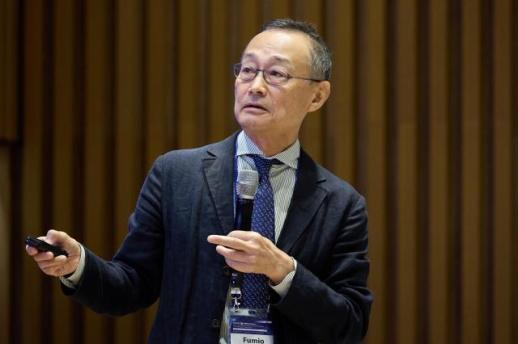 Experts warn of aging, low birthrates at BOK conference SEOUL, September 2 (AJP) - South Korea's rapidly aging population will put pressure on economic growth and pension systems even if birthrates recover, economists said Wednesday. They also said rigid workplace practices and intense competition in education continue to make it costly to raise children. The assessments came on the first day of a conference at the Bank of Korea in Seoul, held under the theme of "The Economics of Population Ageing and Longevity: From Challenges to Opportunities." Several speakers warned that South Korea is going through demographic changes unusually quickly. They said the country has less time than other countries that aged earlier to deal with slower growth, lower interest rates and growing pressure on the pension system. Fumio Hayashi, a professor emeritus at Japan's National Graduate Institute for Policy Studies, argued that Japan's three decades of stagnation can be explained in significant part by its unusually early population aging. His analysis showed Japan was not an outlier among mature economies, with faster aging generally associated with weaker growth. Similar pressure could increasingly shift toward East Asia. Between 2020 and 2050, South Korea's aging pace is projected at 0.96 under Hayashi's measure, more than three times the U.S. figure of 0.31. Hwang In-do, head of the Financial and Monetary Economic Studies Team at the BOK's Economic Research Institute, said ageing could also reshape the environment for monetary policy. A BOK study estimated that South Korea's equilibrium real interest rate in 2024 would have been about 1.4 percentage points higher if fertility and life expectancy had remained at their 1991 levels. Selahattin Imrohoroglu, a professor of finance and business economics at the University of Southern California, said economies such as South Korea and China face an additional challenge because aging began later but is now progressing much faster. Using the United Nations' low-fertility population scenario, Imrohoroglu estimated South Korea's old-age dependency ratio could approach 200 percent by 2100. That would imply roughly two elderly people for every working-age person. As a measure of the scale of adjustment, he calculated that South Korea's full retirement age would have to rise by about 24 years by 2100 to keep its old-age dependency ratio at the 2024 level. Imrohoroglu stressed that the figure was not a policy recommendation. He presented it as a simplified measure to illustrate the scale of demographic adjustment across countries. "South Korea sits literally at the sharp end of all these three points," Imrohoroglu said, referring to the size of the fiscal adjustment, limited time available and weaker growth capacity. Even a near-term recovery in fertility would provide little immediate relief to pension finances, he said during a panel discussion. Additional births would not begin expanding the tax-paying workforce until around 2060, meaning pension reform cannot rely on higher fertility to ease pressures over the next several decades. Imrohoroglu said South Korea would instead need to use several policy levers at once. He cited gradually extending working lives, increasing labor-force participation and reducing disincentives to remain employed longer. He also cited Japan's 2004 introduction of a "macroeconomic slide," which adjusts pension benefits according to demographic conditions, as an example South Korea could study. Hwang Jisoo, an associate professor of economics at Seoul National University, said there is no consensus on a single cause of falling fertility. She cited housing costs, intensive parenting and changing social values, as well as tensions between women's economic roles and traditional expectations of motherhood Using nationwide National Health Insurance data, Hwang found that mothers' earnings five years after their first childbirth were 43 percent below the estimated level had they remained childless. Fathers showed little comparable change. The penalty approached 50 percent among some more recent cohorts even as South Korea's overall gender earnings gap narrowed. "Parenthood is becoming a more economically stratified experience," Hwang said. She said women with higher earnings, more secure employment and jobs at large companies or in the public sector have become increasingly more likely to have children. Economic stability is therefore becoming an important factor in who enters parenthood, according to her findings. Hwang also cautioned against interpreting South Korea's recent fertility rebound as evidence of a structural turnaround. Some of the increase may reflect marriages delayed during the coronavirus pandemic that took place in 2023 and 2024 and are now resulting in births, she said. Several more years may be needed to determine whether fertility behavior has fundamentally changed, Hwang added. She said policy should move beyond parental leave toward broader work-family compatibility. That could include flexible schedules and workplace practices that allow both men and women to participate in everyday care. South Korea's parental leave system is generous on paper, Hwang said, but actual access differs sharply across workplaces, particularly at smaller firms. She also cautioned that policies targeted specifically at women or mothers could unintentionally reinforce gender differences in hiring and employment. Family and population policies should instead be designed around workers' broader care needs, she said. Smaller employers may also need financial or technological support to make flexible arrangements feasible. Yum Minchul, associate professor of economics at Virginia Commonwealth University, identified competition over children's education as another factor weighing on fertility. Yum said spending by higher-income families can create pressure on other households to keep up. His research suggests that this can push private education spending above a socially efficient level and reduce fertility. A 10-percent decline in private education spending among the top 15 percent of households was associated with about a 0.5 percentage point decline in the education spending share of the bottom half, based on the midpoint estimate presented Wednesday. A model calibrated to South Korean households found that removing the status-comparison effect entirely would increase completed fertility by 28 percent. Yum said reducing competition may require changes beyond the private tutoring market. Greater labor mobility over a worker's career could weaken the tight link between admission to an elite university and lifetime earnings, reducing families' incentive to engage in costly educational competition, he said. Volker Ziemann, an economist at the Organisation for Economic Co-operation and Development, highlighted another feedback loop involving low fertility and South Korea's concentration of population and economic activity in the Seoul metropolitan area. Ziemann said higher wages draw young people toward the capital region, while expensive housing and congestion make family formation more difficult. Population decline outside the capital can then weaken regional economies further and reinforce concentration, according to his analysis. The OECD estimates South Korea's overall population could fall by around 10 percent by 2050 and its working-age population by more than 35 percent. The panel ultimately converged on the view that demographic policy should not simply target a predetermined fertility rate. Hwang said South Koreans want more children than the country's current fertility rate suggests. This shows that some people may be unable to have the families they want because of various barriers. Hwang and Yum said policymakers should focus on reducing those constraints rather than treating a specific fertility rate as the objective itself. The discussions highlighted a two-track challenge for Korea. Policymakers can still reduce barriers to family formation, but pensions, labor markets and productivity policies also need to adjust to ageing already embedded in the population structure. AJP Takeaways • South Korea faces one of the world's fastest aging transitions, with economists warning that a shrinking workforce could weigh on growth, lower equilibrium interest rates and increase pressure on public pensions. • Even if South Korea's fertility rate rebounds soon, the pension impact would take decades to materialize, while one estimate showed the retirement age would need to rise by about 24 years by 2100 to keep the current old-age dependency ratio unchanged. • Seoul National University economist Hwang Jisoo said South Korea's recent fertility rebound may partly reflect marriages delayed during the COVID-19 pandemic, making it too early to call a structural turnaround in birth trends. • Economists at the BOK-CEPR-OECD conference said Korea should tackle barriers to parenthood — including workplace rigidity, unequal care burdens and intense education competition — while simultaneously reforming pensions and labor markets for ageing already embedded in the population structure. 2026-09-02 17:33:29
 -
U.S. Open to Unconditional Talks with North Korea; South Korea's Role Under Scrutiny The White House has reaffirmed its openness to unconditional dialogue with North Korea, highlighting the potential for renewed U.S.-North Korea talks. If negotiations gain momentum, it could bolster the government's vision for a peace regime on the Korean Peninsula. However, experts stress the need for enhanced pre-coordination between the U.S. and South Korea to ensure that South Korea's security interests are not sidelined during the negotiation process.According to diplomatic sources on September 2, a White House official responded to media inquiries about preparations for a U.S.-North Korea summit, stating, "President Trump is open to dialogue with Chairman Kim Jong Un without preconditions." The official noted that Trump contributed to stability on the Korean Peninsula through three meetings with Kim during his first term, emphasizing that U.S. policy toward North Korea remains unchanged.Earlier, the National Intelligence Service (NIS) reported in a closed-door meeting of the National Assembly's Intelligence Committee that a U.S.-North Korea summit is possible at any time. Yoon Gun-young, a ruling party lawmaker and the committee's secretary, told reporters after the meeting, "While no specific contacts between the U.S. and North Korea have been confirmed, the NIS analysis indicates there are signs of dialogue." Recently, President Trump has repeatedly hinted at the possibility of a meeting with Kim within the year, and the White House has officially reaffirmed its willingness to engage in unconditional talks. Additionally, movements within the U.S. government suggest preparations for potential discussions with North Korea.Kelly McKeague, director of the Defense POW/MIA Accounting Agency (DPAA), revealed that the White House inquired about what measures could be taken to recover U.S. military remains in North Korea if an agreement is reached.There are also speculations that Pyongyang could be chosen as the meeting location. John Bolton, former White House National Security Advisor, suggested during a virtual discussion with the Korea Institute for National Unification on September 1 that Trump may seek a symbolic visit to Pyongyang, following his historic trip to the Demilitarized Zone (DMZ) as the first sitting U.S. president.However, even if a summit occurs, it remains uncertain whether it will lead to substantial agreements. North Korea demands nuclear disarmament negotiations based on its status as a nuclear power, while the U.S. maintains its principle of denuclearization on the Korean Peninsula. North Korea has also recently reiterated that U.S. hostile policies toward it have not changed, continuing to assert its nuclear capabilities without easing its pressure.Experts emphasize the growing need for pre-coordination to prevent 'Korea passing' on critical issues such as the scope of denuclearization, sanctions relief, and adjustments to U.S.-South Korea joint military exercises. Hong Min, a senior researcher at the Korea Institute for National Unification, stated, "South Korea's role as a facilitator in U.S.-North Korea dialogue does not mean waiting for the results. We must analyze the agenda and expected levels of agreement in advance, clarify our minimum and maximum scenarios, and actively communicate these to the U.S."He added, "If an agreement only freezes intercontinental ballistic missiles (ICBMs) that threaten the U.S. mainland, the tactical nuclear threats aimed at the Korean Peninsula may remain. Therefore, we need to expedite pre-consultations to ensure that the minimum thresholds for threat reduction, as perceived by the U.S. and South Korea, do not diverge significantly."* This article has been translated by AI. 2026-09-02 17:32:00
-
Shinsegae Property to Launch Aman Seoul in Cheongdam-dong Shinsegae Property is set to introduce the world-renowned luxury hospitality brand 'Aman' in Cheongdam-dong, Seoul. This project marks a significant expansion for Shinsegae Property, which has been involved in various mixed-use developments, including Starfield. On September 2, Shinsegae Property and Aman announced plans to develop 'Aman Seoul' in the Cheongdam-dong area of Gangnam-gu, Seoul. Aman Seoul will be constructed on sites 52-3 and 52-7 in Cheongdam-dong, featuring eight underground levels and 38 above-ground floors, with a total floor area of approximately 70,000 square meters. The development will include a hotel, 49 branded residences, and retail and cultural spaces. As the project developer, Shinsegae Property will oversee planning, strategy, and overall development. Aman will participate as a partner in design, architecture, and operations. The hotel, residences, and community facilities will be operated directly by Aman under a long-term management agreement. Aman Seoul aims to create an 'urban sanctuary' that combines a hotel, branded residences, and the exclusive Aman Club, catering to a high-end lifestyle. The architecture and interior design will reflect a blend of Korea's unique spatial aesthetics and Aman's design philosophy. The project will also feature spa and wellness facilities, Aman's signature dining brands, and global food and beverage programs. The Aman Club will include a members-only swimming pool, fitness center, and lounge, serving as a private community space for residents and global club members to interact. Shinsegae Property plans to set a new standard in the domestic high-end market by combining its development expertise, gained through large-scale projects like Starfield and premium office spaces, with Aman's brand value. Jung Yong-jin, Chairman of Shinsegae Group, stated, “Aman Seoul will be more than just a hotel development; it will become a new landmark for high-end lifestyles in Seoul. We will continue to create innovative spatial value based on our differentiated development capabilities.” Vlad Doronin, Chairman of Aman Group, remarked, “Seoul is evolving into a global city that integrates culture, design, technology, and wellness, leading global lifestyle trends. By establishing a hotel, residences, and the Aman Club in the heart of Gangnam, we aim to create an urban sanctuary.” As the combination of global brands and developers intensifies in the domestic luxury residential and hotel market, competition in the high-end real estate sector in Gangnam is expected to escalate.* This article has been translated by AI. 2026-09-02 17:32:00
-
Prime Minister Han Seung-soo: AI Innovation Must Transform Government Operations Prime Minister Han Seung-soo stated on September 2 that "fundamental artificial intelligence (AI) administrative innovation must go beyond individual public officials' use and transform the entire way the government operates." During the 'AI Administrative Innovation Outstanding Public Officials Meeting' held at the Government Seoul Complex, she emphasized that this transformation is essential for achieving significant productivity improvements. Han noted that public officials with expertise in relevant tasks can produce faster and more professional results when utilizing AI compared to related companies. She stressed the importance of enhancing the AI utilization capabilities of on-site public officials. She also suggested fostering AI champions and holding hackathons more frequently, urging the government to actively use its high-quality, large-scale data to develop administrative services in areas such as flood prediction, public complaint response, and disaster safety. While acknowledging the rapid spread of AI utilization in the country, Han assessed that evaluations of its overall impact on productivity improvement are still insufficient. She urged public officials who are quickly integrating AI into their work to actively share their insights on necessary changes. The meeting included 'AI champions' and outstanding public officials from central ministries and local governments, who shared examples of AI application in administrative settings and discussed potential policy improvements.* This article has been translated by AI. 2026-09-02 17:32:00
-
 S. Korea targets physical AI, expert warns against imitation SEOUL, September 02 (AJP) - South Korea can reach the top tier of physical artificial intelligence by pairing its factory base with the data those factories generate, Prime Minister Han Seong-sook told a technology forum in Seoul on Wednesday. Physical AI refers to systems that act in the world rather than on a screen, driving robots, machines and vehicles through real space. It is the industry's next frontier after generative AI, and the competition for it has pulled in national governments. "If semiconductors are the brain of AI, physical AI is the body that moves in the real world, and the heart supporting all of it is the AI data center," Han said. The government intends to link the three through a set of mega-projects so that each one feeds the others. She pointed to the San Francisco AI Declaration that President Lee Jae Myung issued in July during a trip to the United States and South America, which set out a plan to make South Korea a global production base for AI and a core link in the AI supply chain. Movement and process data logged on Korean factory floors, combined with the manufacturers already using it, is the government's answer to the question of what South Korea brings that its rivals do not. The forum, the 2026 GGGF, opened Wednesday at The Plaza in central Seoul and runs through Friday under the theme "KOREA, State of AI." Aju News Corporation hosts it with the Global Economic and Financial Research Institute. Roughly 200 lawmakers, academics, students and industry executives attended the opening, where National Assembly Speaker Cho Jung-sik also spoke. The keynote went to Dennis Hong, a professor at the University of California, Los Angeles and director of its Robotics and Mechanisms Laboratory, known as RoMeLa, on whether AI civilization arrives at all without physical AI competitiveness. Hong had made his case days earlier in an interview ahead of the forum, and it cuts against the ambition the government laid out from the same stage. The United States holds the software ecosystem and the capital. China holds supply chain scale, price and the speed to mass-produce. South Korea loses if it competes on either. "What matters in physical AI is iteration speed, actually building robots, deploying them, getting data, learning, then building better robots," he said. Not who designs the best brain or body, he added, but who evolves fastest. He named semiconductors, automobiles, batteries, electronics and precision manufacturing as the base South Korea already has, and warned against the alternative. "We should not get into a numbers race, building the same humanoids just because the United States and China are building humanoids," Hong said. Samsung, Hyundai Motor and LG hold something the internet cannot supply, which is data from real production sites, and the companies best placed to use it are the ones that already own the plants, the products and the customers. Two problems sit in the way. Workers asked to teach their skills to a machine have no guarantee the job survives the lesson, and no country has settled who owns the resulting data or how its value gets shared. Hong said rules on ownership, consent and compensation need to come first. He was also blunt about the gap between what physical AI demonstrates and what it delivers. "Succeeding once in a demonstration and running reliably in the field all day are completely different problems," he said. "Technological progress and a bubble exist at the same time." 2026-09-02 17:31:56
 -
 Will AI contracts shield Korean chipmakers from boom-and-bust cycle? SEOUL, September 02 (AJP) - Investment banks and market trackers are betting South Korea's memory giants can extend their red-hot earnings streak into a third year in 2027 and possibly beyond, as AI pushes the business away from the spot-price-driven boom-and-bust cycles that have long defined memory chips. Before the rise of AI, earnings at Samsung Electronics and SK hynix were heavily exposed to prices for mass-market DRAM and NAND flash, commodities notorious for swinging between shortage and glut. Today, at least in advanced memory, the business is beginning to look different. Samsung Electronics and SK hynix are increasingly locking in multi-year supply arrangements with major customers, giving them greater visibility into future demand while allowing AI chipmakers and hyperscalers to secure supplies of increasingly critical high-bandwidth memory, or HBM. In that respect, part of the memory business is moving closer to the long-term customer relationships seen at Taiwan's TSMC, the world's dominant pure-play foundry, rather than relying as heavily on short-term commodity pricing. The shift could make the memory cycle more predictable — and potentially less violent — than in the past. Industry experts, however, caution that long-term agreements, or LTAs, cannot eliminate one of memory's defining characteristics: the risk that supply eventually outruns demand. What exactly is an LTA? A long-term agreement is essentially an arrangement under which a supplier and customer commit to a business relationship covering future chip supplies. The terms vary widely by supplier and customer, including the length of the contract, volume commitments, pricing mechanisms and penalties. What makes LTAs particularly important in the AI boom is the enormous amount of money and time required to produce advanced memory. Semiconductor manufacturers cannot quickly respond to a sudden jump in demand. New fabrication capacity and production equipment must often be planned months or years before the resulting chips reach customers. That creates a problem for both sides. Memory makers need confidence that customers will still want their chips by the time new capacity comes online. AI chipmakers and hyperscalers need confidence that enough memory will be available for the accelerators and servers they plan to deploy. LTAs help bridge that gap. "It is essentially a case where the interests of both sides align," said Lee Jong-hwan, professor of system semiconductor engineering at Sangmyung University. For Samsung Electronics and SK hynix, knowing expected volumes in advance gives them a clearer basis for deciding how much capacity to build and when to invest, Lee said. Customers face the opposite problem. Many leading AI semiconductor companies are fabless and cannot manufacture the memory they need themselves. U.S. big tech companies therefore want to secure supplies in advance because a shortage of memory could constrain deployment of their AI chips and data-center infrastructure, Lee said. The amount of memory covered by long-term agreements is consequently becoming an increasingly important indicator of future demand, he added. Why both sides benefit For memory manufacturers, the biggest advantage is visibility. Building or expanding a semiconductor fabrication facility requires billions of dollars, while production equipment often must be ordered well before actual demand materializes. Long-term commitments give manufacturers greater confidence about how much capacity they may need several years ahead, reducing some of the uncertainty surrounding those investment decisions. Lee said some agreements can extend as far as five years, giving manufacturers a basis for estimating future production volumes and determining when additional production-line investment will be necessary. For customers, the principal benefit is supply security. AI accelerators cannot function without advanced memory. Securing GPUs or other processors has limited value if sufficient HBM cannot be obtained alongside them. By committing earlier, customers reduce the risk of memory becoming the bottleneck that prevents them from deploying AI infrastructure. The arrangement effectively divides the risk: suppliers gain greater confidence that future production will find buyers, while customers gain greater confidence that capacity will be available when they need it. A stabilizer, not a cure The bigger question is whether those arrangements can make the notoriously volatile memory cycle less severe. Kim Deok-kee, professor of electrical engineering at Sejong University, said LTAs should have a stabilizing effect because they reduce some of the mismatch between supply and demand that has historically driven extreme cycles. Memory has traditionally been highly cyclical precisely because supply and demand frequently fail to match, Kim said. Locking in part of future demand should therefore make the market more stable than before. But that stability has limits. A contract does not necessarily guarantee that every committed chip will ultimately be purchased. Depending on individual terms, customers could choose to absorb contractual penalties if abandoning or modifying an agreement becomes economically preferable, Kim said. Details of individual LTAs are generally not made public, making it difficult to know how binding each arrangement ultimately is. More importantly, contracts cannot eliminate the underlying economics of memory. "LTAs can reduce those fluctuations, but I don't think they can completely solve them," Kim said. Even with long-term agreements, supply and demand cannot match perfectly, leaving open the possibility of another oversupply cycle. That risk would become more important if today's AI infrastructure boom slows unexpectedly. Demand is exceptionally strong as hyperscalers race to build data centers and deploy AI infrastructure. But if that investment cycle cools after memory manufacturers have expanded production, excess capacity could once again push prices sharply lower. The emergence of Chinese memory manufacturers adds another source of uncertainty if additional capacity eventually intensifies price competition, Kim said. That helps explain why manufacturers remain cautious about aggressive capacity expansion despite today's extraordinary demand. Existing infrastructure can be repurposed to increase output rather than relying exclusively on large-scale greenfield expansion, Kim said, suggesting producers remain conscious of the danger of building too much capacity. A boom big enough to move an economy The stakes extend well beyond the balance sheets of Samsung Electronics and SK hynix. South Korea's semiconductor exports reached a record $46.65 billion in August, accounting for 47.5 percent of the country's total exports of $98.25 billion, according to the Ministry of Trade, Industry and Energy. Overall exports surged 68.7 percent from a year earlier to an all-time monthly high, bringing the country within striking distance of the $100 billion mark for the first time. The trade surplus reached $34.75 billion. The figures show just how heavily South Korea's export boom has come to depend on semiconductors, fueled by surging demand for HBM and other advanced memory used in AI infrastructure. Yet the chip boom has not spread evenly through the domestic economy. Retail sales fell 2.4 percent in July from the previous month, while overall industrial production was unchanged, according to government data. Sales of durable goods, including passenger vehicles, dropped 7.7 percent, while sales of semi-durable and non-durable goods also declined. Semiconductor earnings and exports can therefore soar without producing an equally dramatic improvement in household consumption or other parts of the economy. That makes the durability of the memory upcycle increasingly consequential not only for Samsung Electronics and SK hynix but for South Korea's broader economic outlook. During previous booms, memory manufacturers had to make enormous investment decisions largely on forecasts of future demand. When those forecasts proved too optimistic, new capacity sometimes arrived just as demand weakened, exacerbating oversupply and sending prices tumbling. LTAs give manufacturers something they lacked in those cycles: a clearer view of at least part of future demand. They do not guarantee that the view will prove correct. For an industry accustomed to swinging from shortage to glut and back again, however, greater visibility alone could make today's AI-driven memory boom different from those that came before. LTAs may not kill the memory cycle. But they could make its swings less violent. AJP Takeaways ● Long-term agreements are giving Samsung Electronics and SK hynix greater visibility into future AI memory demand, potentially reducing the severity of traditional memory cycles. ● LTAs benefit both sides: memory makers gain greater confidence for capacity investment, while AI chipmakers and hyperscalers secure critical HBM supplies in advance. ● Contracts cannot eliminate the cycle altogether, as weaker AI investment, excess capacity or rising Chinese competition could still push the memory market back into oversupply. 2026-09-02 17:27:52
 -
Insurance Association Opens Integrated Consumer Support Center to Enhance Consumer Protection 손해보험협회는 소비자 불편을 줄이기 위해 통합민원지원센터를 운영한다. 손해보험협회는 2일 서울에서 '통합민원지원센터' 개소식을 열었다. 이병래 손해보험협회 회장과 협회 임원, 노동조합 관계자 등이 참석했다. 통합민원지원센터는 금감원에서 이송되는 협회 처리 대상 민원과 국민신문고 등을 통해 직접 접수되는 보험 관련 민원을 맡는다. 보험가입 조회와 보험 모집종사자 직접 말소 등의 업무도 함께 수행한다. 협회는 민원 처리 과정에서 축적되는 사례를 분석해 반복적으로 발생하는 소비자 불편을 찾아내고 이를 민원 처리 절차와 소비자보호 업무 개선에 활용할 방침이다. 센터는 공식 개소에 앞서 지난 7월부터 자동차사고 과실비율 관련 민원을 시작으로 금감원에서 이관된 민원을 처리해왔다. 7월 6일부터 8월 26일까지 금감원에서 넘어온 협회 처리 대상 민원은 211건으로 이 가운데 130건(61.6%)을 처리 완료했다. 나머지 81건(38.4%)은 현재 처리 중이다. 처리가 끝난 민원의 평균 소요 기간은 약 11.6일로 집계됐다. 기존 금감원의 보험민원 처리 기간과 비교하면 크게 짧아진 수준이다. 금감원에서 보험민원을 처리하는 데 걸린 기간은 2023년 62.5일, 2024년 51.2일, 2025년 56.2일이었다. 협회는 민원 업무와 함께 보험설계사 상설시험장 기능도 확대했다. 통합민원지원센터에 총 3개의 시험장을 마련하면서 1교시 동시 수용 인원이 기존 220명에서 330명으로 약 50% 늘었다. 하루 최대 응시 가능 인원도 1100명에서 1650명으로 550명 확대됐다. 이 회장은 "통합민원지원센터 개소를 계기로 보험민원 처리의 전문성과 효율성을 한층 높이고, 소비자 보호라는 사회적 역할을 더욱 충실히 수행할 수 있는 기반이 마련됐다"며 "앞으로도 민원 현장에서 확인되는 불편사항을 면밀히 살펴 업무 개선에 적극 반영하겠다"고 말했다. * This article has been translated by AI. 2026-09-02 17:24:00