


Latest by
-
 Couple Holds Wedding in Flooded Church in the Philippines A couple is making headlines for holding their wedding as planned in a church flooded up to waist height.According to AFP and local media, Reian Lieza Galang and Gilbert Chico were married on September 1 at the St. John the Baptist Church in Hagonoy, Bulacan, located north of Manila. The church was filled with muddy water due to continuous heavy rain.The church officials advised the couple to postpone or change their wedding plans as the water levels continued to rise. However, the couple decided to proceed with the ceremony. Parts of the church had been submerged for about a month.There was a reason for their decision to stick to the schedule. Chico, who works as a rigger in the Middle East, was originally set to marry in December. However, after injuring his ankle while playing basketball, he returned to the Philippines earlier than expected and decided to use his vacation to hold the wedding before returning to work abroad.Photos and videos shared online show Galang walking through the murky water in her white wedding dress. A child carrying the wedding rings also walked down the aisle through the flooded church. Fewer than 15 guests attended the ceremony.To navigate safely through the flooded church, the bride shortened the train of her wedding dress. When the power went out, the church provided portable speakers for the ceremony. Floral decorations remained in place on the submerged church seats.The couple arrived at the church in a high-bodied tricycle. Chico told AFP that he was not concerned about his wedding attire getting wet. They officially became husband and wife during a simplified morning ceremony.The wedding photos were quickly shared on the church's official social media, generating congratulations, though some expressed concern about health risks associated with wading through floodwaters. In the Philippines, recent heavy rains and flooding have raised fears of leptospirosis infections. According to the Department of Health, there have been 5,835 reported cases of leptospirosis in the country this year.Last month, northern regions of the Philippines experienced stronger-than-usual seasonal monsoon rains. Authorities reported that 34 people died due to sudden landslides and flooding. Hagonoy has also been affected by flooding due to its geographical features that collect water from upstream.* This article has been translated by AI. 2026-09-02 17:04:10
 -
September Mock Exam Shows English Top Scores Near 18% The English section of the September mock exam for the 2027 College Scholastic Ability Test (CSAT) is projected to have a top score rate of 18% to 19%. This marks a stark contrast to last year's exam and the June mock exam, where the top score rates were only 3% and 4%, respectively, earning a reputation for being exceptionally difficult. Jongno Academy reported on September 2 that, based on preliminary scoring data from students, the percentage of students achieving a top score (90 points or above) in English is estimated to be around 18% to 19%, with a possibility of reaching 20%. This represents a dramatic reversal compared to previous exams. In the 2026 CSAT, the English top score rate was just 3.11%, the lowest since the grading system was changed to absolute evaluation. The June mock exam also maintained a high difficulty level, with a top score rate of only 4.13%. However, the September mock exam featured significantly easier vocabulary, sentence structures, and passage lengths, leading to predictions of a surge in top scores. Im Seong-ho, the head of Jongno Academy, stated, "Our internal sample data indicates that the English top score rate is around 18.5%. Considering the margin of error, it is possible that it could exceed 20%." He added, "The drastic fluctuation from 3% to 18% in just one exam is beyond what could be expected from a test. This highlights the shortcomings of the absolute evaluation system in practice." Fluctuating Difficulty Poses Risks for Students The timing of this exam is critical, as it occurs just five days before the application period for the 2027 college admissions begins. Students must use their preliminary scores from the September mock exam to determine whether they meet the minimum academic standards for their chosen universities. With English being unusually easy, there are warnings that relying solely on preliminary scores could lead to poor decisions in application strategies, potentially resulting in disastrous outcomes in the actual CSAT in November. Last year, for instance, the English top score rate in the June mock exam was 19.1%, but it plummeted to 4.5% in the September mock and further dropped to 3.1% in the actual CSAT, causing many students to fail to meet the minimum standards. Im cautioned, "If students feel relieved after performing well in today's exam and apply to universities based on that, they could face significant setbacks in the actual CSAT. Given the likelihood that the evaluation agency will raise the difficulty level again, students should approach their assessment of meeting minimum standards much more conservatively and cautiously than in previous years." Final Study Strategies Must Be Reassessed The unexpected ease of the English exam has complicated students' final study plans. While the first two sections, Korean and Mathematics, maintained a challenging trend, the simplicity of the English exam has left students uncertain about whether to reduce their study time for English. Additionally, the trend of science students opting for social studies and statistics has intensified, and approximately 80,000 high-scoring repeat test-takers who did not participate in the September mock exam are expected to enter the actual CSAT. This raises the potential for significant fluctuations in relative evaluation scores across other subjects. Im noted, "The results of the September mock exam will not be released until September 29, after the application period ends. Students should not be overly swayed by preliminary scores and must maintain a consistent practice of reading comprehension to prepare for the possibility of a more difficult actual CSAT."* This article has been translated by AI. 2026-09-02 17:04:10
-
615 Applicants Withdraw from Special Appointment for New Serious Crimes Investigation Agency As the Serious Crimes Investigation Agency prepares to launch on October 2, 615 applicants have withdrawn their applications for special appointments, raising concerns about potential disruptions in case handling during the agency's initial phase.According to the Ministry of the Interior and Safety, the final number of applicants for the special appointments at the Serious Crimes Investigation Agency stands at 1,761. This figure comes after 615 individuals withdrew their applications by the deadline of August 31, representing 25.9% of the initial 2,376 applicants.The final applicant count constitutes 61.3% of the agency's total staffing capacity of 2,874. Although the ministry had previously reported that applications exceeded 82% of the total positions, the large number of withdrawals has significantly lowered this figure by over 20 percentage points.Concerns are particularly heightened as most of the withdrawn applicants are believed to be investigators, which could lead to a shortage of operational personnel. Of the agency's total positions, 2,567 are designated for investigators. The final applicants will also undergo evaluations based on their experience, expertise, and preferred work locations, potentially reducing the actual number of appointments further.Reasons for the withdrawals include expectations of remaining with the Prosecution Service and uncertainties regarding promotions and assignments after transitioning to the new agency. With the structure and staffing of the Prosecution Service yet to be announced, there is growing anticipation among investigators that more personnel than expected may be assigned to the Prosecution Service.One current investigator noted, "It seems that expectations regarding a higher-than-anticipated number of investigator positions in the Prosecution Service influenced the decision to withdraw. Prosecutors applying to the Serious Crimes Investigation Agency may have led some investigators at the 5th grade level and above to believe that their chances for promotion would diminish."The government plans to encourage voluntary applications without forced transfers. To address the staffing shortfall, it intends to fill positions through additional special appointments and external competitive hiring. This will include recruiting professionals from related fields such as police, law, accounting, and patent law, as well as accepting additional applications from current prosecutors and Prosecution Service officials. Additional special appointments will be possible until April 30, 2027.However, concerns have been raised that it will take time to select and deploy external personnel to the field, potentially resulting in a lack of experienced staff during the agency's early days. The Serious Crimes Investigation Agency is set to take over seven major crime cases, including corruption, economic crimes, drug offenses, defense business, national security, cybercrime, and legal distortion, which were previously under investigation by the prosecution.Preparations for the agency's physical infrastructure are progressing. The Serious Crimes Investigation Agency has completed lease agreements for six offices nationwide, including its headquarters and regional offices in Seoul, Suwon, Busan, Daegu, Daejeon, and Gwangju. The inaugural candidate recommendation committee for the agency's first chief is also scheduled to hold its first meeting this week to begin the candidate review process.However, the establishment of internal investigation spaces and the installation of IT, communication, and security equipment are still ongoing. Of the nine procurement projects initiated by the preparation committee, six are expected to be delivered after the agency's launch, scheduled for December.Legal experts have pointed out that merely establishing the agency's offices and organizational structure will not ensure effective investigative capabilities. To seamlessly continue existing cases from the outset, it is crucial to promptly finalize the number of appointments by job classification and the deployment plans for each office at the time of the agency's launch.* This article has been translated by AI. 2026-09-02 17:04:10
-
Koscom Partners with Hyundai Motor Securities on Token Securities Initiative Koscom is collaborating with Hyundai Motor Securities to establish a joint platform for token securities ahead of the implementation of the token securities system in February next year.Koscom announced on September 2 that it has signed a memorandum of understanding (MOU) with Hyundai Motor Securities for the use of the joint platform and business cooperation. The agreement was signed the previous day at Koscom's headquarters in Yeouido, Seoul.Under this agreement, the two companies will work together on system integration for the joint platform, as well as on identifying underlying assets and products for token securities, and refining the processes for issuance and account management.They will also conduct joint testing that reflects legal and regulatory requirements and investor protection standards, and will exchange information to promote the token securities market.Koscom is preparing a joint platform for token securities called 'KoSTO,' which can be used by multiple securities firms. It has completed the infrastructure for token securities issuance in collaboration with LG CNS and has also finished a testbed for total management linkage with the Korea Securities Depository.With Hyundai Motor Securities joining, the number of securities firms collaborating on Koscom's token securities platform has increased to 13.Koscom is also pursuing a proof of concept (PoC) for token securities settlement using stablecoins. Plans are underway to tokenize new types of securities, such as investment contract securities and trust beneficiary securities, as well as existing structured securities like bonds.Hyundai Motor Securities plans to utilize KoSTO to establish the necessary systems and operational foundations for its token securities business and to identify competitive underlying assets and products. The firm aims to proactively respond to the token securities market based on its unique capabilities in product structuring and investor service planning.Yoon Chang-hyun, CEO of Koscom, stated, "For the token securities market to be fully activated, it requires not only innovation in individual products but also a reliable infrastructure that can support everything from issuance to rights management. Through our collaboration with Hyundai Motor Securities, we will enhance the completeness of the joint platform and establish a foundation for financial investment companies to participate in the token securities business at reasonable costs."Baek Hyung-geun, CEO of Hyundai Motor Securities, remarked, "Token securities present a new opportunity to connect various assets to regulated financial products and expand investor accessibility. By combining Koscom's capital market IT infrastructure capabilities with Hyundai Motor Securities' product planning and financial expertise, we will introduce safe and differentiated token securities products and services."* This article has been translated by AI. 2026-09-02 17:04:00
-
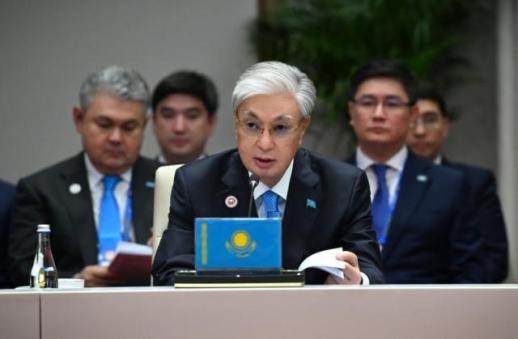 Kazakhstan offers to host SCO Development Bank headquarters SEOUL, September 02 (AJP) - A development bank that the Shanghai Cooperation Organization has not yet agreed to create already has a country volunteering to house it. Kazakhstan's President Kassym-Jomart Tokayev told the Shanghai Cooperation Organization (SCO) Council of Heads of State in Bishkek on Sept. 1 that Kazakhstan would take the lender and its headquarters if the bloc's members reached agreement on building it. He backed the proposal, which China has pushed, and said the money should go first to infrastructure, technology and industrial projects. "And if the member states reach consensus, Kazakhstan could host this institution, its headquarters," the Kazakh president said. The bank does not exist yet. Tokayev attached his offer to a condition the bloc has not met, and the leaders left Bishkek without a founding document for the institution. The SCO groups 10 member states, including China, Russia, India, Pakistan, Iran and four Central Asian countries, and has run for a quarter century without a development lender of its own. Tokayev built the offer on trade numbers. He said commerce among SCO countries was approaching $1 trillion, then argued that the bloc's economic connections still fall well short of what its members could manage together. Kazakhstan wants what he called a broad SCO trade and investment space with minimal barriers, digital procedures and developed transport and logistics links. To get there, he proposed a workaround for the bloc's habit of moving at the pace of its slowest member. "We propose introducing a mechanism of pilot industrial consortia, which will allow states to carry out projects as they become ready for them, without waiting for all participants to join," he said. "Successful undertakings can be scaled up across the whole Organization." He also proposed launching SCO cross-border trade zones on the basis of existing border cooperation centers, describing them as a testing ground for simplified goods exchange, digital customs procedures and modern settlement mechanisms. Transport came next, and here Kazakhstan has the most direct stake. The country sits on the overland routes between China and Europe, and Tokayev listed the Belt and Road Initiative, the Trans-Caspian International Transport Route and the North-South corridor as networks the SCO should knit together. He asked members to build a single digital transit platform that would follow cargo from departure point to final recipient, and to adopt a Transport Connectivity Strategy of the Shanghai Cooperation Organization through 2035. On technology, Tokayev argued that artificial intelligence is moving too fast for member states to simply adapt to it. He said SCO countries should shift from trading experience to building technology together, and proposed a network of AI centers under SCO auspices drawing on member states' universities, research institutions and technology companies. Kazakhstan already signed on to a parallel Chinese project in this area. On July 16 in Shanghai, it became one of 29 founding members of the World Artificial Intelligence Cooperation Organization, an intergovernmental body headquartered in the Chinese city and created on Beijing's initiative to set common approaches to AI governance. Security occupied the first section of his speech. Tokayev proposed an SCO ministerial conference on strategic stability and confidence-building measures in Eurasia, with an agenda covering the reduction of military risks, restraint of a new arms race, and the prevention of dangerous incidents. He warned that the effects of armed conflict are no longer contained where the fighting happens. "Of particular concern is the fact that the consequences of armed conflicts are already spreading beyond the immediate combat zones, affecting international markets, commercial shipping and the stability of energy and transport links," he said. Kazakhstan backed the aims of two bodies the bloc is standing up, the SCO Universal Center for Countering Security Challenges and Threats and the SCO Anti-Drug Center, saying their work would lift coordination among member states' agencies to a different level. Tokayev also asked that the question of reforming the SCO be handed to member states' foreign ministries. The session continued in the SCO Plus format, where Tokayev turned to the wider international system and made an unusual argument for a leader in that room. He defended the United Nations. "A good deal of criticism is directed at the U.N.," he said. "Even if this criticism is partly justified, it does not cancel out the main point, that there is no alternative to this Organization." He said the U.N. Charter should remain the universal foundation of international law, praised Secretary-General Antonio Guterres for defending it, and said the reform Guterres began would succeed only if member states supplied the political will. Tokayev then made a case for countries in Kazakhstan's own weight class. Responsible middle powers, he said, can broker between competing centers of power and should have their positions reflected in global governance mechanisms. He pointed to Kazakhstan's decision in July to join the Convention on the Establishment of the International Organization for Mediation, another Chinese initiative, as evidence of that approach. He proposed fixing the SCO's core principles in a special U.N. General Assembly resolution timed to the International Day of Multilateralism and Diplomacy for Peace. Water took up the longest passage of the second speech. Tokayev said dozens of U.N. structures handle water issues without any single intergovernmental organization holding a comprehensive mandate, and repeated Kazakhstan's call for an International Water Organization under U.N. auspices, with an SCO water analysis center as its regional counterpart. On technology governance, he cited a project already approved. The Asia-Pacific Digital Solutions Center for Sustainable Development, established in Almaty on Kazakhstan's initiative under the U.N. Economic and Social Commission for Asia and the Pacific, should help spread working digital solutions to developing countries, he said. He used the SCO Plus floor to report on changes at home, telling the leaders that Kazakhstan's new constitution took effect July 1 and that a new unicameral legislature, the Kurultai, has begun work. Kyrgyz President Sadyr Japarov, Belarusian President Alexander Lukashenko, Indian Prime Minister Narendra Modi, Iranian President Masoud Pezeshkian, Chinese President Xi Jinping, Pakistani Prime Minister Shehbaz Sharif, Russian President Vladimir Putin, Tajik President Emomali Rahmon and Uzbek President Shavkat Mirziyoyev also addressed the session. The leaders closed the meeting by signing the Bishkek Declaration marking the organization's 25th anniversary, along with decisions approving the regulations of the SCO Universal Center for Countering Security Challenges and Threats and the executive committee of the SCO Anti-Drug Center. No document establishing the development bank was among them. 2026-09-02 17:00:59
 -
Poet Kim Nam-joo Exonerated 46 Years After 'Namminjeon Incident' Kim Nam-joo, a poet who was wrongfully imprisoned for his involvement in the 'Namminjeon Incident' during the Park Chung-hee regime, was declared not guilty 46 years later. On September 2, the Seoul Central District Court's Criminal Division 28, led by Judge Han Dae-kyun, announced its verdict in the retrial of Kim, who had faced charges of violating the National Security Law and Anti-Communism Law.The court found that Kim had been illegally arrested and detained during the investigation, and that he had been subjected to violence and coercion. As a result, the court ruled that most of the evidence collected by the authorities was obtained unlawfully and lacked evidentiary value.Regarding the confessions made during the original trial, the court noted that the psychological pressure from the illegal investigation likely affected their credibility. The court stated, "Confessions alone cannot be deemed guilty without objective and clear evidence." The 'Namminjeon' was formed in 1976 by Lee Jae-moon, Shin Hyang-sik, and Kim Byeong-gwon, former journalists of the Minjok Ilbo, aiming to criticize the Yushin regime and promote anti-imperialist national liberation movements. In 1979, following the distribution of pamphlets, over 80 members and associates were arrested.Kim joined the Namminjeon Preparatory Committee in 1978 after participating in the Korean Democratic Struggle Committee (Minju). He was forcibly taken without a warrant in 1979 for allegedly publishing resistance poetry and producing anti-Yushin pamphlets. He was subsequently held illegally for 48 days and sentenced to 15 years in prison and a 15-year disqualification in 1980.After serving 9 years and 2 months, Kim was released on parole in 1988 due to a suspension of his sentence. However, he suffered from various illnesses due to the aftereffects of torture and passed away from pancreatic cancer in 1994. He reportedly continued to write poetry in prison, using sharpened toothbrushes to inscribe his verses on milk cartons and aluminum foil.Kim's collection of over 250 poems was published, starting with his first poetry book, 'Jinhonga,' in 1984, followed by 'My Knife, My Blood' and 'The Fatherland is One.'In 2006, Kim was recognized by the Committee for the Restoration of Honor and Compensation for Democratic Movement Activists for his contributions against the Yushin regime, but his judicial honor was not restored until now. His family filed for a retrial in June 2024, and approximately two years after the court acknowledged the illegal detention, the not guilty verdict was finally issued.* This article has been translated by AI. 2026-09-02 16:52:10
-
Gyeongsang National University Transforms Chilam Campus into Youth Startup and Cultural Hub Gyeongsang National University's Chilam Campus is being transformed into a hub aimed at attracting youth and research and startup talent to the old downtown area of Jinju.Following the relocation of the Industry-Academic Cooperation Center and the Nursing College, the addition of a 453 billion won startup support facility is crucial to determining whether the university's facility reorganization will lead to revitalization of the old downtown.On August 27, Gyeongsang National University presented plans to enhance the Chilam Campus during the 'Jinju City-Gyeongsang National University Cooperative Development Council.' This followed a request from Jinju City to consider relocating some colleges from the Gajwa Campus to the Chilam Campus, incorporating both completed relocation projects and new initiatives planned through 2028.The university's industry-academic cooperation functions have already moved to the Chilam Campus. The Industry-Academic Cooperation Center relocated from the Gajwa Campus last May, and affiliated research institutes and centers are gradually moving as well. To date, 15 research institutes have relocated to the Chilam Campus.The Nursing College also moved to the Chilam Campus last month. The relocation included undergraduate and graduate students, faculty, and practical training facilities, which the university notes differs from typical college relocations due to the presence of ongoing practical training.A university planning official stated, "The Nursing College has its practical training facilities and equipment at the Chilam Campus, allowing students to stay and receive education continuously."The Chilam Campus also operates existing dormitories and student dining facilities. However, some buildings are aging, raising the need for future renovations. The university is considering remodeling older facilities, such as those for the College of Humanities and Social Sciences and the College of Business, but specific project sizes and timelines have not yet been finalized.A major project aimed at attracting startup talent is also underway. The 'Green Startup Town,' funded through a project by the Ministry of SMEs and Startups, will involve a total investment of 453 billion won, with completion targeted for 2027. This initiative aims to cluster eco-friendly venture companies and startup support facilities within the university.In 2028, plans are in place to establish a special education program at the Chilam Campus. This initiative aims to address the shortage of specialized personnel in special education in western Gyeongnam following the closure of Korea International University.An increase of 20 students was confirmed in April, and a decision on the increase of full-time faculty requested by the university is expected in the first half of 2027.The university is also considering adding additional organizational structures related to the expansion of undergraduate programs in artificial intelligence at the Chilam Campus. The potential relocation of additional colleges from the Gajwa Campus, as requested by Jinju City, will be decided after consulting university members and reviewing the long-term development plan.The plan to open the campus to the public is also included. Starting October 1, the university will offer free parking at the Chilam Campus on weekends and holidays. This initiative aims to enhance parking convenience for visitors to Chilam-dong and the riverside area, thereby increasing foot traffic to local businesses. However, details regarding the total number of free parking spaces and operational specifics will be managed separately by the administrative department.Gyeongsang National University plans to include the functional and specialization directions of each campus in its long-term development plan to be announced this month.The success of revitalizing the Chilam Campus hinges on how much the actual resident population can be increased, rather than just the relocation of facilities. If the relocation of the Industry-Academic Cooperation Center and Nursing College, along with the establishment of the Green Startup Town, leads to an influx of research and startup talent, a structure could be created that keeps these individuals in the old downtown area.Conversely, the additional relocation of colleges and the attraction of public institutions are still under review, leaving the specifics of the execution schedule and scale in the long-term development plan as the next task ahead.* This article has been translated by AI. 2026-09-02 16:52:00
-
Korean Lawmakers Share Laughter at 2026 GGGF Forum On September 2, at the Plaza Hotel in Jung-gu, Seoul, the 18th Good Growth, Good Jobs Global Forum (2026 GGGF) brought together political figures, including National Assembly Speaker Cho Jeong-sik and People Power Party floor leader Jeong Jeom-sik, who shared a warm atmosphere.During the forum, which focused on the topic of artificial intelligence (AI), Cho and Jeong exchanged views and shared jokes, creating a lighthearted environment. Notably, before delivering his congratulatory remarks, Cho expressed gratitude to Jeong for attending, saying, "The regular session of the National Assembly began yesterday, and I appreciate you taking the time to join us." In response, Jeong thanked Cho for his "always gentle charisma in leading the legislative body of South Korea."The two leaders found common ground on South Korea's competitiveness amid the global shift towards AI. They expressed confidence that as the focus of the AI industry shifts towards 'Physical AI,' South Korea, as a manufacturing powerhouse, has the potential to emerge as a leading nation. They also pledged to do their utmost to provide policy and institutional support from their respective positions as heads of the legislature and the opposition party.In addition to Cho and Jeong, lawmakers Kim Jang-gyeom and Yoon Yong-geun from the People Power Party engaged in ongoing discussions on various topics. When Yoon remarked, "I need to study a lot about AI," Cho smiled and urged him to ensure the opposition party actively participates in the AI industry. The forum's host even introduced them with a three-line poem using their names, which sparked further conversation among the attendees. 2026-09-02 16:52:00
-
 Six missing after tugboat capsizes off Busan SEOUL, September 2 (AJP) - A tugboat carrying eight crew members capsized off the southern port city of Busan on Wednesday, leaving six people missing, according to coast guards. The 286-ton boat overturned at about 1:29 p.m. in waters about 9 kilometers southeast of Oryukdo islets. Of the crew including six South Koreans and two foreign nationals, one crew member was rescued by a cargo ship passing nearby, while another was found unconscious. Strong currents and high waves of 1 to 1.5 meters, along with northwesterly winds of 4 to 6 meters per second, were hampering search and rescue efforts. President Lee Jae Myung ordered officials to use all available resources to rescue the missing crew members. Prime Minister Han Seong-sook also called on the Ministry of the Interior and Safety, the Defense Ministry and the Busan city government to provide personnel and equipment to support the rescue operation. AJP Takeaways • A 286 ton tugboat carrying eight crew members capsized off Busan, leaving six people missing. • One crew member was rescued and another was found unconscious as strong currents and high waves hampered the search. • President Lee Jae Myung ordered authorities to use all available resources in the rescue operation. 2026-09-02 16:48:41
 -
Korea's Jeong Yeon-du Meets U.S. Ambassador Michelle Steel to Reinforce Cooperation Jeong Yeon-du, head of the Foreign Affairs Strategy and Information Bureau, met with Michelle Steel, the new U.S. Ambassador to South Korea, on September 2, pledging to strengthen cooperation for peace on the Korean Peninsula. The Foreign Ministry announced in a press release that "Director Jeong welcomed Ambassador Steel's appointment." It added, "Both sides reaffirmed the importance of close communication and cooperation on various issues, including the Korean Peninsula." The ministry emphasized that they agreed to continue enhancing communication moving forward. Meanwhile, Ambassador Steel, who took office in July, has been meeting with senior government officials. As discussions around a potential North Korea-U.S. summit gain traction, attention is focused on whether U.S. and South Korean diplomatic authorities can find a way forward. 2026-09-02 16:48:10