


Latest by
-
 Lenovo Expands AI PC Market with AMD Partnership, Launches ThinkStation P4 in Korea Lenovo is strengthening its presence in the artificial intelligence (AI) workstation market through a technology partnership with AMD. The company aims to expand its product range beyond high-end workstations to cater to a broader array of professional fields.On September 1, Lenovo Korea held a media showcase at the Mondrian Seoul Itaewon, where it launched the ThinkStation P4, a professional desktop workstation equipped with AMD's Ryzen Pro 9000 series processors.New CEO of Lenovo Korea, Shin Gyu-sik, stated, "We have built a comprehensive partnership with AMD from the initial design phase, covering everything from end devices to data centers. The ThinkStation P4, based on the AMD Ryzen Pro 9000 processor, offers powerful computing performance and excellent scalability, enhancing productivity and efficiency across various professional fields such as design, engineering, and content creation."The P4 is designed as an AI-optimized desktop workstation featuring AMD Ryzen Pro 9000 series processors and supports up to 256 gigabytes (GB) of DDR5 memory. It includes the first model to apply AMD's 3D V-Cache technology, providing high-performance computing environments for specialized fields such as architecture, engineering, manufacturing, media, content, education, and healthcare.Graphics options include the NVIDIA RTX Pro 6000 Blackwell workstation GPU or the Max-Q model. It supports up to 96GB of GDDR7 ECC memory and offers a maximum AI computing performance of 4000 TOPS, enabling support for heavy workloads like large-scale AI inference, 3D rendering, and engineering simulations.Lenovo emphasizes 'sustainable high performance' with the P4. The top-tier model features a liquid cooling system, a first for Lenovo workstations. This system absorbs heat generated by the CPU, which is then transferred through tubes to a radiator, cooling the liquid before it returns to the CPU, effectively managing heat. The cooling unit is designed to be sealed, eliminating the need for separate coolant replacement or maintenance.This system controls heat from CPUs rated up to 170 watts (W), reducing performance degradation and noise during prolonged high-load tasks. According to Lenovo's internal tests, the Ryzen Pro 9 model handled 160W of CPU power in an environment of 86 degrees, approximately 23% higher than air-cooled systems.This represents an extension of Lenovo's cooling technology, developed in data centers, to personal workstations. Shin noted, "Five years ago, we supplied around 10,000 liquid-cooled servers for the Korea Meteorological Administration's supercomputer infrastructure, and we have now applied this validated cooling technology from data center servers to workstations."With the P4, Lenovo is targeting a broader market. The existing AMD workstation portfolio has focused on high-performance, high-cost models like the ThinkStation P8, catering primarily to customers requiring top-tier performance in media and entertainment. The P4 aims to enhance versatility, targeting a wide range of professional markets, including manufacturing, design, engineering, architecture, as well as media, content, and AI computing.The P4 features a chassis of approximately 30 liters, ensuring flagship-level performance and scalability. It supports PCIe 5.0 for improved compatibility with the latest hardware and offers a hybrid storage structure that can accommodate up to six storage devices, expandable to a maximum of 48 terabytes (TB).Shin concluded, "As AI technology spreads across industries, the demand for on-device AI-based high-performance computing is rapidly increasing. The P4 will enhance productivity and efficiency in various professional fields such as design, engineering, and content creation."* This article has been translated by AI. 2026-09-01 17:44:10
 -
Mokdong Yunsul Jais to Launch Amid Loan Regulations with 70% LTV The large mixed-use complex 'Mokdong Yunsul Jais' is set to launch this month in a prime location in Mokdong, Seoul. Amid tightened apartment loan regulations, the project will be offered as officetels, allowing for a loan-to-value (LTV) ratio of up to 70%. The development aims to attract actual buyers with its spacious layouts.On September 1, a visit to the GS Construction Mokdong Yunsul Jais model home in Yangcheon-gu, Seoul, revealed an interactive video and a model of the complex on the first floor, showcasing the overall layout and views. The third floor featured actual unit displays, highlighting larger and duplex options, which stand out from typical small officetels.During a press briefing, Kim Pil-moon, the sales manager for Mokdong Yunsul Jais, emphasized the favorable loan conditions, stating, "Since it is classified as an officetel, the LTV can go up to 70%. While the debt service ratio (DSR) varies by individual, there are relatively advantageous aspects regarding loans." However, the actual loan amount will depend on individual DSR, income, and existing debts. An LTV of 70% does not guarantee a loan of 70% of the sale price. Buyers must consider the differences in financing, taxes, and subscription systems between officetels and apartments.Mokdong Yunsul Jais will be built on the former KT site in Mokdong, Yangcheon-gu, with three buildings rising from six underground floors to 48 above ground. The project will include 651 officetel units with sizes ranging from 114 to 203 square meters, along with commercial and office facilities. Unlike typical officetels, this development focuses on larger units to cater to actual residents.The model home showcased spacious living areas and practical layouts. The 114-square-meter unit features a layout similar to an apartment, while the 203-square-meter AD unit employs a duplex design to maximize space. High-quality finishes and built-in furniture are included, reducing the burden of additional options.Located near Omokgyo Station on Line 5, the site offers easy access to major business districts like Yeouido and existing amenities such as the Hyundai Department Store Mokdong and the Mokdong academy district. The ongoing redevelopment of Mokdong New Town is also expected to generate future demand for relocation and rentals, which the sales team is closely monitoring.The upper floors will feature community facilities for residents, including a sky community on the 47th floor of Building 102, offering views of the Mokdong area, along with dining and guesthouse amenities.The success of the sales will likely depend on pricing and the actual financial burden on buyers. While officetels offer more flexibility in loan regulations compared to apartments, the LTV limit does not guarantee the full loan amount. Given that the units are primarily larger than 114 square meters, the final sale price will significantly influence buyer decisions.The Mokdong Yunsul Jais model home will open on September 3, marking the start of the sales schedule.* This article has been translated by AI. 2026-09-01 17:44:00
-
Korea Zinc Plans Criminal Complaint Against Youngpoong and MBK Ahead of Shareholder Meeting Korea Zinc announced plans to file a criminal complaint against representatives of Youngpoong and Korea Corporate Investment Holdings for defamation and obstruction of business ahead of an extraordinary shareholders' meeting scheduled for September 9. Korea Corporate Investment Holdings is a special purpose company established by MBK Partners to acquire shares in Korea Zinc.Korea Zinc claims that the materials posted on the campaign website on August 12, which solicited proxy voting, contained false information regarding the nomination of director candidates representing all shareholders at the 2026 extraordinary shareholders' meeting.The issues raised by Korea Zinc include the disposal of treasury shares, issuance of new shares, violations of accounting standards, accounting treatment related to Ignio Holdings, resignations of independent directors, and the circumstances surrounding the extraordinary shareholders' meeting.Youngpoong and Korea Corporate Investment Holdings allege that Korea Zinc allocated 15.5% of its issued shares to friendly forces through the disposal of treasury shares and issuance of new shares, with many related transactions now subject to legal proceedings. In response, Korea Zinc stated that these transactions were conducted for strategic partnerships and new business initiatives, and that only one case is currently in the appeals process.Regarding the alleged accounting violations, the two sides have conflicting claims. Youngpoong and Korea Corporate Investment Holdings assert that no follow-up actions were taken by the board after sanctions were imposed, while Korea Zinc contends that it has enhanced controls related to impairment of investment assets and implemented procedures to prevent omissions in disclosures of related parties, which were reported to the audit committee.In response to claims of intent to conceal losses related to Ignio Holdings, Korea Zinc argued that regulatory authorities determined the issue was due to negligence rather than intent.There are also differing views on the resignations of independent directors and the circumstances of the extraordinary shareholders' meeting. Youngpoong and Korea Corporate Investment Holdings claim that the independent directors resigned at the behest of Chairman Choi Yoon-beom ahead of a court ruling regarding voting rights restrictions. Conversely, Korea Zinc explained that the timing and outcome of the related case had not been finalized, and that the independent directors resigned for personal reasons.Korea Zinc maintains that the extraordinary shareholders' meeting was convened to meet the requirements for forming an audit committee under the amended Commercial Act. It noted that a proposed amendment to the articles of incorporation to expand the audit committee was not passed at the regular shareholders' meeting in March, necessitating a separate extraordinary meeting.Korea Zinc plans to file complaints against representatives of Youngpoong and Korea Corporate Investment Holdings for defamation under the Information and Communications Network Act, defamation through publications, and obstruction of business, stating that the materials were also used in soliciting proxy voting from institutional investors and during the investor relations process.A representative from Korea Zinc stated, "If false information is disseminated ahead of the shareholders' meeting, it could influence shareholders' judgments and voting rights."The extraordinary shareholders' meeting is set to take place at 10 a.m. at the Mondrian Hotel in Yongsan, Seoul on the 9th.* This article has been translated by AI. 2026-09-01 17:44:00
-
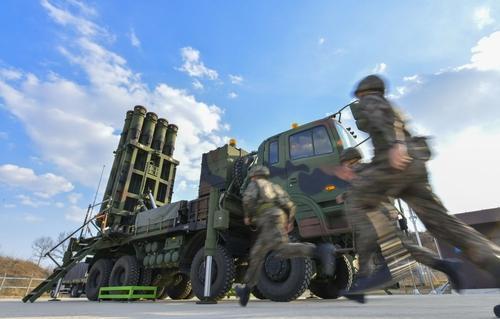 K-defense gains traction amid localization push SEOUL, September 01 (AJP) - If the AI boom has delivered a windfall for South Korean chipmakers, rising geopolitical risks along Russia’s borders and across the Middle East have pushed Korean weapons makers into the spotlight. Growing pressure for greater self-reliance, fueled by America-first policies and strains among traditional allies, is driving governments across Europe, Asia and the Middle East to sharply increase defense spending and modernize their arsenals. The rush has benefited South Korean defense companies Hanwha Aerospace, LIG Nex1, Hyundai Rotem and Korea Aerospace Industries, or KAI, all of which appeared in Defense News’ latest ranking of the world’s 100 largest defense companies. The four generated a combined $17.79 billion in defense revenue in 2025, up 38.4 percent from $12.85 billion a year earlier, according to an AJP calculation based on the 2026 Defense News Top 100. Hanwha made the biggest leap, rising to 16th from 22nd as defense revenue surged 53 percent to $10.44 billion from $6.82 billion. LIG Nex1 moved to 52nd from 53rd, with revenue rising to $3.03 billion from $2.36 billion, while Hyundai Rotem climbed to 61st from 67th as defense revenue increased to $2.46 billion from $1.74 billion. KAI was the exception, falling to 74th from 62nd as defense revenue declined to $1.86 billion from $1.94 billion. Localization becomes price of entry The European Union’s defense industrial strategy calls for member states to gradually raise procurement from the European defense industrial base to at least 50 percent by 2030 and 60 percent by 2035. Under the EU’s €150 billion ($175 billion) Security Action for Europe, or SAFE, financing instrument, components originating outside the EU, European Economic Area and Ukraine generally cannot exceed 35 percent of an eligible product’s component costs. Similar pressure is building in the Middle East. Saudi Arabia aims to localize more than 50 percent of military equipment and services spending by 2030, putting domestic production, maintenance and technology transfer at the center of its defense strategy. The requirements are changing the equation for Korean exporters, which initially gained market share through relatively fast delivery, proven platforms and competitive pricing. “The markets that can be accessed through direct exports of finished products alone are inevitably limited,” Korea Investment & Securities said in a report, adding that localization can expand both the range of accessible markets and the likelihood of winning contracts while generating follow-on revenue from technology transfer and maintenance. What began as an additional condition attached to major export contracts is increasingly becoming part of the competitive proposition itself. Hanwha: Spain and U.S. open harder markets Hanwha Aerospace is pushing into two markets that have traditionally been difficult for Korean defense companies. It is partnering with Spain’s Indra on a K9-based artillery program covering 128 self-propelled howitzers and 120 ammunition resupply vehicles, with hull design and production to be localized in Spain. Defense News put the broader Spanish tracked-artillery budget at €4.55 billion. In the U.S., the Army selected Hanwha Defense USA in August to provide six Mobile Tactical Cannon prototypes, with options for 12 more, under a contract worth up to $262.9 million. “The U.S. howitzer prototype program and the Spanish artillery deal are significant as footholds for follow-on orders, additional items and entry into new markets,” Yang Seung-yoon, an analyst at Eugene Investment & Securities, said in a report Monday. Korea Investment & Securities also said Hanwha’s experience in building production facilities, localizing supply chains and transferring technology could become a differentiator as localization requirements tighten. LIG: European air defense becomes next frontier LIG Nex1 is moving beyond the Middle East, where Cheongung-II sales created its largest export base, toward establishing a manufacturing foothold in Europe. LIG and Germany’s Rheinmetall agreed in June to pursue a European joint venture, with Rheinmetall holding a majority stake, to localize and market LIG’s medium- and long-range air-defense systems and jointly develop new short-range missiles. LIG has also opened a representative office in Munich. The company is simultaneously expanding in Southeast Asia, including the first export of its Haegung naval missile to Malaysia and prospective missile deals in Indonesia. “Export markets and products are continuing to diversify across Europe, Southeast Asia, the Middle East and South America, particularly in air-defense and ground systems,” Yang said. Hyundai Rotem: Poland shifts from buyer to production base Hyundai Rotem’s Polish K2 program is moving from rapid deliveries of Korean-built tanks toward local production and long-term sustainment. Poland received the first 28 K2GF tanks under its second $6.5 billion contract in August. Of the 64 K2PL tanks included in the deal, the first three will be built in South Korea for testing, while the remaining 61 will undergo final assembly at Poland’s Bumar-Łabędy plant. Maintenance capabilities and the parts ecosystem are also being transferred to Poland. “The revenue structure is becoming longer-term, moving from finished-product exports to local production, maintenance and ammunition,” Yang said. The next potential market is Peru, where the K2 remains in contention for a major tank procurement program. KAI: KF-21 enters service, exports become next test KAI is entering a different transition as the KF-21 moves from development into operational service. The first production fighter is scheduled for delivery to the Korean Air Force on Sept. 17, with eight expected by year-end. Eugene Investment & Securities said the program is now expanding “from aircraft production to an air-to-air and air-to-ground weapons package” as South Korea develops indigenous weapons for the fighter. The bigger test is exports. Indonesia, once the KF-21’s development partner and expected production partner, dropped plans for domestic co-production this year, although purchases of completed aircraft remain possible. That leaves KAI with the task of turning the KF-21’s entry into service into its first firm overseas order while continuing to expand the FA-50 business in markets including Malaysia and the Philippines. The Defense News ranking reflects contracts and deliveries recognized in 2025. Many of the localization moves now underway - Hanwha’s Spanish and U.S. programs, Hyundai Rotem’s Polish production arrangement, LIG’s overseas manufacturing push and KAI’s support networks abroad - will only begin to show their financial impact over the coming years. South Korea’s first defense export boom was largely about proving that its weapons could compete overseas and be delivered quickly. The next phase is about becoming part of customers’ own defense industrial bases, extending the business from finished-product exports into local production, maintenance, ammunition and technology transfer. 2026-09-01 17:41:17
 -
Lionel Messi Retires from Argentina National Team After 21 Years A chapter in Argentine soccer has come to a close as Lionel Messi, often referred to as the 'God of Football,' has announced his retirement from the national team after 21 years of service.On September 1, Messi declared his retirement via social media, marking the end of his international career that began with his debut on August 17, 2005, in a friendly match against Hungary.During his time with the national team, Messi played 207 matches, scoring 125 goals and providing 68 assists, both of which are records for Argentina. His 125 goals are the most by any South American player, and he also holds the record for the most hat-tricks with 11.In FIFA World Cup competitions, Messi participated in six tournaments starting from 2006 in Germany, playing a total of 34 matches, scoring 21 goals, and assisting 12 times, all of which are also records. He won the World Cup once, in 2022 in Qatar, and finished as a runner-up in 2014 in Brazil and 2026 in North America. He received the Golden Ball award for best player in the tournament twice, in 2014 and 2022.In the Copa America, Messi played a record 39 matches, scoring 14 goals and providing 18 assists, also the highest in the tournament's history. He won the title twice, in 2021 in Brazil and in 2024 in the United States.Messi also earned an Olympic gold medal at the 2008 Beijing Games, where Argentina defeated Nigeria 1-0 in the final, marking their second consecutive Olympic title after Athens in 2004.Throughout his international career, Messi won the Ballon d'Or award eight times, setting a record and solidifying his status as one of the greatest players in soccer history.“I Have No More Strength to Give”In his retirement announcement, Messi stated, “After some time has passed since the North American World Cup final, I want to share my retirement news after much contemplation. It is a painful decision, but I know it is time to leave.”Messi wrote this statement two days after the final against Spain in July. He noted that the passing of his father, Jorge Messi, who died last month at the age of 68, solidified his decision. Jorge had been Messi's agent and a significant support throughout his career. Following his father's death, Messi expressed uncertainty about continuing in soccer, saying, “I don’t know what to do without my father, and I question whether I can continue playing.”International media outlets, including the BBC and The Athletic, noted that while Messi's retirement at 39 was anticipated, the loss in the World Cup final and his father's passing accelerated his decision.Messi added, “I have always fought to bring joy to you and to instill pride in being Argentine through soccer. I have given everything I had, and now I have no more strength to give.” He also mentioned that there are talented young players ready to take his place on the national team.Struggles and TriumphsMessi's journey with the national team was not without challenges. After leaving his hometown of Rosario at age 13 to join FC Barcelona, he faced criticism in Argentina for being perceived as more Catalan than Argentine. He was often compared to the late Diego Maradona, who led Argentina to victory in the 1986 World Cup, which added pressure on him.Messi struggled to win titles with the national team, contrasting with his club success, where he won 10 league titles and 4 UEFA Champions League titles with Barcelona. He reached his first World Cup final in 2014, where Argentina lost to Germany 1-0 after extra time, despite Messi winning the Golden Ball.In the Copa America, he finished as a runner-up in 2007, 2015, and 2016, with the latter being particularly painful as he missed a penalty in the shootout against Chile. Following that match, he announced his retirement, stating, “For me, the national team is over.” However, after appeals from the Argentine president, soccer community, and fans, he reversed his decision and returned to the team.Despite facing setbacks, including a Round of 16 exit in the 2018 World Cup, Messi's fortunes changed under coach Lionel Scaloni. The team evolved from relying solely on Messi to a more balanced squad that combined youthful energy with his creativity. This shift led to victory in the 2021 Copa America, where Argentina defeated Brazil in the final, ending a 28-year title drought. Messi was named the tournament's MVP, top scorer, and top assist provider. The following year, he added the Finalissima title by defeating European champions Italy.The pinnacle of Messi's career came at the 2022 Qatar World Cup, where at 35, he scored 7 goals and provided 3 assists, leading Argentina to its first World Cup title in 36 years. In the final against France, he scored twice and successfully converted a penalty in the shootout, helping secure the victory. This win allowed Messi to step out of Maradona's shadow and be recognized as Argentina's greatest player.Even after winning the World Cup, Messi continued to represent Argentina, participating in the 2024 Copa America after moving to Inter Miami in Major League Soccer.In his final World Cup appearance at the 2026 North American tournament, Messi showcased his enduring talent, scoring 8 goals and providing 4 assists, earning the Silver Ball and Silver Boot. However, Argentina finished as runners-up, losing to Spain 1-0 after extra time in the final, held in the same stadium where Messi had announced his retirement a decade earlier.“I sincerely thank you for the love you have shown me over the past 20 years. I will miss hearing your cheers in the stadium,” Messi said. “Now, I will support the team as a fan.”Messi shared a two-minute video capturing moments from his time with the national team, featuring a young Messi saying, “Playing for the national team is my dream.”“I leave with pride, having been able to gift you dreamlike moments. I was truly happy to share all of this with you. I love you,” he concluded.Messi has a contract with Inter Miami until the end of 2028. Having retired from the national team, he will now focus solely on his club career.* This article has been translated by AI. 2026-09-01 17:40:00
-
Bukwang Pharmaceutical's Subsidiary Korea Union Pharmaceutical Exits Court Protection Bukwang Pharmaceutical's subsidiary, Korea Union Pharmaceutical, has successfully exited court protection. This follows Bukwang's investment of 30 billion won, which allowed for the repayment of most rehabilitation claims just three months ago. On September 1, Bukwang Pharmaceutical announced that the Seoul Bankruptcy Court had decided to conclude the rehabilitation process for Korea Union Pharmaceutical on August 31. The company had filed for rehabilitation proceedings in September of last year due to management difficulties and received the court's approval the same month. It has now completed the court protection process in about a year. The conclusion of the rehabilitation process is determined when the majority of debt repayments and rights changes outlined in the rehabilitation plan have been fulfilled, indicating that court oversight is no longer necessary. Korea Union Pharmaceutical repaid most of the 29.2 billion won in claims due this year, excluding some unconfirmed claims. The remaining unpaid amount is 76 million won. The company submitted a request to conclude the rehabilitation process to the Seoul Bankruptcy Court on August 14, which was accepted. The foundation for this normalization was Bukwang Pharmaceutical's financial support. On May 27, Bukwang invested 30 billion won to acquire new shares in Korea Union Pharmaceutical, becoming the largest shareholder. This acquisition funding was utilized for debt repayment as part of the rehabilitation plan. Bukwang stated that the conclusion of the rehabilitation process has significantly alleviated the financial uncertainties surrounding Korea Union Pharmaceutical. The company noted, "After the acquisition, we have repaid most of the debts according to the rehabilitation plan," adding that the previously capital-deficient financial structure has improved to a debt ratio of around 40%. Furthermore, it mentioned, "All past unpaid trade receivables, loans, and convertible bonds have been settled. Currently, only some debts related to normal operations, such as trade payables and return provisions arising during the management normalization process, remain. Excluding these, the actual debt ratio is about 15%." Bukwang is already seeing the benefits of the acquisition. In June, it shipped the digestive enzyme product 'Complex Pajaim Double Tablets,' which is produced by Korea Union Pharmaceutical. Starting this month, it plans to produce and ship general over-the-counter medications 'Hard Chewable Tablets' and 'Hard Chewable Easy Tablets' at Korea Union Pharmaceutical.* This article has been translated by AI. 2026-09-01 17:40:00
-
Korea GM Reports 9.4% Increase in August Sales Driven by Strong Overseas Demand Korea GM has reported an improvement in overall sales performance due to strong overseas demand. On September 1, Korea GM announced that its total sales for August reached 23,042 units, a 9.4% increase from 21,059 units in the same month last year. While domestic sales were sluggish, the increase in overseas sales offset this decline. Domestic sales fell from 1,207 units to 731 units, a decrease of 39.4%, while overseas sales rose from 19,852 units to 22,311 units, marking a 12.4% increase. By model, the Trax crossover saw a significant increase in sales overseas, rising from 15,693 units in August last year to 18,223 units last month, a 16.1% increase. A Korea GM official stated, “Despite the impact of facility construction carried out in August following the summer vacation, sales increased in overseas markets.” Meanwhile, General Motors (GM) plans to invest a total of $600 million in its South Korean operations this year to enhance production facilities for small SUVs. * This article has been translated by AI. 2026-09-01 17:32:00
-
 OPINION: Is anywhere safe from climate disaster? Planet Earth has suffered and is still enduring a punishing summer in 2026. Last week, a massive section of glacier-covered mountain near the Nepal-Tibet border simply gave way, plunging roughly 1,200 meters into the valley below and unleashing an avalanche of ice, rock, mud and water that tore through settlements along the river. The collapse was so violent that it generated seismic energy equivalent to a magnitude 5.2 event, briefly leading observers to believe an earthquake had triggered the catastrophe. Scientists now say the reverse appears to have happened - the falling mountain caused the shaking. The death toll in Nepal has climbed above 900 and nearly 4,500 missing. Gravity is natural. Glaciers advance and retreat. Mountains fracture. Avalanches and floods have shaped the Himalayas for millennia. But that description no longer tells the whole story. The precise trigger that caused this particular mass of ice and rock to fail is still being investigated. Scientists should be careful about attributing a single collapse directly to climate change. What is much clearer is that the environment in which such failures occur is changing. Human-caused warming is rapidly shrinking glaciers across the Himalayas and thawing the permafrost that helps bind high mountain slopes together. Warmer conditions can accelerate snowmelt, expose rock that had long been insulated by ice and weaken the frozen material holding steep terrain in place. Researchers therefore increasingly worry not simply about melting glaciers, but about mountains becoming structurally less stable as the climate warms. Nepal's disaster was not the familiar glacial lake outburst flood, in which meltwater accumulates behind a natural barrier until the barrier breaks. Nor does evidence point to a man-made dam collapse. The infrastructure along the river — including hydropower facilities — was in the path of the disaster, not its apparent cause. The sequence was more disturbing precisely because it was less familiar: glacier and rock collapsed, an enormous debris flow entered the river system and several hazards cascaded into one another. The source material on the disaster describes a Himalaya already losing ice at an accelerating rate and warns that conventional flood-warning systems may struggle with events generated by rapidly destabilizing mountains and raises an uncomfortable question far beyond Nepal. If even mountains can no longer be treated as permanent, what exactly is safe? For South Korea, the immediate answer requires some perspective. Climate change does not distribute the same disaster to every country. It pushes against the particular physical and social weaknesses each country already has. For Nepal, one of those weaknesses is a vast high-altitude landscape increasingly destabilized by disappearing ice. For Korea, it is a densely populated, mountainous peninsula containing enormous concentrations of people, homes, transport networks and economic assets in relatively small spaces. The hazards are therefore different: extreme rainfall, urban flooding, landslides, heat waves, drought, wildfires, coastal flooding and typhoons. The Korea Meteorological Administration said 2025 was the country's second-hottest year on record. Even though annual rainfall was broadly around normal levels, rainfall exceeding 100 millimeters in a single hour was observed at 15 locations. This year was no different, repeatedly swing between extreme heat, torrential rain, drought and wildfire. A broader government assessment published last year, based on more than 2,000 Korean and international studies, concluded that warming on the Korean Peninsula is intensifying and that heat waves and extreme rainfall are already increasing and are expected to become stronger and more frequent. The significance lies not merely in hotter summers or heavier rain. It lies in what happens when extremes begin exceeding the assumptions on which society was built. A drainage system designed around the rainfall patterns of the past can become inadequate when extraordinary cloudbursts become more common. A mountain slope that survived decades of monsoons can fail after unprecedented rainfall. A forest stressed by prolonged drought can become fuel for a fire of an intensity rarely experienced before. A coastal defense built around historical sea levels becomes progressively less protective as those levels rise. And a power grid built for yesterday's summer temperatures must operate through longer periods of extreme cooling demand. The Korean government effectively acknowledges that adjustment is necessary. Its latest climate adaptation measures call for stronger infrastructure design standards reflecting future flood risks, expanded AI-based flood forecasting and tougher standards for buildings exposed to heavy snow and other climate hazards. Modern societies became remarkably good at engineering around known risks. Rivers were dammed. Embankments were raised. Storm drains were installed. Hillsides were reinforced. Weather satellites made typhoons visible days before landfall. Insurance companies calculated probabilities from decades of historical losses. Governments drew flood maps based on historical rainfall. Engineers designed structures around what constituted a once-in-50-year or once-in-100-year event. Climate change creates a fundamental problem for that system. The past becomes a less reliable guide to the future. A "100-year" rainfall event makes considerably less sense as a planning benchmark if the underlying climate itself is changing. Poor nations generally have fewer resources with which to protect themselves. Small island states face an existential threat from rising seas. Himalayan communities live beneath increasingly unstable ice. Countries already suffering water scarcity have little margin when drought intensifies. It would therefore be wrong to pretend everyone carries the same risk. But wealth is not immunity. Germany has experienced catastrophic flooding. Canada has battled enormous wildfires. Southern Europe has endured lethal heat. Switzerland has evacuated Alpine villages threatened by collapsing rock and ice. Korea's considerable engineering capacity, sophisticated weather forecasting and disaster-response infrastructure give it advantages Nepal does not possess. They cannot make the peninsula climate-proof. Perhaps the most important lesson from Nepal is therefore not that climate change produced one more terrible flood. It is that the boundaries between different kinds of disaster are beginning to blur. Heat can destabilize ice. Ice can destabilize rock. Rock can block rivers. Rivers can become floods. Floods can destroy power plants, roads and communications, making the next stage of the disaster harder to manage. For Korea, the warning from the Himalayas should not be, "A mountain could fall on us." The disaster we have prepared for may not be the disaster that comes next. And in a rapidly changing climate, nowhere can afford to assume that yesterday's definition of safety will protect it tomorrow. *The author is the managing editor of AJP 2026-09-01 17:31:11
 -
Employment Insurance Premium Rate to Increase to 2% Next Year Starting next year, the employment insurance premium rate will rise from the current 1.8% to 2.0%. The method of paying unemployment benefits will also change to cover only six days a week, excluding unpaid holidays. The Ministry of Employment and Labor discussed these changes in a meeting of the Employment Insurance Committee on September 1. The proposal is based on 16 discussions held by a task force established in November last year, which included labor and management representatives as well as experts. Beginning next year, the insurance premium rates for workers and employers in the unemployment benefit account will each increase by 0.1 percentage points, raising the overall premium rate to 2.0%. This increase is intended to bolster the finances of the employment insurance fund, which have been strained by rising expenditures for maternity protection benefits. Spending on maternity protection benefits more than doubled from 2.1 trillion won in 2022 to 4.3 trillion won last year. The unemployment benefit account recorded a deficit of 1.8 trillion won last year. Although the reserve stands at 1.8 trillion won, considering the 7.7 trillion won borrowed from the Public Fund Management Fund, the actual reserve shows a deficit of 6 trillion won. The government will also increase its financial contributions. The transfer from the general account will rise from 600 billion won this year to 900 billion won next year, a 50% increase, with plans for gradual increases until 2029. In 2028, a new account tentatively named the 'Work-Family Balance Account' will be established to separate expenditures for maternity protection benefits, such as parental leave benefits, from the unemployment benefit account. However, considering that employers are obligated to pay for benefits related to maternity leave, these will be moved to the Employment Stability and Vocational Development Account. The specific premium rates and government contributions for the new account will be determined after further discussions based on trends in maternity protection expenditures. The method of paying unemployment benefits will also be revised for the first time in 22 years since the introduction of the five-day workweek in 2004. Currently, benefits are paid for seven days a week, including unpaid holidays, but in the future, they will only cover six days, excluding unpaid holidays. While the monthly payment amount will decrease, the total payout and total number of payment days will remain the same. Based on next year's minimum wage, the monthly payment is expected to range from 1.76 million won to 1.81 million won. For those receiving unemployment benefits for 150 days, the actual duration of benefits will extend to approximately 5 to 5.8 months. A ministry official stated, "Currently, workers earning at the minimum wage level are receiving more in unemployment benefits than their after-tax monthly wages. We aim to normalize the monthly payment to about 80% of the minimum wage while not reducing the total benefit amount." To prevent the recurring issue of the upper and lower limits being reversed, the upper limit for unemployment benefits, which was previously set as a fixed amount, will now be linked to 103% of the lower limit. The criteria for excluding early re-employment allowances will also be lowered from a monthly income of 5.74 million won to 3 million won after re-employment. This change addresses concerns that high-income earners, who are likely to find re-employment quickly, were still receiving benefits. The scope of employment insurance coverage will also be expanded. Starting in January, the coverage for four job categories, including insurance agents, after-school instructors, and delivery drivers who also install furniture, will be aligned with the scope of industrial accident insurance. From 2028, the government plans to expand employment insurance to cover all individuals with reported income from the National Tax Service. The aim is to include all personal service income earners, but those whose employment status is difficult to define, such as multi-level marketers or YouTubers, may be excluded from this coverage. Minister of Employment and Labor Kim Young-hoon stated, "By establishing the Work-Family Balance Account, we will clarify the state's responsibilities and create a solid financial foundation through joint contributions from labor, management, and the government. We will promptly implement the necessary follow-up measures based on the discussions."* This article has been translated by AI. 2026-09-01 17:28:00
-
Muan County Breaks Ground on Oryong Cultural Center, Set for 2028 Completion Muan County in South Jeolla Province has officially begun construction on a cultural center that will provide residents of the Oryong district with integrated cultural, care, administrative, and health services.On the morning of September 1, Muan County held a groundbreaking ceremony for the 'Oryong Cultural Center' at the construction site located at 313-2 Oryong-ri, Ilwon-eup.The ceremony was attended by around 100 people, including county officials, invited guests, and local residents. The event featured a pre-performance by the county's traditional music ensemble, followed by a project progress report, speeches, a ceremonial groundbreaking, and a group photo.The Oryong Cultural Center will be built with a total investment of 25.5 billion won, covering an area of 6,497 square meters and consisting of four stories. The project aims for completion by 2028.The center will house a community cultural center, a shared care center, a joint childcare space, an Oryong branch office, and a health support center.Once completed, residents will have access to a range of public services closely related to their daily lives, including cultural activities, child care, administrative tasks, and health management, all in one location.The facility is expected to address the growing demand for living SOC and public services in response to the increasing population and changing living conditions in the Oryong district.Muan County plans to intensify construction following the groundbreaking and aims to complete the project within the planned timeframe through effective progress and safety management. Additionally, preparations for the operation of the center will be gradually implemented to ensure it serves as a space for residents' cultural and welfare activities and communication.Kim San, the mayor of Muan County, expressed hope that the Oryong Cultural Center will enhance residents' cultural and welfare opportunities and improve their quality of life, stating, "We will carry out the project without any setbacks to create a multifunctional cultural space that residents can conveniently use."The Oryong Cultural Center represents a shift from standalone cultural facilities to a multifunctional public facility that integrates cultural, care, childcare, administrative, and health-related functions within a single building. Muan County believes that once completed, the center will reduce the inconvenience of residents having to visit multiple institutions and improve accessibility to public services in the Oryong district.* This article has been translated by AI. 2026-09-01 17:28:00