


Latest by
-
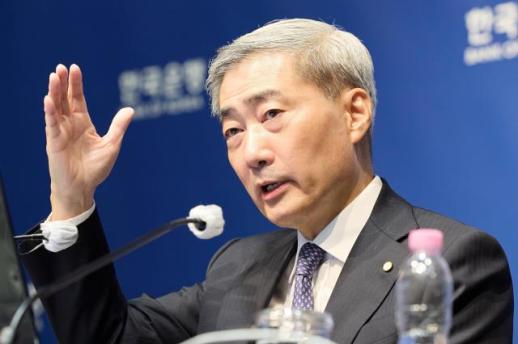 BOK front-loads tightening, but disinflation tests early hikes SEOUL, August 27 (AJP) - The Bank of Korea (BOK) has front-loaded monetary tightening with its first back-to-back rate hikes since January 2023, betting that South Korea's chip-powered economic resilience and increasingly persistent inflation warrant acting before price pressures become harder to contain. The BOK raised its base rate by 25 basis points to 3.00 percent on Thursday, following an identical increase in July. Governor Shin Hyun-song, proving to be a hawk by delivering two rate hikes since taking office in late April, made clear that his preference is to pay the smaller cost of tightening early rather than risk a much more painful response later. He said preemptive monetary-policy action was necessary to preserve macroeconomic stability, including price stability. To explain the consecutive increases, Shin invoked a familiar Korean proverb: "What can be stopped with a hoe should not be left until it requires a spade." "We used the hoe, not the spade," he said. The message was straightforward. Strong growth is likely to continue into next year, and inflation could broaden and remain elevated for longer if the BOK waits until demand pressures become firmly entrenched. The central bank's new economic outlook strengthens that argument. The BOK raised its 2026 growth forecast sharply to 3.3 percent from 2.6 percent in May and its 2027 projection to 2.9 percent from 2.1 percent, citing the semiconductor boom and its widening spillover across the economy. Headline inflation forecasts were unchanged at 2.7 percent this year and 2.3 percent next year. Core inflation, however, was revised up to 2.5 percent for both years. The BOK expects demand-side price pressures to gradually strengthen as domestic demand remains solid, supported by improving household income and an expansionary fiscal stance. The central bank's working assumption is that semiconductor profits and investment will increasingly find their way into incomes and consumption, keeping underlying inflation sticky even as headline price increases moderate. Shin said the consecutive hikes departed from the BOK's usual pattern and were intended partly to send a forceful signal to markets. Having sent it, the question becomes whether the central bank needs to fire again soon. The composition of the growth upgrade offers reasons for caution. Half of the 0.7-percentage-point increase in this year's growth forecast came from stronger-than-expected semiconductor conditions. Goods-export growth was raised to 9.7 percent from 4.9 percent, while facilities investment was revised to 6.8 percent from 4.4 percent. Private consumption barely moved, rising to 2.1 percent from 2.0 percent. Construction investment was cut to 0.2 percent from 0.6 percent. The BOK also lowered its employment-growth forecast to 140,000 from 180,000, citing weakness in sectors including construction. The policy debate therefore turns increasingly on transmission: not whether Korea is growing, but how quickly the export and semiconductor boom reaches household spending, wages and service prices. That distinction matters because higher interest rates impose costs across the economy, including on households and companies receiving little of the semiconductor windfall. Inflation itself is sending mixed signals. Consumer prices slowed to 2.8 percent in July, while core inflation edged up to 2.6 percent from 2.5 percent. The BOK expects headline inflation to ease further to 2.3 percent next year. Core inflation is forecast to stay at 2.5 percent as stronger domestic demand offsets some of the relief from goods and energy prices. The won has meanwhile strengthened sharply. The dollar-won rate fell from 1,424.0 at the end of July to 1,380.9 on Thursday, potentially reducing imported inflation. The BOK itself identifies larger declines in oil prices and the exchange rate as downside risks to its inflation forecasts. Timing creates another complication. The July increase has had only about six weeks to work through borrowing costs, household demand and asset prices. Shin acknowledged that the impact of the two consecutive moves now needs to be assessed. The Monetary Policy Board was also not unanimous. Hwang Kun-il voted to keep the base rate at 2.75 percent, while the other six members backed the increase. Shin described Hwang's dissent as a "tactical difference," saying the disagreement concerned timing rather than the broader direction of policy. The board's six-month rate projections nevertheless moved decisively upward. Of 21 probability-weighted dots submitted by the seven board members, 10 were placed at 3.25 percent and six at 3.50 percent. Five remained at the current 3.00 percent. In May, only two dots had been above 3.00 percent. The median projection rose to 3.25 percent, putting the center of the board's outlook one additional quarter-point increase above the current rate. Shin stopped well short of promising another immediate move. "All upcoming meetings are live," he said. The combination leaves the BOK in an unusual position: signaling that rates will probably have to go higher while simultaneously arguing that it now has room to watch what the first two increases actually do. Kang In-soo, an economics professor at Sookmyung Women's University, said the move was better understood as a preemptive response to inflation and financial-stability risks than as the beginning of an extended tightening cycle. The back-to-back hikes have already sent a powerful signal, he said, and the BOK should now give greater weight to assessing their impact before raising rates again. Yoon Yeo-sam, a bond strategist at Meritz Securities, said the August meeting strengthened the case that Korean market yields may have reached their peak. He estimated fair value for the three-year Korean government bond yield at 3.8 percent and the 10-year yield at 4.2 percent. Financial markets showed a mixed but relatively contained reaction. The KOSPI's gain narrowed to as little as 0.49 percent around the rate decision before recovering later in the session. The benchmark closed at 6,908.74, up 1.48 percent from Wednesday. The won strengthened into the 1,379 range shortly after the decision and closed at 1,380.9 per dollar, 3.9 won stronger than Wednesday. Korean government bond yields were little changed after an earlier selloff faded. The three-year yield ended 0.6 basis point lower at 3.810 percent. The 10-year yield edged up 1.4 basis points to 4.302 percent, while the 20-year yield rose 1.5 basis points to 4.557 percent. The muted repricing suggested investors were already looking beyond Thursday's increase toward two questions: whether another hike follows, and how long the BOK intends to keep policy restrictive. Financial stability supplies another argument for keeping rates high. Seoul home prices rose 1.1 percent in July from the previous month, while prices across the broader capital region gained 0.7 percent. Bank household lending increased by 5.4 trillion won ($3.9 billion), including a 3.4 trillion won rise in mortgage lending. Shin said interest rates were no cure-all for housing but could help restrain leverage alongside macroprudential measures. Fiscal policy adds another twist. The BOK's own outlook identifies expansionary government spending as one reason domestic demand should remain resilient. Stronger fiscal support can help the economy absorb higher borrowing costs. It can also keep demand and underlying inflation firmer, forcing monetary policy to remain restrictive for longer. Shin argued that the two policies do not necessarily conflict. Fiscal spending that raises the economy's potential growth, he said, could allow faster expansion without generating the same degree of inflation. Ultimately, the BOK's strategy rests on two judgments. The first is that semiconductor-driven income gains will spread widely enough to generate persistent demand-side inflation. The second is that the rest of the economy can withstand higher borrowing costs before that inflation becomes unmistakable. If consumption and wages strengthen as the BOK expects and core inflation remains sticky, the back-to-back hikes may come to look like cheap insurance against a much more disruptive tightening cycle later. If growth remains heavily concentrated in exports and investment while headline inflation continues to subside, the argument for moving twice in rapid succession will become harder to sustain. A stronger won would reinforce that disinflationary pressure by lowering import costs. Thursday's decision shows that Shin has chosen not to wait for the evidence to become conclusive. He has reached for the hoe. Whether Korea's broader economy produces the inflation the BOK is trying to prevent will determine whether those early swings prove prudent — or whether the central bank started digging before it needed to. AJP Takeaways • The Bank of Korea raised its base rate to 3.00 percent with a second consecutive 25-basis-point increase, as Governor Shin Hyun-song argued that early tightening could prevent a more painful inflation fight later. • The BOK raised its 2026 growth forecast to 3.3 percent, but much of the upgrade came from semiconductors, exports and investment, leaving the transmission of chip wealth into household consumption and wages central to the case for further tightening. • The BOK's six-month rate outlook shifted sharply higher, with 16 of 21 probability-weighted projections above the current 3.00 percent rate, although Shin said all future meetings remain "live." • Falling headline inflation, a stronger Korean won and the still-limited transmission of July's rate hike could challenge the case for another rapid increase, even as housing leverage, sticky core inflation and expansionary fiscal policy argue for keeping monetary policy restrictive. 2026-08-27 16:49:59
 -
 Government to Reveal Wind Power Pricing Standards Next Month The government will unveil the pricing principles for the long-term wind power contract market, which will be introduced following the abolishment of the Renewable Energy Supply Obligation System (RPS), around mid-September. A key issue will be how to translate the weights assigned to renewable energy certificates (RECs) based on factors such as community participation, water depth, and grid connection distance into contract prices.Industry stakeholders have urged for a swift establishment of the new system, warning that delays in finalizing detailed regulations could hinder investment decisions and project financing. The government is also considering extending the contract period for offshore wind projects to 25 years and incorporating adjustments for inflation and raw material price fluctuations. ◆Transition from RPS to Long-Term Contract Market... Basic Plan to be Released in SeptemberAt a seminar titled 'Direction and Challenges of Wind Power Bidding System After RPS Sunset,' held on August 27 at the aT Center in Seocho-gu, Seoul, the Korea Wind Energy Association and the Global Wind Energy Council (GWEC) discussed market transition strategies following the RPS abolishment and measures to protect existing operators.The government plans to shift from a certificate trading system based on generation volume to a long-term fixed price contract market based on installed capacity. In this new market, Korea Electric Power Corporation (KEPCO) will act as the sole buyer, entering into long-term contracts with power producers through competitive bidding.A contract for difference (CfD) mechanism will be applied for settlement. If the market price is lower than the contract price, KEPCO will compensate the difference; conversely, if the market price exceeds the contract price, KEPCO will reclaim the excess profits from the power producers. Starting next year, new power facilities will receive a Renewable Energy Generation Attribute Certificate (REGO) instead of RECs.The government is reviewing a plan to convert the existing REC weights into a preferential pricing system by adding a certain amount to the contract price. While the specific amount and application period have not been finalized, the basic standards and principles for the transition, including the preferential pricing, are expected to be disclosed next month.Woo Seok-jung, a senior official at the Ministry of Climate, Energy, and Environment, stated, "The amendment to the Renewable Energy Act is expected to be announced as early as the second week of September, and we plan to publicly share a draft of the standards or principles by mid-September at the latest." ◆Monitoring Price Caps and Transition Measures... Consideration of 25-Year Contract ExtensionThere are suggestions that the price cap should be set considering both actual project costs and consumer burdens. Jo Eun-byeol, director of Ocean Energy Pathways, warned, "If the price cap is set too low, as seen in the UK, there may be no bidders, while setting it too high could impose high costs on the public for 20 to 25 years. We need to determine a reasonable level based on actual costs, including interest rates, exchange rates, raw material prices, installation vessel charter fees, and capital costs."Transition measures for existing operators are also under consideration. Projects that win fixed-price competitive bids this year will continue to be governed by the current RPS regulations. Projects in the development stage that have not yet participated in bidding will be integrated into the new contract market, with discussions ongoing about how to supplement profitability by considering existing REC weights.Woo emphasized, "The reform of the RPS should not prevent operators from conducting business or eliminate predictability. We are internally discussing how to protect operators based on their current permitting stages and the costs incurred."The wind power industry argues that economic factors reflected in existing weights, such as water depth and grid connection distance, should also be maintained in the preferential pricing system. There are calls to apply preferential pricing until 2033, when existing operators can enter the bidding market.Choi Deok-hwan, secretary general of the Korea Wind Energy Association, stated, "We conveyed to the government that the weighting system should be linked to a fixed amount rather than a percentage, while inheriting the existing system. We should avoid overly segmenting the market and instead create a structure that complements the economics of individual projects."The extension of the contract period from 20 to 25 years is also under consideration. The industry explains that a longer contract period would secure stable cash flow, reducing project financing risks and levelized cost of energy (LCOE).The government is also reviewing the introduction of indexation to reflect inflation and raw material price fluctuations in contract prices. The industry demands that exchange rates be included in the indexation metrics, as domestic offshore wind power heavily relies on foreign equipment and raw material procurement.Yoo Sang-geun, a senior executive at Ørsted, noted, "Even if we maximize the use of the domestic supply chain, foreign currency payments are unavoidable in the raw material procurement process. If the exchange rate risk due to macroeconomic fluctuations is largely borne by the operators, it could become a critical constraint on project financing." 2026-08-27 16:48:20
 -
Former Military Leaders Sentenced for Blocking National Assembly During Martial Law The Seoul Central District Court has sentenced former military leaders to prison for their roles in blocking the National Assembly and deploying troops to the National Election Commission during the 12·3 martial law crisis.On August 27, the court's Criminal Division 37-2, led by Judges Oh Chang-seob, Ryu Chang-seong, and Jang Seong-hoon, sentenced Kim Hyun-tae, former commander of the Army Special Warfare Command's 707th Special Mission Battalion, to 12 years in prison for insurrection-related charges.Lee Sang-hyun, former commander of the 1st Airborne Special Forces Brigade, received a 10-year sentence, while Kim Dae-woo, former head of the Defense Security Command's Investigation Division, was sentenced to 5 years.Additionally, Kim Bong-kyu, former head of the Central Newspaper Division, and Jeong Seong-wook, former head of the 100th Brigade's 2nd Business Division, were each sentenced to 7 years for attempting to occupy the National Election Commission and arrest its staff.The court ordered the detention of Kim Hyun-tae, Lee Sang-hyun, and Kim Dae-woo, citing concerns over flight risk and evidence tampering.However, Park Heon-soo, former head of the Ministry of National Defense's Investigation Headquarters, and Ko Dong-hee, former head of the Intelligence Command's Planning Division, were acquitted, as the court found insufficient evidence of intent to commit insurrection or disrupt the constitutional order.A key issue in the trial was whether the defendants had the intent to participate in insurrection and whether they were obligated to follow orders that were unconstitutional or illegal. The court characterized the actions as a 'rebellion aimed at disrupting the constitutional order,' stating that they sought to undermine the functions of constitutional institutions like the National Assembly and the National Election Commission by using armed military and police forces after former President Yoon Suk-yeol declared martial law.The court determined that the defendants actively carried out unconstitutional orders, including preventing the National Assembly from voting on a proposal to lift martial law and attempting to arrest civilians despite lacking the authority to do so.The court rejected the defendants' claims that they were merely following orders, emphasizing that while soldiers are obligated to obey lawful commands, they are not required to follow orders that are clearly illegal or unlawful. The actions of deploying troops to infiltrate the National Assembly, cutting off electricity to the main building, and breaking down doors to forcibly remove lawmakers were deemed illegal and beyond the scope of permissible actions under martial law.The court specifically pointed out Kim Dae-woo's involvement in directing arrests, stating that he ordered the arrest and transfer of civilians, including politicians, despite knowing he lacked the authority to do so, which constituted a significant role in the insurrection.Regarding Kim Bong-kyu and Jeong Seong-wook, the court noted that they had meticulously planned the illegal arrest of National Election Commission staff in collusion with a former intelligence commander, warranting severe penalties.In its sentencing remarks, the court condemned the misuse of military power and the violation of constitutional order, stating, 'Insurrection is the most serious crime that undermines the existence of the state and the fundamental order of a free democracy.' The court criticized the defendants for abusing military power, which should have been used for national security and defense, for the benefit of specific individuals and groups.The court emphasized that the actions of the defendants, who blindly followed illegal orders, severely damaged the honor and dignity of the Republic of Korea's military and imposed the burden of being associated with insurrection on countless soldiers who were mobilized against their will. It highlighted the extreme anxiety caused to the public and the serious damage to South Korea's international standing, asserting that legal accountability must be strictly enforced.Furthermore, the court stressed the necessity of sending a strong message to society that such insurrectionary acts, which are utterly unacceptable in a free democratic state, will not be tolerated, to prevent any future attempts to use military force for insurrection or constitutional disruption.* This article has been translated by AI. 2026-08-27 16:48:10
-
Bukwang Pharmaceutical Begins Construction of $240 Million Smart Warehouse in Ansan Bukwang Pharmaceutical is investing 240 billion won to build a state-of-the-art automated warehouse at its Ansan facility in Gyeonggi Province. This strategic investment aims to enhance both pharmaceutical production capacity and logistics efficiency. On August 27, Bukwang announced that the new automated warehouse will increase its storage capacity from 1,500 cells to 4,500 cells, tripling its current capacity. A cell refers to the minimum storage space within a logistics warehouse where pallets and other goods are stored. The new warehouse will feature advanced logistics equipment, including loading racks, stacker cranes, and a warehouse management system (WMS). It will comply with Good Manufacturing Practice (GMP) standards, allowing for integrated control of the entire process from raw materials to finished pharmaceuticals. With the introduction of the automated system, the previously dispersed storage facilities will be consolidated into a single location, reducing the time required for loading and unloading per cell from 10 minutes to 38 seconds, a decrease of approximately 94%. Consequently, the workforce needed for warehouse operations is expected to be reduced by about 60%. The efficiency gained from streamlined logistics is anticipated to lead to increased production capacity. Bukwang will secure the infrastructure to produce an additional 200 million tablets annually, which corresponds to an estimated revenue increase of about 26 billion won. Construction of the warehouse is set to begin this month, with a target for full operation by September of next year. A representative from Bukwang stated, "This investment is aimed at proactively addressing logistics saturation in line with our long-term goal of establishing a production system for 1.2 billion tablets annually by 2029. We plan to achieve workforce efficiency and productivity improvements through a smart logistics network, thereby enhancing the stability of pharmaceutical supply in the market." Meanwhile, Bukwang's consolidated revenue for the first half of this year reached 104.8 billion won, a 15.9% increase from 90.4 billion won in the same period last year. This marks the first time the company has surpassed 100 billion won in half-year revenue. Last year, the company also reported a revenue increase of about 27% compared to the previous year, setting a record at that time, and has now surpassed that record again within a year. However, operating profit fell to 2.5 billion won, a 50% decrease from the same period last year, indicating ongoing challenges in improving profitability.* This article has been translated by AI. 2026-08-27 16:48:10
-
 KOSPI closes a tad higher as Nvidia boost fades on BOK rate hike SEOUL, August 27 (AJP) - South Korean stocks opened higher on Nvidia's earnings beat on Thursday but gave back most of their gains after the Bank of Korea (BOK) raised its key interest rate for a second straight time and signaled further hikes. The main KOSPI closed at 6,912.37, up 104.16 points or 1.53 percent from the previous session, after opening 2.76 percent higher at 6,996.12. The country's two major chipmakers SK hynix and Samsung Electronics kept only part of their opening gains, and the day's largest moves went instead to power equipment and battery makers. Tokyo did not follow Seoul at all. The BOK's quarter-point hike raised the base rate to 3 percent in a six-to-one vote, its highest level since early last year. The central bank also raised its growth forecast for this year to 3.3 percent from 2.6 percent, citing the semiconductor boom as a key driver of growth even as it moves to curb the economy with higher interest rates. Nvidia posted revenue of US$96.2 billion for its fiscal second quarter, more than double the figure from a year earlier, and adjusted earnings of $2.22 per share. But that was enough to revive the chip trade at the open, though not enough to sustain the gains. SK hynix closed at 1,730,000 won ($1,249), up 2.49 percent, after rising more than 5 percent early in the session. Samsung Electronics ended at 266,000 won ($192), up 1.72 percent, off an opening gain of more than 3 percent. Foreign investors bought a net 142.2 billion won ($103 million), their first session of net buying this week. They had sold a net 9.44 trillion won over the five sessions through Tuesday and sold again on Wednesday. Individuals sold a net 1.92 trillion won ($1.39 billion). Electrical equipment, the sector supplying cable and switchgear to data centers, rose 10.3 percent as a group, the strongest sector move of the session. Samsung SDI rose 10.08 percent to 569,000 won ($411) on the day its 4.45 trillion won sale of Samsung Display shares was due to settle. LG Energy Solution added 5.56 percent to 370,500 won ($268). Hyundai Motor fell 2.45 percent to 398,000 won ($287). The junior KOSDAQ closed at 837.65, up 1.30 percent. The Nikkei 225 slipped 0.2 percent to 66,131.98, with memory maker Kioxia up 5.0 percent and chip test equipment maker Advantest down 3.1 percent. The composite index in Shanghai ended higher. The won strengthened against the dollar, closing at 1380.50. Meanwhile, the rate projections released alongside the decision showed that 16 of 21 BOK board members expected the rate to rise above 3 percent within six months, with none forecasting a rate below 3 percent. Investors who bought the market's early gains are now betting that the AI boom can outweigh the impact of higher interest rates. 2026-08-27 16:44:21
 -
Seongnam Mayor Shin Sang-jin Aims to Set National Standards with City Council Seongnam Mayor Shin Sang-jin expressed his commitment on August 27 to pave the way for the future of South Korea, stating, "We will create 'Seongnam, the standard of South Korea' together with the city council."During the '10th Seongnam City Council's Inauguration Ceremony' held in the lobby of the city council, Mayor Shin congratulated the council's opening and urged collaboration between the council and the administration to swiftly address key issues affecting Seongnam and bring about real changes in citizens' lives.The event included speeches, congratulatory messages, a celebratory video, a performance by the Seongnam Children's Choir, and a commemorative photo session.Mayor Shin sincerely congratulated the inauguration of the 10th Seongnam City Council and expressed his determination to enhance Seongnam's future competitiveness through close cooperation between the council and the administration.Approximately 100 attendees were present, including Mayor Shin, Seongnam City Council Chairman Kang Sang-tae, city council members, and senior officials from the administration.Mayor Shin emphasized the core tasks of the 9th elected administration, declaring, "We will create changes that citizens can feel under the banner of 'Correctly! Quickly! Completing Hopeful Seongnam!'"He outlined plans to advance significant urban issues, including the reconstruction of Bundang New Town and the redevelopment of the old town, the establishment of a diamond-shaped advanced industry belt to secure future growth engines, and improvements to transportation for citizen convenience.Mayor Shin stated, "I will focus our efforts on swiftly resolving key issues directly related to citizens' lives and driving tangible changes." This approach aims to transform Seongnam into a future-oriented city where housing, industry, transportation, and welfare are interconnected.Above all, Mayor Shin's vision includes enhancing urban competitiveness through Bundang reconstruction and old town redevelopment while simultaneously fostering advanced industries, improving transportation, and implementing welfare policies to ensure citizens experience changes in their daily lives.He also stressed the importance of cooperation from the city council for Seongnam to become a global city.Citizens are particularly interested in how the new city council will contribute to resolving local issues and improving livelihoods. With pressing matters like Bundang reconstruction, old town redevelopment, and transportation improvements directly affecting residents, there are calls for the city and council to collaborate for Seongnam's future rather than engage in political disputes.One citizen remarked, "What matters more than which side the city and council are on is how our neighborhood actually changes," adding, "I hope they resolve longstanding issues like reconstruction, redevelopment, and transportation quickly rather than just discussing them."Another citizen expressed, "Seongnam, centered around Pangyo, is a city with competitive advanced industries, and I hope it becomes a place where businesses and jobs increase, allowing young people to stay. I expect the city and council to work together for Seongnam's future rather than hinder each other."Meanwhile, Mayor Shin Sang-jin stated, "For Seongnam to take a step forward as a global city, active cooperation from the city council is essential," adding, "I will communicate closely with the city council to lead Seongnam's continuous development." 2026-08-27 16:44:00
-
Yongsan Park Housing Supply: Will New Plans Finally Materialize? As disagreements continue between the government and Seoul City over housing supply at Yongsan Park, alternative sites in Tancheon and the relaxation of private development density regulations have come to the negotiation table. Given that both proposals have been discussed multiple times in the past, there is keen interest in whether they will lead to actual supply this time.According to the real estate industry on August 27, Seoul City has proposed to the Ministry of Land, Infrastructure and Transport the relocation of the Tancheon Water Reclamation Center in Gangnam's Ilwon-dong, along with the development of 10,000 to 13,000 units of youth housing and facilities for the physical AI industry, linking it with the Eastern Road Office and the Seoul Trade Exhibition Center (SETEC). The Ministry of Land has agreed to review the related materials.Discussions about development in this area have been ongoing for a decade. Since 2014, Seoul City has attempted to develop the area around SETEC and the Eastern Road Office, but plans have repeatedly changed or been put on hold. In 2016, a mixed-use development aimed at enhancing the functionality of the aging exhibition center was proposed, and in 2018, the Eastern Road Office was included as a site for public housing supply, leading to the suspension of existing plans.Seoul City later expanded the development scope to include the confluence of the Yangjae and Tancheon streams, reassessing the development direction. A master plan study for the confluence area was completed in 2024, and a feasibility study for relocating the water reclamation center is currently underway. This time, the plan aims to develop the area as a southeastern hub combining physical AI industry and youth housing.However, the challenges of relocating facilities and the financial burden of the project remain. The relocation of the water reclamation center is essential for development, but identifying a suitable alternative site is proving difficult. Minister of Land, Infrastructure and Transport Kim Yoon-deok stated, "Selecting a new site for the Tancheon Water Reclamation Center is also challenging," as discussions on related issues continue.Before the proposed supply of 10,000 to 13,000 housing units can be realized, the issues surrounding the relocation site and funding must be resolved. Seoul City plans to utilize the Eastern Road Office and SETEC sites to secure project funding and attract private investment.Nam Hyuk-woo, a researcher at Woori Bank's real estate research institute, noted, "It seems unlikely that housing supply on the Tancheon Water Reclamation Center site will happen in the short term," but added, "Compared to the Yongsan Park project, which requires legal amendments, this project can be pursued more swiftly."The relaxation of density regulations is not a new solution. During the 2022 presidential election, a proposal was made to establish a new 'Type 4 General Residential Area' that would allow density to increase up to 500%. In the August 2024 supply plan, the government also proposed increasing density for redevelopment and reconstruction to expand urban supply.In May of this year, Seoul City raised the legal upper limit for urban redevelopment in revitalization promotion districts by up to 1.2 times. Semi-residential areas can now allow density up to 600%, while general commercial areas can reach 1,560%. This time, the city aims to extend similar exceptions to private redevelopment to increase supply.Seoul City believes that allowing a density increase of 1.2 times the legal upper limit for private redevelopment will enhance the net housing supply from redevelopment projects. However, issues related to public contributions and securing rental housing standards, as well as amendments to urban redevelopment laws, must also be addressed.Seoul City explained that the Ministry of Land has shown a willingness to positively consider the relaxation of density regulations for private redevelopment projects.However, the Ministry of Land has drawn a line on broad interpretations. A ministry official stated, "No decisions have been made regarding the review direction for the relaxation of private redevelopment density regulations by 1.2 times." 2026-08-27 16:44:00
-
Who is Dai Bing, the Chinese Ambassador to South Korea? National Assembly Speaker Chung Jae-suk met with Dai Bing, the Chinese Ambassador to South Korea, on August 27, drawing attention to Dai's background and diplomatic career.Chung met with Ambassador Dai in his office at the National Assembly in Yeouido, Seoul. Dai, a Chinese diplomat with a career focused on Africa and the United Nations, officially took up his post as the Chinese Ambassador to South Korea in December 2024.Born in 1967 in Anhui Province, China, Dai joined the Ministry of Foreign Affairs in 1995, primarily building his career in Africa and multilateral diplomacy rather than in Korea or Japan.Having served at the Chinese Embassy in South Africa, he was the Deputy Permanent Representative of China to the UN from 2020. At the UN, he addressed various issues, including international conflicts and security and development matters.Due to this background, Dai's appointment to South Korea has been viewed as a departure from previous ambassadors. His predecessor, Xing Haiming, was known for his extensive experience on the Korean Peninsula, while Dai has no prior experience in Korea, focusing instead on Africa and the UN.Dai officially began his role in South Korea on December 27, 2024, filling the position that had been vacant for about five months after Xing returned to China in July of the same year. The Chinese government later announced Dai's official appointment as the Ambassador Extraordinary and Plenipotentiary to the Republic of Korea.At the time of his appointment, South Korea was under a presidential acting system following the 12-3 emergency martial law situation. Dai submitted his credentials to the Ministry of Foreign Affairs on December 30, 2024, and presented his credentials to then-acting President Choi Sang-mok on January 7, 2025.Since his arrival, Dai has engaged with South Korean government officials and political figures to discuss issues related to China-South Korea relations. In February 2025, he met with then-Foreign Minister Jo Tae-yul to exchange views on bilateral relations and the situation on the Korean Peninsula. In July of the same year, he met with First Vice Minister Park Yoon-joo to discuss ways to enhance the development of relations between the two countries.In 2026, he continued to engage with South Korean political circles and local governments. On August 11, he met with National Assembly Vice Speaker Nam In-soon to emphasize the need for increased exchanges between the legislative bodies of the two countries, and he also met with Incheon Mayor Park Chan-dae and Chungnam Governor Park Soo-hyun to discuss local government-level exchanges between China and South Korea.* This article has been translated by AI. 2026-08-27 16:40:20
-
Who is Dai Bing, the Chinese Ambassador to South Korea? National Assembly Speaker Chung Jae-suk met with Dai Bing, the Chinese Ambassador to South Korea, on August 27, drawing attention to Dai's background and diplomatic career.Speaker Chung met with Ambassador Dai in his office at the National Assembly in Yeouido, Seoul, on the afternoon of August 27.Dai, born in 1967 in Anhui Province, China, joined the Ministry of Foreign Affairs in 1995. Unlike his predecessors, he has primarily built his career in Africa and multilateral diplomacy rather than in Korea or Japan.Having served at the Chinese Embassy in South Africa, he was the Deputy Permanent Representative of China to the United Nations from 2020. At the UN, he addressed various issues, including international conflicts and security and development matters.Due to this background, Dai's appointment to South Korea is seen as a departure from previous selections. His predecessor, Xing Haiming, was a well-known expert on the Korean Peninsula, having worked extensively in North and South Korea, while Dai has no prior experience in Korea, focusing instead on Africa and the UN.Dai officially took up his post in South Korea on December 27, 2024, filling the vacancy left by Xing Haiming, who returned to China in July of the same year. The Chinese government subsequently announced Dai's official appointment as Ambassador Extraordinary and Plenipotentiary to the Republic of Korea.At the time of his appointment, South Korea was under a presidential acting system following the 12-3 emergency martial law situation. Dai began his official duties after submitting a copy of his credentials to the Ministry of Foreign Affairs on December 30, 2024, and presented his credentials to then-acting President Choi Sang-mok on January 7, 2025.Since his arrival, Dai has engaged with South Korean government officials and political figures to discuss issues related to Sino-Korean relations. In February 2025, he met with then-Foreign Minister Jo Tae-yul to exchange views on bilateral relations and the situation on the Korean Peninsula. In July of the same year, he met with First Vice Minister Park Yoon-joo to discuss ways to enhance the relationship between the two countries.This year, he has continued to connect with South Korean political circles and local governments. On August 11, he met with National Assembly Vice Speaker Nam In-soon to emphasize the need for increased exchanges between the legislative bodies of the two countries, and he has also met with Incheon Mayor Park Chan-dae and Chungnam Governor Park Soo-hyun to discuss local government-level exchanges between China and South Korea. 2026-08-27 16:40:00
-
Are Special Resolutions Ineffective for Reelecting Financial Holding Chairmen? The Democratic Party and financial authorities are considering a plan to require special resolutions at shareholder meetings for the reappointment of financial holding chairmen, rather than outright banning third terms by law. A bill has also been proposed in the National Assembly to apply special resolutions from the first reappointment onward. However, based on past voting results, the introduction of special resolutions is unlikely to change the outcomes of reappointments significantly.According to political and financial sources on August 27, the Democratic Party and financial authorities are reviewing amendments to the governance law for financial companies that would strengthen voting requirements at shareholder meetings instead of directly limiting third terms for chairmen. This approach is seen as a response to potential constitutional issues and concerns over infringing on management autonomy if CEO terms are uniformly restricted by law.A governance law amendment proposed by Democratic Party lawmaker Kim Hyun-jung goes further by requiring special resolutions for every reappointment of a financial holding representative director, not just for third terms.Currently, the general resolution for appointing inside directors requires a majority of attending shares and at least one-fourth of the total issued shares to vote in favor. In contrast, a special resolution requires approval from at least two-thirds of attending shares and more than one-third of the total issued shares. This structure necessitates a certain level of support from all shareholders, not just those present at the meeting.However, applying past voting results raises questions about the effectiveness of this measure. Recently reappointed chairmen, including Ham Young-joo of Hana Financial, Jin Ok-dong of Shinhan Financial, and Im Jong-ryong of Woori Financial, received support rates of 81.2%, 88.0%, and 99.3%, respectively, based on attending shares. Their approval rates compared to total issued shares ranged from approximately 68.5% to 78.8%, well above the one-third threshold required for special resolutions.In cases of third-term reappointments, support rates were even higher. Former chairmen Kim Jung-tae of Hana Financial, Yoon Jong-kyu of KB Financial, and Kim Ki-hong of JB Financial received attending share support rates between 84.6% and 99.72%. Their approval rates compared to total issued shares also reached about 66.7% to 84.4%. Thus, even if the two criteria for special resolutions were applied, they would have successfully secured their third terms.Given strong performance and increased shareholder returns, major shareholders such as the National Pension Service and foreign investors are unlikely to see special resolutions as a significant barrier for chairmen. This suggests that merely raising voting requirements has limitations in preventing long-term reappointments.However, it could serve as a mechanism to filter out controversial candidates. For instance, former Shinhan Financial chairman Cho Yong-byeong faced legal risks related to hiring irregularities and opposition from proxy advisory firms during his first reappointment in 2020, resulting in a support rate of only 56.43%. Had a special resolution been in place, his reappointment proposal would likely have been rejected.Ultimately, special resolutions appear to function more as a tool for filtering out controversial candidates rather than a means to prevent long-term reappointments. If the special resolution criteria under commercial law are applied as they are, the outcomes of past significant reappointments and third terms would remain unchanged. The key discussion moving forward will be whether the government and ruling party will impose higher separate requirements for third terms or apply special resolutions from the first reappointment onward. 2026-08-27 16:40:00