


Latest by
-
 Samsung Unveils New Odyssey Gaming Monitors at Gamescom 2026 Samsung Electronics showcased a range of next-generation gaming products, including the world's first 1100Hz ultra-high refresh rate monitor, at the world's largest gaming exhibition.On August 26, Samsung announced the unveiling of four new models of its 2027 Odyssey gaming monitors at Gamescom 2026, which opened in Cologne, Germany.The new models include the world's first 360Hz refresh rate 49-inch Odyssey OLED G9, the 32-inch Odyssey OLED G8 with triple mode support, the world's first 42-inch curved OLED gaming monitor Odyssey OLED G7, and the 27-inch Odyssey G6, which achieves a world-first 1100Hz ultra-high refresh rate.The Odyssey OLED G9 features a 32:9 aspect ratio with a fifth-generation QD-OLED pentatandem panel. It supports 360Hz at dual QHD and up to 720Hz at dual HD. The response time is 0.03ms, and the maximum brightness reaches 1300 nits.The OLED G8 incorporates a 'triple mode' that allows users to select resolution and refresh rate based on the game genre. It defaults to 4K at 360Hz but can switch to QHD at 520Hz and FHD at 680Hz. It also includes a DisplayPort 2.1 with a maximum bandwidth of 80Gbps for stable transmission of high-quality, ultra-high refresh rate video.The large-screen lineup has also expanded. The OLED G7 is the world's first 42-inch curved OLED gaming monitor, offering approximately 72% more display area than the previous 32-inch model. It features a 1000R curvature, a 4K OLED panel, and HDR10+ gaming technology.The ultra-high refresh rate competition is also intensifying, targeting fast-paced games. The Odyssey G6 supports 600Hz at 27-inch QHD resolution and achieves a maximum refresh rate of 1100Hz at HD resolution in dual mode, surpassing 1000Hz for the first time. It is optimized for FPS games with a Fast IPS panel and a 1ms response time, ensuring uniform color reproduction even in fast screen transitions.Samsung is also expanding collaborations with gaming content. The glasses-free 3D monitor, Odyssey 3D, will support 3D modes for 'Cyberpunk 2077' and 'Chronos: Before the Ashes' by the end of the year, with plans to increase compatible games to over 120.The next-generation HDR10+ gaming ecosystem is also being expanded. In collaboration with Activision Blizzard, HDR10+ technology has been applied to 'Call of Duty: Modern Warfare 4,' with plans to extend its application to over 20 major global games by the first half of 2027.Samsung maintains a leading position in the gaming monitor market. According to market research firm IDC, Samsung recorded a 17.8% share of the global gaming monitor market with refresh rates above 144Hz in terms of revenue in the first half of this year. The company aims to maintain its position as the global market leader for the eighth consecutive year by the end of this year.Lee Hun, Vice President of Samsung Electronics' Visual Display Business, stated, "We have unveiled a range of next-generation display technologies, from the world's first 360Hz 49-inch OLED to the maximum 1100Hz ultra-high refresh rate gaming monitor. We will continue to introduce innovative products that lead the gaming display market."* This article has been translated by AI. 2026-08-27 17:32:00
 -
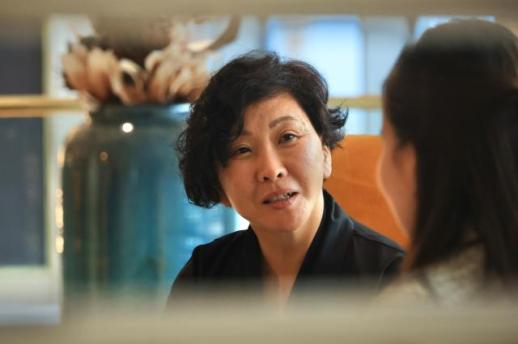 For Kazakhstan's Koryo-saram, exile became home ASTANA, Kazakhstan — Elena Ko has little difficulty answering a question that history made complicated for her family. "I'm Korean, but I think like Kazakh," she said through an interpreter. Ko, 55, is a third-generation Koryo-saram, a descendant of ethnic Koreans who settled across the former Soviet Union. She keeps Korean traditions, stays close to Kazakhstan's Korean community and travels to Seoul roughly once a year. But when she talks about home, there is little ambiguity. Kazakhstan is where she was born and went to school, where she built a business and raised a family. "I'm very proud that I was born in Kazakhstan," she said. Her ancestors had no such choice. In 1937, they were among the ethnic Koreans uprooted from the Soviet Far East under Stalin and loaded onto trains bound thousands of kilometers west. The story handed down in Ko's family is one of a punishing journey, hunger and arrival on an unfamiliar steppe with almost nothing waiting for them. Yet when Ko tells the story, the cruelty of how her family arrived is followed almost immediately by another memory. Kazakh residents took in women and children. They shared food with the newcomers even though local communities were themselves struggling with shortages. "We live today because our ancestors survived with the kindness of Kazakh people," Ko said. "We will never forget this." Nearly nine decades later, a country her ancestors were forced to enter is the country their granddaughter chooses to call home. And Ko's daughters are crossing borders again. Her eldest is pursuing a doctorate in the United States. Another is studying in Hong Kong. The difference between those journeys and the one that began the family's life in Central Asia could hardly be greater. Ko's ancestors crossed borders because the Soviet state ordered them to. Their descendants cross them for education, work and opportunity — and can decide whether to come back. Across three generations, forced displacement became survival, survival became settlement, and settlement eventually produced something the first arrivals could not have assumed: belonging. The trajectory complicates a familiar image of diaspora as a people forever suspended between a homeland they lost and the country where history deposited them. Kazakhstan's Koryo-saram did not simply preserve an unchanged Korean identity while awaiting reconnection with Korea. They learned other languages, adapted their food, married into new surroundings and lived through the collapse of one country and the birth of another. For generations born in Central Asia, ancestral homeland and home no longer necessarily mean the same place. A journey with no choice The Soviet government ordered Koreans removed from the Far East in August 1937, officially citing fears of Japanese espionage. By Oct. 25, Soviet records showed that 171,781 ethnic Koreans from 36,442 households had been transported aboard 124 trains. Of them, 95,256 were designated for Soviet Kazakhstan and 76,525 for Uzbekistan. Later records put the number actually settled in Kazakhstan at 95,427. The deportation established Kazakhstan and Uzbekistan as the two main centers of the Koryo-saram population in Central Asia. For Ko, the history is carried less in those numbers than in a phrase repeated through the family. "They came to the open steppe, to nowhere," she said. Two truths sit beside each other in her telling. The Soviet state determined where her ancestors would live. The people they found there helped them stay alive. The first was an act of coercion. The second became part of the family's understanding of Kazakhstan. Later generations did the rest. They built lives in the place where the trains had stopped. By Ko's generation, Kazakhstan was no longer simply where the family had been sent. It was home. Surviving by changing If displacement scattered the first generation, adaptation defined those that followed. Kazakhstan's 2021 census counted 118,450 ethnic Koreans, up 18 percent from 100,385 in 2009. They made up about 0.6 percent of the country's population. The numbers resist a simple story of a community fading away. But they also show just how much the community has changed. Some 102,804 ethnic Koreans lived in urban areas in 2021 — nearly 87 percent of the total. A population once closely associated with agricultural settlements and Soviet collective farms is now overwhelmingly urban. Language tells another part of the story. Of the 118,450 ethnic Koreans in the census, 49,222, or 41.6 percent, identified the language of their own ethnicity as their native language. The remaining 69,228 named the language of another ethnicity. The figure does not mean only 41.6 percent can speak Korean. The census asked about native-language identification, not proficiency. But the result captures a widening distance between ethnicity and language. Multilingualism has become ordinary. Among 111,549 Korean respondents included in another census table, 44,315 reported using two languages and 28,311 reported three. More than two-thirds used at least two. Ko needs no census table to recognize the transformation. "A Korean in Kazakhstan is really different from a Korean in Korea," she said. She does not say it with regret. Her family observes Korean traditions alongside Kazakhstan's national holidays. Korean associations organize festivals and cultural programs and maintain ties with South Korea. "We can always take care of our culture, of our traditions," Ko said. Even the food carries a record of adaptation. The first arrivals could not find many of the ingredients they had used in the Soviet Far East, Ko said. They cooked instead with what Kazakhstan offered. "They didn't have Korean food groceries to make their traditional food," she said. "They had to use the food that was already in Kazakhstan." Today, Korean groceries are easy enough to find. The dishes, however, had already changed. Koryo-saram culture survived not by being sealed off from its surroundings, but by absorbing them. It survived by changing. Korean roots, Kazakhstani belonging Ko's ease with her two identities reflects one strand of a broader generational shift. Research also warns against treating any single Koryo-saram experience as universal. A 2024 study by Korea University sociologist Yoon In-jin analyzed a 2022 survey of 2,679 adult overseas Koreans in 10 countries, including 186 respondents in Kazakhstan and 234 in Uzbekistan. Social integration differed significantly by country and generation. First-generation Koreans in Kazakhstan and Uzbekistan showed moderate integration into social institutions but greater difficulty with psychological integration. Later generations in Kazakhstan were well integrated across the dimensions examined. Ko's life looks familiar within that pattern. She does not describe herself as a Korean living temporarily in somebody else's country. She talks about the state that educated her, the society in which she established a business and the place where her children grew up. "I'm happy to be part of Kazakhstan," she said. Other research suggests the confidence with which Ko reconciles those identities is not shared equally across the community. A study published in Nationalities Papers in 2026 surveyed 4,000 people across Kazakhstan, including 160 ethnic Koreans, and conducted 250 semi-structured interviews. Among Korean respondents, 53 percent identified more often with a civic than an ethnic identity. Just 29 percent said they often felt a strong sense of ethnic belonging, the lowest share among the groups surveyed. Yet 80 percent said they were proud to be citizens of Kazakhstan. The researchers found that ethnic minorities broadly viewed Kazakhstan's nation-building positively, while ethnic and civic identities remained uneven and the effort to forge a single Kazakhstani nation remained incomplete. Ko does not resolve those contradictions for an entire community. Her story is revealing precisely because it does not need to. It shows how Korean ancestry and Kazakhstani belonging can occupy the same life without one cancelling the other. "We feel like one nation," Ko said of Kazakhstan's ethnic communities. For her, integration has not meant choosing between the two parts of herself. One deportation, different homes Kazakhstan is only one branch of a history that split at the railway tracks. The 1937 deportation sent the overwhelming majority of displaced Koreans to Kazakhstan and Uzbekistan. The two communities began with essentially the same trauma. Both then spent more than five decades inside the Soviet Union before Kazakhstan and Uzbekistan became independent states in 1991. After that, descendants of the same deported population found themselves citizens of different countries, living under different political institutions, language environments and ideas of national belonging. Yoon's research found that integration differed not only by generation but also by host country. That distinction moves the Koryo-saram story beyond a narrower question often asked of diasporas: How much Korean culture survived? A different question may be more revealing. What happened after they survived? One displaced population became part of several societies. Its descendants inherited a common history without necessarily inheriting the same language, nationality or understanding of home. For Ko, the Kazakhstan part of that question no longer feels complicated. She does not speak about the country as a temporary substitute for Korea. It is where her life happened. Toward Korea, but not necessarily home History has added one more turn. Some descendants of the people sent west in 1937 are now moving east, toward South Korea. South Korean Justice Ministry data show that Kazakhstan nationals classified as foreign-national overseas Koreans increased from 13,993 in 2021 to 21,790 in 2025. Among Uzbekistan nationals in the same category, the number rose from 32,216 to 41,144. The figures do not represent all Kazakhstan or Uzbekistan nationals living in South Korea. They refer specifically to foreign nationals whom South Korean authorities classify as overseas Koreans. Still, the direction of travel carries an unmistakable historical echo. In 1937, Koreans were sent away from the Soviet Far East with no say in the matter. Today, some of their descendants travel toward South Korea because they choose to — for jobs, study or opportunity. But going to Korea is not necessarily going home. For later-generation Koryo-saram, South Korea can be an ancestral homeland, a cultural reference point and a place to work or study without becoming the place to which they feel they ultimately belong. Ko herself visits Seoul about once a year. Then she returns to Kazakhstan. Her daughters may build lives even farther away. Their grandmother's generation was told where it could not remain. Their mother's generation grew up in the place where the trains had left the family. The daughters now have a privilege their ancestors were denied: they can decide for themselves where to go. Ko already knows what she calls the place she comes back to. "I'm Korean, but I think like Kazakh." For a family whose modern history began with being told where it had to live, there is something quietly consequential in being able to say where home is by choice. AJP Takeaways • Kazakhstan's Koryo-saram community traces its roots to Stalin's 1937 forced deportation of nearly 172,000 ethnic Koreans from the Soviet Far East, including more than 95,000 who were ultimately settled in Kazakhstan. • Nearly nine decades later, Korean ancestry and Kazakhstani belonging increasingly coexist, with Kazakhstan's 2021 census counting 118,450 ethnic Koreans and showing a highly urbanized, multilingual community. • Research suggests later-generation Koryo-saram in Kazakhstan are deeply integrated into the country, while identity remains varied and does not necessarily depend on retaining Korean as a native language. • Growing numbers of ethnic Koreans from Kazakhstan are now moving to South Korea voluntarily for work and study, reversing the direction of the original forced migration without necessarily redefining Korea as home. 2026-08-27 17:30:46
 -
Democratic Party Plans Two-Track Strategy for Upcoming National Assembly Session The Democratic Party announced on August 27 that it will enhance its focus on livelihood issues as it prepares for the second half of the 2026 legislative session starting in September.Lee Joo-hee, the party's floor spokesperson, spoke with reporters after the second session of the "National Assembly Workshop for the 2026 Regular Session" held at the Inspire Hotel in Incheon. She stated, "We discussed the current political landscape and the goals the Democratic Party should pursue moving forward."Lee emphasized that the party will implement a two-track strategy, allowing the floor leadership and party leadership to operate independently to secure control over the regular session and budget discussions.She added, "The party will also be restructured to focus on grassroots efforts, strengthening the leadership's commitment to livelihood issues." Lee highlighted four key objectives: a working Democratic Party, a forward-looking Democratic Party, a youth-oriented Democratic Party, and a winning Democratic Party.Additionally, the Democratic Party plans to actively respond to the ongoing opposition from the People Power Party, which has resulted in a low implementation rate of national policy tasks. Lee noted, "Currently, the implementation rate of national tasks is around 30% due to the obstruction by the People Power Party. We will take proactive measures in the upcoming session." She also mentioned that a recently passed fast-track bill to shorten the processing time for legislation will help expedite the handling of livelihood bills.* This article has been translated by AI. 2026-08-27 17:28:00
-
School Safety Central Association Celebrates 19th Anniversary with Focus on Prevention The School Safety Central Association, which has served as a strong support for educational institutions nationwide since the enactment of the School Safety Act in 2007, marked its 19th anniversary by hosting a large-scale communication event aimed at transforming safety culture.On August 27, the association held the event titled '2026 Creating a Safe School Together' at the aT Center in Yangjae, Seoul, attended by over 300 students, parents, educators, education authorities, and experts.This event went beyond a simple ceremony, sharing school safety policies and prevention messages through content tailored to students, and aimed to spread a prevention-focused safety culture that resonates with all educational stakeholders. Attendees included elementary, middle, and high school students, university students, officials from the Ministry of Education and local education offices, as well as safety experts and related organizations.The program featured a variety of activities, including an awards ceremony for the School Safety Accident Data Analysis and Utilization Competition and the Safe School Contest, a forum on the development of school safety statistics, guest lectures, presentations on the direction and examples of safety education content (Future School Safety Forum), and exhibitions and experience zones for school safety content.Chairman Jeong Hoon: "Award winners should become safety guardians in schools"In his opening remarks and congratulatory speech, Chairman Jeong Hoon expressed deep gratitude to the Ministry of Education, the 17 local education offices, and teachers for their hard work in the educational field, while encouraging participants in the competitions and contests to take on a leading role.He stated, "Safety in South Korea is a collective effort involving the Ministry of Education, the 17 local education offices, and all individual school teachers. We have been hosting the 'Safe School Contest' in collaboration with the Ministry of Education to respond to numerous accidents occurring in educational settings, and we have continued the data competition for four years to recognize the importance of school safety data." He emphasized that over 300 teams participated in this year's competitions and contests.Chairman Jeong particularly addressed the award-winning students, saying, "Those receiving awards today have overcome fierce competition with odds of 7 to 1 and 8 to 1. More than 200 teams did not receive awards. I hope you will not only celebrate your achievement but also return to your schools to share the importance of safety with your peers. The association will work hard to ensure your safety, the future of South Korea."He added, "School safety cannot be achieved by the efforts of specific institutions or individuals alone; it requires the involvement and interest of students, parents, educators, and related organizations. The association will create a virtuous cycle where students participate as safety agents, data leads to preventive policies, and field experiences are reflected back into policy."Awards for Data Competition and Contest: "Students, move beyond being protected to being safety agents"During the school safety awards ceremony, winners of the '2026 School Safety Accident Data Analysis and Utilization Competition' and the 13th Safe School Contest were announced.The data competition was divided into poster categories for elementary, middle, and high school students and a report category for university students.In the poster category, the grand prize (Minister of Education Award) was awarded to the SYS team (Shim Ji-won, Busan Hyewha Elementary School). The excellence award (Director of National Data Agency Award) went to the School Safety Guardians in the elementary category, the Special Safety Research Institute in the middle school category, and Prosperity in the high school category. In the report category, the grand prize (Minister of Education Award) was awarded to the Namoo team (Lee Seung-hyuk, Kookmin University), while the excellence award (Director of National Data Agency Award) was given to the Neodo?Nado! team (Lee Do-yoon, Gachon University).A total of 26 teams received awards from the Minister of Education, the Director of the National Data Agency, the Chair of the Korea Association of Superintendents, and the Chairman of the School Safety Central Association. In the 13th Safe School Contest, 48 teams were honored across three categories: the School Safety Choir Competition, the Traffic Safety Challenge, and Excellent Cases of Safety Education. Awards included those from the Minister of Education, the Minister of the Interior and Safety, the Chair of the Korea Association of Superintendents, the Chair of the Viewer Media Foundation, the Chair of the Korean Educational Broadcasting System, and the Chairman of the School Safety Central Association. The award-winning choir team also performed to celebrate, conveying the importance of school safety through their songs. Students demonstrated their transition from being mere "subjects of protection" to becoming "agents of safety" through the content and performances they created.Special Session on School Safety: 'Statistics Development Forum' - "Increase in accidents = failure of measures? We must avoid simplification and understand qualitative structures"The School Safety Statistics Development Forum, a special session on school safety, featured expert presentations and discussions aimed at improving the quality of school safety accident statistics and expanding their policy applicability. The forum discussed the current state of school safety statistics, the direction of national approved statistics, and topics such as accidents occurring in shared spaces and compensation status, design directions for accident prevention, and the development direction of school safety accident and compensation statistics.Dr. Lee Soo-yeon from the association's education statistics team presented on the topic 'Revisiting School Safety Accidents through Graphs.' She emphasized the need to critically examine the oversimplified tendency in media to equate an increase in accident numbers with a failure of safety measures, arguing for a systematic understanding of qualitative changes in accident types and compensation structures beyond mere quantitative aspects. Dr. Lee proposed developing in-depth analytical indicators that can systematically grasp the structural significance of accidents and compensations, leading to a refined prevention system.Participants from the Ministry of Education, the National Data Agency, field educators, and experts shared broad opinions on how to utilize school safety statistics not just as a means to confirm accident occurrences but as foundational data for analyzing causes and identifying risk factors to design effective preventive policies.Guest Lectures, Future School Safety Forum, and Exhibition Experience Zones ThrivingIn the guest lecture segment, Professor Yoo Seong-ho from Seoul National University’s Department of Forensic Medicine delivered a talk on 'Causes of Drug-Related Accidents and Forensic Judgments.' He examined the main causes and cases of drug-related accidents from a forensic perspective and provided insights for accident prevention and response.Following the lecture, a Q&A session with attendees took place. The Future School Safety Forum introduced the Student Safety Self-Assessment Tool (SSA) and presented examples of safety education content developed for 2026, considering the characteristics of general, multicultural, and disabled students. Discussions focused on the applicability and development direction of tailored safety education reflecting individual student characteristics and school conditions. This approach aims to advance school safety education from providing uniform safety education to diagnosing student characteristics and risk factors and offering necessary educational interventions.The exhibition and experience zone for school safety on the 5th floor lobby of the aT Center showcased award-winning works from the contests and data competition, safety education content, and videos. Attendees engaged with school safety content through various interactive programs, including a school safety quiz zone, an SNS certification event zone, and a photo zone, making the concept of school safety more accessible and relatable.The School Safety Central Association plans to continue expanding student participation in safety education and data-driven preventive policies in collaboration with the Ministry of Education, local education offices, and related organizations, while consistently strengthening prevention-focused school safety policies that can be felt in the field.* This article has been translated by AI. 2026-08-27 17:28:00
-
Seongnam Mayor Calls for Swift Appointment of Deputy Mayor Amid Ongoing Vacancy Seongnam Mayor Shin Sang-jin delivered a letter to Gyeonggi Province Governor Choo Mi-ae on August 27, stating, "The vacancy of the deputy mayor in Seongnam is not an issue to be linked with organizational restructuring," and urged for a prompt appointment.The deputy mayor position has been vacant since the previous deputy mayor retired on June 30, leaving the role unfilled for nearly two months.If Gyeonggi Province proceeds with the deputy mayor appointments alongside organizational restructuring in January, the vacancy in Seongnam could extend to approximately seven months.In his letter, Mayor Shin emphasized, "While organizational restructuring is a task for the provincial government, the vacancy of the deputy mayor directly impacts the response to local issues and citizen safety," and requested that the two matters be separated to expedite the appointment of the deputy mayor.The primary reason for Mayor Shin's call for an early appointment is to ensure citizen safety and a stable decision-making process within the city administration.He stressed, "The vacancy of the deputy mayor is not merely a scheduling issue; it is a matter of administration directly related to citizen safety."The deputy mayor serves as the ex officio chair of 70 committees, including the Urban Planning Committee, and coordinates key tasks across personnel, finance, welfare, education, environment, housing, and transportation.Additionally, in the event of the mayor's absence, the deputy mayor assumes the role of acting mayor under local government law.Most importantly, Mayor Shin highlighted the need for disaster response. With ongoing heavy rainfall, typhoons, and heatwaves, a prolonged vacancy in the deputy mayor position could hinder quick decision-making and inter-departmental coordination during emergencies.The call for a swift appointment is also linked to the redevelopment of Bundang's first new town.Mayor Shin noted, "On July 2, a proposal for the designation of a second special maintenance zone was announced, receiving submissions amounting to 5.5 times the designated quota of 12,000 units for this year."As large-scale maintenance projects commence, complex issues surrounding the designation of maintenance zones, relocation measures, and transportation, education, and infrastructure are becoming unavoidable.Mayor Shin anticipates that as the relocation of leading districts progresses, there will be an increase in matters requiring coordination at the provincial level regarding housing, rental markets, transportation, schools, and water supply and sewage.He stated that the current situation does not allow for a prolonged vacancy in the deputy mayor position, emphasizing the need for Gyeonggi Province to make a swift decision.Despite the vacancy, Seongnam City is managing operations through an acting system centered on department heads to ensure there are no disruptions in city governance.However, Mayor Shin believes that continuing operations under an acting system is distinct from the coordination and oversight functions that a formal deputy mayor should fulfill.In Seongnam's case, with simultaneous large-scale urban maintenance, transportation, housing, and disaster safety issues requiring close cooperation with Gyeonggi Province, the prolonged vacancy of the deputy mayor cannot be allowed to continue.Meanwhile, Mayor Shin Sang-jin requested, "Rather than delaying the appointment of the deputy mayor due to the organizational restructuring schedule, please consider the urgency of the situation on the ground and proceed with the appointment promptly." 2026-08-27 17:24:00
-
Constitutional Court Rules Against Military Service Exemption Dismissal Clause Employers are prohibited from dismissing employees who evade military service, as the Constitutional Court ruled that this provision violates the freedom to choose a profession. On August 27, the court issued a decision on Article 76, Section 1 of the Military Service Act, with five judges voting for a constitutional inconsistency, two for simple unconstitutionality, and two dissenting. A ruling of constitutional inconsistency acknowledges the unconstitutionality of a law but allows it to remain in effect temporarily to prevent chaos until a legislative amendment is made. Consequently, the court has set a deadline of February 29, 2028, for the National Assembly to revise the law. Previously, an individual, referred to as A, was prosecuted for violating the Military Service Act but was acquitted on the grounds that refusing active duty based on religious conscience constituted a 'justifiable reason' under Article 88, Section 1 of the Military Service Act. This ruling was upheld by the Supreme Court in 2020. Following this, the Incheon Military Manpower Administration notified A of additional active duty enlistment and provided guidance on the application process for alternative service. However, A communicated a lack of intent to apply for alternative service and did not enlist as an active duty soldier. A was subsequently prosecuted again for violating the Military Service Act and was sentenced to 18 months in prison in October 2021, a ruling that was upheld in an appeals court on November 17, 2023. A is currently in the process of appealing to a higher court. On August 8, 2023, during the second trial, the head of the Incheon Military Manpower Administration sent a letter to the company where A was working as a dispatched employee, stating, "Individuals evading military service cannot be employed, and hiring them may result in penalties under relevant laws. Please inform us if A is still employed." The company subsequently dismissed A on August 11, citing the letter as the reason. In response, A filed a constitutional complaint on October 11, arguing that Article 76 of the Military Service Act infringes on the freedom to choose a profession. Article 76, Section 1, Clause 2 of the Military Service Act stipulates that "heads of state agencies, local governments, or employers cannot appoint or hire individuals who evade conscription or summons, and if they are already employed, they must be dismissed." The court acknowledged the legitimacy of the purpose and appropriateness of the means of the contested provision but determined that it failed to meet the criteria of minimal infringement and balance of interests. The court stated, "While dismissing individuals evading military service may be necessary to ensure the effectiveness of military obligations and achieve justice in military service, the contested provision does not provide any opportunity for those subject to military obligations to present their case, failing to establish institutional measures to minimize the infringement of fundamental rights." It further noted, "By not providing procedural protections necessary to safeguard the rights of those subject to military obligations, the provision places the public interest of securing military resources and ensuring equity in military burdens at an undue advantage over individual rights, lacking balance between public and private interests." The court explained that a simple ruling of unconstitutionality would create a legal vacuum by eliminating the basis for the dismissal system for military evaders, leading to an unjust outcome where all military evaders could not be dismissed without just cause, contrary to the intent of this decision, which highlights the procedural unconstitutionality of the dismissal system. However, judges Jeong Jeong-mi and Jo Han-chang expressed dissenting opinions, arguing that A's complaint should be dismissed. They contended that the contested provision aims to secure military resources and ensure equity in military burdens, ultimately serving the purpose of 'national security,' thus recognizing the legitimacy of the legislative purpose and appropriateness of the means. They added, "If military evaders are allowed to present their reasons or circumstances for failing to fulfill their military obligations, and the Military Manpower Administration is given discretionary power to determine whether they fall under the dismissal criteria, it could raise significant questions about the fairness of the dismissal or employment restriction system itself. Therefore, the provision mandating dismissal of those evading conscription or summons can be seen as necessary for ensuring fair and efficient fulfillment of military obligations and enhancing equity in military burdens."* This article has been translated by AI. 2026-08-27 17:16:00
-
AI in Finance Moves from Experimentation to Implementation South Korea's financial sector is transitioning from experimenting with artificial intelligence (AI) to applying it in real-world operations. As AI rises to the forefront of executive agendas, financial institutions are accelerating their AI transformation (AX) and moving beyond mere implementation to actual customer service applications.On August 27, AWS Korea held a press conference at the Seoul Chamber of Commerce during the 'AWS Financial Services Forum 2026.' Attendees included Choi Gi-young, head of Anthropic Korea, and Noh Kyung-hoon, head of AWS Korea's financial services and public sector.Choi emphasized, "The most significant change in AI adoption in finance is that it has become a priority for top executives." He noted that as interest from CEOs grows, there is a rapid shift from pilot programs and proof of concepts (PoCs) to actual implementation in business operations.Choi added, "Some CEOs are even taking coding training themselves," highlighting the increasing prevalence of top-down AI adoption in the country.Noh stated that as AI moves into production, it is beginning to have a substantial impact on business. He remarked, "In the past two to three years, we were in the stage of exploring what AI could do and conducting PoCs. This year, however, there has been a significant increase in questions about how to operate and utilize agents."Shinhan Card has sequentially launched 15 customer-facing AI agents for tasks such as card recommendations and credit assessments for foreigners. Kakao Insurance is also applying AI to enhance productivity for developers and operational staff.The criteria for evaluating AI are also changing. Initially, the number of agents created was a key metric, but now the focus has shifted to the impact on business, such as reductions in work hours and costs. Noh noted, "We are seeing cases where tasks that used to take days are now completed in hours, and those that took hours are now done in minutes."However, as AI usage expands in the heavily regulated financial sector, establishing control systems to ensure security and reliability has become a critical challenge. Financial institutions must ensure not only the performance of models but also their accuracy, consistency, and explainability, necessitating a secure and controllable environment.Choi stressed, "In the financial sector, it is essential that AI can provide consistent and accurate answers, even when asked repeatedly, and that it can explain why it provided those answers." He added that as agents connect to multiple systems, the importance of safety measures, or guardrails, increases.AWS and Anthropic are enhancing their partnership to meet these demands from the financial sector. Anthropic provides frontier AI models and safety technologies, while AWS supports permission management, monitoring, and security and control environments through Amazon Bedrock and AgentCore.Noh stated, "We need to be able to examine what data AI uses, what results it produces, and how those results are generated," emphasizing that AI and agent platforms must be built in an auditable manner.In this context, Anthropic is preparing to offer its latest Claude model in the AWS Seoul region. Choi noted, "If we can process inference within the Seoul region, it will reduce concerns about data leaving the country while allowing the use of the latest frontier models."AWS and Anthropic have proposed 'AI Native Finance' as the next step for financial AI, which involves redesigning work and organizations around AI.Noh expressed optimism, stating, "I expect to see the form of 'AI Native Finance' emerge in a year. If AI is handling these tasks, we will need to rethink how to change workflows, leading to the emergence of 'AX Everywhere.'"* This article has been translated by AI. 2026-08-27 17:12:00
-
Big Tech Companies Pursue Dual Strategy of Buying NVIDIA GPUs and Developing Own AI Chips As NVIDIA continues to dominate the artificial intelligence (AI) market, major tech companies are ramping up their purchases of NVIDIA's graphics processing units (GPUs) while simultaneously accelerating the development of their own AI chips. This dual approach aims to enhance cost and energy efficiency by securing chips tailored to specific computational needs.On August 25, OpenAI disclosed the initial performance metrics of its custom AI inference chip, named 'Jalapeño.' According to OpenAI, Jalapeño outperformed NVIDIA's GB200 and GB300 in both throughput per watt and response latency. Tests indicated that Jalapeño's throughput was 1.5 to 1.9 times higher than the comparison systems, while its response latency was 1.7 to 3.6 times lower. However, as these results are based on internal evaluations, the chip's competitiveness will need to be validated in commercial environments.OpenAI plans to deploy Jalapeño in its computing infrastructure starting later this year, while continuing to utilize external accelerators, including NVIDIA's, for training and inference. This strategy does not aim to replace NVIDIA GPUs but rather to create a structure that employs multiple accelerators based on specific use cases.OpenAI is not alone in its chip development efforts. Google has developed its own AI accelerator, TPU, for use in data centers. Amazon is creating its Trainium and Inferentia chips while also offering NVIDIA GPUs in its cloud services. Meta is expanding its AI chip, MTIA, while sourcing external chips from NVIDIA and AMD. Microsoft is also pursuing a strategy that combines its own AI accelerator, Maia, with external GPUs.One of the primary motivations for developing custom chips is the rising cost of AI inference. As the number of AI service users grows, the computational demands for both training and inference have surged. While general-purpose GPUs can handle a variety of computations, they do not provide the same level of performance and energy efficiency for all tasks. Designing chips tailored to specific services can potentially reduce the power required for repetitive computations.Inference is particularly seen as an area where the efficiency of custom chips can shine. While versatility is crucial for training, inference involves repeatedly executing pre-trained models, allowing for optimization tailored to specific models and services. This context helps explain why OpenAI developed Jalapeño as an inference chip.The expansion of custom chips does not necessarily lead to a decrease in demand for NVIDIA GPUs. In fact, the overall demand for AI computations is rapidly increasing, resulting in a structure where big tech companies secure both external GPUs and their own chips. NVIDIA continues to collaborate with OpenAI, which is developing its own chips. In a recent earnings report, NVIDIA announced that its data center revenue surged 117% year-over-year to $89 billion.However, the rise of custom chips could alter the competitive landscape of the AI semiconductor market. Traditionally, companies like NVIDIA and AMD have led chip design, with big tech purchasing these products. In the future, it is expected that big tech will increasingly design the structure and performance of chips themselves, collaborating with semiconductor manufacturers for production.This shift may also change the customer structure within the semiconductor industry. High-performance semiconductors, such as high-bandwidth memory (HBM) and advanced packaging, are essential for custom AI chips. Reports indicate that OpenAI's Jalapeño utilizes HBM4. As more companies develop their own AI chips, there is growing anticipation that big tech's custom chips will become a new source of demand for high-performance memory, alongside traditional accelerator companies like NVIDIA and AMD.* This article has been translated by AI. 2026-08-27 17:08:20
-
South Korea Establishes Youth-Specific Probation Agency to Reduce Recidivism The Ministry of Justice is establishing a 'Youth-Specific Probation Agency' aimed at reducing the significantly higher recidivism rates among juvenile offenders compared to adults and providing tailored management suited to the characteristics of youth. On August 27, the Ministry announced that a bill to amend the probation law, which allows for the separate operation of adult and youth probation, passed the National Assembly the previous day. This marks the establishment of a specialized probation system for juvenile offenders, 37 years after the probation system was first introduced in South Korea in 1989. Previously, probation offices across the country managed both adult and juvenile offenders in the same facilities and under the same operational framework. This raised concerns that young individuals receiving supervision could be negatively influenced by contact with adult criminals, potentially exacerbating the stigma of being labeled as offenders. Statistics indicate that the recidivism rate for juvenile probationers is currently around 12-13%, approximately three times higher than that of adult probationers. Critics have pointed out that the uniform management approach, which does not consider the physical and mental development of adolescents or the environmental factors surrounding them, has limitations in preventing juvenile recidivism. The revised bill aims to address these issues by clearly establishing the legal basis for the creation of a specialized agency dedicated to juvenile probation. The new agency will operate a 'One-Stop Integrated Management System' for at-risk youth. This system will systematically manage the entire process, starting with preventive education at the initial stages of delinquency, followed by close supervision, treatment, rehabilitation, and post-release support to aid social reintegration. This approach draws on juvenile justice policies from major developed countries, such as the UK, which emphasize strict separation of youth and adult offenders and enhanced early intervention. Acting Minister of Justice Lee Jin-soo stated, "This amendment is significant as it marks a new turning point in the specialization of juvenile probation 37 years after the introduction of the probation system. We will strengthen professional management and support tailored to the characteristics of youth, enabling us to respond more systematically and effectively to public concerns about juvenile crime."* This article has been translated by AI. 2026-08-27 17:08:00
-
Samsung Electronics Files Trademark for Next-Gen AI Memory 'zHBF' Samsung Electronics is seeking to secure trademark rights related to high-bandwidth flash (HBF), a next-generation artificial intelligence (AI) memory technology. According to industry sources, Samsung recently filed for the 'zHBF' trademark. This move is seen as a proactive measure to prepare for the future, while actual development is confirmed to be underway with the zNAND-O solution unveiled at FMS.Unlike high-bandwidth memory (HBM), which stacks DRAM vertically, HBF utilizes stacked NAND flash to achieve both high capacity and fast data transfer speeds. It is gaining attention as a new memory tier that bridges the performance and capacity gap between HBM and solid-state drives (SSDs).As the AI market expands from training to inference, the demand for high-capacity, high-bandwidth memory like HBF is increasing. The rapid growth in the size of AI models and the volume of data processed makes it challenging to meet memory capacity needs with the expensive HBM alone. HBF leverages the high-capacity characteristics of NAND while supplying data faster than traditional SSDs, alleviating memory bottlenecks for AI accelerators.Samsung is also focusing on developing its next-generation NAND solution, zNAND-O. This product was first introduced at the FMS 2026 event held earlier this month in Santa Clara, California. It is designed to address the high-performance NAND requirements for processing large volumes of data during AI inference.Additionally, Samsung is broadening its scope in next-generation AI memory technology. At FMS, the company showcased the concept of 'zHBM,' a new 3D memory that vertically stacks computational units and memory. This design aims to reduce physical distance between memory and accelerators, thereby minimizing latency and power consumption during data transfer.However, the filing for the zHBF trademark does not immediately indicate the development or commercialization of a separate product. It reflects a strategic move to secure intellectual property rights in anticipation of future opportunities, as the technology and product names in the next-generation AI memory market are still being established. 2026-08-27 17:08:00