


Latest by
-
 Samsung Electronics Unveils Next-Gen Portable SSDs 'P9' and 'P7' with Double the Speed Samsung Electronics has introduced new portable solid-state drives (SSDs) featuring the next-generation USB4 interface, which doubles the data transfer speed compared to previous models.On August 26, during the world's largest gaming exhibition, Gamescom 2026, held in Cologne, Germany, Samsung unveiled the next-generation portable SSDs, 'P9' and 'P7'.The new P series consists of the professional flagship model P9 and the consumer-oriented P7. Samsung has emphasized 'Peace of Mind' as the product vision, enhancing not only performance but also stability and compatibility.The flagship P9's standout feature is its improved transfer speed through the USB4 interface, supporting a maximum sequential read speed of 4,000 megabytes per second (MB/s) and a sequential write speed of 3,800 MB/s. This represents a significant increase compared to the previous T9 model, which utilized USB 3.2 Gen 2x2 and had maximum read and write speeds of 2,000 MB/s each.The P9 also achieves both high capacity and ultra-fast performance, being the world's first 8TB USB4 portable SSD to support speeds of 4,000 MB/s. Its technological advancements have earned it the 'CES 2026 Innovation Award'.Targeting professional content creation environments, the P9 supports '12K Direct Recording', allowing users to record shooting data in real-time to a separate storage device based on its high sequential write performance. This capability enables stable storage and editing of large RAW photos and 12K ultra-high-definition videos, enhancing workflow efficiency for professional creators.The P7, also unveiled, is designed for various everyday environments, from work to entertainment, based on the USB4 interface. It is compatible with a wide range of devices, including desktops, laptops, smartphones, gaming consoles, and cameras.Durability has also been improved. Samsung has conducted drop tests from a height of 2 meters and verified shock and vibration resistance to ensure data protection in mobile or outdoor environments.Samsung's enhancement of portable SSD performance comes in response to the rapid increase in data sizes handled by individuals due to the rise of AI-based content creation, high-resolution videos, and large-capacity games. There is a growing demand among both professionals and general users for fast storage and transfer of large data.Kwon Hyung-seok, Executive Vice President of Samsung Electronics' Memory Business, stated, "As the use of large data in AI-based content creation and ultra-high-resolution videos becomes commonplace, users expect faster and more reliable storage experiences. We aim to provide the best working environment for both professionals and various everyday users."The Samsung P series will be available in four capacities: 1TB, 2TB, 4TB, and 8TB, and will be released sequentially in global markets starting in September.* This article has been translated by AI. 2026-08-26 16:04:00
 -
SK Biopharm Bets $1.1 Billion on Epilepsy Drug Opakalim, Aiming for Blockbuster Success "We will become a company with two blockbuster epilepsy drugs, following Exkopia with the introduction of Opakalim," said Lee Dong-hoon, CEO of SK Biopharm, during an emergency press conference held on August 26 at the Westin Chosun in Seoul. He added, "We are entering a completely new phase of direct sales in the U.S. market with multiple products," expressing confidence in demonstrating what true big biotech is.On the same day, SK Biopharm announced that it has signed a global exclusive licensing agreement with Biohaven for the epilepsy drug candidate Opakalim (BHV-7000), other Kv7 activator compounds, and the Kv7 discovery platform. The deal is valued at up to $795 million (approximately 1.1 trillion won), with an upfront payment of $400 million (about 553.2 billion won) that does not require repayment.Upon closing the transaction, SK Biopharm will receive $350 million initially, followed by an additional $50 million a year later. The remaining amount will be paid through milestone payments (up to $395 million) based on development and approval stages, as well as royalties based on net sales after product launch.Opakalim is a drug candidate that selectively activates Kv7.2/7.3 potassium channels to regulate the excitability of brain neurons and suppress seizures. Global Phase 2 and 3 clinical trials, including RISE2 and RISE3, are currently underway for patients with refractory focal seizures. Biohaven completed patient enrollment for RISE3 in June and is expected to announce key results in the second half of this year.If clinical and approval processes proceed as planned, the first top-line results from the RISE3 trial are anticipated by the end of this year. Following the second clinical results announcement in 2028, SK Biopharm aims to launch the product in the U.S. market as early as 2029.The company plans to enhance its competitiveness in the central nervous system (CNS) field by securing a follow-up pipeline while also obtaining a platform capable of discovering new drugs, following its own developed epilepsy drug, Cenobamate.SK Biopharm stated, "Having sold Cenobamate directly in the U.S., we have experienced the entire process from drug discovery to clinical trials, FDA approval, and commercialization. By adding Opakalim, which is in the later stages of clinical trials, we can aim for synergy in the epilepsy field and expand our product portfolio simultaneously." It added, "Upon Opakalim's approval, we plan to focus on its launch and commercialization using our established network of over 150 dedicated sales personnel and key epilepsy centers and neurologists in the U.S. through our subsidiary, SK Life Science."* This article has been translated by AI. 2026-08-26 16:00:00
-
KB Financial Group Narrows Down Next Chairman Candidates to Three KB Financial Group is accelerating the selection process for its next chairman by narrowing the candidate pool to three. The decision on whether current Chairman Yang Jong-hee will be reappointed is a key focus, especially with the recent initiation of a special tax investigation by the National Tax Service into KB Kookmin Bank, which could serve as a last-minute variable.According to the financial sector on the 26th, the KB Financial Chairman Candidate Recommendation Committee (CRC) plans to conduct first-round interviews with six candidates on the 27th, reducing the pool to three. The CRC will assess each candidate's management strategies, responses to questions, sustainable growth plans, and leadership qualities.The candidate list confirmed on July 3 includes four internal candidates: Chairman Yang, Lee Jae-geun and Lee Chang-gwon, both division heads at KB Financial, and Lee Hwan-joo, the president of KB Kookmin Bank. Two external candidates are former Woori Bank President Kwon Kwang-seok and one individual whose identity remains undisclosed at their request.The CRC will conduct in-depth second-round interviews with the three finalists on September 11 and will finalize one candidate. Following qualification verification and recommendations from the CRC and the board, the new chairman is expected to be appointed at an extraordinary shareholders' meeting in November.Currently, there is a strong possibility of Chairman Yang's reappointment, bolstered by his current position and the strong performance during his first term. Under his leadership, KB Financial has achieved record profits, exceeding 5 trillion won in net income for two consecutive years. In the first half of this year, the company reported a net income of 3.8846 trillion won, setting a new record for the period. His proactive shareholder return policies, including stock buybacks and cancellations, also support his case for reappointment.Among the internal candidates, there is interest in who will make the final three, particularly as Lee Hwan-joo leads the core subsidiary, KB Kookmin Bank. Competing with the internal candidates are Kwon Kwang-seok and the undisclosed external candidate.Initially, the financial authorities' proposed improvements to the governance structure of financial holding companies were considered a major variable, but delays in its announcement suggest it may not directly apply to this succession process. Changes such as limits on reappointment or strengthened voting requirements would require legal amendments, making it difficult to institutionalize before the final candidate selection next month.Instead, the ongoing irregular tax investigation by the Seoul Regional Tax Office into KB Kookmin Bank has emerged as a new variable. The investigation is expected to continue until the end of the year, making it unlikely that results will be available before the final candidate selection on September 11. Therefore, the CRC's evaluation will likely focus on the initiation of the tax investigation itself and the group's internal controls and management responsibilities of key subsidiaries. 2026-08-26 15:56:00
-
Southern Regions to See Up to 10% Reduction in Industrial Electricity Rates The South Korean government plans to lower industrial electricity rates in regions with high power production to encourage local investments. In the southern regions, rates will decrease by up to 18 won per kilowatt-hour, while the southern metropolitan area, which has concentrated power demand, will maintain current rates. This initiative aims to distribute power demand more evenly and reduce the burden of long-distance transmission network construction.On August 26, the Ministry of Climate, Energy and Environment and Korea Electric Power Corporation (KEPCO) held a public hearing at KEPCO's Southern Seoul headquarters in Yeongdeungpo, Seoul, to unveil the design plan for the 'Regional Industrial Electricity Rate System.'The new regional rate system will introduce a 'regional adjustment fee' as part of the rate structure. Areas with greater power supply capacity and those requiring policy consideration will see lower rates, reflecting transmission costs, self-sufficiency rates, and balanced growth factors.According to the plan presented, the country will be divided into four major regions based on power flow and transmission network structure. These will be further subdivided into 11 regions by combining the local preferential index developed by the Ministry of the Interior and Safety with the designation of industrial crisis areas. Jeju will be excluded from this system due to its unique island characteristics.In the southern regions, industrial electricity rates will decrease by 13 to 18 won per kilowatt-hour. The central region, which includes Gangwon and Chungcheong, will see reductions of 10 to 15 won, while the northern metropolitan area, including northern Seoul and Incheon, will experience a decrease of 6 to 10 won. The southern metropolitan area, including southern Seoul and Gyeonggi Province, will see a minimal reduction of 0 to 1 won, effectively maintaining current rates.Considering that the average selling price of industrial electricity was 181.9 won per kilowatt-hour last year, the southern regions are expected to see a maximum reduction of 10%. Since industrial electricity accounts for 51% of KEPCO's total sales, the government anticipates that the differentiated rates will serve as an incentive for power-intensive companies to choose new investment locations.The Ministry of Climate expects that this reform will reduce the annual electricity cost burden on the industrial sector by approximately 2.8 trillion won. However, the actual reduction may vary depending on the final regional classifications.The government and KEPCO plan to introduce a regional pricing system in the wholesale electricity market to reduce KEPCO's power purchase costs while also providing financial support. They aim to implement the new system within the year after gathering additional feedback and revising related regulations and electricity rate terms.During the public hearing, there were mixed expectations that the regional pricing system could encourage new investments in power-intensive industries outside the metropolitan area, alongside concerns about increasing KEPCO's financial burden.Kim Sang-bong, a professor at Korea University, stated, "The effect of inducing new investments in power-intensive sectors such as artificial intelligence, semiconductors, and data centers to the regions will likely be greater than that of relocating existing manufacturing companies from the metropolitan area. A comprehensive policy package that includes water resources, industrial land, tax incentives, and workforce development is necessary."Conversely, Lee Yoo-soo, a professor of economics at Soongsil University, argued, "In a situation where KEPCO's debt and fiscal deficits are seriously accumulating, imposing additional burdens through regional pricing is unreasonable. If the goal is to encourage corporate relocation, the government or local authorities should take responsibility by providing tax benefits, financial support, and regulatory relief." 2026-08-26 15:56:00
-
Jang Dong-hyuk Emphasizes Public Sentiment as He Marks One Year as Leader of People Power Party Jang Dong-hyuk, leader of the People Power Party, declared on August 26 that he aims to "navigate into the sea of public sentiment" as he reaches the halfway point of his two-year term. He intends to build on his emphasis on a "party member-centered" approach to elevate the party into a "people's party." The success of Jang's vision for "People Power Party 2.0" will likely hinge on his ability to quell internal calls for resignation and unify the party for a cohesive front against the opposition.During a press conference at the National Assembly, Jang pledged to uphold fundamental rights such as housing and property rights, the rule of law, voting rights, safety, freedom of expression, and the happiness of youth. He also promised to establish various task forces within the party to implement these goals. He outlined a vision to secure public support based on party sentiment to win the 2028 general elections and ultimately regain power.As Jang presents "People Power Party 2.0" as a key agenda, political analysts suggest he may be seeking a compromise between party sentiment and public sentiment. This move is interpreted as a stepping stone toward expanding the party's appeal to the center ahead of the upcoming elections.However, Jang's commitment to "pursuing reform from within" indicates that the party's member-centered approach may continue. He has expressed a strong intention to push forward with concepts like direct elections for local party leaders and reforms to the evaluation system for elected officials, referring to it as "Party Member Sovereignty 2.0."Political analysts argue that for the ideals of a people's party and People Power Party 2.0 to take root, the party must form a unified front. While the sentiment of winning the general and presidential elections by gaining public support through party members resonates with many, the current fragmented state of the party is likely to lead to intense debates over the methodology.Immediately, Lee Seong-gwon, a member of the People Power Party's youth faction "Alternatives and Future," criticized Jang's self-assessment of the past year as overly lenient, questioning how Jang plans to create a "strong party" in the face of waning public support without achieving rational changes in the party's direction.Jin Jong-o, also classified as a non-party faction member, remarked that despite the Lee Jae-myung administration's numerous failures, the People Power Party's approval ratings have declined. He suggested that true innovation for the party should focus on becoming a party for both members and the public.Jang also acknowledged the need for sufficient discussion regarding the scope and pace of reforms, indicating that his ability to foster unity within the party will be crucial moving forward. He stated, "The foremost task is to consider how to unite the 109 National Assembly members, local party leaders, and party members to fight together. Based on that, we need to reorganize and discover talent within the necessary scope and pace."Regarding the direct election of party members, he affirmed his unwavering belief that it is essential, while also noting the need to listen to concerns about timing and pace to establish reasonable standards.* This article has been translated by AI. 2026-08-26 15:52:20
-
U.S.-Iran Ceasefire Agreement Expected Amid Economic Sanctions and Diplomatic Mediation As speculation grows about a ceasefire agreement between the United States and Iran, signs of easing tensions are emerging, including an agreement between Iran and Oman to normalize navigation in the Strait of Hormuz. The U.S. has indicated it will focus on economic sanctions rather than additional military operations against Iran for the time being, raising questions about the potential restoration of a memorandum of understanding (MOU) that fell through in June, amid diplomatic efforts from mediating countries like Pakistan.On August 25, Russian state news agency RIA Novosti reported, citing sources from Pakistan and Iran, that the U.S. and Iran have agreed to a ceasefire that includes guarantees for free navigation in the Strait of Hormuz, with an official announcement expected within days. However, neither the U.S. nor Iranian governments have confirmed this report, making it premature to conclude that a ceasefire agreement has been reached.Despite this uncertainty, some signs supporting the possibility of a ceasefire have emerged. Iran and Oman have agreed to establish a temporary joint maritime corridor and initiate a joint project for mine removal to ensure safe navigation in the Strait of Hormuz, which has been restricted due to recent conflicts. The two countries also plan to continue technical negotiations on long-term management strategies for the strait, including the establishment of permanent maritime routes and information exchange.Oman's role as a mediator between the U.S. and Iran adds significance to this agreement. Particularly, following the collapse of the Islamabad MOU after renewed clashes in July, discussions between the two nations regarding the normalization of navigation in the Strait of Hormuz could serve as a catalyst for resuming the implementation of the previous MOU.Additionally, reports from Reuters and The New York Times indicate that the U.S. plans to redeploy diplomats who were previously recalled from the Middle East after the outbreak of hostilities with Iran. This has heightened expectations for negotiations between the U.S. and Iran, contributing to a nearly 2% drop in international oil prices in Asian markets on August 26.U.S. Economic Sanctions and Diplomatic EffortsThis movement follows the recent visit of a Pakistani delegation to Iran amid U.S. economic sanctions against Iran. U.S. Treasury Secretary Scott Bancen announced an 'economic isolation operation' aimed at isolating Iran economically, stating that sanctions would also be imposed on third countries engaging in trade with Iran. Iran's economy has already suffered significantly due to U.S.-led sanctions, with inflation nearly doubling compared to the previous year, raising internal concerns that new sanctions will further burden the economy.Moreover, the Pakistani delegation, led by Army Chief Asim Munir, visited Iran on August 24 and held talks with high-ranking Iranian officials, including President Masoud Pezeshkian. Following the discussions, Pakistan's Interior Minister Mohsin Naqvi reported that there had been 'significant progress' and that the talks concluded in a very positive atmosphere. In this context, Iranian semi-official news agency Tasnim reported that Iran conveyed its stance on the Strait of Hormuz to the U.S. through the Pakistani delegation.In addition, it was revealed that John Ratcliffe, the Director of the U.S. Central Intelligence Agency (CIA), secretly visited Russia for the first time in five years. While the purpose of Ratcliffe's visit remains undisclosed, former U.S. intelligence officials have suggested that discussions may have included involving Russia in negotiations regarding a ceasefire with Iran or addressing Russia's support for Iran. Given Russia's status as a key ally of Iran, it holds significant influence in the context of U.S.-Iran conflicts.Iran Urges U.S. to Adhere to MOUHowever, Iran is not fully accepting U.S. economic sanctions and diplomatic mediation. Kazem Gharibabadi, Iran's Deputy Foreign Minister, stated that the U.S. must fully implement its obligations under the existing MOU before Iran can take steps to reopen the Strait of Hormuz. Iran insists that guarantees must be provided for the cessation of hostilities on all fronts, the lifting of blockades, and the resolution of the Yemen crisis. Iran has also strongly opposed the U.S. claims regarding mine removal operations in the strait, labeling them as propaganda lies.Mohktar Hadad, editor-in-chief of the Iranian newspaper Al-Wefaq, commented on the agreement between Iran and Oman regarding the management of the Strait of Hormuz, stating, 'This does not mean that Iran will reopen the Strait of Hormuz.' He emphasized that if the U.S. does not accept Iran's demands included in the Islamabad MOU, Iran will maintain its current position, as reported by the influential Arab media outlet Al Jazeera.Meanwhile, U.S. Secretary of State Marco Rubio recently informed some allied nations that the U.S. would continue its focus on economic sanctions rather than initiating new military operations against Iran for the time being. A U.S. official indicated that this sanctions-focused policy could persist at least until the November midterm elections.Hadad analyzed Rubio's remarks, suggesting, 'He is indicating that the midterm elections are important to them (the Trump administration).' He added, 'They intend to resume fighting after this period.' He further noted that Iran would not remain passive while the U.S. seeks to navigate the election period without incident, asserting that if Iran perceives that the U.S. is not fulfilling the conditions of the MOU and is not returning to it, Iran will take necessary actions.As both the Trump administration and Iran grapple with vulnerabilities related to the midterm elections and economic challenges, attention is focused on whether additional measures to ease tensions will emerge before the November elections. However, significant gaps remain, as the U.S. continues to demand the curtailment of Iran's nuclear development and free navigation in the Strait of Hormuz, while Iran insists on the U.S. returning to the MOU and lifting the blockade, leaving the outcome of current diplomatic efforts uncertain.* This article has been translated by AI. 2026-08-26 15:52:00
-
Gwangju City to Transfer Some Metropolitan Duties to Local Governments Gwangju City has decided to transfer some metropolitan duties to 27 local governments and is establishing a framework for this transition. On August 26, Gwangju City announced a legislative notice for the 'Ordinance on the Transfer of City, County, and District Duties.' The ordinance outlines plans to transfer responsibilities and authority previously handled by the metropolitan government to local city, county, and district administrations. The principle is that duties closely related to residents' lives will be managed by the local city, county, and district governments. However, duties that affect multiple cities, counties, or districts, or require uniform standards and coordination across Gwangju City, will remain under the jurisdiction of the metropolitan government. The specific duties to be transferred will be identified and selected by the newly established Jeonnam-Gwangju Decentralization Committee, which will also review metropolitan administrative tasks and local government duties. The ordinance allows for a phased determination of the timing and scope of the transfer, taking into account the nature of the duties, the autonomy of each city, county, and district, their administrative capabilities, and readiness. The implementation plan will include the duties to be transferred, the relevant cities, counties, and districts, the scope and timing of the transfer, as well as the accompanying authority, responsibilities, and support measures for finance, personnel, and organization. The metropolitan government will provide necessary financial, personnel, and organizational support for the transferred duties, with the scale and method of support determined based on workload, costs, and the financial conditions and capabilities of the respective cities, counties, and districts. Currently, each department is internally identifying tasks among the existing integrated city duties that are appropriate for local city, county, and district management.* This article has been translated by AI. 2026-08-26 15:52:00
-
Korea Housing Finance Corporation Freezes Home Loan Rates at 3.90% for September The Korea Housing Finance Corporation has announced that it will freeze the interest rate for its home loan program in September. Following a 0.30 percentage point increase in July, the rates will remain unchanged for the second consecutive month.The corporation stated on August 26 that the interest rate for the long-term, fixed-rate, amortized home loan, known as the Bogumjari Loan, will be held steady. As a result, the 'Akkimee-Bogumjari Loan' rates will range from 4.90% to 5.20% depending on the loan term. Specifically, the rates are 4.90% for a 10-year term, 5.00% for 15 years, 5.05% for 20 years, 5.10% for 30 years, 5.15% for 40 years, and 5.20% for 50 years.The Bogumjari Loan rates have been on an upward trend this year. The Korea Housing Finance Corporation raised rates five times: by 0.25 percentage points in January, 0.15 percentage points in February, 0.30 percentage points in April, 0.25 percentage points in May, and 0.30 percentage points in July. However, rates were held steady in June, and after the July increase, they remained unchanged in August and September.Low-income youth, newlywed couples, socially disadvantaged groups such as the disabled and single-parent families, as well as victims of rental fraud, can receive an additional preferential interest rate of up to 1.0 percentage point. In this case, the minimum rates would be 3.90% for a 10-year term and 4.20% for a 50-year term.For the non-face-to-face 'U-Bogumjari Loan' and the face-to-face 'T-Bogumjari Loan,' the interest rates are set 0.1 percentage points higher than those of the Akkimee-Bogumjari Loan.* This article has been translated by AI. 2026-08-26 15:52:00
-
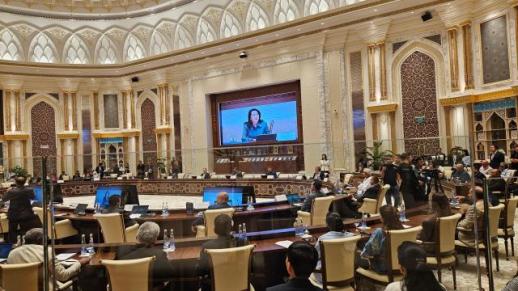 Uzbekistan turns Islamic heritage into cultural diplomacy TASHKENT, August 26 (AJP) -Uzbek officials highlighted the country's rapid modernization and deeper integration into the global community while stressing efforts to preserve its cultural roots and use its Islamic heritage as a bridge to the wider world. “Given the current geopolitical difficulties around the world, Central Asia is increasingly important to global progress,” Munira Aminova, adviser to Uzbekistan’s foreign minister, said Wednesday, highlighting the region’s growing role in international cooperation. “I want to ask you to pay attention to the little details of our transformation. Uzbekistan is changing very rapidly. Wherever you go, new buildings and new infrastructure are being built. This is just the beginning,” Aminova said. Speaking at the International Media Forum “Islamic Civilization: A New Perspective — New Discoveries” in Tashkent, Aminova said the presence of international journalists and experts was recognition that Uzbekistan was moving in the right direction. She said the Silk Road had historically been more than a trade route, serving as a channel for the exchange of knowledge between continents. The Center for Islamic Civilization, she added, was intended not only to preserve and present the past but also to serve Uzbekistan’s present and future as an instrument of cultural diplomacy. “Building trust between countries is related to culture,” Aminova said. She encouraged foreign participants to look beyond the center’s major exhibits and pay attention to the broader changes taking place across Uzbekistan. The forum later turned to efforts to preserve and reproduce historic Quran manuscripts, highlighting the painstaking work involved in protecting Islamic cultural heritage for future generations. Alexander Wilhelm, vice president of Austrian publishing house Mueller & Schindler, presented its “114 Qurans” project, which has brought together 114 Quran manuscripts to showcase the diversity and richness of Islamic calligraphy. Wilhelm said the manuscripts are being reproduced in high-quality publications designed to faithfully preserve the colors and visual details of the originals. Rustam Djabborov, scientific secretary of the Center for Islamic Civilization in Uzbekistan, discussed the lengthy restoration and research work surrounding the Kattalangar Quran. “We have not even completed half of the work yet,” Djabborov said, underscoring the scale of the preservation project. Alexei Telnov, director general of the St. Petersburg Documentary Film Studio, also introduced an upcoming documentary titled “Mosque,” part of a project exploring the shared historical heritage of Uzbekistan and Russia. Telnov said around 1 million Uzbeks live in Russia, describing them as “our brothers.” He said the documentary, filmed by an Uzbek cinematographer, is expected to be released soon. AJP Takeaways Uzbekistan is positioning Central Asia as an increasingly important region for global cooperation, with Munira Aminova, adviser to Uzbekistan’s foreign minister, highlighting cultural diplomacy and the Silk Road’s legacy at an international media forum in Tashkent. The Center for Islamic Civilization in Uzbekistan aims to connect Islamic history with the country’s modern development, presenting cultural heritage as a tool for building international trust while showcasing Uzbekistan’s rapid transformation. Historic Quran preservation emerged as a major focus of the Tashkent forum, including Mueller & Schindler’s “114 Qurans” project and the Center for Islamic Civilization’s extensive restoration and research on the Kattalangar Quran. 2026-08-26 15:51:08
 -
KOSPI Rises 0.97% on Strong Institutional Buying, Driven by Samsung and SK Hynix Stock Buybacks 코스피가 기관과 기타법인의 대규모 순매수에 힘입어 6800선을 회복했다. 이 순매수는 삼성전자와 SK하이닉스의 자사주 매입에 따른 것으로 추정된다. On August 26, the KOSPI index closed at 6,808.21, up 65.47 points (0.97%) from the previous trading day. Individual investors sold a net 2.2468 trillion won, while foreign investors sold 105.2 billion won. In contrast, institutions purchased a net 764.9 billion won, with financial investors accounting for 690.9 billion won of that total. Notably, other corporations showed significant buying activity, with a net purchase of 1.5981 trillion won on the day. Among the top market capitalization stocks, Samsung Electronics rose 1.75%, and SK Hynix increased by 0.60%. Other gainers included Samsung Electronics Preferred (1.18%), LG Energy Solution (0.43%), and Samsung Biologics (0.88%). However, Samsung Electro-Mechanics fell by 2.35%, Hyundai Motor dropped 3.09%, and SK Square decreased by 0.19%. The KOSDAQ index closed at 826.87, down 0.28 points (0.03%) from the previous day. Individual investors bought a net 193 billion won, but foreign and institutional investors sold 91.1 billion won and 105.3 billion won, respectively. Stocks such as Alteogen (1.96%), EcoPro (2.11%), and Pharma Research (6.63%) saw gains, while HLB fell by 4.70%, Juseong Engineering dropped 3.02%, and Wonik IPS decreased by 2.67%. Lee Kyung-min, a researcher at Daishin Securities, noted, "The supply-demand momentum has strengthened. The large-scale buying by other corporations, likely due to the stock buybacks by Samsung Electronics and SK Hynix, has supported the index and shifted market sentiment. Additionally, the reduction in foreign selling and a shift to buying have contributed to the KOSPI's upward movement."* This article has been translated by AI. 2026-08-26 15:48:00