


Latest by
-
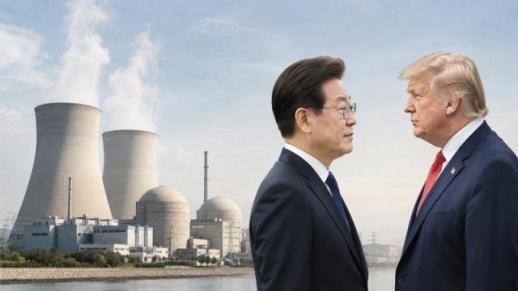 Westinghouse stake report exposes US-Korea nuclear divide SEOUL, August 26 (AJP) - U.S. President Donald Trump has hardly been shy about expressing displeasure over the slow progress in Seoul's execution of its pledged $350 billion investment commitment, and the latest pressure involves the nuclear reactor business. Seoul has denied a report that Washington proposed jointly acquiring an equity stake in Westinghouse Electric, even as the Trump administration presses to draw Korean capital and construction muscle into a sweeping revival of American nuclear power. The Ministry of Trade, Industry and Energy said Tuesday that the claim that the two countries would co-invest to buy into the U.S. reactor maker "is not true." It pushed back against reports that the Pennsylvania-based company could become part of the allies' strategic investment program. State nuclear operator Korea Hydro & Nuclear Power (KHNP) also kept its distance. "We have nothing to say about this matter," a company spokesperson said. Even if Korea were to participate in such a venture, the spokesperson said, it would not necessarily mean abandoning the homegrown APR1400 reactor model used at the Barakah nuclear power plant in the United Arab Emirates, South Korea's first nuclear export project. "It would be a structure where KEPCO leads and KHNP takes part," the spokesperson added, referring to Korea Electric Power Corp. (KEPCO), the state utility and KHNP's parent company. KEPCO separately declined to comment. Investors nevertheless welcomed the prospect of deeper Korean participation in America's nuclear expansion, sending shares of nuclear-related companies sharply higher. Shares of Korea Electrical Power Industrial Development ended Wednesday 12.72 percent higher at 13,270 won ($9). KEPCO E&C rose 13.63 percent to 123,400 won and KEPCO gained 6.42 percent to 34,800 won, well above the main KOSPI's gain of 0.97 percent. Business dailies in Seoul reported this week that the ministry and KEPCO had received a U.S. proposal and were weighing possible investment structures and financing, with part of South Korea's pledged U.S. investment cited as a potential source of funds. The reports come as Washington seeks to revive a domestic nuclear industry that has struggled to build large reactors at scale even as electricity demand surges from artificial intelligence data centers and advanced manufacturing. Westinghouse is controlled by Brookfield alongside Canadian uranium producer Cameco, which owns 49 percent. The U.S. government struck a strategic partnership with Brookfield and Cameco last October aimed at supporting at least $80 billion in new Westinghouse reactor construction in the United States. The arrangement gives Washington a path to a substantial financial interest in Westinghouse if the reactor program proceeds. Once specified investment conditions are met, the U.S. government would receive a participation interest tied to Westinghouse cash distributions. Washington could also require an initial public offering if the interest has vested and Westinghouse is expected to command a valuation of at least $30 billion by January 2029, with the participation interest convertible into a warrant under the agreement's formula. The structure gives the Trump administration a direct financial incentive to accelerate Westinghouse reactor deployment. Korea could supply something Washington has found harder to reproduce – the capacity to build large nuclear plants at scale. One industry insider who asked not to be named said U.S. utilities remain reluctant to shoulder the financing and construction risks of a new wave of large reactors, giving Washington an incentive to bring Korean capital into the equation. "The utilities find it burdensome to launch new projects, so the idea is that we put up the seed money," the insider said. Under such a structure, Korean companies could help finance and build the reactors and, depending on the equity terms, secure a lasting share of the returns generated by the projects. Whether that pays off for Seoul would depend heavily on the size of Korea's stake and how deeply Korean suppliers are allowed into the supply chain. Some industry experts argue that an equity investment would give Korea little strategic value that it does not already possess. Westinghouse absorbed Combustion Engineering, the U.S. company whose pressurized-water technology Korea licensed decades ago as it developed its own nuclear reactor program. One expert argued that decades of technology transfer and domestic development mean an equity investment would offer Korea relatively little additional technical know-how. "We already received all the technical data — we simply don't hold the property rights to it," the expert said. "There is nothing new to gain." The concern is that Korea could provide capital and construction expertise without gaining corresponding control over intellectual property or project leadership. If Washington also acquires a financial interest in Westinghouse, the expert said, U.S. influence over the company could further complicate Korea's ability to use and export its own technology freely, potentially leaving Seoul "to put up the money and end up subordinate to the United States." A Westinghouse stake would not necessarily open the overseas nuclear markets Korea most wants to penetrate. KEPCO, KHNP and Westinghouse reached a global settlement in January 2025 ending a bruising intellectual-property dispute over Korean reactor exports. The detailed terms remain confidential. Korean media have reported that the agreement restricts KEPCO and KHNP from independently pursuing certain projects in North America and Europe. Neither side has publicly disclosed the detailed geographic or commercial restrictions. Experts said buying into Westinghouse would not automatically remove obligations contained in the existing settlement. That uncertainty sits at the heart of Seoul's calculation. Westinghouse has formidable strength in reactor design, licensing and intellectual property, but the United States has struggled to reproduce the construction capacity needed to deliver large nuclear projects on time and at predictable cost. Korea's record runs in the opposite direction. KEPCO and KHNP delivered the four-reactor Barakah project in the United Arab Emirates, establishing South Korea as one of the few democratic countries with recent experience building a large nuclear complex from the ground up. Korea's flagship APR1400 also received U.S. Nuclear Regulatory Commission design certification in 2019. Washington therefore has reason to court both Korean money and Korean execution. The U.S. Commerce Department, which helped broker the broader Westinghouse framework, said it "continues to progress the President's agenda of promoting new Nuclear Power projects, including through the Japanese and Korean trade deals," adding that it was "in discussions with all relevant parties." Even if discussions advance, the two sides could remain divided over who leads the projects and which reactor is built. Washington's nuclear expansion is centered on Westinghouse's 1.1-gigawatt AP1000, including reactors aimed at meeting rising electricity demand from AI data centers and other power-intensive industries. Seoul has its own interest in expanding the global footprint of the larger APR1400 and preserving a leading role for KHNP and the Korean nuclear supply chain. Korea's misgiving is that a U.S.-designed and U.S.-led structure could leave it shouldering a significant share of the financing and construction risk while Westinghouse retains control over reactor technology and project leadership. The potential upside is access to what could become one of the world's largest nuclear construction markets and a long pipeline of orders for Korean engineering, equipment and construction companies. The trade-off therefore goes well beyond the price of a Westinghouse stake. Washington needs capital and construction capacity to turn its nuclear revival from policy into actual reactors. Seoul must decide how much of both it is willing to commit if Korean companies remain supporting players rather than equal partners. AJP Takeaways • South Korea denied reports that Washington proposed a joint investment in Westinghouse, but the controversy exposes deeper differences over financing, reactor technology and project leadership. • The United States needs Korean capital and construction expertise to accelerate its nuclear revival, while Seoul wants sufficient control and commercial returns before taking on large financing and execution risks. • A Westinghouse stake would not automatically expand KEPCO and KHNP's freedom in overseas markets because the detailed terms of their confidential 2025 settlement with Westinghouse remain in force. 2026-08-26 15:05:57
 -
 Gachon University Team Wins Top Prize for AI Education Model Gachon University’s business administration team, 'Team Compass,' won the top prize at the 'K-Business Education Idea Contest' on August 25 for proposing a new university education model suited for the generative AI era. According to Gachon University, students Yoon Jeong-jun, Kwon Jun-seok, and Jeong Hee-chan from the class of 2025 received high praise for their 'Thought Restoration Project,' which aims to enhance critical thinking skills in an increasingly AI-dependent educational environment. The 'Thought Restoration Project' focuses on moving beyond simply accepting answers provided by AI, encouraging students to verify and analyze information independently. The initiative aims to help students evolve from merely using AI to becoming 'AI Validators' who can verify and interpret results. The curriculum is structured in stages: the first stage develops critical understanding of AI, the second enhances data verification skills, followed by a third stage involving practical projects specific to their majors, and a fourth stage focusing on global strategy education. Additionally, the program incorporates digital badges to track learning outcomes and a performance management and feedback system to ensure sustainability in education. Notably, the project can be implemented by redesigning existing courses without the need for large budgets or organizational restructuring. AACSB and KERIS standards and case studies were referenced to enhance the model's validity and applicability in real-world settings. Judges praised the project for addressing educational challenges in the generative AI era from a 'thought restoration' perspective and for integrating no-code tools, digital badges, and AI collaboration skills into a cohesive educational framework. Team leader Yoon Jeong-jun stated, “In the generative AI era, it is crucial to not only have the skills to use AI but also the ability to question and verify the answers it provides. I am pleased that our efforts to find ways for students to actively develop verification skills within existing classes received such positive feedback.” Meanwhile, Choi Sung-jun, dean of the College of Business, remarked, “It is significant that students have not only identified the demand for education but have also proposed directions for future business education.” He added that the students' ideas will be actively considered for future curriculum innovation and AI-integrated education models.* This article has been translated by AI. 2026-08-26 15:04:00
 -
140 South Korean SMEs Gather in Las Vegas to Target U.S. Consumer Goods Market One hundred forty South Korean small and medium-sized enterprises (SMEs) are intensifying their efforts to penetrate the U.S. consumer goods market.The Korea Federation of Small and Medium Businesses announced that the 'K-Goods Fair' opened on August 25 at the 'ASD Market Week 2026' in Las Vegas.'ASD Market Week 2026' will run until August 27 at the Las Vegas Convention Center. Last year, approximately 1,800 companies from around 80 countries participated.This year, over 150 booths showcasing K-Goods in categories such as beauty and lifestyle have been set up. Participants include companies involved in the Ministry of SMEs and Startups' export consortium, small business owners under the Korea Federation of Small and Medium Businesses' Yellow Umbrella Fund, Home & Shopping partners, and local SMEs.The opening ceremony on August 25 featured key figures from both domestic and international sectors, including Hwang Byung-koo, president of the Korean American Chamber of Commerce, and Las Vegas Mayor Shelley Berkley. The state of Nevada and the city of Las Vegas presented certificates of appreciation to Kim Gi-moon, president of the Korea Federation of Small and Medium Businesses, and Hwang Byung-koo for their contributions to U.S.-Korea business cooperation through this large-scale Korean pavilion.Seo Hyun-young, CEO of Skin & Plus, stated, "At the ASD exhibition I attended for the first time in March, I secured an exclusive contract worth $2.5 million with a buyer from Latin America. I hope to expand our opportunities by successfully contracting with major North American retailers like Walmart and Costco during this second participation."Han Young-wook, CEO of Shinil Special Metals, remarked, "I was able to reconnect with a Mexican buyer I had lost contact with in the past during this exhibition, allowing for quicker discussions on additional contracts. We prepared in advance through online meetings to discuss our exhibition products and consultation strategies, and I look forward to consultations with both existing and new buyers."Kim Gi-moon emphasized, "Despite the increasing uncertainty in the trade environment, K-beauty and food are gaining significant popularity, and the organizers of the ASD exhibition have requested the participation of Korean companies, reflecting their elevated status. In an era of low birth rates and an aging population, the overseas expansion of SMEs is now essential. I hope this K-Goods Fair serves as a practical export platform for our SMEs to open new avenues in the North American market."* This article has been translated by AI. 2026-08-26 14:56:20
-
Syangyong The Platinum Seodaemun Sees 240.5 to 1 Subscription Rate Syangyong Construction's 'Syangyong The Platinum Seodaemun' in Hong-eun-dong, Seodaemun District, achieved a remarkable subscription rate of 240.5 to 1 in its first round, successfully closing all unit types.The Korea Real Estate Agency reported on the 26th that for the first round of subscriptions in the designated area, 1,112 applicants registered for 28 units (excluding special supply), resulting in an average competition rate of 39.71 to 1.By unit type, the 59㎡A model attracted 721 applicants for 3 units, yielding the highest competition rate of 240.5 to 1. The 84㎡A model recorded a rate of 25.39 to 1, while the 84㎡B model had a rate of 15.67 to 1.The high subscription rates are attributed to competitive pricing compared to surrounding market rates. The selling price for the 59㎡ unit is set at 1.08 billion won for the third floor, while the 84㎡ units range from 1.28 billion to 1.37 billion won. Given the recent upward trend in prices for newly built apartments in the Seodaemun area, the pricing is considered competitive.'Syangyong The Platinum Seodaemun' will consist of three buildings with a total of 177 units, spanning from four basement levels to 20 stories, located at 355 Hong-eun-dong, Seodaemun District. The general sale includes 62 units, broken down into 3 units of 59㎡A, 53 units of 84㎡A, and 6 units of 84㎡B. Occupancy is expected in January 2030.The development features a four-bay flat structure with storage spaces such as a pantry, dressing room, and individual storage. Each unit is allocated approximately 1.63 parking spaces. Various community facilities, including a fitness club, golf practice range, and a reading café, will also be available.Nearby amenities include Myongji Elementary School, Myongji Middle School, Myongji High School, Myongji University, and a range of private tutoring centers, along with green spaces like Baengnyeonsan and Hongjecheon, contributing to a pleasant living environment.The winners will be announced on September 2, with the contract signing scheduled from September 14 to 16.A representative from the development stated, “By setting a reasonable price lower than nearby market rates, we attracted interest primarily from actual buyers since the model home opening, leading to excellent subscription rates. We expect the contract process to proceed smoothly due to the differentiated layouts and diverse community facilities.”Meanwhile, the model home for 'Syangyong The Platinum Seodaemun' is located at 235 Susaek-ro, Eunpyeong District, Seoul.* This article has been translated by AI. 2026-08-26 14:56:00
-
Financial Authorities Raid Hanmi Accounting Firm Over Insider Trading Allegations Financial authorities have launched a raid on Hanmi Accounting Firm in connection with allegations of stock trading using insider information.On August 26, the joint task force composed of the Financial Services Commission, the Financial Supervisory Service, and the Korea Exchange began the raid on Hanmi Accounting Firm. The task force is reported to have secured work materials and internal documents.Accountants affiliated with Hanmi Accounting Firm are suspected of trading stocks using undisclosed important information about listed companies that they learned during their work, allegedly reaping illicit profits amounting to tens of millions of won per person.Notably, the insider information used in the stock trading reportedly included details about upcoming public offerings and significant information pending disclosure.The task force is expected to investigate the sources and channels of the insider information, the actual stock trading processes, and the scale of the illicit profits based on the materials secured during the raid.Hanmi Accounting Firm is a mid-sized accounting firm ranked among the top 20 in South Korea by revenue, providing corporate advisory services such as mergers and acquisitions, business valuation, and financial due diligence.* This article has been translated by AI. 2026-08-26 14:52:00
-
Foreign Tourists Increasingly Renting Cars in Jeju, Reservations Up 154% Foreign tourists traveling in South Korea are increasingly opting to drive themselves. Rentals by foreigners in the country have surged by 154% over the past year, with visitors from Australia, Thailand, and Taiwan tripling their bookings. Domestic rental car usage has also risen by 194%, expanding demand beyond Jeju to cities like Yeosu, Gangneung, and Gyeongju.According to an analysis of rental car reservation data by Trip.com, the total number of global rental car bookings increased by 81% compared to the same period last year. South Korea ranked fourth among countries for rental car travel destinations.Japan topped the list, with bookings rising by 119% year-on-year. Thailand and the United States followed, with South Korea's growth rate at 148%. Australia ranked fifth.Jeju was the most popular city for rentals, with bookings increasing by 148% compared to the previous year. Major Japanese cities such as Tokyo, Okinawa, Sapporo, and Fukuoka followed.Domestic rental car reservations by South Koreans also saw a significant increase of 194% year-on-year. The most popular destination was Jeju, followed by Seoul, Busan, Yeosu, Gangneung, and Gyeongju, indicating a broader range of rental car usage across these regions.Foreign bookings for domestic rentals rose by 154% during the same period, with Australia showing the highest growth rate at 333%. Other countries with notable increases included Thailand (295%), Taiwan (289%), Malaysia (281%), Singapore (249%), Japan (179%), and Hong Kong (171%).Notably, South Korea ranked second among overseas rental car destinations for Taiwanese users. It was third for Vietnamese users and fourth for both Singaporean and Filipino travelers, while it ranked fifth for Malaysian users. In Thailand, Hong Kong, and Japan, South Korea was sixth, and seventh for Australia.South Koreans are also renting more cars abroad, with popular destinations including Japan, South Korea, the United States, Thailand, Canada, and Italy. All top ten regions saw booking numbers increase by over 100% compared to the previous year.More than half of all rental car bookings by South Koreans were for Japan and South Korea. Vehicles with five seats or fewer accounted for about 80% of the rentals.Trip.com collaborated with Tamra Rent-a-Car in Jeju last year. From January to July this year, the use of Tamra Rent-a-Car by international travelers increased by 56% compared to the same period last year.Hong Jong-min, head of Trip.com’s South Korea branch, stated, “Rental car travel is becoming a new trend that goes beyond being a simple means of transportation, allowing travelers to discover the charm of destinations at their own pace. We will enhance our services to facilitate local travel for foreign tourists visiting Korea and to make it easier for Korean travelers to rent cars both domestically and internationally.”* This article has been translated by AI. 2026-08-26 14:52:00
-
Shinsegae Group Unveils Cultural Space Philosophy at Frieze Seoul Shinsegae Group will showcase a unique cultural space at the global art fair Frieze Seoul 2026, set to take place at COEX in Seoul next month. As the headline partner for Frieze Seoul starting this year, the company aims to offer a differentiated customer experience that combines retail and art.On August 26, Shinsegae Group announced that it will operate a special space called 'Shinsegae Lounge' during Frieze Seoul 2026, which runs from September 2 to 5. The Shinsegae Lounge will encapsulate the company's expertise in space and content planning. This lounge serves as a symbolic space marking the beginning of a long-term partnership, as Shinsegae Group commits to being a headline partner for the next five years.A representative from Shinsegae Group explained, "The motivation behind presenting a unique lounge stems from Chairman Jeong Yong-jin's management philosophy of creating a cultural space where customers want to linger in their daily lives."The lounge will host a special exhibition titled 'The Monumental Everyday: L'Immensité du Quotidien,' featuring works by French artist Paul Cox. This exhibition will present the world premiere of 336 pieces from Cox's 'Diary' series, which documents his daily evening meditations using opaque watercolors.Additionally, the exterior of the lounge will feature a large image of one of Paul Cox's representative works, 'Diary 16 05 26,' allowing visitors to experience the artist's world before entering the space.Through its partnership with Frieze Seoul, Shinsegae Group plans to expand cultural content that seamlessly integrates retail and art. A Shinsegae Group representative stated, "We aim to establish a foundation for active exchanges among major galleries, artists, collectors, and cultural institutions, contributing to enhancing the international status of the domestic art market." 2026-08-26 14:52:00
-
Jung Jeom-sik Urges Lee to Appoint Police Chief Before Pushing for Reform Jung Jeom-sik, the floor leader of the People Power Party, urged President Lee Jae-myung on August 26 to appoint a police chief before advocating for police reform.During a general meeting at the National Assembly, Jung criticized the president's recent directive for police reform, stating, "To call for grand police reform now, citing public concerns, is akin to closing the barn door after the horse has bolted."He noted, "The original intent of prosecutorial reform was to reduce the power of the prosecution. While many experts and opposition members agreed with this intent, there were concerns that a misguided approach could inadvertently enhance police power."Jung continued, "However, the Lee Jae-myung administration completely ignored these warnings and pushed through adjustments to investigative powers, the complete deprivation of prosecutorial authority, and the dismantling of the prosecution, concentrating significant power in the police, driven solely by an obsession with attacking the prosecution."He also criticized Democratic Party lawmaker Lee Hae-sik for making remarks about a missing person case in Jeju, suggesting it was an individual’s misconduct that became a national news burden for the administration. Jung stated, "Instead of reflecting on their role in damaging the police system, they are only concerned with public opinion, prioritizing the administration's stability over the safety of citizens. This is a truly irresponsible ruling force."Jung described the ongoing acting police chief system, which has lasted over a year and eight months, as a "clear dereliction of duty" by the president.He asserted, "The president has delayed appointing the police chief, responsible for national security, without providing any valid reasons. The growing criticism and distrust towards the police stem from a few bad officers, the Democratic Party's mismanagement that has undermined the police system, and the unstable acting leadership under this president."Furthermore, he remarked, "Concerns and distrust towards the police did not arise suddenly. They have accumulated over time following the Moon Jae-in administration's adjustments to investigative powers and the complete deprivation of prosecutorial authority, and are now coming to a head."Jung concluded by stating, "The People Power Party will begin working on fundamental police reform proposals, aiming for structural solutions that comprehensively review the investigative system, rather than the piecemeal fixes characteristic of the Lee Jae-myung administration's approach after concentrating power in the police."* This article has been translated by AI. 2026-08-26 14:48:00
-
Iworld Shares Surge Ahead of 5-for-1 Stock Consolidation Iworld is experiencing a surge in its stock price as it prepares for a 5-for-1 stock consolidation.According to the Korea Exchange, as of 2:37 PM on August 26, Iworld's shares rose by 140 won (29.98%) to 607 won compared to the previous trading day.The news that Iworld, which was designated as a management item due to its low stock price, is taking steps to mitigate the risk of delisting through stock consolidation has reportedly boosted investor sentiment.Iworld plans to hold an extraordinary general meeting on August 27 to address the stock consolidation proposal, which will merge five common shares into one. Once the consolidation is completed, the par value per share will increase from 1,000 won to 5,000 won, and the total number of issued shares will decrease from 141,806,193 to 28,361,238.The company aims to raise its share price through the consolidation to address the delisting risk associated with its low stock price. Iworld has stated that the purpose of the consolidation is to stabilize the stock price by maintaining an appropriate number of circulating shares and enhancing corporate value.Previously, Iworld was designated as a management item on August 20 after its stock price fell below 1,000 won for 30 consecutive trading days. According to the regulations of the KOSDAQ market, failure to recover the stock price within a specified period after being designated as a management item could lead to delisting.If the proposal is approved at the general meeting, trading will be suspended from September 10 to October 1, with trading of the consolidated shares resuming on October 2.* This article has been translated by AI. 2026-08-26 14:48:00
-
 Seoul to cut power bills for chip and datacenter host regions SEOUL, August 26 (AJP) - South Korea's industrial users will pay electricity rates that differ by region, with bills in the southern provinces tapped to host data centers and chip clusters falling by as much as 10 percent under a plan to draw advanced manufacturing away from the overcrowded capital area. The Ministry of Climate, Energy and Environment and Korea Electric Power Corporation (KEPCO) presented the regional pricing scheme at a Wednesday public hearing in western Seoul, dividing the country into four broad zones with a new "regional adjustment charge" folded into industrial tariffs. Under the plan, southern regions would see industrial rates fall by 13 to 18 won ($0.009 to $0.013) per kilowatt-hour, or about 7 to 10 percent against last year's average industrial selling price of 181.9 won. The central zone of Chungcheong and Gangwon would drop 5 to 8 percent, and the northern capital area 3 to 8 percent. The power differentiation comes as Seoul presses aggressively with its so-called Three Megaprojects envisioning to create chip, physical AI and datacenter belt beyond the capital region. Honam and the southwest are being positioned as Korea’s second memory semiconductor production base. Chungcheong is being developed as a hub for HBM, advanced packaging, displays, batteries, and bio manufacturing. Yeongnam and Daegyeong are being assigned to host bases for physical AI, robotics, materials, components, equipment, power semiconductors, and manufacturing conversion. AI data centers are intended to connect these regional clusters into a national compute network. Rates in the southern capital area, including southern Seoul and southern Gyeonggi, would stay essentially unchanged, with the adjustment charge set between zero and a one-won cut. The government aims to break a one-directional structure in which power generated outside the capital is funneled through the grid into Seoul and its surroundings. About 40 percent of the electricity produced in South Korea is consumed in the capital area, which drew 40.6 percent of national power sales last year. That strain is set to deepen as a semiconductor cluster rises in Yongin, south of Seoul, where Samsung Electronics and SK hynix fabrication plants are expected to require 14 gigawatts by 2041, roughly the output of 10 large nuclear reactors. Currently, the capital area's power self-sufficiency stands at about 66 percent. The plan has drawn concern that rates could differ across a single road, stoking friction between neighboring districts, and that basing cuts on self-sufficiency rewards areas already benefiting from nearby plants. Officials in cities such as Daegu warned that lowering rates for power-rich regions "could amount to double benefits that undermine fairness between regions," according to a March review report to the National Assembly. Even the deepest discounts would leave industrial rates above China's, raising doubts about the plan's effectiveness while adding to the burden on KEPCO, which forecasts about 2.8 trillion won in forgone revenue. To offset that, the government will introduce location based marginal pricing on wholesale power, buying more cheaply from generators outside the capital. The government and KEPCO plan to complete the procedures for the regional pricing scheme within the year. AJP Takeaways • South Korea's Ministry of Climate, Energy and Environment and Korea Electric Power Corportaion unveiled a regional electricity pricing plan that would cut industrial power rates by up to about 10 percent in southern regions while leaving the southern capital area essentially unchanged. • Southern industrial rates would fall 13 to 18 won per kilowatt-hour, measured against an average industrial selling price of 181.9 won per kilowatt-hour. • The plan aims to ease the capital area's concentration of power demand, which accounted for 40.6 percent of national electricity sales last year, though even discounted rates would remain above China's and cost KEPCO about 2.8 trillion won ($2.02 billion) in forgone revenue. 2026-08-26 14:45:55