


Latest by
-
 Miridi Partners with Sturning to Enhance Design Services for Businesses Miridi announced on August 25 that it has signed a memorandum of understanding (MOU) with Sturning, which operates the design expert connection platform Loudsourcing.The agreement aims to address the demand from companies seeking to commission professional designers for logo development and customized brand design.Miridi, which runs Miricanvas and Bizhouse, plans to significantly expand its corporate branding infrastructure by combining its B2B network and design capabilities with Sturning's pool of 300,000 designers.Key areas of collaboration include connecting personnel for B2B branding and design projects, utilizing the Miricanvas and Bizhouse infrastructure for production and printing, and exploring joint business opportunities.Miridi will provide corporate client discovery, project management, and Bizhouse's printing and production services. Sturning designers will deliver design outcomes through Miricanvas to maximize collaboration synergies.Kang Chang-seok, CEO of Miridi, stated, "By adding Sturning's proven design talent to Miridi's professional design capabilities and production convenience, we will further enhance the one-stop design solutions that corporate clients desire." He added, "We will continue to expand our service capabilities to dramatically reduce the challenges companies face in branding and design production."* This article has been translated by AI. 2026-08-25 12:28:00
 -
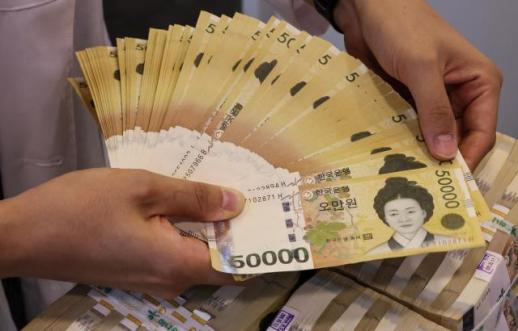 Korea's new household loans hit three-year low in Q2 SEOUL, August 25 (AJP) - South Korean consumer borrowing fell to its lowest in more than three years in the second quarter amid tighter caps on mortgage lending. The average amount of new household loans dropped 3.6 percent in April-June period from the previous quarter to 34.14 million won ($24,687) per borrower, preliminary data from the Bank of Korea (BOK) showed Tuesday. The BOK attributed the decline in part to tighter loan management across the financial sector. The drop was concentrated among borrowers in their 30s and 40s, residents of the Seoul metropolitan area and mortgage borrowers. New mortgage borrowing fell 9.2 percent to 208.29 million won per borrower from 229.39 million won in the first quarter, the lowest since the fourth quarter of 2024, according to a separate BOK time-series comparison. The curb in new lending did not translate into lower outstanding debt. Average household loan balances per borrower rose 0.5 percent to 97.90 million won at the end of June. Average mortgage balances increased by 1.87 million won to 161.93 million won. The two measures capture different parts of household borrowing. New lending tracks loans issued during a quarter, while outstanding balances reflect accumulated loans that borrowers still owe. The BOK's borrower-level statistics are based on a sample from NICE Information Service's personal credit database covering 4.8 percent of borrowers. The data are designed to show differences in borrowing by age, region, lender and loan type. The second-quarter decline was particularly pronounced among borrowers in their 30s and 40s. Average new household borrowing among people in their 40s fell by 5.83 million won to 35.88 million won, while the figure for those in their 30s declined by 2.74 million won to 49.08 million won. The two age groups also led the decline in mortgages. Average new mortgage borrowing fell by 35.37 million won among borrowers in their 40s and by 26.32 million won among those in their 30s. Borrowers in their 20s bucked the trend. Their average new mortgage borrowing rose by 3.92 million won to 232.17 million won, and they accounted for 6.0 percent of new mortgage lending by value. The pullback was also concentrated in the Seoul metropolitan area. Average new household borrowing in Seoul, Incheon and Gyeonggi Province fell by 1.93 million won to 37.80 million won per borrower. Average new mortgage borrowing in the region declined by 43.97 million won to 230.59 million won. Lending trends diverged sharply between banks and nonbank institutions. Average new household borrowing through nonbanks fell by 14.39 million won to 27.91 million won, while borrowing through banks rose by 3.42 million won to 50.13 million won. Banks nevertheless remained the largest source of new borrowing by value, accounting for 58.3 percent of the total. Borrowers in their 30s accounted for 32.7 percent, while the Seoul metropolitan area represented 59.4 percent. The slowdown in new borrowing comes even as South Korea's overall household debt continues to rise. Separate BOK data released last week showed household credit increased by 25.9 trillion won to a record 2,019.8 trillion won at the end of June, exceeding 2,000 trillion won for the first time. The two statistics are not directly comparable. Household credit measures economy-wide loans and sales credit using reports from financial institutions, while the borrower-level statistics use a sample of individual credit records to track borrowing patterns. Second-quarter borrower-level figures are preliminary and will be finalized when the next quarterly data are released. AJP Takeaways: • South Korea's average new household borrowing per borrower fell 3.6 percent to 34.14 million won in the second quarter, the lowest since the first quarter of 2023. • New mortgage borrowing dropped 9.2 percent to 208.29 million won per borrower, led by declines among people in their 30s and 40s and in the Seoul metropolitan area. • New lending slowed even as South Korea's total household credit climbed to a record 2,019.8 trillion won at the end of June, according to the Bank of Korea. 2026-08-25 12:13:03
 -
Korean Education Council Urges Early Application Preparation for 2027 Admissions Starting September 7, the application process for early admissions to four-year universities and colleges in South Korea for the 2027 academic year will begin. The Korean Council for University Education (KCUE) has advised students to prepare their common applications in advance to avoid overwhelming traffic at the deadline.According to the KCUE, the application period for four-year universities will run from September 7 to 11, with each university conducting admissions for at least three days. For colleges, the first round of admissions will take place from September 7 to 30, followed by a second round from November 11 to 25.Before the official application period, students can complete their common application through the 'Standard Common Application Pre-Service.' By registering as a unified member with either Uway or Jinhak Apply, students can apply to all universities nationwide that accept applications through these agencies.The common application includes personal information such as name, resident registration number, address, phone number, refund account details, and school information. It is crucial to ensure that the refund account is valid and accessible at the time of any potential refunds from the universities. The completed common application can be shared between agencies using the 'export' and 'import' functions, and any modifications must be saved and exported to reflect changes across all agencies.To prevent issues related to high traffic at the deadline or errors due to PC environments, the KCUE recommends using the Chrome or Microsoft Edge browsers on Windows operating systems.Students should also be aware that the method for online access to their school records varies by graduation year. For those graduating in February 2024 (2023 academic year) to those expected to graduate in February 2027 (2026 academic year), school records will be generated and provided to universities through the education administrative information system (NICE) by their high schools.In contrast, students who graduated between February 2005 (2004 academic year) and February 2023 (2022 academic year) must directly access the online application system (apply.neis.go.kr) to request their school records by 6 PM on September 11 to ensure a smooth application process.To assist students in successfully planning their academic paths, the KCUE is providing key information and performance analysis services for the 2027 admissions through the college information portal 'Adiga' (adiga.kr). Since late June, an AI-based interactive chatbot service has been introduced to offer personalized admissions assessments for students.Additionally, the KCUE's admissions counseling center will deploy a team of 500 current high school teachers for focused one-on-one counseling until September 5. Phone consultations will be available from 9 AM to 10 PM on weekdays and Saturdays, along with online counseling to alleviate admissions-related anxiety for students and parents.* This article has been translated by AI. 2026-08-25 12:08:00
-
Ulsan Port Must Evolve Beyond Fuel Supply in Arctic Shipping Era The melting ice in the Arctic is reshaping the global shipping landscape. The government has identified the Arctic route as a new national growth axis, accelerating pilot operations, special legislation, and the development of hub ports. Following an examination of the readiness and strategies of Busan, Ulsan, and Pohang's Yeongilman ports, this article explores the competitive advantages Ulsan Port must secure in the Arctic route era. <Editor’s Note> Ulsan Port's most realistic competitive advantage in the Arctic route era is already established.With decades of experience handling liquid cargo, storage facilities, pipeline networks, and a robust refining and petrochemical industry, Ulsan is also represented by HD Hyundai Heavy Industries in the shipbuilding sector.Additionally, Ulsan is gaining experience in supplying next-generation ship fuels such as LNG, methanol, and ammonia. This division of roles, with Busan focusing on containers and Ulsan on energy, is the backdrop for the government's strategy.The challenge now is the next step.Will Ulsan Port remain a hub that only supplies fuel to ships passing through the Arctic route, or will it evolve into a port where cargo, ships, energy, and related industries operate together?Ulsan's Established Competitiveness in LNG, Methanol, and Ammonia SupplyUlsan Port has a clear track record in the eco-friendly ship fuel sector.The port has accumulated experience in supplying methanol as a ship fuel, and in September of last year, it became the first in South Korea to supply 830 tons of green methanol to a dual-fuel dry bulk carrier.In February of this year, Ulsan successfully conducted commercial bunkering by supplying LNG during the unloading of a car carrier, and in April, it supplied 600 tons of clean ammonia to an ammonia-powered gas carrier.By supplying LNG, methanol, and ammonia to actual vessels, Ulsan is broadening its experience as a next-generation ship fuel supply port.As the decarbonization of international shipping accelerates, this alternative fuel supply capability is expected to be a key factor in determining port competitiveness.Byun Jae-young, CEO of Ulsan Port Authority, stated during the ammonia supply, "This was achieved based on Ulsan Port's energy infrastructure and accumulated bunkering experience and capabilities. We will further strengthen our ability to supply eco-friendly ship fuels." Ulsan Must Not Remain Just a 'Gas Station' for BusanHowever, relying solely on eco-friendly bunkering will not guarantee Ulsan Port's future in the Arctic route era.While Ulsan can temporarily supplement Busan's inadequate bunkering capabilities, Busan is also working to establish its own eco-friendly bunkering infrastructure by 2030.Once Busan's fuel supply capabilities are in place, it will be challenging for Ulsan to maintain differentiation through bunkering alone.Thus, Ulsan Port needs to move beyond 'fuel supply' to the next stage.The first step is cargo.A noteworthy aspect of the agreement signed on the 20th between Ulsan Port Authority, Dutch shipping company Royal Wagenborg, and the Korea Maritime Promotion Corporation is not just bunkering.The three entities agreed to jointly explore potential cargo between Korea and North America and assess the feasibility of Arctic route operations. They will also collaborate on developing operational manuals and securing ice-class vessels.This year, up to four vessels passing through the Arctic route are expected to call at Ulsan Port to receive fuel or unload cargo.In this regard, Byun Jae-young stated, "This will serve as a practical foundation for implementing the government's Arctic route policy, enhancing the domestic shipping industry's capabilities for Arctic operations and strengthening port competitiveness."If vessels passing through the Arctic begin to load and unload actual cargo at Ulsan Port, it will mark the first test of integrating into the Arctic route logistics network beyond simple bunkering. What Will Be Brought from the Arctic and What Will Be Sent from Ulsan?The success of the Arctic route ultimately depends on cargo.Ulsan is home to a concentration of refining, petrochemicals, non-ferrous metals, automotive, and shipbuilding industries.If a bidirectional logistics structure is established, bringing in energy and raw materials from the Arctic and exporting products manufactured in Ulsan's industrial complex, Ulsan Port can position itself as a key part of the supply chain rather than just a stopover.The Northwest Passage is also noteworthy. Using the Northwest Passage from Ulsan to Quebec, Canada, the sailing distance is approximately 13,500 kilometers, about 35% shorter than via the Panama Canal.However, uncertainties remain regarding Russian sanctions, year-round navigability, freight and insurance costs, icebreaking expenses, and actual shipper demand.Ultimately, identifying which cargo will come from which countries and which companies in Ulsan's industrial complex will be the actual demanders is a necessary preliminary step.Port competitiveness is not built solely on the scale of facilities. Securing shippers and shipping companies that will actually move cargo is essential for the route to translate into industry.Connecting Shipbuilding and MRO: Ulsan's Arctic Route StrategyAnother avenue for expansion for Ulsan Port is shipbuilding and maintenance, repair, and overhaul (MRO).Vessels operating on the Arctic route require higher levels of technology for hulls, propulsion systems, communication, and navigation equipment than standard commercial vessels.Ulsan has established a world-class shipbuilding ecosystem centered around HD Hyundai Heavy Industries.If Arctic route vessels can not only load and unload cargo and receive fuel in Ulsan but also receive maintenance and equipment supplies, the added value generated from a single port call could significantly change.Ulsan Port Authority has also included the activation of the next-generation ship fuel supply market and support for Arctic route development based on MRO technology as actionable items in its '2040 Vision.'While Busan's greatest asset lies in its container and transshipment network, Ulsan possesses energy, manufacturing, and shipbuilding industries.Rather than competing for the same functions as 'Arctic route hub ports,' it is more realistic to differentiate roles based on each port's industrial foundation. From Task Force to Business: The Role of Ulsan City is CrucialIn January of this year, Ulsan City launched the 'Task Force for Leading the Arctic Route Era Based on Ulsan Port.'Participating entities include Ulsan Port Authority, Ulsan Regional Maritime Affairs and Fisheries Office, research institutions, and the port and logistics industry, all working to develop response strategies connecting the Arctic route with shipping, energy, and logistics.The key now is to translate these plans into actual business ventures.Industry stakeholders emphasize that attracting vessels passing through the Arctic route, supplying eco-friendly ship fuels, discovering Arctic cargo, and linking MRO and shipbuilding equipment industries must lead to concrete projects.With the special law for the Arctic route set to take effect in December, competition among port cities for government support and hub functions is expected to intensify.Ulsan already has energy storage and supply networks, refining and petrochemical industries, and a world-class shipbuilding sector that are difficult for other ports to replicate in the short term.Creating a structure where vessels traveling to and from the Arctic can refuel, load and unload cargo, and receive maintenance and equipment services in Ulsan is central to the Arctic route strategy envisioned by Ulsan Port.The opportunities presented by the Arctic route are not solely on the water; the answer lies in how Ulsan connects its existing industries. 2026-08-25 12:08:00
-
Direct Sales of Ethanol for Soju to Increase Fivefold Next Year Starting next year, the amount of ethanol allowed for direct sales, a key ingredient in diluted soju, will increase fivefold compared to current levels. This move aims to lower barriers for outside companies entering the municipal waste collection and transportation market, which has been plagued by monopolistic practices among a few local firms.The Fair Trade Commission announced on August 25 that it has finalized plans for regulatory improvements aimed at enhancing competition, following consultations with relevant government departments. The commission has been working to identify and address competition-restricting regulations that hinder business activities.Initially, the volume of ethanol permitted for direct sales between liquor manufacturers and ethanol producers will rise from the current 2% of total sales to 10% by 2027. Previously, the distribution of ethanol was largely confined to specific wholesalers, limiting competition among ethanol producers. The government plans to gradually increase the direct sales volume based on a comprehensive assessment of market competition and supply conditions.The municipal waste collection and transportation market, which has suffered from regional monopolies, will also undergo changes. Local governments have historically denied permits to companies from outside their jurisdictions, allowing existing local firms to monopolize contracts and engage in bid-rigging. The government will revise guidelines to allow qualified companies from other municipalities to apply for permits to expand or change their operating areas, provided there are no legal impediments.Additionally, the concentration of large accounting firms in the auditing market will be addressed. Under the periodic designation system for auditors of listed companies, medium-sized and small accounting firms that receive high-quality audit evaluations will be granted eligibility to audit larger corporations. To promote competition in auditing services in local areas, the requirement for accounting firms to establish branch offices will be eased from a minimum of three full-time accountants to just one.The requirement for sanitary toilet and accessory certification to be supplied as a single packaging unit has been removed, strengthening the competitive foundation for domestic accessory manufacturers. This change reflects the challenges faced by local manufacturers when combining imported toilets with domestic accessories due to increased repackaging costs and logistical burdens.A Fair Trade Commission official stated, "We will unlock the long-standing structural limitations on competition in the ethanol distribution and public service markets to promote genuine market competition. We also plan to identify additional competition-restricting regulations in the second half of the year and announce them by the end of the year."* This article has been translated by AI. 2026-08-25 12:04:20
-
New Household Loans Decline in Q2 Amid Tightened Lending Regulations As banks tighten lending management, new household loans per borrower have decreased in the second quarter. Mortgage loans have also declined, particularly in the metropolitan area.According to the Bank of Korea's 'Household Debt Statistics by Borrower' released on August 25, the average new household loan amount per borrower in the second quarter was 34.14 million won, down 1.28 million won from the previous quarter. This marks the lowest level since the first quarter of 2023.After a decrease of 4.09 million won in the fourth quarter of last year, new household loan amounts showed an upward trend in the first quarter of this year, but reverted to a decline in the second quarter.By sector, non-banking institutions saw a decrease of 14.39 million won, while other sectors dropped by 2.4 million won. In contrast, banks increased by 3.42 million won.Focusing solely on mortgage loans, the average new amount was 208.29 million won, a decrease of 21.1 million won from the previous quarter.By age group, borrowers in their 40s saw a reduction of 35.37 million won, those in their 30s decreased by 26.32 million won, and those in their 50s dropped by 12.81 million won. Conversely, borrowers in their 20s increased by 3.92 million won, the only age group to show growth.Min Sook-hong, head of the Household Debt Microstatistics Team at the Bank of Korea, explained, "The 20s demographic has a relatively high proportion of first-time homebuyers and renters, which means they face less stringent regulations on these types of loans, contributing to the increase in borrowing among this age group."The share of new mortgage loans for those in their 30s rose to 43.7%, up from 41.4% in the previous quarter. Borrowers in their 40s accounted for 24.5%, while those in their 50s made up 15.9%. The share for the 20s, which was the only age group to see an increase, remained at 6%.Regionally, the metropolitan area saw a decrease of 43.97 million won, along with Gangwon and Jeju (-21.08 million won) and the southeastern region (-9.42 million won). In contrast, the Honam region experienced an increase of 11.13 million won.Min noted, "Due to lending limit regulations, the housing transaction trends in the metropolitan area this year have shifted towards mid- to low-priced homes, which likely contributed to the decline. In the Honam region, some areas like Jeonju and Gwangju saw increases in loans due to new housing developments, unlike other regions."Excluding new loans, the average household loan balance per borrower in the second quarter was 97.90 million won, an increase of 500,000 won from the first quarter. During the same period, the mortgage balance rose to 161.93 million won, up 1.87 million won.By age group, mortgage balances increased for all, with those in their 20s rising by 5.75 million won and those in their 30s by 4.09 million won. Regionally, all areas saw increases, including Chungcheong (+1.82 million won), Gangwon and Jeju (+1.66 million won), and the metropolitan area (+1.58 million won).The average mortgage balance was highest among those in their 30s at 234.19 million won, followed by those in their 20s at 100.39 million won and those in their 40s at 185.86 million won.* This article has been translated by AI. 2026-08-25 12:04:20
-
One in Ten Seniors in South Korea Receive No Pension, Average Monthly Benefit Falls Short of Minimum Living Costs One in ten South Koreans aged 65 and older do not receive any pension, and the average monthly benefit for pension recipients is 737,000 won, which is below the minimum living cost. Notably, the gap in pension amounts between men and women exceeds 400,000 won, highlighting ongoing disparities in retirement income based on gender.According to the '2024 Pension Statistics' released by the National Data Agency on August 25, 2026, among the 10 million people aged 65 and older last year, 9,122,000 received at least one type of pension, an increase of 5.6% (486,000 people) from the previous year. The pension coverage rate rose to 91.2%, up 0.3 percentage points from the year before.Conversely, 878,000 individuals aged 65 and older, or 8.8% of the total, did not receive any pension. This means that approximately nine out of every 100 seniors receive no pension, including the Basic Pension and National Pension.The pension statistics compile data from 11 types of public and private pensions, including the Basic Pension, National Pension, occupational pensions, retirement pensions, individual pensions, and housing pensions, linked with population and household registration statistics.The actual amount received by pensioners was lower than the coverage rate might suggest. Last year, the average monthly pension amount was 737,000 won, a 6.0% (42,000 won) increase from the previous year. However, the median amount was 497,000 won, which is 240,000 won less than the average. This indicates that half of the pension recipients received 497,000 won or less per month.In terms of pension amount ranges, 46.7% received between 250,000 and 500,000 won, while 33.8% received between 500,000 and 1 million won, and 9.5% received between 1 million and 2 million won. Those receiving over 2 million won accounted for 6.3%, while 3.6% received less than 250,000 won.The Data Agency noted that while pension amounts are steadily increasing, disparities among different groups are unlikely to be resolved in the short term. Song Joo-hwa, head of the Administrative Statistics Division at the Data Agency, stated, "Pensions are the result of 30 to 40 years of preparation during one's younger years, so it will be difficult to resolve these issues in the near future."By type of pension, 6,756,000 people received the Basic Pension, accounting for 67.6% of the population aged 65 and older, while 5,211,000 received the National Pension, representing 52.1%. Since one person can receive multiple pensions, the coverage rates for each type are counted cumulatively. The average monthly amount for the Basic Pension was 300,000 won, while for the National Pension, it was 491,000 won.There were 3,926,000 individuals receiving two or more pensions, making up 39.3% of the population aged 65 and older. Among pension recipients, 43.0% received two or more pensions, with 36.5% receiving both the Basic Pension and the National Pension.Gender disparities were also evident. There were 4,231,000 male pension recipients, with a coverage rate of 95.5%, while female recipients numbered 4,891,000, with a coverage rate of only 87.8%. The average monthly benefit for men was 957,000 won, compared to 546,000 won for women, resulting in a difference of 411,000 won. Women's benefits were only 57% of men's.Song noted, "The differences are the result of varying participation in the labor market and income levels during the years of 18 to 59, leading to differences in insurance enrollment periods and premiums accumulated over decades. Men have generally participated more in economic activities, resulting in a higher National Pension coverage rate, while women tend to have a relatively higher Basic Pension coverage rate."Differences in pension amounts were also observed based on the length of enrollment. Among National Pension recipients, 2,645,000 had enrollment periods of 10 to 20 years, accounting for 50.8% of the total. The average enrollment period for National Pension recipients was 14.2 years, with longer enrollment periods correlating with higher average monthly benefits.By age, there were 2,225,000 recipients aged 80 and older, with the highest coverage rate at 92.8%. However, the highest average monthly benefit was for those aged 65 to 69, at 858,000 won. As age increases, the coverage rate tends to rise, while the benefit amount tends to decrease.In terms of households, there were 6,831,000 households with at least one pension recipient, a 4.9% increase from the previous year. Among households that included individuals aged 65 and older, the proportion of pension-receiving households was 95.9%. The average monthly pension amount for these households was 959,000 won, a 6.7% increase from the previous year, with a median amount of 670,000 won. Two-person households received an average of 1,131,000 won, while one-person households received 1,321,000 won.Notably, the pension enrollment rate for registered workers was 95.2%, while it was only 52.5% for unregistered workers. This disparity in pension enrollment based on current economic activity could lead to future income gaps in retirement. Song remarked, "While the number of recipients and the coverage rate are steadily increasing, indicating that pensions are becoming more universal and diversified, disparities among groups still exist."* This article has been translated by AI. 2026-08-25 12:04:20
-
42% of Corporate-Owned Luxury Homes Used for Personal Purposes; Tax Agency Targets 1.9 Trillion Won in Evasion Nearly 42% of the luxury homes owned by corporations are being used as residences or vacation homes for their owners, according to the National Tax Service (NTS). The agency is investigating 50 companies suspected of tax evasion through the personal use of corporate housing, including the use of fictitious payroll and false invoices.On August 25, the NTS announced it has launched tax audits on these 50 companies, with the total amount of suspected tax evasion estimated at approximately 1.9 trillion won.A comprehensive review of 2,639 corporate-owned homes, each exceeding 85 square meters in area and valued over 900 million won, revealed that 1,097 homes (42%) were confirmed to be used by the owners or their families for personal purposes.Among the properties, 1,157 were held for rental purposes, while 385 were designated as employee housing. The NTS is also analyzing the usage of the remaining corporate homes alongside the reporting records of the owning companies.In many cases where personal use was confirmed, additional signs of tax evasion, such as the payment of fictitious payroll and receipt of false invoices, were detected. The NTS has prioritized the investigation of companies with significant allegations.The targets of the investigation include 28 companies that provided luxury homes to owners or their families at no cost or at a low price, five companies that used corporate names to evade multiple housing and loan regulations, and 17 companies that used vacation condos and villas exclusively for owners.One company acquired a luxury home in the Hanam-dong area of Yongsan for over 20 billion won and spent 10 billion won on expansion and renovation using corporate funds. The owner and their children were found to own a separate home valued at 30 billion won nearby while also using the corporate housing for personal purposes.This company reportedly paid the owner approximately 15 billion won, which is ten times the average salary of top earners in the same industry. It is also accused of paying about 5 billion won in fictitious payroll to family members who did not work and disguising the outflow of about 5 billion won as loans to defunct companies.Instances of evading real estate taxes and financial regulations through corporate structures have also been uncovered. One owner acquired a planned redevelopment apartment in Banpo-dong, becoming a two-home owner, and then transferred their existing home valued at 4 billion won to a company they control to qualify for the one-home tax exemption. They continued to reside in that home without paying rent.Another company acquired a 10 billion won apartment in Hanam-dong while the owner family already owned two apartments in Gangnam. The family was found to be living in the corporate housing while avoiding multiple housing tax regulations.Cases where condos and vacation homes were reported as employee welfare facilities but were exclusively used by the owners are also under investigation. One foreign company provided a 60 billion won single-family condo, with a nightly rate of 3 million won, as a private vacation home for the owner family and covered about 2 billion won in renovation costs for an apartment owned by the owner in Gangnam.Another company acquired a luxury condo in a golf resort in Pyeongchang for about 3 billion won, claiming it as an employee welfare facility to receive a value-added tax deduction, while it was actually used by the owner family. This company is also accused of processing the purchase of luxury goods and precious metals for the owner family as corporate expenses.The NTS plans to investigate the outflow of corporate funds and their usage through temporary storage, account inquiries, and digital forensics. They will also verify whether the outflowed funds contributed to the wealth accumulation of the owner family.Profits attributed to the owner family will be subject to income taxation, and if tax evasion or the receipt of false invoices is detected, the NTS plans to file charges under the Tax Offenses Punishment Act.While personal use has been confirmed in the comprehensive review, the NTS will continue to analyze corporations not included in this investigation. The scope of verification will also expand to include instances of providing corporate housing for children studying abroad or supporting their education expenses.* This article has been translated by AI. 2026-08-25 12:04:10
-
KAIST President Baechung-sik Announces AI Integration Across All Courses Baechung-sik, the president of KAIST, is set to transform the five major innovation strategies announced at his inauguration into actionable projects. The university will focus on comprehensive innovations in education, research, entrepreneurship, administration, campus development, and internationalization, all centered around artificial intelligence (AI). On August 24, during a press conference in Gwanghwamun, Seoul, President Baechung-sik unveiled the five development strategies: Beyond AI, Beyond Laboratory, Beyond Barriers, Beyond Carbon, and Beyond KAIST. "If the vision I presented at my inauguration was the direction for KAIST, now is the time to turn that vision into tangible changes that our members can feel," Baechung-sik said. "We will not just declare plans but will swiftly implement actionable tasks." The first actionable task is a comprehensive AI transformation in education and research. KAIST plans to expand AI from being a specialized knowledge area to a common competency that all students and researchers should possess. To achieve this, the curriculum will be systematically redesigned based on the level of AI application and educational objectives, establishing an educational framework that connects the principles of AI with AI-X applications, grounded in the humanities, social sciences, arts, and basic sciences. Baechung-sik emphasized, "In the age of AI, a solid foundation and unique human thinking are crucial. By adding AI capabilities on top of the basics, we will enable all students to proactively utilize AI in their respective fields and strengthen research on AI core technologies and convergence research to lead a comprehensive AI transformation in education and research." Creating an ecosystem that connects research lab outcomes to industry and entrepreneurship is also a key focus. KAIST aims to enhance long-term basic research while expanding large-scale research projects and national strategic technology and future science research, consolidating research capabilities in future strategic areas such as quantum technology and climate and energy. The university plans to increase the establishment of joint research centers with industry and satellite research labs to foster collaborative research environments between academia and industry. Startup education will begin upon admission. Freshmen will be exposed to KAIST's research outcomes and technology entrepreneurship cases, meeting alumni entrepreneurs, investors, and industry experts to experience the process of turning ideas into technology and startups. Baechung-sik stated, "Research labs should not only create new knowledge but also serve as starting points for innovations that drive change in industry and society. We will create an ecosystem that connects basic research to joint research with companies and entrepreneurship, empowering students to link ideas and technology to social value through startup education from the moment they enroll." To allow more time for education and research, administrative and institutional innovations will also be pursued. KAIST plans to establish a digital one-stop administrative system utilizing AI tools to automate repetitive administrative tasks, simplify complex procedures, and continuously identify and eliminate or improve unnecessary regulations. Employees actively participating in AI-based administrative innovations will receive incentives, and capacity-building programs will be expanded. The direction for campus development has also been outlined. KAIST aims to strengthen its research capabilities in climate and energy while promoting the creation of a sustainable campus that considers energy efficiency, safety, and space utilization. The university will systematically analyze and manage energy use on campus using AI and energy technologies. Plans include improving pedestrian pathways and efficiently reallocating research and educational spaces, considering safety, convenience, and green space protection in a phased approach. The internationalization strategy focuses on creating an environment where outstanding talents and research institutions from around the world gather at KAIST to educate and research together, going beyond simple overseas exchanges. KAIST aims to significantly increase the proportion of excellent international students and plans to connect global partnerships through dual degree programs, student exchanges, and practical educational and research collaborations. KAIST intends to link these innovative projects to a long-term development strategy leading up to its 60th anniversary in 2031, rather than treating them as isolated initiatives. The university plans to specify its 100-year vision and 2031 goals while continuously reviewing and updating its long-term strategies. Baechung-sik remarked, "Our goal is not to follow the world's top universities but to set new standards for universities. We will create new models in education, research, technology entrepreneurship, university operations, sustainable campuses, and global cooperation, spreading them throughout South Korea and the world." He added, "By the time we celebrate our 60th anniversary in 2031, I will ensure that the plans announced today become real changes that students, faculty, and staff can genuinely feel. We will develop KAIST into a national innovation platform that shapes the future of science and technology in South Korea." * This article has been translated by AI. 2026-08-25 12:04:10
-
Palgongsan Valley Restored After 70 Years of Illegal Use, 17 Wildlife Species Detected 약 70년간 불법 기도터로 사용된 팔공산국립공원 계곡을 복원한 결과 멸종위기 야생생물인 담비와 참매를 비롯해 야생동물 17종이 계곡을 이용하는 모습이 확인됐다.기후에너지환경부 산하 국립공원공단은 팔공산국립공원 도학동 계곡 일원에 설치된 제단과 촛불함 등 불법시설물 92개를 철거하고 폐기물 약 356t를 처리했다고 25일 밝혔다.해당 지역은 약 70년간 불법 기도터로 사용되면서 그늘막과 철제 교량, 촛불함, 제단 등이 무단으로 설치돼 있었다.팔공산국립공원동부사무소는 관계기관과 협력해 점유자를 지속해서 설득한 끝에 자진 철거와 퇴거를 이끌어냈다. 이후 폐콘크리트 등 폐기물을 처리하고 계곡 밖으로 옮겨졌던 자연석을 제자리로 돌려놓는 등 지난 5월 복원을 마쳤다.공단이 지난 6월 초부터 8월 초까지 무인 센서 카메라로 생태계를 관찰한 결과 포유류 6종과 조류 11종 등 야생동물 총 17종이 계곡을 이동하거나 휴식하는 모습이 확인됐다.특히 멸종위기 야생생물 Ⅱ급인 담비와 참매가 포착됐다. 너구리와 노루, 노랑할미새, 호랑지빠귀 등도 계곡을 이용했다. 공단은 불법시설물 철거로 사람의 간섭이 줄면서 계곡의 자연성이 회복되고 있는 것으로 보고 있다.공단은 계곡 진입부에 무인 계도 시스템을 운영하고 정기적으로 순찰할 계획이다. 무인 센서 카메라를 활용한 생태 관측도 이어간다.주대영 국립공원공단 이사장은 "불법시설물을 철거하고 훼손된 계곡을 자연에 돌려준 결과 담비와 참매 등 다양한 야생동물의 이용이 확인됐다"며 "앞으로도 국립공원의 훼손지를 복원하고 자연이 스스로 회복할 수 있도록 체계적으로 관리하겠다"고 말했다.* This article has been translated by AI. 2026-08-25 12:04:00