


Latest by
-
 Shirin Emira, President of Mercedes-Benz Korea, Announces 11 New Models for South Korea Shirin Emira, President of Mercedes-Benz Korea, is set to accelerate the company's push into the luxury car market by introducing 11 new models in South Korea this year. Alongside this new vehicle rollout, the company aims to establish its recently introduced direct sales system (ROF) and enhance consumer trust.During a media event on August 19 in Yeongwol, Gangwon Province, Emira stated, "We will showcase 11 models in the South Korean market this year," adding that the lineup will include a variety of products such as SUVs, sedans, and coupes.Mercedes-Benz Korea's new offerings will feature four electric models, six updated versions of the S-Class, and the flagship V-Class family van. At the center of this extensive new model launch is the S-Class, which began pre-orders on May 18. The new S-Class and the new Mercedes-Maybach S-Class have recorded over 2,500 contracts in just three months.Emira described the S-Class as "the most iconic model of Mercedes, setting new standards in innovation, safety, and quality through generations." She emphasized that the new S-Class elevates these standards by combining the brand's legacy with cutting-edge technology and unparalleled comfort.This marks Emira's first official meeting with domestic media since she took the helm at Mercedes-Benz Korea last month. The S-Class has a significant history in South Korea, with the first 10 units of the second-generation S-Class, the 560 SEL (W126), being imported when the domestic market opened to foreign cars in 1987. Over the past 40 years, more than 100,000 units have been sold, solidifying its presence in Korean society. Mercedes-Benz has maintained a legacy of innovation since the world's first automobile was created in 1886.Emira noted, "Heritage cannot be built overnight. It shapes the future. Continuing to innovate based on a long history and tradition is the direction Mercedes-Benz pursues."Another key task for Emira is to successfully implement the direct sales system introduced this year. Since April, Mercedes-Benz Korea has been operating the Retail of the Future (ROF) system, which allows the headquarters to directly manage vehicle pricing and inventory, ensuring consistent pricing and purchasing conditions across all dealerships nationwide.Regarding the market situation following the change in sales methods, Emira stated, "The most important aspect of ROF is the customer experience," emphasizing that providing a single price and a consistent experience is the primary goal. She added, "It is crucial to clearly explain the process to customers and gain their trust, and we will focus on collaboration to help Korean consumers adapt to this new business model." 2026-08-21 17:04:00
 -
IBK and KDB Banks Face 678 Billion Won Fraud Allegations IBK Bank and KDB Bank are involved in a financial incident totaling 678 billion won related to the same client. However, the loans from this client are currently classified as normal with no delinquencies, meaning the reported amount has not yet been confirmed as an actual loss. On August 21, financial sources reported that IBK Bank disclosed a financial incident involving 9.4 billion won due to fraud by an external party. The incident occurred over a period of approximately four years and ten months, from March 16, 2021, to January 13 of this year. The estimated loss amount has not yet been finalized. IBK Bank stated that the incident was discovered during the process of recognizing facts related to an investigation of another financial institution, rather than through its own internal checks. Authorities are currently investigating the case. This incident is the same one that KDB Bank reported on August 6, involving a financial incident of 583.5 billion won. When the amounts disclosed by both banks are simply added together, they total 677.9 billion won. KDB Bank became aware of the incident while receiving a search warrant from the police related to allegations of corporate finance fraud involving the client. The estimated loss amount reported by KDB Bank matches the incident amount, but since collateral values are not reflected, the actual loss may vary depending on the outcome of the investigation and debt recovery efforts. This marks the third financial incident involving external fraud reported by IBK Bank this year. Last month, the bank disclosed a financial incident of 833.8 billion won involving its overseas subsidiary, and earlier this month, it corrected a previously reported amount of 47.8 billion won to 182.2 billion won for a separate financial incident. Including this latest incident, the total amount related to external fraud allegations reported by IBK Bank this year is approximately 1.11 trillion won.* This article has been translated by AI. 2026-08-21 17:00:00
-
Korean Won Strengthens Against Dollar, Impacting Foreign Shopper Appeal The department store industry, which saw record sales due to a surge in foreign tourists in the first half of the year, is closely monitoring the rapidly declining won-dollar exchange rate. The depreciation of the won had been a factor attracting foreign purchases of luxury goods and fashion, but with the exchange rate dropping to the 1300 won range for the first time in 11 months, price competitiveness may weaken.As of August 21, the won-dollar exchange rate in the Seoul foreign exchange market was recorded at 1386.5 won, down 6.1 won from the previous trading day's closing price. This marks a significant increase in the value of the won compared to just over a month ago when the exchange rate was above 1500 won.Foreign sales at department stores are particularly sensitive to exchange rate fluctuations. According to industry reports, foreign sales at Lotte, Shinsegae, and Hyundai department stores reached approximately 1.72 trillion won in the first half of the year, the highest on record. Lotte Department Store saw a 124.6% increase in foreign sales to 640 billion won compared to the same period last year, while Shinsegae Department Store reported a 120.5% increase to 580 billion won, and Hyundai Department Store experienced a 112.8% rise to 500 billion won. The combination of a weaker won, an increase in inbound tourists, and the popularity of K-content has driven a surge in foreign consumption of luxury goods and fashion.From January 1 to August 20 this year, foreign sales at Lotte Department Store increased by 125% compared to the same period last year. Shinsegae Department Store reported a 238% increase in foreign sales at its main store and an 183% increase at its Centum City store from January to July. Hyundai Department Store also saw foreign sales rise by 138% and 134% at its The Hyundai Seoul and Trade Center locations, respectively. Notably, foreign customers accounted for about 20% of total sales at The Hyundai Seoul and Trade Center, highlighting their significant contribution to the performance of key stores.The challenge is that as the value of the won increases, Korean products become more expensive for foreign buyers. For instance, a product priced at 1 million won would cost approximately $667 when the exchange rate is 1500 won per dollar, but would require about $721 at the current rate of 1386.5 won. This means foreign buyers would need to pay an additional $55, or about 8.2%, for the same product.Luxury goods, in particular, have relatively small price differences across countries, making exchange rate changes influential in determining where purchases are made. In the first half of the year, the weaker won made buying luxury goods in Korea more attractive, drawing foreign consumers to department stores. However, if the won continues to strengthen, this effect may diminish. In April, some duty-free items priced in dollars became more expensive than those in domestic department stores due to high exchange rates.It remains to be seen whether the decline in the exchange rate will directly lead to a decrease in foreign sales. According to the Ministry of Culture, Sports and Tourism, the number of foreign visitors to Korea in the first half of the year reached 10.71 million, a 21.3% increase from the previous year. During the same period, foreign card spending in Korea also rose by 50.8% to 10.39 trillion won.Another variable is the diversification of the foreign customer base, shifting from a focus on Chinese tourists to include more visitors from the United States and Southeast Asia. The proportion of Chinese customers in foreign sales at Shinsegae Department Store dropped from 77.5% in 2019 to 48.5% in the first half of this year, while the share of American customers increased from 1.1% to 19.1%. Historically, Chinese tourists, who were significant contributors to sales, tended to adjust their purchasing behavior based on exchange rates. This shift suggests that more customers are visiting Korea for experiences related to K-fashion, K-beauty, and K-content rather than solely for shopping.An industry insider stated, “It has only been a short time since the exchange rate dropped to the 1300 won range, and there has not yet been a noticeable impact on foreign sales. However, the increase in foreign tourists is somewhat offsetting the decrease in price attractiveness, and we are closely monitoring the potential effects if the decline in the exchange rate continues.” 2026-08-21 16:56:00
-
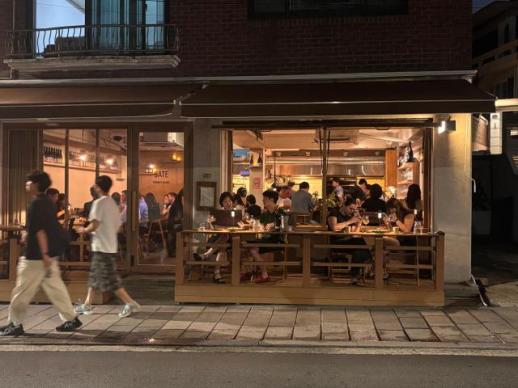 How Seoul's hillside neighborhood becomes hidden gem for foreigners SEOUL, August 21 (AJP) - On a steep hillside beneath Mt. Namsan, a neighborhood once known for cheap housing is giving foreigners a reason to look beyond Seoul's better-known hotspots. It is not as crowded as Seoul's hip Hongik University neighborhood, a popular nightlife district known for its youthful energy or as busy as nearby Itaewon, Seoul's best-known international and entertainment district. Yet Haebangchon has plenty of bars, restaurants and cafés within walking distance, food from around the world and quiet side streets that offer a break from the city's crowds. For Aurelia Rhinan, a 38-year-old visitor from France who was walking through Haebangchon with her nephew on Thursday, that mix felt just right. "It's the perfect in-between," she said. Rhinan, who had also traveled to Pohang in southeastern South Korea during her visit, described Haebangchon as a place with "everything you need" without the crowds and noise she associated with Hongdae and Itaewon. "It's peaceful, but not too quiet," she said. "If you want to go out, have a drink or something like that, you can." That "middle ground" came up repeatedly in conversations with foreigners AJP met in Haebangchon. Residents and visitors alike described a place that feels international and lively without being overwhelmed by its growing popularity. Rhinan said she would surely recommend the neighborhood to friends and could imagine making a home there herself. "If I can ever live here, why not?" she said. "This is just what I like personally." A neighborhood built by newcomers Haebangchon, a hillside neighborhood in central Seoul's Yongsan District, has long been home to newcomers. Its name translates literally as "Liberation Village," reflecting its origins after Korea's liberation from Japanese colonial rule in 1945, when Koreans returning from overseas and those who had come south from northern Korea began settling on the slopes below Mt. Namsan. More refugees arrived during and after the Korean War. Another wave followed from the 1960s, as people from across the country sought relatively cheap housing in Seoul. Many made a living in the neighborhood's growing knitwear industry, producing garments for Namdaemun Market, one of Seoul's largest wholesale markets and Myeong-dong, a major shopping district. The industry remained a major source of livelihood for residents through the 1980s. When that industry declined in the 1990s, the neighborhood entered another transition. Foreign residents increasingly moved in, drawn by its proximity to Itaewon and central Seoul and a rental market that was unusually accessible to people without the large deposits commonly required elsewhere in Seoul. Local landlords were also known for accepting shorter leases, an advantage for foreigners planning limited stays in the country. U.S. military personnel and other foreigners living around nearby Itaewon and Hannam-dong were among those who made their way into the area. In more recent years, artists, young entrepreneurs and residents from a broader range of countries have further reshaped the neighborhood. A foreign community inside Seoul Eventually, the community that had formed there became another reason to come. For Ella Ishimwe, a 28-year-old from Burundi, the draw is less about being trendy than about being able to build a life. Ishimwe came to South Korea to study and work, and has lived in Seoul for three years while working at a pizza restaurant. She plans to pursue a doctorate in global leadership. "Lots of foreigners," she said when asked what appealed to her most. "You can meet a lot of people while you're still in Seoul," she said with a smile, reflecting her affection for life in Korea. She described the Koreans she had met in the neighborhood as open-minded and kind, adding that many were naturally speaking English, which made daily life easier. The neighborhood is "peaceful" and "convenient," she said, but still fun. Safety matters, too. "It's safe to walk around even at 4 a.m.," Ishimwe said. In the three years she has been here, she has also seen the foreign community grow. "There are so many foreigners here than three years ago," she said. Official figures point in the same direction. In 2023, about 1,324 foreign residents lived in Haebangchon, accounting for roughly 10 percent of the neighborhood's population. By 2025, foreigners made up 16 percent of residents in Yongsan 2-ga-dong — about one in every six people — according to the local community service center. The center said the number of foreign residents had been increasing each year. The concentration is high enough that the office now provides foreign-language information on taxes, garbage disposal and parking, connects residents with legal and tax consultations. That concentration creates practical networks, too. "You can find a job easily as a foreigner," she said. In her experience, the neighborhood's international community made it easier for foreigners to find work in the area. Local enough to "gatekeep" Yet for some foreigners, what sets the area apart is how much of its older, local character remains alongside it. Luca Nowakowski, a 26-year-old Italian model, was sitting on the pavement with a friend he affectionately calls his "uncle," who lives in the neighborhood, when AJP met him. "I like this area because it's more local than Gangnam," he said. "If I would live somewhere, I would live in this area." For Nowakowski, much of the appeal lies farther up the hill, where the streets narrow, views of Seoul open up and small local businesses are tucked into side alleys. "If you go up a little bit more, you have a super nice view," he said. "You have a lot of side streets. You will find some more local spots." But he worries that the local character he values could fade as more people discover the area. "I just hope it doesn't become like Hongdae," he said. "I think it should stay a bit older and more local." He said he did not want the neighborhood overrun by tourists or transformed into another district dominated by younger crowds and commercial trends. Asked to name his favorite places, Nowakowski laughed and resisted. "I want to gatekeep," he said. "I don't want my favorite restaurants to have long queues of foreigners.” Beyond the newer cafés and shops, parts of the hillside still carry much older traces of the neighborhood's history. The 108 Stairs, a stone staircase built in 1943 during Japanese colonial rule, originally served as an approach to Gyeongseong Hoguk Shrine, a Shinto shrine built by imperial Japan to enshrine those who died in war. The shrine was dismantled after the liberation in 1945, but the stairs remained as a passageway for local residents. In 2018, an inclined elevator, which travels diagonally along the slope, was installed to make the climb easier for elderly residents. From fading market to destination Few places show the neighborhood's transformation as clearly as Shinheung Market. The market flourished in the 1970s and 1980s alongside the area's booming knitwear industry, serving as a hub where goods produced in small workshops and homes were gathered and distributed. When the industry declined in the 1990s, the market faded with it. By the 2010s, however, cafés and workshops had begun taking over vacant storefronts. Seoul designated the area as an urban-regeneration area in 2015 and made the revitalization of the Market one of its core projects. The plan sought to build on the businesses already emerging there while improving the market's aging infrastructure and strengthening the local community. By 2021, older shops were operating alongside cafés, workshops and other newer businesses. Television dramas, variety shows and social media later helped turn the market into a destination for a younger crowd. The transformation was easy to see on Thursday. Visitors stopped beneath the market's red "1953 Shinheung Market" sign to take photos before heading into narrow lanes lined with restaurants and cafes. A taste of home Not everyone comes to Haebangchon to live. At a Mexican restaurant, four Mexican visitors in their 20s, who declined to give their names, had crossed the area for something more familiar. "We came here to eat our home food," one said, laughing. The irony of traveling to South Korea and then seeking out Mexican food wasn't lost on them. One compared it to Koreans going overseas and eventually finding their way to a Koreatown. Another said the food alone was worth the trip, adding, "There are so many different nationalities here. It has a vibe that's pretty distinct from the rest of Seoul." Haebangchon and nearby Itaewon have long drawn Koreans looking for authentic international food. Now, social media is also bringing foreigners to the area in search of a taste of home. More broadly, Seoul is drawing record numbers of overseas visitors, with tourists increasingly venturing beyond the city's traditional attractions. A record 8.23 million foreign tourists visited the capital in the first half of 2026, up 21.3 percent from a year earlier, according to the Seoul Metropolitan Government on July 29. From behind the counter For longtime Korean shopkeepers, the change is visible not in statistics or social-media posts, but in who walks through the door. At an old supermarket in Haebangchon, a Korean owner in her 70s said she had watched the number of foreign customers rise over the years. "Half of my customers are foreigners," she added, saying Filipinos and Nigerians are among her regular shoppers. Her store offers a glimpse of how ordinary that international presence has become. Just down the street, a pet-grooming shop displayed its name prominently in English, another small sign that businesses here increasingly cater to people from different backgrounds. Foreigners are not simply visitors stopping at trendy bars or restaurants they found on Instagram. They buy groceries, work at local businesses and increasingly call the neighborhood home. In that sense, today's Haebangchon continues a long pattern. The people arriving have changed over time, but the neighborhood has repeatedly become a home for newcomers — from Koreans returning after liberation and families coming south from the North, to workers during industrialization and, later, residents from abroad. What has changed is what draws the next wave. Cheap housing once helped foreigners establish a foothold. Over time, that community created its own restaurants, businesses and social networks, turning the neighborhood itself into part of the attraction. Today, Haebangchon sits somewhere between an old residential neighborhood and an international destination. Its appeal lies in holding on to both — local streets and global influences, places to go out and places to slow down. Rhinan would recommend it to her friends. Nowakowski would happily live there. Both are drawn to the same place for much the same reason — the energy of central Seoul without quite surrendering to it. Not too crowded. Not too quiet. "The perfect in-between." 2026-08-21 16:52:48
 -
Bang Jun-hyuk Acquires Additional 13.4% Stake in Netmarble for $3.74 Billion Bang Jun-hyuk, chairman of Netmarble and Cowie, is set to acquire an additional 13.4% stake in Netmarble. This purchase will increase his ownership stake to 38.34% as he directly acquires part of the shares held by a Tencent subsidiary.On August 21, Netmarble announced that Bang Jun-hyuk will buy 13.4% of the 18.1% stake owned by Tencent's Han River Investment for 374 billion won.This transaction comes as Tencent is divesting part of its holdings.Once the acquisition is complete, Bang's stake in Netmarble will rise from the current 24.93% to 38.34%, enhancing his role as the founder and largest shareholder.Despite the changes in shareholding, the business collaboration between Netmarble and Tencent will continue. The two companies plan to maintain their partnership across various sectors, including the global gaming industry.A Netmarble representative stated, “This acquisition signifies Bang Jun-hyuk's commitment to responsible management as the founder and largest shareholder, while also proactively alleviating market uncertainties stemming from significant share changes.”* This article has been translated by AI. 2026-08-21 16:52:10
-
Samsung DX Union Protests After Wage Negotiations End, Blocking Traffic in Gangnam The Donghaeng Union, representing Samsung Electronics' Device Experience (DX) division, took to the streets again after concluding this year's wage negotiations. Following the agreement, the union demanded additional compensation and staged a march through the heart of Gangnam during Friday's rush hour.The protest occurred on August 21 in front of Samsung's Seocho office in Seoul, starting at 4 p.m. The march from Gangnam Station to the Seocho office coincided with a peak time for both vehicle and pedestrian traffic. Some lanes were blocked during the march, affecting traffic flow in the area.The union's demands include an additional compensation of 1,000 shares of company stock per DX employee and a complete re-evaluation of the 2026 wage negotiations. They argue that the DX division has not received compensation commensurate with its performance compared to the semiconductor-focused Device Solutions (DS) division.However, the timing of the protest raises questions. Samsung Electronics and the labor union had already reached an agreement on the 2026 wage negotiations in May. The union's call for a re-opening of these negotiations months later has drawn criticism, being labeled a 'backward protest' for revisiting an already settled issue.The method of the protest is also controversial. The Donghaeng Union participated in the demonstration using the company's 'D-day' leave system and annual leave, claiming that participation was voluntary and not a strike. However, the overlap with regular working hours and the urban march raises concerns about the appropriateness of their tactics in labor relations.Choosing to march in Gangnam during the busy Friday evening commute has drawn criticism for inconveniencing citizens who are not directly involved in the union's demands. The protest, intended to raise awareness about compensation issues, risks generating negative perceptions of the union as it disrupts the daily commute of the public.The demand for 1,000 shares represents a significant additional compensation based on Samsung's stock price. To successfully advocate for this request after the wage negotiations have concluded, the union must clarify the actual compensation gap between the DX and DS divisions and justify why the previous agreement should be revisited. Simply increasing the size of the protest and taking to the streets may not be sufficient to persuade the company, employees, and the public.As Samsung focuses on regaining competitiveness in key sectors like artificial intelligence and semiconductors, the union's assertive actions could introduce new tensions in labor relations. If protests that inconvenience the public continue, the union risks being perceived more as 'the union that blocked the commute' rather than effectively addressing compensation issues.* This article has been translated by AI. 2026-08-21 16:52:10
-
Hanwha Life Launches Recruitment Drive for New Employees Focused on Investment, Marketing, and New Business Hanwha Life is seeking to attract new talent.The company announced on August 21 that it will accept applications for new employees through the Hanwha Group recruitment site, Hanwha In, until 3 p.m. on September 18.Graduates who completed their studies by January 2027 or those expected to graduate in February 2028 can apply, regardless of age or major. The positions available include roles in investment, marketing, and new business.The recruitment process will consist of application registration, completion of a detailed questionnaire, practical interviews, and executive interviews. Successful candidates will be offered a training program designed to develop financial expertise, foundational skills, and capabilities in artificial intelligence (AI). The program aims to support their growth into financial professionals through exposure to various businesses and global environments.This recruitment drive introduces a new format for the detailed questionnaire, consisting of over 60 concise questions, replacing the traditional personal statement. This change aims to reduce the burden of writing a personal statement while allowing the company to assess candidates' growth potential and organizational fit based on their actual experiences and unique stories.During the practical interviews, candidates will be evaluated comprehensively on their thinking and execution skills through various projects and collaborative tasks.Yoon Ho-jae, head of the People & Culture team at Hanwha Life, stated, "We will systematically support applicants to grow into professionals with their own expertise by experiencing various areas of finance after joining the company."* This article has been translated by AI. 2026-08-21 16:52:00
-
Government Focuses on AI Infrastructure for Drug Development, Highlighting Biotech Firms The South Korean government is ramping up efforts to build infrastructure that integrates artificial intelligence (AI) technology to accelerate drug development, drawing attention to biotech firms with proprietary AI drug development platforms.According to industry sources, the government recently announced its 'Advanced Bio Promotion Strategy,' which aims to establish an AI model specialized in cancer, autonomous laboratories, and biofoundries by 2030. The initiative seeks to significantly reduce the time and costs associated with research and development for new drugs.To support this effort, the government plans to substantially increase its investment in bio and medical research and development (R&D). The budget for related projects has expanded by 23% this year, rising from 648.7 billion won last year to 802.3 billion won. Of this, 199 billion won will be allocated to the AI bio sector, with plans to pilot six autonomous laboratories to expedite infrastructure development.The industry anticipates that the AI-based drug development market will continue to grow. According to the Korea Bio Association, the global healthcare AI market, valued at $39.34 billion last year, is projected to grow at an average annual rate of 44%, reaching $1.3327 trillion by 2034.The Bio Association stated, "The establishment of the 'cancer-specialized AI model,' 'autonomous laboratories,' and 'biofoundries' included in the Advanced Bio Promotion Strategy will positively impact companies that urgently need to shorten development times and reduce costs."Companies that have already integrated AI technology into drug development are expected to benefit from government policies. In particular, firms with self-developed AI platforms that do not rely on external technologies are attracting market interest.Pharos AI Bio has developed a platform called 'Chemiverse,' which combines the latest AI algorithms, including AlphaFold and transformer-based generative models, with a database of approximately 6.2 billion protein 3D structures and compounds. This platform integrates AI throughout the entire drug development cycle, from new compound screening and lead candidate identification to drug modeling and target genome analysis for discovering new indications.Inno Therapeutics is utilizing its proprietary AI drug development platform, 'DeepZema,' to identify candidate substances based on drug repurposing. DeepZema combines existing computational drug development technologies with AI to select effective candidates based on the designs and judgments of medicinal chemistry researchers. Its main functions include target discovery, ADME and toxicity prediction, new derivative design, docking, and binding pose evaluation.Synteka Bio is operating multiple research projects on a high-efficiency AI platform based on a specialized model for new drug development, rapidly discovering candidate substances. It has established three core pipelines based on its proprietary DSM technology: discovery of new small molecules (synthetic drugs), design of improved small molecules, and development of antibody biobetters. In the small molecule sector, it is achieving concrete results by simultaneously pursuing new compound discovery and improved drug design based on its main AI platform, 'DeepMatcher.'* This article has been translated by AI. 2026-08-21 16:52:00
-
Ruling Party Considers Enhancements to Government's Real Estate Tax Reform Plan The Democratic Party of Korea is deliberating enhancements to the government's real estate tax reform plan while also aiming to expedite supply measures.Kim Young-bae, head of the party's Seoul chapter, spoke to reporters on the 21st after a meeting of the Housing Market Stabilization Task Force, stating, "Today, we gathered each other's opinions." This move is seen as an effort to bridge differences that arose within the party following the government's announcement of the tax reform plan. The Democratic Party has indicated that since the tax reform plan will be sent to the National Assembly for amendments, discussions will continue to formulate supplementary measures.Additionally, the party is working on swift supply measures. With the government advocating for a 'supply now' approach, they are seeking reasonable solutions.Particularly, the party is grappling with supply issues in the Seoul area. The government announced on the 13th that it would supply over 230,000 housing units in the metropolitan area, but only 1,000 units are planned for the Yeomchang Park area in Gangseo District, Seoul. The main opposition party, People Power Party, has criticized this as a mere illusion.Some experts have analyzed that this indicates a lack of available land in Seoul. Consequently, the Democratic Party has proposed utilizing the Yongsan Park site through amendments to the Yongsan Park Creation Special Law to supply housing.The Yongsan Park Creation Special Law was enacted during the Roh Moo-hyun administration in 2007, which stipulates that the land cannot be used for purposes other than park development.However, the Democratic Party argues that nearly 20 years have passed since the law was enacted, and with the increase in one- and two-person households, it should be revised to reflect current trends. They plan to utilize areas that have lost their green space function rather than the entire site.In contrast, the People Power Party opposes the amendment. In response, Kim plans to meet with Seoul Mayor Oh Se-hoon, a member of the People Power Party, on the 22nd to discuss the matter.On the 20th, both parties postponed the processing of the Yongsan Park Creation Special Law and other real estate supply bills. It is reported that they will decide on the processing after observing the meeting between Mayor Oh and Minister of Land, Infrastructure and Transport Kim Yoon-deok, as well as Kim's meeting with other party members. If discussions gain momentum, the bills could be processed as early as the 26th in a plenary session.Additionally, Democratic Party lawmakers from the Seoul chapter held a meeting the previous day to discuss measures for youth housing issues, expressing their intention to use additional tax revenue generated from the semiconductor boom for youth housing supply. They believe that the additional revenue is expected to continue for several years, making it feasible.* This article has been translated by AI. 2026-08-21 16:40:00
-
 Senior bureaucrat named new trade minister SEOUL, August 21 (AJP) - Senior trade official Park Jung-sung was appointed South Korea's new trade minister, Cheong Wa Dae said on Friday. In a press briefing, presidential spokesperson Kang Yu-jung said Park is "the right person to maximize the national interest while maintaining continuity in negotiations amid urgent trade issues with the U.S." Park's appointment comes about a week after his predecessor was sacked for unknown reasons, as Seoul faces mounting pressure from Washington to accelerate its US$350 billion investment commitment in the U.S., the threat of additional U.S. tariffs and a growing dispute over the treatment of U.S.-listed e-commerce giant Coupang. Park, who had been serving as deputy minister for trade at the Ministry of Trade, Industry and Resources, replaces Yeo Han-koo, who was abruptly dismissed last Saturday. Park is a longtime bureaucrat who most recently handled trade policy, supply chains and economic security as deputy minister for trade. He previously headed the ministry's trade and investment office and has been directly involved in recent negotiations with major trading partners, including the U.S. and the European Union. One of Park's most immediate tasks will be negotiations over Seoul's investment commitments under last year's broader trade deal with Washington. South Korea pledged to invest $350 billion in the U.S. as part of an agreement that lowered U.S. tariffs on South Korean goods to 15 percent, but the two sides have yet to settle the details of the first projects under a $200 billion strategic investment program. U.S. officials have pressed Seoul to move more quickly. Park will also have to navigate growing friction over Coupang. U.S. investors have filed a petition with the Office of the U.S. Trade Representative seeking action under Section 301 of the Trade Act, alleging that South Korean authorities have discriminated against the U.S.-listed company. The issue has increasingly become a key bilateral trade concern, alongside U.S. investigations into alleged overcapacity in South Korean manufacturing. Meanwhile, the reason for the dismissal of Yeo, Park's predecessor, who had overseen key negotiations with the U.S. including the tariff agreement and follow-up talks, still remains unknown, but officials have said it was unrelated to the Korea-U.S. tariff negotiations but rather personal matters. 2026-08-21 16:36:36