-
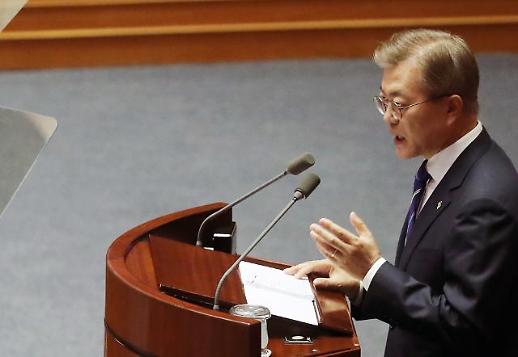
President Moon proposes international embargo on oil supplies to N. Korea
In an apparent message to China, seen as North Korea's economic lifeline, South Korean President Moon Jae-in floated the idea of imposing an oil embargo as the international community discussed tougher sanctions in response to a fresh nuclear test by the isolated regime. At a telephone conversation, Moon suggested that the United Nations Security Council should hold serious discussions about cutting off oil supplies to North Korea, according to a statement published by th
September 5, 2017
-
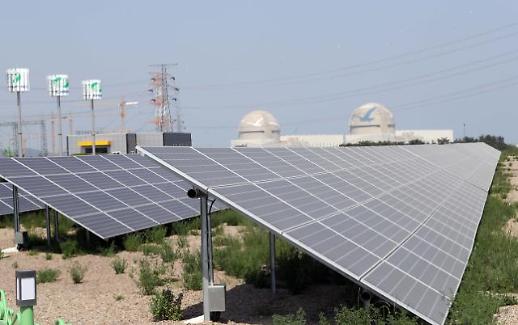
President Moon defends 'nuclear-exit' policy as less radical than Europe's
South Korean President Moon Jae-in vowed to push ahead with his campaign to reduce the use of fossil energy, describing his "nuclear-exit" policy as less radical than those adopted by some European countries. In a bid to allay growing concerns and controversy about a potential power shortage, Moon said his policy would not cause a steep rise in electricity rates because nuclear reactors would be shut down one by one over a long period of time in consideration of thei
August 17, 2017
-
![[COLUMN] Nuclear-exit must be reconsidered for successful Moonlight Policy](https://image.ajunews.com/content/image/2017/07/25/20170725101932346780_518_323.jpg)
[COLUMN] Nuclear-exit must be reconsidered for successful 'Moonlight Policy'
(This article was contributed by Lee Jae-ho, a professor at Dongshin University.) It is regrettable that discussion on phasing out nuclear power plants is proceeding only in terms of the environment, safety, and cost. I wonder if we should look at least once into the big framework of inter-Korean relations. North Korea is suffering from a serious power shortage. There is a famous anecdote that our delegation to the North had to hold talks with a candle lit up because of a bla
July 25, 2017
-
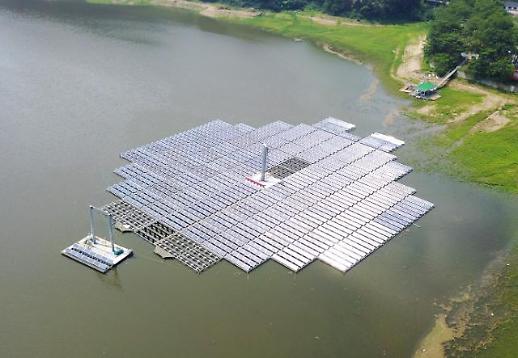
Presidential advisory group proposes tough anti-nuclear policy
A presidential advisory panel put the proportion of clean and renewable energy in generating South Korea's total electricity at 28 percent by 2030 to support President Moon Jae-in's campaign aimed at reducing the use of fossil and nuclear energy. By 2023, power utility firms are required to generate 10 percent of their electricity with solar and other renewable energy, the State Affairs Planning Advisory Committee said in policy recommendations which set the cour
July 19, 2017
-
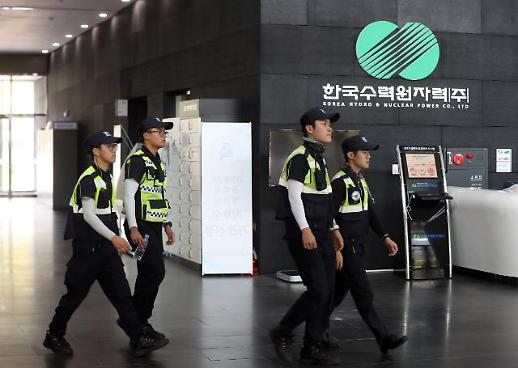
Board members hold secret meeting to endorse suspended reactor construction
Police are on patrol in the headquarters of South Korea's nuclear power operator in the southeastern city of Gyeongju. At an undisrupted meeting in a hotel room, the 13-member board of South Korea's power plant operator endorsed a government decision to suspend the construction of two nuclear reactors under President Moon Jae-in's "nuclear exit" policy. The meeting came a day after hundreds of workers blocked board members from entering a building u
July 14, 2017
-
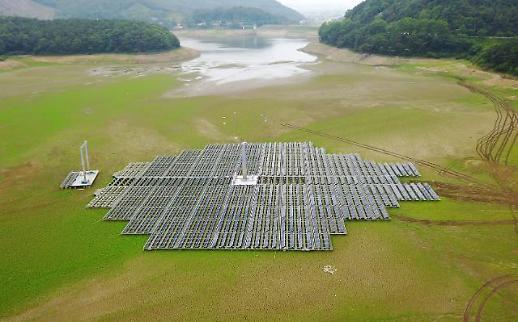
S. Korea builds world's largest floating and rotating solar power plant
Floating solar power plant is sitting on the dried-out lakebed in South Korea. Buoyed by the fine operation of the world's first floating solar power plant that tracks sunlight, Solkiss launches a new project this week to build more plants using solar energy on the surface of two reservoirs in South Korea's remote rural areas. The solar energy firm gained fame in 2014 for opening a floating and rotating solar power plant capable of producing 465 kilowatts per hour in A
June 28, 2017
-
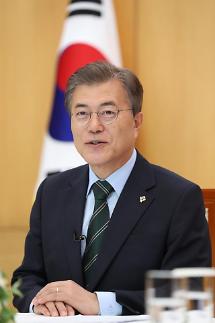
Cabinet approves temporary shutdown of two reactors under construction
In his first cabinet meeting, South Korean President Moon Jae-in approved the temporary shutdown of two nuclear reactors under construction pending public hearings and debate for three months. The decision, announced by Hong Nam-ki, who heads the Office for Government Policy Coordination, takes effect on Tuesday, and construction of the two reactors, slated for completion in 2022, in South Korea's largest Gori nuclear complex near the southeastern port city of Busan came t
June 27, 2017
-
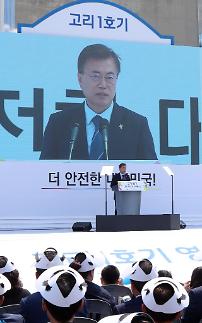
President Moon pushes for fast closure of nuclear power plants
President Moon Jae-in speaks in a ceremony to close the Gori-1 nuclear reactor near the southern city of Busan. Undeterred by strong opposition from industrial and academic communities, President Moon Jae-in vowed to close a second reactor at an early date and help South Korea become a global technology leader in the safe dismantlement of nuclear power plants. The pledge came in a ceremony Monday to mark the permanent shutdown of South Korea's oldest 580-megawatt reac
June 19, 2017
-
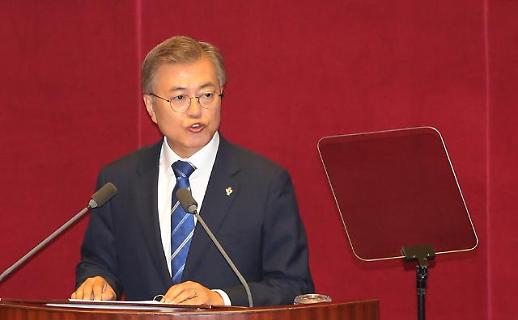
Renewable energy to account for 20 percent of total power supply by 2030: Moon
President Moon Jae-in presented a new timetable to reduce South Korea's heavy dependence on nuclear energy and increase the proportion of clean and renewable energy sources to 20 percent of total power supplies by 2030. The plan was contained in Moon's opening speech Friday at the second annual meeting of the China-led Asian Infrastructure Investment Bank (AIIB) on South Korea's southern resort island of Jeju. Moon suggested the increased use of clean and renewable
June 16, 2017
-
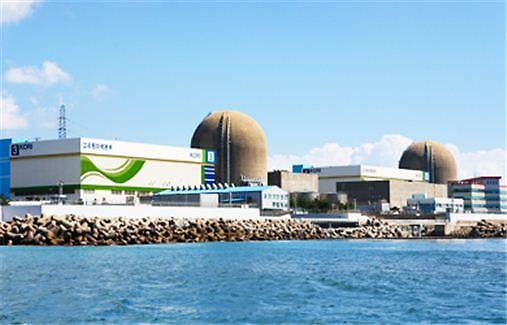
S. Korea's oldest nuclear reactor faces permanent shutdown this month
South Korea's oldest 580-megawatt nuclear reactor will be shut down permanently this month, ending its extended 40-year operation that has been the target of frequent protests by Greenpeace activists at home and abroad. The reactor in the country's largest Gori nuclear power complex near the southeastern port city of Busan started commercial production on April 29, 1978. Its initial life cycle ended in 2007 but it was granted a new lease of life for 10 yea
June 9, 2017
