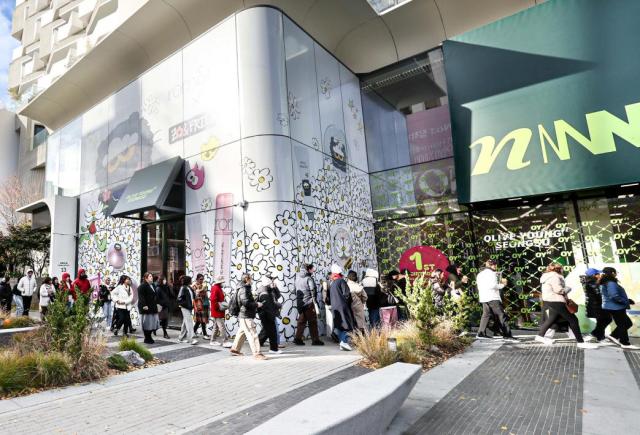
SEOUL, December 03 (AJP) - A quarter of revenue at CJ Olive Young stores across South Korea now comes from foreign customers, whose purchases surpassed the 1 trillion won ($770 million) mark this year in a sharp illustration of K-beauty’s global pull, the beauty franchise said Wednesday.
From January through November, spending by foreign nationals at Olive Young’s offline stores nationwide reached the milestone, marking a 26-fold increase from 2022, when Korea’s tourism industry was still emerging from the pandemic. Foreign shoppers accounted for more than 25 percent of offline sales this year, compared with about 2 percent in 2022 and just over 10 percent in 2023, as the retailer’s outlets solidified their status as a “must-visit” stop for visitors seeking Korean beauty trends.
Nearly nine out of ten foreign cosmetics purchases in South Korea were made at Olive Young, according to Global Tax Free, which tracks tax-refund transactions. Shoppers from 190 countries used tax-refund services at the retailer, effectively giving it a United Nations-wide footprint and turning its nationwide network into an inbound export platform generating significant foreign-currency inflows.
Shopping patterns among overseas visitors are evolving as well. According to Olive Young’s internally published report, foreign customers are buying more items, traveling farther between stores and exploring a wider range of brands. About 40 percent of foreign shoppers visited two or more Olive Young locations during their trips, moving between flagship town stores and neighborhood outlets with differing layouts and product curation. Spending outside the Seoul metropolitan area rose sharply, with purchasing in non-capital regions increasing 86.8-fold from 2022, led by Jeju, Busan and Gangwon.
An Olive Young official said the chain’s blend of curated flagship stores and region-specific outlets helped attract foreign shoppers seeking both novelty and breadth. Unlike monobrand boutiques, the multi-brand format allows customers to compare and explore a broad range of Korean beauty products in a single location, the official told AJP, adding that the most visited store among foreigners is the Myeongdong Town branch. The official said frequent monthly promotions tailored to seasonal changes have also kept foreign tourists highly engaged, reinforcing Olive Young’s reputation as fast-moving and trend-driven.
Accessibility has emerged as another competitive advantage as Korea’s tourist footprint widens. Tourists increasingly travel beyond Seoul, the official noted, and while duty-free shops are concentrated in limited districts, Olive Young branches are ubiquitous nationwide, from Jeju to Busan, making them an easy and familiar stop for overseas visitors.
As foreign demand broadens, customers are also purchasing a wider array of brands and product categories. More than half of foreign shoppers bought items from six or more brands, while one-third purchased products from ten or more. Interest is expanding beyond beauty into wellness as sales of health and lifestyle products grow alongside skincare and makeup, reflecting the global uptake of Korean self-care routines.
Olive Young said it plans to continue expanding its “global tourist commercial district” strategy, enhancing in-store services and linking offline experiences with its cross-border e-commerce platform to sustain demand after tourists return home. “Reaching 1 trillion won in foreign customer purchases is meaningful because it was achieved together with small and indie brands that met global consumers through Olive Young,” the official said. “We will continue working to ensure K-beauty becomes not only a trend, but a reason for people to revisit Korea.”

Copyright ⓒ Aju Press All rights reserved.