SEOUL, December 08 (AJP) - South Korea and Türkiye will convene a high-level strategic forum in Seoul on Dec. 15 to reflect on their historical ties and chart a roadmap for future comprehensive cooperation across next-generation industries and agenda on the momentum of the 75th year of the outbreak of the Korean War, where Turkey had been second only to Americans in arriving in the country to defend South Korea.
Hosted jointly by the Embassy of Türkiye in the Republic of Korea and the Korea University Graduate School of International Studies (GSIS) International Policy Forum, the event — titled "Türkiye Meetings" — will take place from 3:30 p.m. to 6:00 p.m. at Korea University's International Studies Hall, compromised of panel and separate high-level discussions among senior government officials, policy specialists, think tank scholars, and innovation leaders of the two countries.
Marking what officials describe as a relationship rooted in "friendship, fraternity and brotherhood," the program opens with a photo exhibition tracing the evolution of Türkiye–Korea ties — from Türkiye's participation in the Korean War and Cold War-era solidarity to the launch of the strategic partnership in 2012 and the countries' present-day geopolitical alignment.
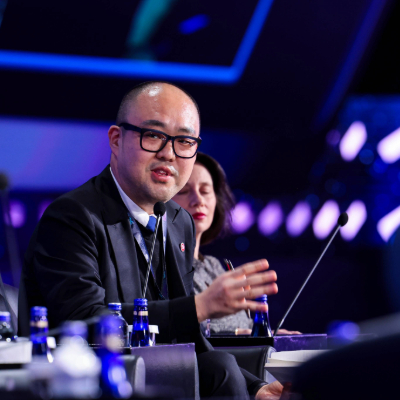
The main forum features a panel discussion and seminar joined by leading figures from both countries' diplomatic and academic communities, including Prof. Ferhat Pirinççi, Deputy Director of Communications, Presidential Communications Directorate of Türkiye, Prof. Kim Byungki, Board Chair, Korea University GSIS International Policy Forum, Dr. Hong Hyun-ik, former Chancellor, Korea Diplomatic Academy, Prof. Nam Sung-wook, former Director, Institute for National Security Strategy, Prof. Kılıç Buğra Kanat, Executive Advisor and Professor, SETA Foundation, Prof. Murat Yeşiltaş, Professor of Geopolitics, Ankara Social Sciences University and SETA Director of Foreign Policy Studies, and Prof. Kadir Üstün, SETA Washington DC Chair
The lineup reflects a shared intention to situate bilateral relations within a broader strategic context shaped by regional security demands, shifting global alliances, and accelerating technological change.
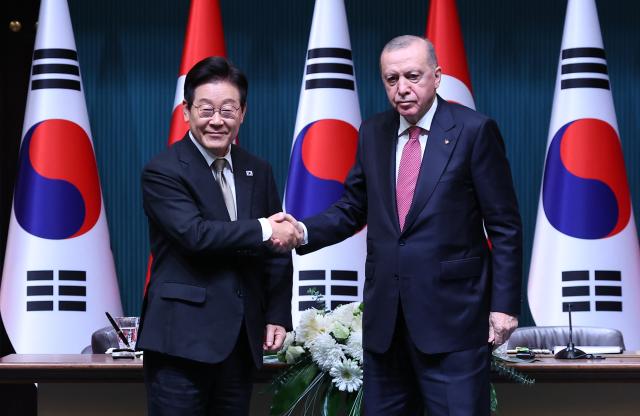
President Lee Jae Myung visited Ankara on Nov. 24 for summit talks with Turkish President Recep Tayyip Erdogan, addressing the country as "brotherly nation" for sending more than 20,000 soldiers soon after the North Korean invasion in 1950, even as the two countries lacked diplomatic relations at the time.
The two summits signed memorandums of understandings on cooperation in nuclear energy, road infrastructure, defense capabilities, biotechnology cooperation, and AI and digital infrastructure.
Erdoğan invited "vast and untapped potential" for cooperation across advanced industries" while Lee highlighted Türkiye’s role in mediating Middle East tensions and its relevance to stability on the Korean Peninsula.
The event is additionally linked to commemorations organized through the Turkish Cultural Center of Ankara to mark Turkish Language Diaspora Day on December 15, reinforcing the cultural dimension of Türkiye's engagement with Korea.
A special gala exhibition and seminar component is being prepared by the Embassy in Seoul, the Presidential Directorate of Strategic Communications, and the SETA Foundation to honor both President Erdoğan and President Lee's state-level exchanges.
Founded in 2005, SETA (Foundation for Political, Economic and Social Research) is Türkiye's leading non-profit think tank, conducting research across domestic and foreign policy, security, economy, law, society, media, energy, and technology. It is also involved in cultivating future policy researchers through training programs and seminars.
Copyright ⓒ Aju Press All rights reserved.