SEOUL, January 02 (AJP) - With lunch inflation continuing to climb, the typical midday meal for South Korea’s salaried workers is quietly changing.
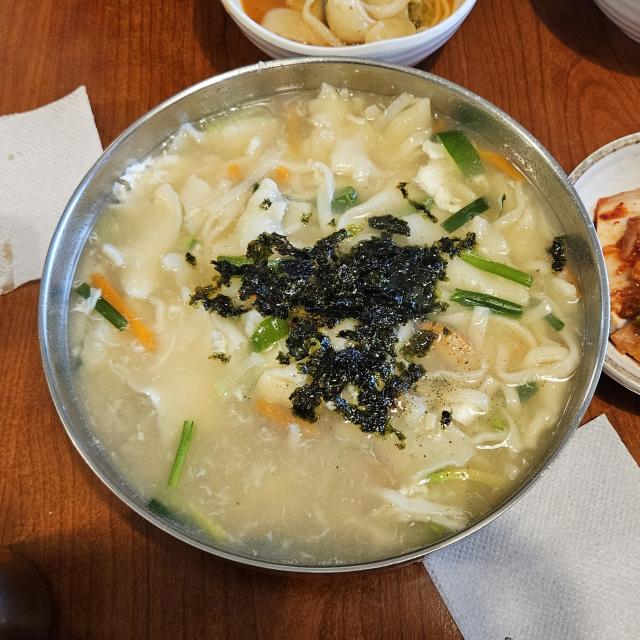
Once a go-to comfort food, hot or cold noodle dishes are becoming noticeably more expensive, driven largely by rising import costs. Kalguksu — the traditional knife-cut noodle soup — has reached a fresh record high, reflecting the prolonged impact of a weak won and higher input prices.
According to data from the Korea Consumer Agency, the average price of a bowl of kalguksu in Seoul stood at 9,846 won ($6.82) as of November 2025, up 4.91 percent from a year earlier and edging closer to the psychologically important 10,000-won mark. Among major dining-out items tracked by the agency, kalguksu posted the second-largest annual price increase, trailing only gimbap. Other popular meals such as naengmyeon (cold noodles) and bibimbap also recorded notable price hikes.
Overall, noodle prices have been rising by an average of about 5 percent annually since 2023, reflecting sustained cost pressure in the food sector.

Analysts point to currency weakness as the main driver. Between November 2024 and November 2025, the average won-dollar exchange rate climbed 4.3 percent, from 1,395 won to 1,455 won per dollar. Over the same period, international wheat prices on the Chicago Board of Trade remained relatively stable, suggesting that exchange-rate effects — rather than global commodity spikes — are pushing up costs.
South Korea depends on imports for nearly 98 percent of its wheat consumption, with domestic self-sufficiency hovering around just 2 percent. As a result, fluctuations in the currency are quickly passed on to food prices, especially for flour-based dishes.
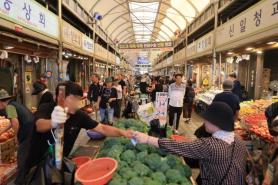
A walk through Seoul’s Jongno district on Friday showed that many restaurants now charge 10,000 won or more for a bowl of kalguksu, while eateries offering the dish for under 9,000 won have become increasingly hard to find.
As traditional meals grow pricier, fast-food chains are moving quickly to position themselves as cheaper lunch alternatives.
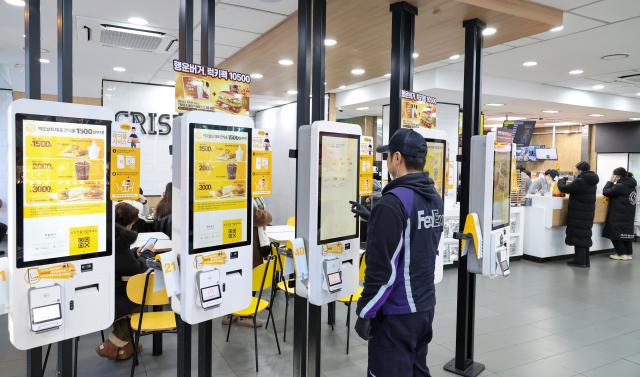
Major franchises now offer set menus priced between 6,000 won and 7,000 won — up to 40 percent cheaper than a typical bowl of kalguksu. Burger King, for example, has rolled out “two for 6,000 won” deals on Whopper Jr. sets. McDonald’s and Mom’s Touch, a domestic chicken-burger chain, also maintain lunch menus priced at around 6,300 won and 7,000 won, respectively.
The shift toward burgers and fast food is also reflected in corporate earnings. Amid persistent meal-price inflation since 2024, McDonald’s Korea posted record annual revenue of 1.29 trillion won and returned to operating profit for the first time in eight years. Mom’s Touch likewise reported record results, with consolidated revenue of 417.9 billion won and operating profit of 73.4 billion won.
Burger King Korea also delivered strong performance, logging 792.7 billion won in revenue and 38.4 billion won in operating profit, underscoring how value-oriented menus are reshaping lunchtime consumption patterns.
As everyday meals grow more expensive, the humble lunch — once a small pleasure in the middle of the workday — is becoming another pressure point for Korea’s salaried workers, highlighting how currency weakness and food inflation are quietly reshaping daily life.

Copyright ⓒ Aju Press All rights reserved.