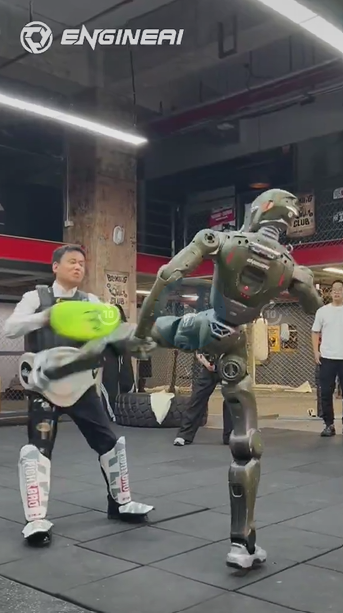
Behind the curtain, those same robots swung wildly into empty air — punches landing nowhere, movements jittery, as if they'd had one cocktail too many before the bout. A human operator stood nearby, joystick hidden behind his back, fingers doing the real work.
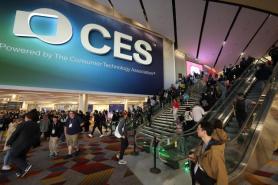
Welcome to CES 2026, where physical AI was meant to unveil the next technological revolution — and instead delivered a high-budget remake of Rock 'Em Sock 'Em Robots.
The Consumer Electronics Show has long outgrown its “consumer electronics” label. This year's theme, Innovators Show Up, put physical AI — the fusion of artificial intelligence and robotics — center stage. Nvidia's Jensen Huang, fresh off receiving the IEEE Medal of Honor, loomed over the event, his chips beating inside nearly every robot on display.
And there were robots everywhere: humanoids boxing in rings, quadrupeds weaving through crowds with pamphlets strapped to their backs like mechanical huskies, machines serving drinks, greeting visitors, folding clothes. The Las Vegas Convention Center had become a metallic zoo.
Strip away the spectacle, and the illusion thinned fast.
Strings attached
At AgiBot, confidence came first. “All in-house,” a representative said. Then the pause. “Well… Nvidia runs the main operations.” The same answer echoed at Unix AI, Galaxea Dynamics and Galbot. Chinese bodies, Western brains.
That dependency, however, is only half the problem. The bigger gap is autonomy.
Shenzhen-based Engine AI was refreshingly blunt. It came to CES looking for partners to supply the brains. The bodies, it said, were ready — capable of boxing, lifting, sorting. Someone just still had to pull the strings.
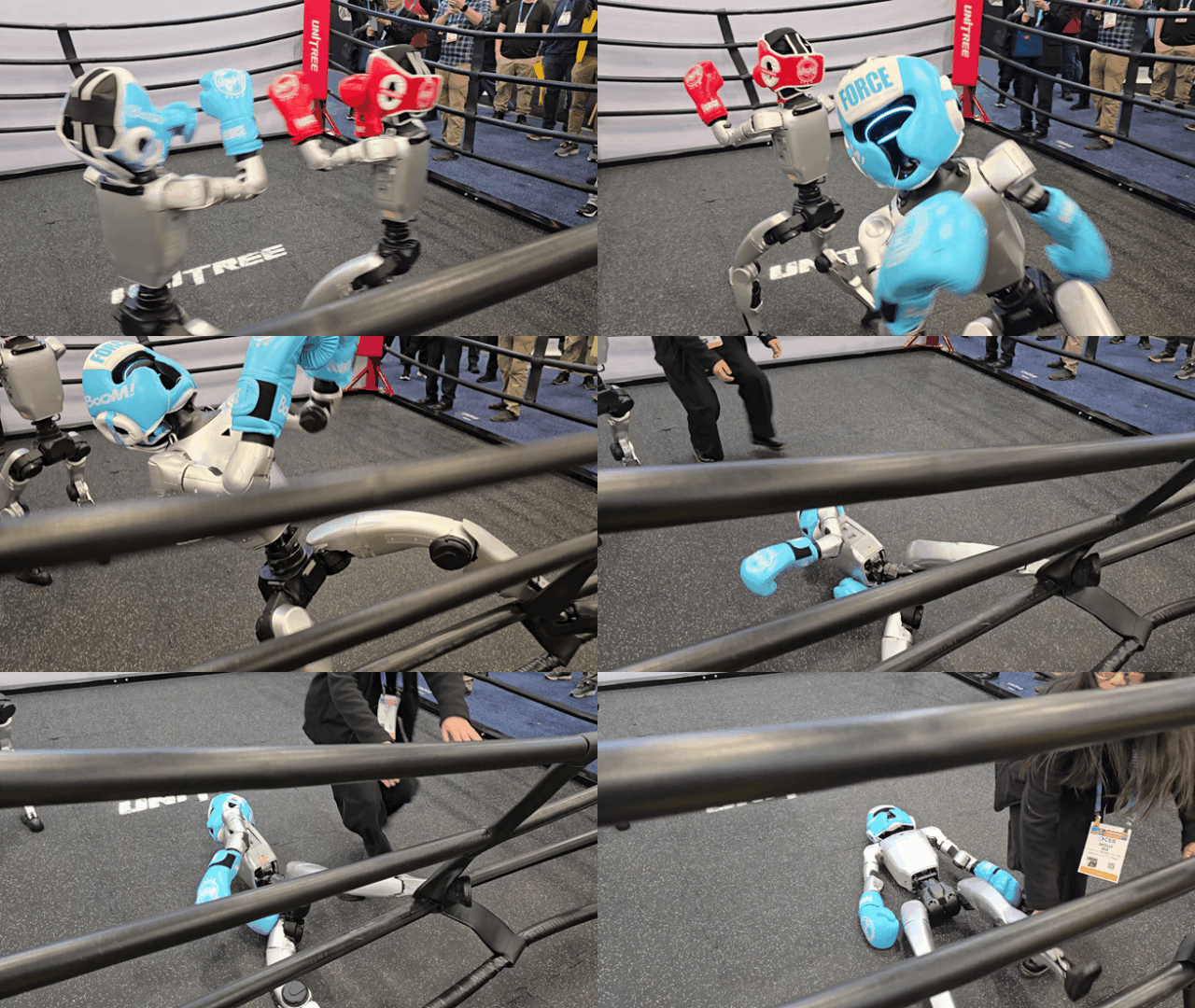
Those Unitree robots throwing punches in the ring? Each was piloted in real time by a human. The Pinocchios of CES 2026 have yet to cut their strings.
Grace of a granny, nerves of an alcoholic
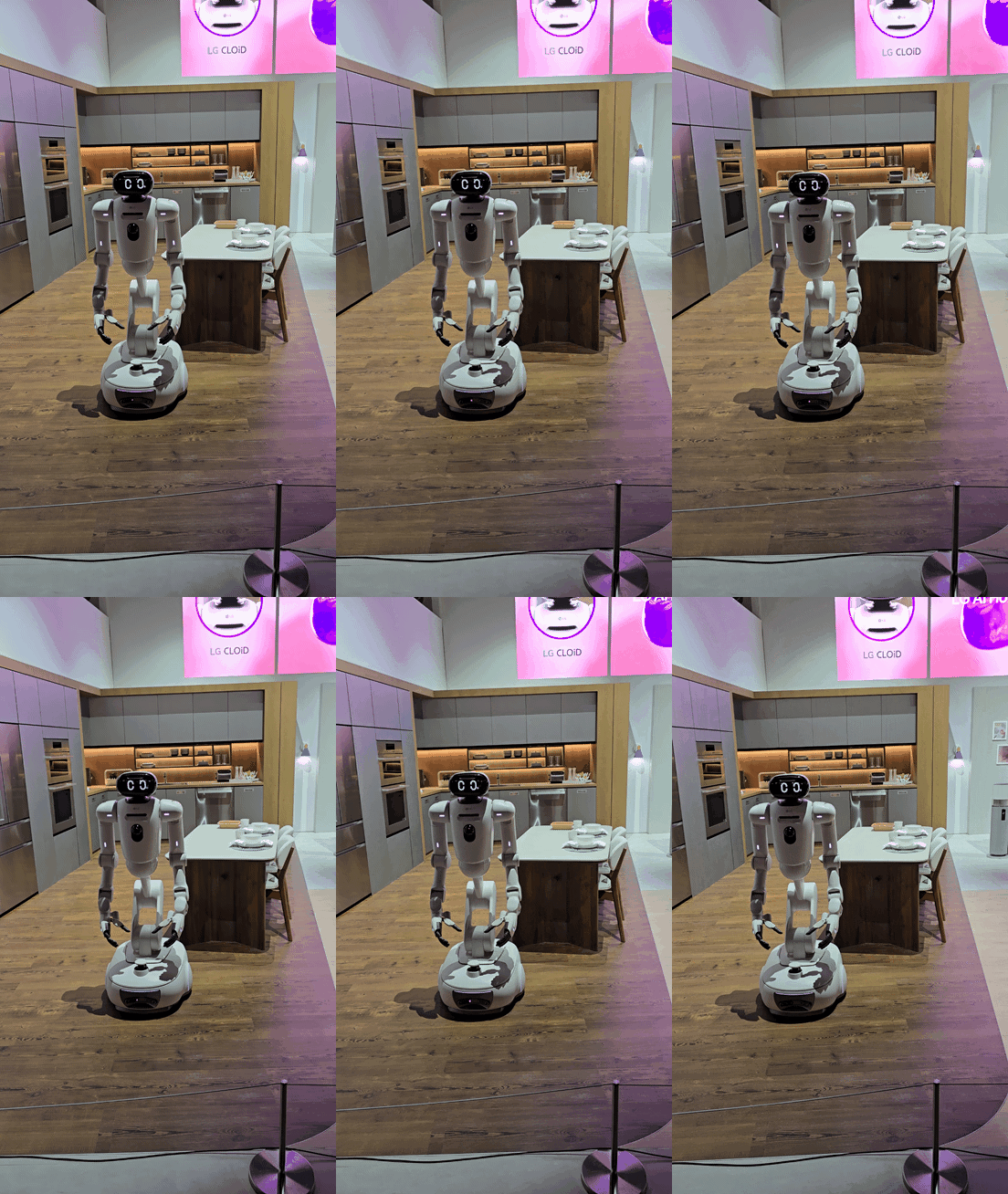
LG Electronics' CLOiD, sleek and futuristic in videos, shuffled across the floor like a grandmother approaching her walker, hands trembling, frame shuddering. The company described it as “robotic breathing.” In the low light of Central Hall, it felt more like an uncanny-valley horror prop.
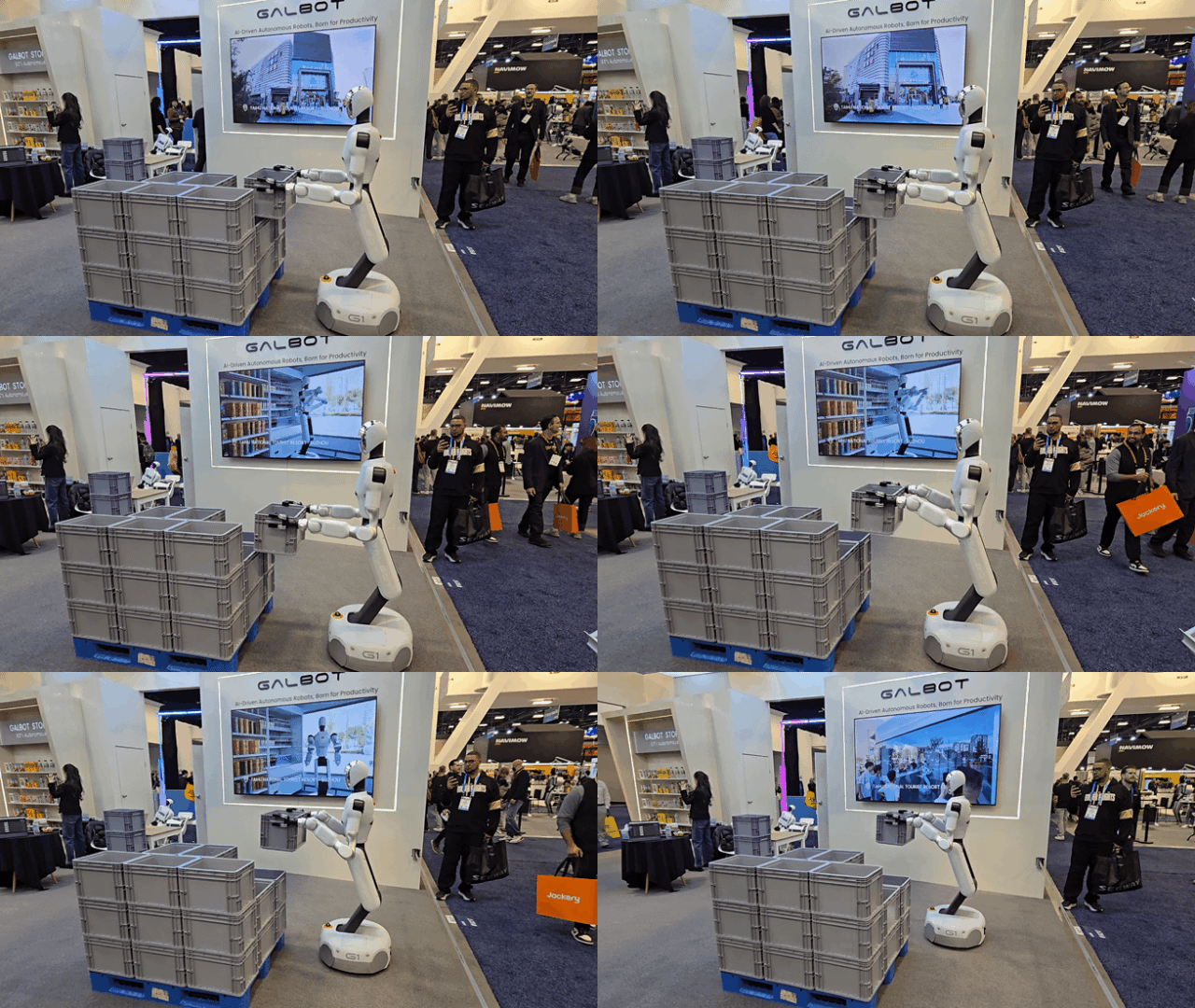
Galbot's G1 warehouse robot was busily moving plastic bins — until it slipped on one and toppled over. Wheels spun. Arms stayed limp. It seemed oddly content with its unscheduled break.
Company staff rushed over mid-interview. Moments earlier, they'd explained how their robots were already “fully employed” in Chinese warehouses.
Elsewhere, robots nudged into walls, froze mid-task, or stared blankly into space. The gulf between demo reels and floor reality was wide enough to park a Cybertruck.
The missing middle
Once-dominant mega booths had shrunk or vanished. Hisense and LG were exceptions. Zeroth Robotics, a Chinese startup founded just last year, commanded a striking footprint with a lineup of domestic robots — from a Wall-E-inspired cleaner to a tabletop companion.
Samsung staged its presence elsewhere. Sony appeared only via its Honda joint venture. The show felt less like a global tech summit and more like a startup bazaar — AI cotton-candy machines, prototype gadgets, concepts destined never to scale.
The question CES couldn't answer
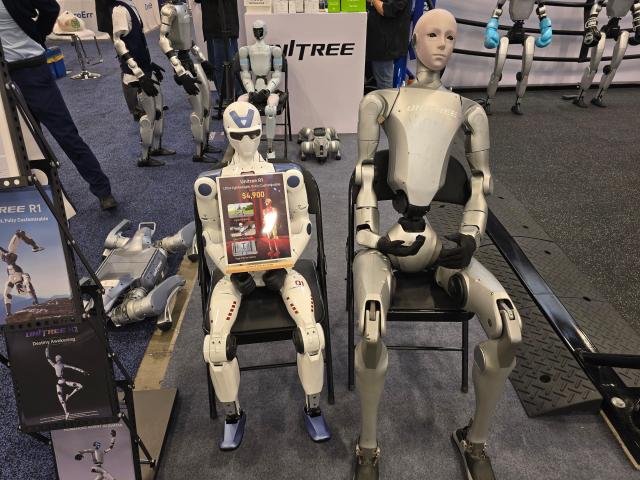
Physical AI promises the next leap: giving those digital minds bodies.
CES 2026 showed how far we still are.
The robots that could talk stood stiff as mannequins. Realbotix's celebrity-faced androids boasted Gemini-powered dialogue — and barely moved. The robots that moved couldn't think. The ones that tried both ended up on the floor.
A decade ago, synthetic fingers with individual motion were headline news. Progress since then has been real. But the final bridge — from programmed motion to autonomous judgment — remains unbuilt.
CES 2026 asked a question it couldn't answer: Is the world ready for physical AI?
Investment is flowing. Hardware is improving. But judging from the clankers in Las Vegas, we still have time before humanoids demand rights — or even manage to deliver a drink without spilling it.
Elon Musk says his humanoid robots will outperform the world's best surgeons within three years.
I wouldn't bet on it.
*The author is AJP tech reporter who covered CES 2026 in Las Vegas.

Copyright ⓒ Aju Press All rights reserved.