

The airline said Feb. 27 that it recently held its “2026 first-quarter Fuel Management Committee” meeting and tallied 12,184,169 metric tons of carbon emissions from its flight operations in 2025. That was down 420,055 tons, or 3.3%, from 12,604,224 tons a year earlier.
Korean Air said its total number of domestic and international flights rose about 2.6% in 2025 from the previous year, making the overall emissions decline notable.
The company said emissions during flight are calculated by multiplying fuel consumption by a carbon-emissions factor commonly used across the global aviation industry.
Korean Air attributed the reduction to tighter fuel management across operations, including deploying newer aircraft, flying more efficient routes, selecting optimal alternate airports for short-haul flights, improving forecasts of passenger baggage and cargo weight, and optimizing aircraft center of gravity. It said it pursued these measures while adhering to its “absolute safety” principle and by strengthening coordination among relevant departments.
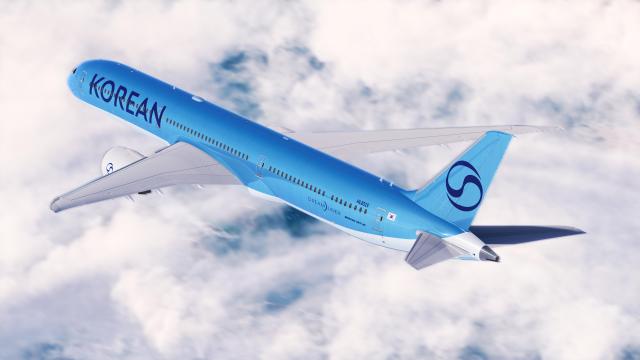
The airline said it expanded the share of aircraft introduced since 2017 to 41.6% of total flights and reduced emissions by operating more fuel-efficient models such as the Boeing 787-9 and 787-10 and the Airbus A350 and A321neo.
It also applied an economically optimal cruising speed in flight planning based on factors including flight time and fuel burn, and optimized fuel loads by more accurately predicting actual payload weight, it said.
Korean Air said it has continued working with air traffic control authorities to secure the shortest possible flight paths, reducing actual distance flown, fuel consumption and flight time. It said it prioritized the nearest airport among those meeting safety standards and reduced aircraft weight by optimizing fuel loads.
The airline said it minimized use of auxiliary power units on the ground before takeoff and after landing to cut fuel use and emissions, and restored engine performance to improve fuel efficiency.
Korean Air said it has also reorganized its companywide operating system to minimize emissions. It runs a fuel-management framework in which all organizations involved in flight operations communicate and cooperate, and it holds quarterly fuel-management committee meetings to review progress and set plans. It said it is also promoting measures to reflect frontline input and encourage voluntary participation, including awards for employees who contribute to emissions reductions and idea contests.
To improve efficiency and apply more precise data, the airline said it digitized data previously recorded by hand and introduced artificial intelligence-based data processing. It said the system helps adjust onboard supplies such as drinking water and more precisely analyze and predict variables affecting passenger baggage weight, reducing deviations in baggage-weight estimates.
Korean Air said its AI-based baggage-weight prediction was selected as an outstanding AI use case at the SkyTeam-led “2025 Sustainable Flight Challenge,” winning in the “Data Insight & Pioneer” category.
“With a cooperative system based on voluntary participation and close communication among employees, we were able to reduce carbon emissions from flight operations,” a Korean Air official said. “This year as well, we plan to continue efforts for sustainable flight, including doing our best to meet our emissions-reduction targets.”
* This article has been translated by AI.
Copyright ⓒ Aju Press All rights reserved.