

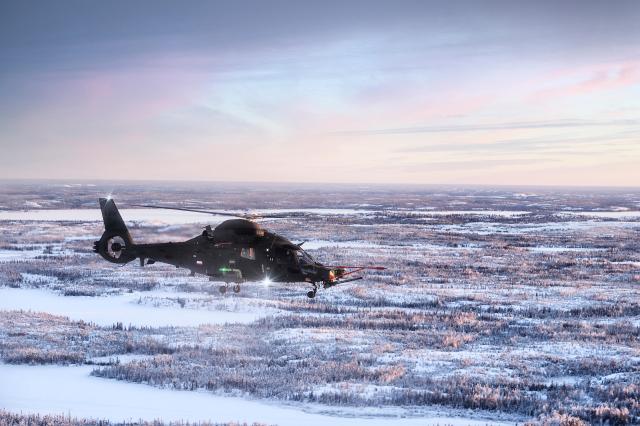
Helicopters gained prominence after the Vietnam War, when armed UH-1s carrying machine guns and rockets helped make rotorcraft a main Army combat platform. U.S. attack helicopters such as the Apache later earned the nickname “tank killer.”
Since the Russia-Ukraine war, helicopter units have faced a new challenge as low-cost drones have shown they can strike tanks and armored vehicles and reshape the battlefield. Some argue drones now offer better value than expensive attack helicopters. This article looks at South Korea’s helicopter fleet and where it may be headed.
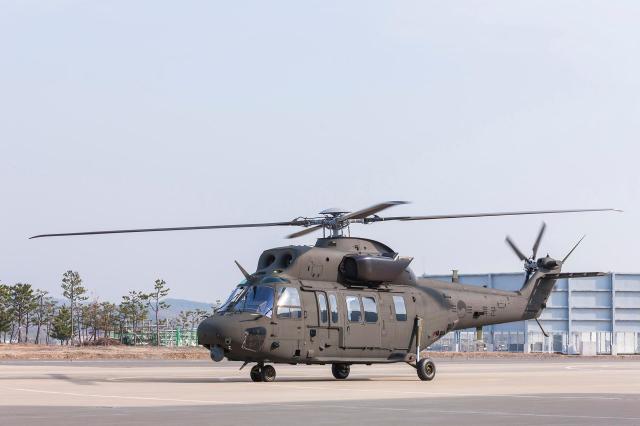
The Army’s helicopter force centers on two domestically developed aircraft: the Surion (KUH-1) transport helicopter and the Mireon (LAH) light armed helicopter.
The Mireon, which began entering Army service in 2024, carries a 20mm cannon, air-to-ground guided missiles and unguided rockets. The two-seat aircraft is designed for mobility and attack missions, including close air support and troop cover. It uses a modern fire-control system based on the Airbus Helicopters H155 platform.
The Surion is built for transport. Developed to replace aging 500MD light attack helicopters and UH-1H utility helicopters, it is South Korea’s first indigenous medium utility helicopter. It can carry 13 troops and is fitted with a 7.62mm machine gun. Delivered to the Army since 2012, more than 200 are now in operation.
Korea Aerospace Industries, the main producer of the Surion and Mireon, has focused on rotorcraft. According to filings with the Financial Supervisory Service’s electronic disclosure system, KAI’s rotorcraft revenue as of the third quarter of last year totaled 269.544 billion won, or 12.3% of total sales. In 2024, the Surion was exported to Iraq, and the company is seeking to expand overseas, including by joining a bid this year for an attack-helicopter program in Bangladesh.
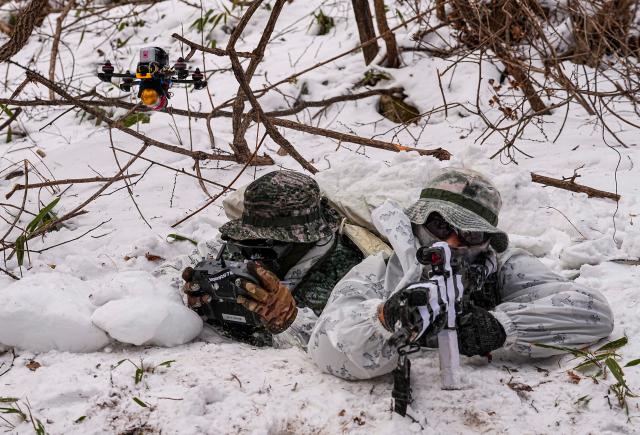
As drones have risen in the Russia-Ukraine war, the helicopter industry has entered a transition. Low-cost first-person-view, or FPV, drones with forward cameras can inflict significant damage on infantry and armored forces. They can be used in swarms and are seen as cost-effective, and the Army is putting more emphasis on training drone specialists.
With drones emerging as a key capability, some in South Korea have questioned whether helicopters are still needed. Industry officials say drones may affect the market but cannot fully replace helicopter missions.
“Drones are cost-effective, but because they rely on communications, they are vulnerable to electronic attacks such as electromagnetic pulses,” one official said. “Helicopters have the advantage in complex missions such as troop transport, air assault, and battlefield command and control.”
The United States, a leading defense producer, has not stopped modernizing helicopters. It is upgrading the Apache and Black Hawk while testing cockpit automation and unmanned operations. The V-280 Valor, being developed by Lockheed Martin and Bell, is drawing attention as a next-generation U.S. Army aircraft. It uses a tiltrotor design, taking off like a helicopter and then tilting its rotors forward in cruise so fixed wings provide lift.
Analysts also say South Korea should expand manned-unmanned teaming, or MUM-T, to strengthen its helicopter force. At a National Assembly seminar on Feb. 24 titled “The Future of Attack Helicopters and Drones,” participants cited results showing that operating attack helicopters (Apache) in a MUM-T concept produced 91% enemy lethality and 83% friendly survivability, compared with 56% and 54% when operated alone.
Jang Won-jun, a professor in the Department of Advanced Defense Industry Studies at Jeonbuk National University, said the right direction is to move beyond operating manned helicopters alone and combine them with unmanned aircraft. Considering troop reductions and challenges in securing specialized personnel, he said, a phased shift toward unmanned operations is needed.
* This article has been translated by AI.
Copyright ⓒ Aju Press All rights reserved.