

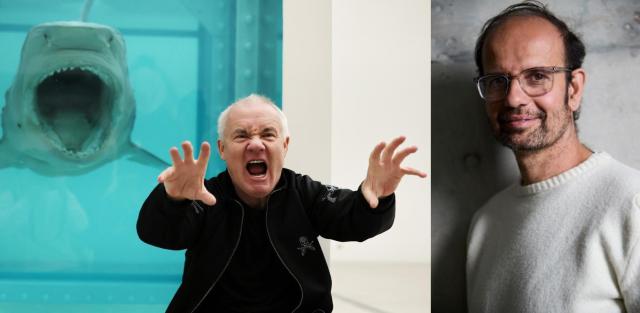
Bare it all, or keep it tightly hidden.
Two exhibitions drawing attention in Seoul are doing so in opposite ways: a Damien Hirst solo show at the National Museum of Modern and Contemporary Art, Korea, leans into exposure, while a Tino Sehgal solo show at the Leeum Museum of Art draws curiosity by refusing it.
Online posts on the 24th have focused on “Damien Hirst: There Is No Truth, Everything Is Possible,” now on view at MMCA Seoul.
The show has been closely watched since before it opened, after debate over whether MMCA should mount a solo exhibition for Hirst, whom some critics describe as past his peak or as a star artist aimed at box-office appeal. Images and reviews of the exhibition have followed.
Hirst, whose name functions as a brand, is known for actively using the media, audiences and social platforms. In the 1990s, he drew explosive attention with shocking works, including a dead shark displayed in a glass tank filled with formaldehyde. His unconventional moves, including producing work with a large team of assistants, helped elevate him to celebrity status.
At a recent news conference, Hirst did not take questions but posed in various ways for photographers. The MMCA exhibition also highlights personal details, including music he says he listens to regularly and a space designed to recreate his London studio.
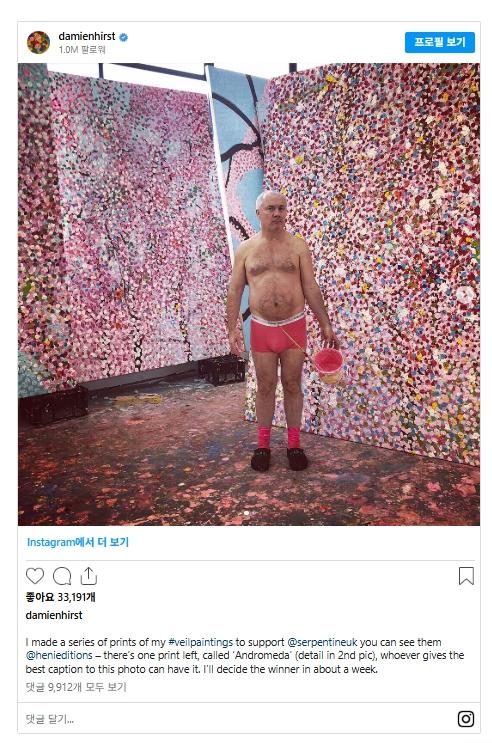
Hirst is also an active social media user, with more than 1.04 million Instagram followers. In 2018, he posted a photo of himself in his studio wearing only underwear and offered a free artwork to the follower who wrote the wittiest caption. The post drew about 10,000 comments.
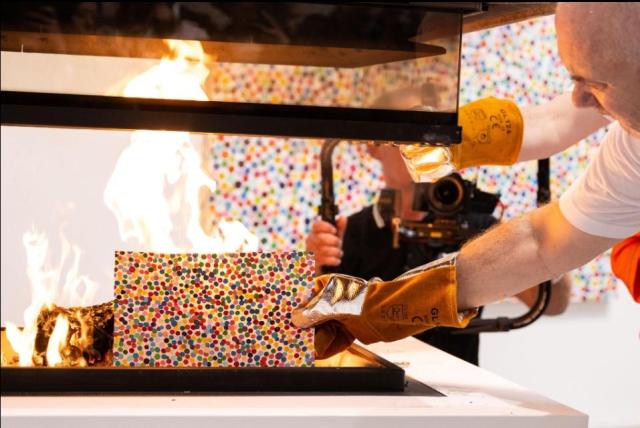
In 2022, through his project “The Currency,” buyers were told to choose between an NFT and a physical artwork. After collectors chose the NFT version, Hirst burned more than 1,000 of the original works. The burning was livestreamed on social media, and the destroyed works were valued at about 10 million pounds (about 17 billion won), according to assessments at the time.
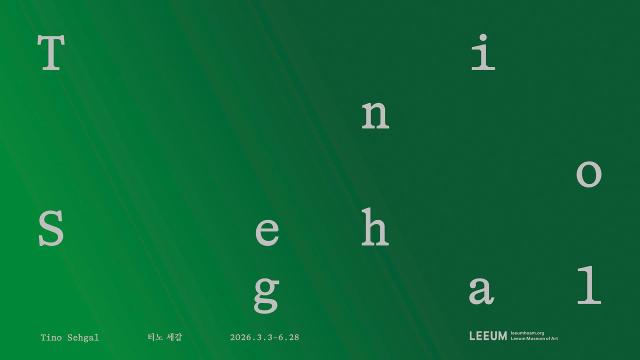
Sehgal, by contrast, keeps his distance from social media. Britain’s The Guardian has described him as an “Instagram users’ nightmare.” His exhibitions leave no photos or videos behind. At Leeum, photography and video recording are banned, and the work is meant to be carried forward only in visitors’ memories.
Sehgal, who pursues what he calls “de-production,” urges visitors to put down smartphones and cameras and stay with the present moment. Asked at a news conference in February whether he regretted being unable to promote his work through social media, he said, “My work is about asking what we can do beyond objects.”
He added, “In a way, I think I benefit in the screen era,” citing growing research on the negative effects of screen activity. “I don’t think you can say my work only loses out,” he said. He also said teenagers often described as “digital natives” are realizing screen time is not always positive and are paying more attention to real experiences.
* This article has been translated by AI.
Copyright ⓒ Aju Press All rights reserved.