SEOUL, April 17 (AJP) - Samsung Electronics has moved to legally block a planned general strike by its labor unions, warning that disruptions to its semiconductor cleanrooms could trigger losses exceeding $20 billion and damage key client relationships.
The South Korean tech giant filed for a provisional injunction with the Suwon District Court on Thursday to prevent what it described as “illegal” protest activities by a joint strike body formed by its three largest labor groups, including the National Samsung Electronics Union (NSEU).
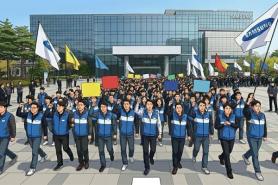
The legal action comes as tensions escalate ahead of an 18-day nationwide strike scheduled from May 21 to June 7, following a partial walkout next week amid impasse over performance-based bonuses.
Samsung has offered to allocate 10 percent of operating profit to employee bonuses, while unions are demanding 15 percent, emboldened by the company’s record earnings.
The company reported stunning first-quarter operating profit of around 57 trillion won.
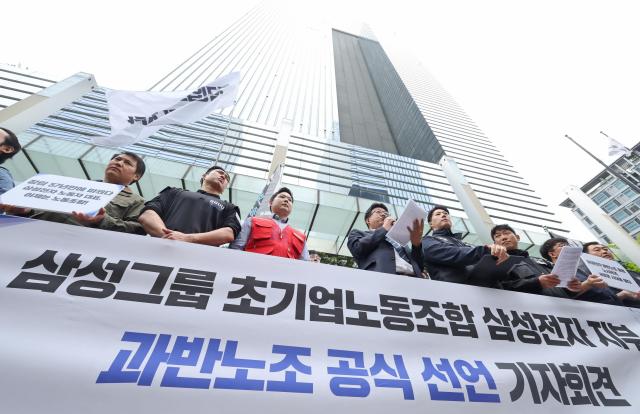
Union leaders dismissed the company’s concerns over potential damage to cleanroom facilities, arguing the strike would remain within legal boundaries.
“We will proceed with a lawful strike based on legal review,” said Choi Seung-ho, head of the Samsung Electronics chapter of the Super-enterprise Union in a press briefing Friday, adding that 30,000 to 40,000 members are expected to join a mass rally on April 23.
The chipmaker and industry watchers however warn even limited disruptions could have outsized consequences given the nature of semiconductor manufacturing.
Chip production relies on uninterrupted, highly sensitive processes and any halt could render in-process wafers unusable, forcing large-scale scrapping and delaying deliveries.
“If production lines stop, everything currently in the process must be scrapped,” said Lee Jong-hwan, a professor of system semiconductor engineering at Sangmyung University. “The damage could far exceed initial estimates.”
Beyond immediate losses, analysts point to longer-term risks. Delays in supplying high-bandwidth memory (HBM) chips or foundry orders could prompt major clients such as Nvidia to shift orders to rivals including SK hynix or TSMC.
“Once trust is broken, it takes years to recover,” Lee said, warning the disruption could widen Samsung’s gap in the fast-moving AI chip market.
Union officials estimate that an 18-day strike could result in direct production losses of at least 12 trillion won, with total damages potentially reaching 20 trillion to 30 trillion won when factoring in recovery time.
Stopping the strike however won't be easy, experts say.
"Courts tend to prioritize constitutional labor rights unless the industry is deemed essential, such as healthcare or railways,” said Lee Byung-hoon, a professor emeritus of sociology at Chung-Ang University.
The dispute also reflects deeper tensions rooted in Samsung’s long-standing non-union management culture, which has only recently begun to shift.
Underscoring the conflict between the management and union, Samsung has filed a criminal complaint against an employee accused of illegally collecting personal data of around 20,000 workers, allegedly to pressure non-union members.
With global tech clients closely watching, the court’s decision could prove pivotal—not only for Samsung’s labor relations but also for its ability to sustain momentum in the ongoing AI-driven semiconductor boom.

Copyright ⓒ Aju Press All rights reserved.