

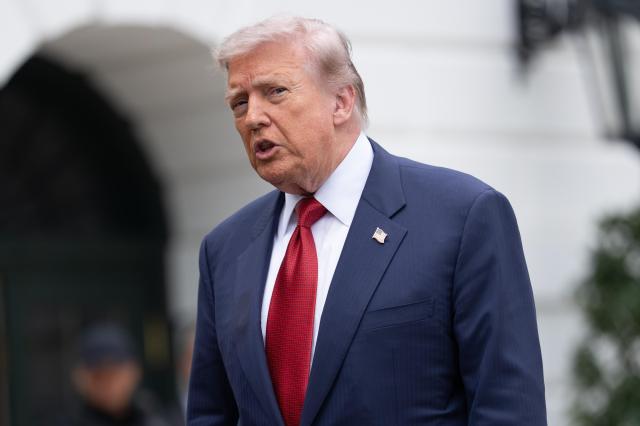
As a U.S. court deliberates on the legality of the 10% global tariffs imposed during the Trump administration, experts suggest that the impact on South Korea may be limited. This is primarily because the tariffs were introduced as part of a transitional phase in U.S. trade policy, and their effects are expected to be minimal. Additionally, it is important to note that South Korea is not a direct party to the court's ruling, as the tariff negotiations between the two countries have already concluded.
According to reports from Reuters and other international news outlets, the U.S. Court of Appeals for the Federal Circuit temporarily stayed a ruling from the U.S. Court of International Trade that deemed the global tariffs illegal. On May 7, the U.S. Court of International Trade ruled that the 10% global tariffs imposed by the Trump administration under Section 122 of the Trade Act were unlawful. As a result, the Trump administration can maintain these tariffs while the appeal process is underway.
This is not the first time U.S. trade policies have faced judicial scrutiny. In February, the U.S. Supreme Court ruled that reciprocal tariffs based on the International Emergency Economic Powers Act (IEEPA) were illegal.
However, some analysts believe that the current ruling may have limited implications for South Korea. Following the Supreme Court's decision on the IEEPA, the U.S. has been imposing the 10% global tariffs based on Section 122 of the Trade Act, which allows for tariffs to be imposed for up to 150 days to address severe international balance of payments deficits. The time-limited nature of these tariffs suggests a lack of long-term policy stability.
Moreover, South Korea has already completed tariff negotiations with the U.S., meaning that the global tariffs, which are lower than the reciprocal tariffs, are unlikely to significantly alter the conditions for South Korean exports.
Nonetheless, the new tariff system being pursued by the U.S. could create market shocks. Following the ruling on the illegality of reciprocal tariffs, the U.S. is working to restore its tariff framework using Sections 301 and 232 of the Trade Act. Section 301 allows for retaliatory tariffs against unfair trade practices by specific countries, while Section 232 permits the imposition of import restrictions and high tariffs if foreign imports are deemed a threat to U.S. national security.
Given the diminishing legal sustainability of the global tariffs that served as a bridge in U.S. trade policy, the Trump administration may accelerate the introduction of a new tariff system. The Office of the United States Trade Representative (USTR) has already initiated investigations under Section 301 related to unfair trade practices linked to overproduction in the manufacturing sector and goods produced through forced labor. Once the USTR's investigation concludes, further actions from the U.S. are likely.
For South Korea, the potential risks stemming from the USTR investigation and subsequent actions may outweigh the immediate implications of the court ruling. There are concerns that the U.S. may change its pressure tactics, including not only item-specific tariffs but also stricter origin standards and supply chain regulations.
As a result, attention is focused on the implementation of investment projects in the U.S. The South Korean government plans to establish the Korea-U.S. Strategic Investment Corporation next month to support strategic investments based on the Special Law on U.S. Investment, which passed the National Assembly last March. The Ministry of Trade, Industry and Energy stated, "We will continue to communicate closely regarding strategic investment projects in the U.S. and strive to ensure that trade issues are managed stably."
* This article has been translated by AI.
Copyright ⓒ Aju Press All rights reserved.