

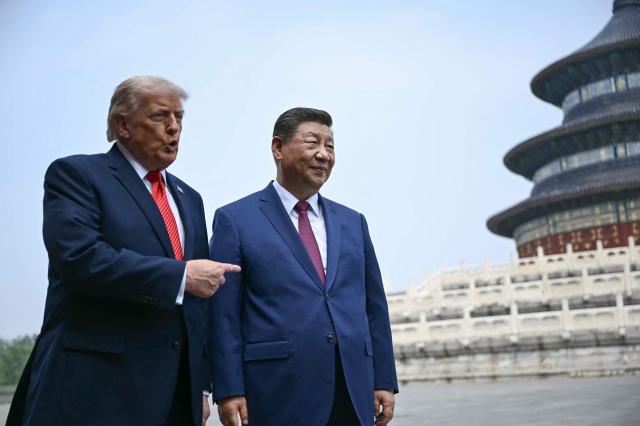
U.S. President Donald Trump and Chinese President Xi Jinping held a summit in Beijing on May 14. The meeting addressed key issues affecting the global economy and security, including tariffs, semiconductors, rare earth elements, artificial intelligence, Taiwan, and the Middle East.
While the summit appeared to focus on stabilizing relations and managing conflicts, the reality is more complex. The U.S. and China have already entered a so-called 'tariff truce' by temporarily easing mutual tariffs. China has relaxed some restrictions on rare earth exports, and the U.S. has adjusted certain sanctions. This reflects a pragmatic recognition that the global supply chain shocks can no longer be ignored.
However, the essence of the summit leans more toward competition for leadership rather than compromise. The U.S. aims to curb China's rise in advanced technologies while also mitigating supply chain instability and inflationary pressures. Meanwhile, China needs to manage the intensity of its conflicts with the U.S. amid economic slowdown and declining exports. The two nations are not meeting to reduce tensions but rather to manage the costs of potential larger confrontations.
Particularly noteworthy are the discussions surrounding AI and advanced technology. The U.S. has classified semiconductor and AI infrastructure as national security assets, tightening export controls to China. In response, China is leveraging its control over rare earth materials and battery supply chains. What once was a simple trade dispute has evolved into a competition for technological hegemony and industrial dominance.
South Korea finds itself at the center of this conflict. The South Korean economy is intricately linked to both the U.S. security framework and the Chinese market. Most of its key industries, including semiconductors, batteries, automobiles, and shipbuilding, are directly tied to the U.S.-China supply chains. Changes from either side could disrupt the entire structure of corporate investments and exports.
The U.S. tightening semiconductor regulations directly impacts Samsung Electronics and SK Hynix's operations in China. China's control over rare earth elements poses challenges for South Korea's electric vehicle and battery industries. Additionally, tensions in the Taiwan Strait and risks in the Middle East complicate logistics and energy costs. The outcomes of the U.S.-China summit have a direct impact on South Korea's industries and financial markets.
As the U.S. and China reshape their supply chains and technological order, South Korea appears to be caught in a cycle of responding to individual issues. Support measures for semiconductors are delayed, the AI infrastructure race is lagging, and strategies for energy and mineral supply chains remain unstable. There are concerns that South Korea's diplomacy lacks a consistent strategy between principles and realities.
The U.S.-China rivalry is no longer a temporary conflict. It is likely to persist as a structural clash, even with changes in government or international circumstances. South Korea's diplomatic and industrial strategies must move beyond short-term event responses. While maintaining its alliance with the U.S., South Korea must also manage the realities of the Chinese market and supply chains with a clear-eyed approach. To reduce the pressure of forced choices, enhancing technological competitiveness and supply chain independence is essential.
Above all, the speed of national strategy is crucial. The U.S. and China are already maneuvering over future industrial orders in AI, semiconductors, rare earths, and energy. Meanwhile, South Korea remains mired in political conflicts and short-term issues. The reconfiguration of the global order will not wait.
This U.S.-China summit is not just a matter for the two nations. It signals how the center of the global economy is shifting. South Korea can no longer remain a mere observer. The time to simultaneously overhaul its diplomatic, industrial, and security strategies has not only approached; it has already begun.
While the summit appeared to focus on stabilizing relations and managing conflicts, the reality is more complex. The U.S. and China have already entered a so-called 'tariff truce' by temporarily easing mutual tariffs. China has relaxed some restrictions on rare earth exports, and the U.S. has adjusted certain sanctions. This reflects a pragmatic recognition that the global supply chain shocks can no longer be ignored.
However, the essence of the summit leans more toward competition for leadership rather than compromise. The U.S. aims to curb China's rise in advanced technologies while also mitigating supply chain instability and inflationary pressures. Meanwhile, China needs to manage the intensity of its conflicts with the U.S. amid economic slowdown and declining exports. The two nations are not meeting to reduce tensions but rather to manage the costs of potential larger confrontations.
Particularly noteworthy are the discussions surrounding AI and advanced technology. The U.S. has classified semiconductor and AI infrastructure as national security assets, tightening export controls to China. In response, China is leveraging its control over rare earth materials and battery supply chains. What once was a simple trade dispute has evolved into a competition for technological hegemony and industrial dominance.
South Korea finds itself at the center of this conflict. The South Korean economy is intricately linked to both the U.S. security framework and the Chinese market. Most of its key industries, including semiconductors, batteries, automobiles, and shipbuilding, are directly tied to the U.S.-China supply chains. Changes from either side could disrupt the entire structure of corporate investments and exports.
The U.S. tightening semiconductor regulations directly impacts Samsung Electronics and SK Hynix's operations in China. China's control over rare earth elements poses challenges for South Korea's electric vehicle and battery industries. Additionally, tensions in the Taiwan Strait and risks in the Middle East complicate logistics and energy costs. The outcomes of the U.S.-China summit have a direct impact on South Korea's industries and financial markets.
As the U.S. and China reshape their supply chains and technological order, South Korea appears to be caught in a cycle of responding to individual issues. Support measures for semiconductors are delayed, the AI infrastructure race is lagging, and strategies for energy and mineral supply chains remain unstable. There are concerns that South Korea's diplomacy lacks a consistent strategy between principles and realities.
The U.S.-China rivalry is no longer a temporary conflict. It is likely to persist as a structural clash, even with changes in government or international circumstances. South Korea's diplomatic and industrial strategies must move beyond short-term event responses. While maintaining its alliance with the U.S., South Korea must also manage the realities of the Chinese market and supply chains with a clear-eyed approach. To reduce the pressure of forced choices, enhancing technological competitiveness and supply chain independence is essential.
Above all, the speed of national strategy is crucial. The U.S. and China are already maneuvering over future industrial orders in AI, semiconductors, rare earths, and energy. Meanwhile, South Korea remains mired in political conflicts and short-term issues. The reconfiguration of the global order will not wait.
This U.S.-China summit is not just a matter for the two nations. It signals how the center of the global economy is shifting. South Korea can no longer remain a mere observer. The time to simultaneously overhaul its diplomatic, industrial, and security strategies has not only approached; it has already begun.
* This article has been translated by AI.
Copyright ⓒ Aju Press All rights reserved.