

Artificial intelligence is reshaping the industrial landscape. As the competition shifts from technological prowess to purposeful innovation, where should South Korea's industry head? Ju Young-seop, the former Minister of Small and Medium Enterprises and Startups, offers a pragmatic and strategic perspective on this question. With experience as a CEO, government policy maker, and academic, he views AI not merely as a technology but as a "key tool for restructuring industries."
He asserts, "The AI era will be determined in the next 2 to 3 years." With the United States and China leading in foundational technology, he believes South Korea must clearly define its path: "We should follow the model but lead in application." He diagnoses that the combination of manufacturing, data, and on-site expertise in what he terms "AI transformation (AX)" is the only strategy for South Korea to rise to the global top tier.
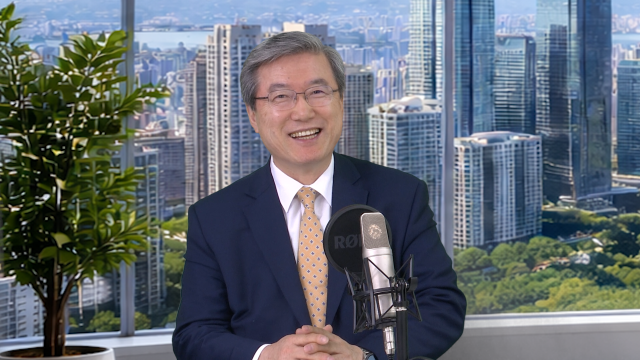
In the era of AI transformation, what is the most fundamental change facing South Korea's industry?
"We are experiencing a fundamental shift, not just a simple technological change, but a change in the 'grammar of industry.' While past industrial revolutions were driven by specific technologies, AI is altering the very way industries operate. I call this 'AI transformation (AX).' The hallmark of this change is its rapid pace. In the past, industrial structures changed over a decade, but now, competitive advantages can shift within 2 to 3 years. Thus, I see the next few years as a critical period for South Korea's industrial fate. Missing this window could lead to not just a decline in competitiveness but a destabilization of the industrial foundation itself. Conversely, if we respond appropriately, it could be an opportunity to leap forward as a global leader.
You mentioned that the AI paradigm is shifting from a technology focus to a purpose-driven focus. What does this mean?
"In the past, the technology itself was the competitive edge. The goal was to secure faster and higher-performing technologies. However, now it is more important to consider what the technology is used for. AI must contribute to solving human problems, not just create superior models. A case in point is how John Deere's autonomous farming equipment garnered more attention at CES than BMW's self-driving cars. Technically, the car is more complex, but the farming equipment has a clear purpose: addressing food issues. Ultimately, technology should be a means to achieve a purpose. This shift significantly impacts not only corporate strategies but also national strategies.
What do you see as South Korea's most important competitive advantage in the AI race?
"I firmly believe it is 'data and expertise.' AI does not operate solely on models. It learns through data, and its performance is determined by the quality of that data. As a manufacturing powerhouse, South Korea has accumulated industrial data and skilled technicians' expertise over many years. This tacit knowledge is an asset that other countries cannot easily replicate. Even if an AI model scores 80, having data and expertise at 100 can yield outstanding results. Conversely, no matter how advanced a model is, limited data will restrict outcomes. In this regard, South Korea has a strong chance of succeeding in AI utilization.
How will the integration of manufacturing and AI change the industrial landscape?
"The most significant changes will be in productivity and quality innovation. For instance, AI-driven predictive maintenance systems can anticipate equipment failures before they occur. In the past, responses were made after breakdowns, but now prevention is possible. Additionally, AI vision systems can detect defects more accurately than humans during quality inspections. As these changes accumulate, productivity will significantly improve, and quality will be dramatically enhanced. Furthermore, as AI is applied to products themselves, product functionalities will also innovate. Ultimately, competitiveness will rise in both production and product quality.
There are concerns that the spread of AI will lead to job losses. What is your perspective?
"In the short term, some jobs may be replaced. However, in the long term, increased productivity will create new jobs. The biggest issue in South Korean industry is actually a shortage of skilled labor. Many skilled technicians are retiring, but there is a lack of personnel to replace them. Here, AI plays a crucial role. By training AI with the expertise of skilled workers, we can maintain and disseminate that knowledge. This will enable younger workers to quickly enhance their skills and lower the barriers to entry into the industrial workforce. Ultimately, AI is likely to be a tool for maintaining and expanding the industrial ecosystem, rather than reducing jobs.
What is South Korea's current position in the global AI competition?
"Objectively, South Korea ranks around sixth. However, there is not much difference between the third and eighth positions. The issue lies in the gap with the United States and China. This gap arises more from the scale of investment than from technological capability. The U.S. and China are pouring astronomical amounts of funding into AI, making direct competition realistically challenging. Therefore, we need to approach this strategically. Instead of trying to compete in every field, it is important to focus on areas where we have strengths.
Is the fast follower strategy still valid in the AI era?
"I believe a 'dual strategy' is necessary. In foundational technology areas, the fast follower strategy remains effective. However, in the application of AI, we must become first movers. The AI competition is structured such that the first and second place holders capture most of the market. Simply remaining in third place is not meaningful. Therefore, we must secure world-class competitiveness in application areas. This is a realistic strategy for South Korea to leap to a global AI powerhouse.
What specific industries can South Korea become a first mover in?
"Notably, manufacturing, healthcare, and cultural industries stand out. Manufacturing is where South Korea has its strongest advantages. Few countries can perform across all industrial sectors, making us very favorable in terms of data accumulation. The healthcare sector also has a high level of skilled personnel and data. Additionally, cultural industries like K-content are important areas. By integrating AI into these fields, we can secure global competitiveness.
How should the roles of government and businesses be divided?
"The government should focus on building the foundation. Key areas include data standardization, infrastructure development, and talent cultivation. Particularly, structuring and standardizing data is challenging for individual companies, making the government's role crucial. On the other hand, businesses must leverage this foundation to generate actual results. Ultimately, the success of AI competition will depend on the level of public-private collaboration. A structure that divides roles while fostering close cooperation is necessary.
What core strategies must South Korea choose in the AI era?
"I want to emphasize two points: a data strategy and collaboration. We must systematically build and share data and expertise within an ecosystem. At the same time, we need to strengthen cooperation among businesses and between the government and private sectors. AI is not just about competition among individual companies; it is about ecosystem competition. Collaboration is competitiveness. If South Korea can establish a collaborative ecosystem, I believe it can leap to a global leading nation in the AI era.
Ju Young-seop is a prominent industrial strategy expert with experience in industry, policy, and academia. He has served as CEO of Daewoo Electronics, GE, and Hyundai Motor affiliates, gaining firsthand experience in the industrial field. In government, he was involved in establishing national industrial strategies while overseeing the Ministry of Knowledge Economy and industrial policy. Later, he served as the 14th Minister of Small and Medium Enterprises and Startups, contributing to strengthening the competitiveness of small businesses and building a startup ecosystem. He is particularly recognized as a 'field-centered strategist,' praised for his ability to connect policies and corporate strategies based on accumulated experience in the industrial field. During his tenure as Minister, he actively promoted policies to nurture technology-based small businesses and support their global expansion. Currently, he serves as a special professor at Seoul National University, leading research on AI and industrial digital transformation. He views AI not merely as a technology but as a key tool for industrial structural innovation, presenting future strategies for South Korean industry through the concept of 'AX (AI Transformation).' His core message is clear: "AI is not just a technology; it is a strategy." To survive in global competition, South Korea needs a utilization-focused strategy based on data and expertise, rather than just competing in foundational technologies.
* This article has been translated by AI.
Copyright ⓒ Aju Press All rights reserved.