

The Broadcasting and Media Communications Commission (BMCC) announced its achievements in the broadcasting, media, and communications sectors, coinciding with the first anniversary of President Lee Jae-myung's administration. The commission has made progress in resolving delays in broadcasting re-licensing, improving the governance structure of public broadcasting, enhancing user protection, and establishing a system to combat misinformation, thereby accelerating the restoration of public service in broadcasting and the establishment of order in digital media.
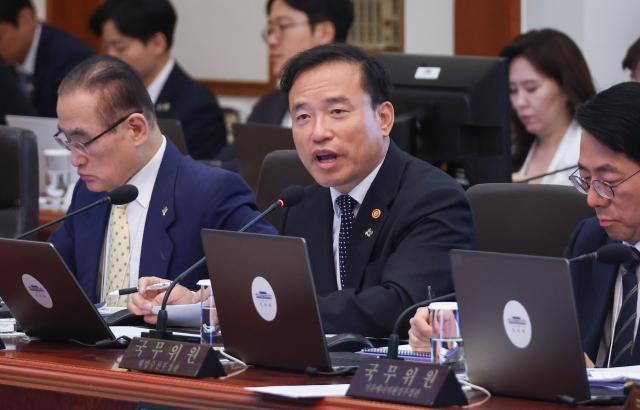
On June 2, the BMCC participated in a Cabinet meeting to present its first-year achievements.
The BMCC began its operations in April after the appointment of its members met the quorum requirements, holding its first plenary meeting on April 10. Since then, it has convened a total of 14 plenary meetings, addressing 86 agenda items, including 12 legislative amendments and 10 sanctions.
Notably, the commission completed the re-licensing of 152 broadcasting stations, including 16 terrestrial broadcasters and 2 cable operators, which had been delayed for an extended period.
The BMCC also worked on improving the re-licensing and re-approval system. It amended broadcasting laws to ensure that if a re-licensing or re-approval decision is not made within the validity period for reasons not attributable to the broadcaster, the existing license or approval will remain valid until a final decision is made. This change aims to provide a stable operational foundation for broadcasters and enhance the protection of viewers' rights.
The commission has also initiated reforms to improve access to disaster information, including establishing a requirement for sign language interpretation in KBS disaster broadcasts. It has begun reviewing the approval process for changes in major shareholders at YTN and has issued corrective orders to news channels that violated broadcasting laws, reinforcing the public responsibility of broadcasting.
In the communications sector, the BMCC focused on user protection and establishing market order. It amended the Enforcement Decree of the Telecommunications Business Act to prohibit discrimination in device subsidies based on residence or age. KT was fined for providing false and exaggerated information during the pre-order process for the Galaxy S25.
The commission has also worked on restoring the public service and independence of broadcasting. It is advancing the necessary subordinate legislation for the implementation of the amended Broadcasting Act, the Broadcasting Culture Promotion Act, and the Korea Educational Broadcasting System Act, collectively known as the "three broadcasting laws." Efforts are underway to establish a selection process for organizations that recommend board members for public broadcasting, laying the groundwork for restoring trust in public broadcasting.
Policies to ensure universal viewer rights are also being pursued. The BMCC supported negotiations for broadcasting rights for the 2026 North and Central America World Cup, facilitating joint broadcasts between terrestrial and cable networks. Additionally, it is working on recommendations for the resale of broadcasting rights for public interest events and the operation of related consultative bodies.
To respond to the media environment shifting towards digital platforms, the BMCC is establishing order in online media. The amendment of the Information and Communications Network Act to strengthen responses to misinformation has established the obligation for large platform operators to report incidents and introduced a punitive damages system of up to five times the amount. The BMCC is expediting the amendment of related enforcement decrees to ensure the system's implementation.
Efforts to combat illegal spam have also been intensified, with the introduction of a fine system and the establishment of a legal basis for recovering criminal proceeds from malicious spam senders, focusing on creating a safe communication environment.
The BMCC is also working to restore the competitiveness of the media industry and establish a foundation for mutual growth. In May, it announced a plan to improve home shopping regulations and establish dedicated home shopping channels for small businesses. The establishment of the Korea Broadcasting Media Communications Promotion Agency, aimed at integrating functions to promote the broadcasting and media sectors, is also underway. This initiative was approved by the National Assembly's Science, Technology, Information, Broadcasting and Communications Committee last month, led by the ruling party, and involves the integration of the Korea Broadcasting Advertising Corporation and the Viewer Media Foundation.
Furthermore, the BMCC plans to expand policies to enhance media capabilities necessary for the AI and digital era in collaboration with relevant ministries. It aims to increase opportunities for digital and media education and experiences to support the public's media literacy and digital citizenship.
Kim Jong-cheol, chairman of the BMCC, stated, "We have focused our policy efforts on restoring the public service of broadcasting and establishing order in digital media. In the future, we will strive to create policy outcomes that the public can feel and work towards a broadcasting, media, and communications environment where public service and industrial competitiveness are harmonized."
* This article has been translated by AI.

Copyright ⓒ Aju Press All rights reserved.