

Peru is holding a presidential runoff election, marking the tenth election in the past decade amid a turbulent political landscape. According to international media outlets including NPR, the runoff is taking place nationwide on June 7.
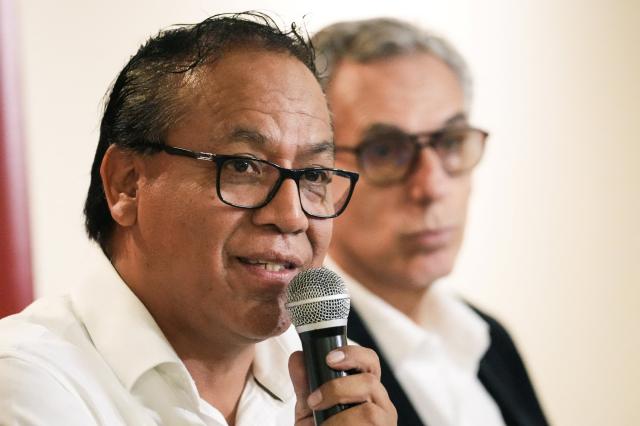
In this runoff, Keiko Fujimori, 51, of the Popular Force party, faces Roberto Sanchez, 57, of the Together for Peru party. They secured the top two spots among 35 candidates in the first round of voting held in April. A poll conducted by Ipsos on June 3 showed Sanchez with 43.8% support compared to Fujimori's 43.2%. In a previous poll on May 31, Fujimori had 38% and Sanchez 35%, indicating a very close race.
Sanchez, who leans left, has expressed admiration for former President Donald Trump, attempting to distance himself from labels of extreme leftism and pro-China sentiment. In an interview with AFP, he stated, "Strengthening friendly relations, mutual respect, and political, cultural, and trade ties should always be a priority," adding that relations with the U.S. are no exception. He emphasized that while China is Peru's main trading partner, the historical significance of U.S. relations cannot be overlooked. Sanchez also assured that he would not pursue nationalization of mines owned by multinational corporations if elected, according to AP.
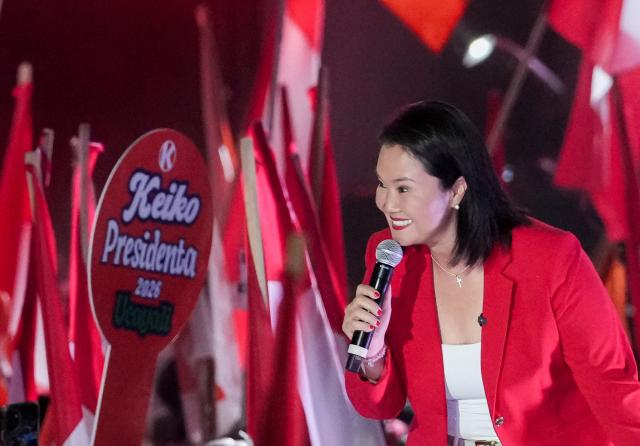
Fujimori has consistently promised to crack down on crime during the campaign. According to AP, she has pledged to deploy military forces to the borders, increase police presence in high-risk areas, and mandate hard labor for prisoners as a way to give back to society. The rise in crime, particularly extortion, has become a significant social issue in Peru. The National Institute of Statistics reports that 84% of urban respondents fear becoming victims of crime within the next year.
Critics argue that the election may boil down to a choice of who is less unpopular. Fujimori's candidacy is complicated by the legacy of her father, former President Alberto Fujimori, who served from 1990 to 2000. During her father's presidency, she served as First Lady. The Washington Post noted that while her father rescued Peru from hyperinflation and violent Maoist uprisings, he ultimately resigned in disgrace amid allegations of electoral fraud, corruption, and murder. Fujimori herself has faced money laundering charges in the past.
The Post also pointed out that Sanchez is politically aligned with former President Pedro Castillo, whose presidency collapsed amid allegations of incompetence, corruption, and coup attempts. Sanchez's ability to win against Fujimori, who has placed second in three previous elections in 2011, 2016, and 2021, indicates Sanchez's own lack of popularity. Castillo was sentenced to 11 years in prison for inciting rebellion after attempting to dissolve Congress to avoid impeachment in 2022.
NPR reports that voting will close at 5 p.m. local time, with results expected to be announced late on June 7. However, if the results are close, it may take several days to finalize.
Meanwhile, former President Donald Trump, who has shown interest in many Latin American elections, has not commented on the Peru presidential election, according to AFP.
* This article has been translated by AI.
Copyright ⓒ Aju Press All rights reserved.