

"Mayor, do you believe that Daejeon can give birth to a world-class AI company within the next decade?"
Daejeon is a unique city in South Korea. Unlike Seoul, where political power is concentrated, or Ulsan, known for its massive manufacturing plants, Daejeon is home to KAIST, the Daedeok Research and Development Special Zone, and 27 government-funded research institutes with over 40,000 researchers. It is the heart of South Korea's science and technology. However, Daejeon has long grappled with a persistent question: Why has the country’s top research city failed to produce its leading tech companies?
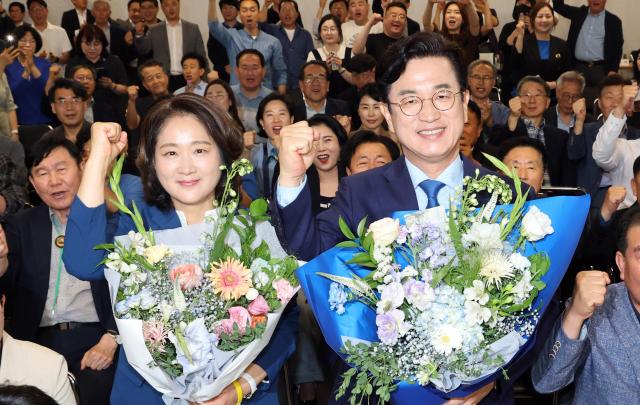
In the recent local elections, newly elected Mayor Heo Tae-jeong pledged to transform Daejeon into a leading AI city, nurture 1,000 young venture companies, and establish a large GPU data center, aiming to shift the city from a research hub to an industrial powerhouse. He emphasized the need to connect research with business rather than ending it at academic papers.
Daejeon now stands at a crossroads. Will it remain a city known for its research achievements, or will it leap forward to become Asia's Silicon Valley in the AI era?
Why has Daejeon failed to produce global companies despite its abundant research?
Daejeon symbolizes the advancement of South Korea's science and technology. For decades, national research and development budgets have been concentrated here, giving birth to numerous foundational technologies. Researchers have published world-class papers, and government-funded research institutes have supported the nation’s technological competitiveness. As a result, Daejeon has earned the title of the science capital and has become a symbol of South Korea's innovation capabilities.
However, it must be said that research achievements have not necessarily translated into industrial success. While there has been a wealth of research, relatively few companies have disrupted the global market. There are many patents, but their conversion into jobs has been limited, and while technology exists, platform companies that dominate the market are rare. Technologies born in research labs often stall before reaching the market, and ideas from universities frequently fail to lead to startups.
Mayor Heo emphasized this point during his campaign. He diagnosed that the research capabilities of the Daedeok Special Zone have not translated into citizens' income and jobs, and he aims to create a virtuous cycle connecting research to industry, jobs, and citizen income. His initiatives to nurture 1,000 young venture companies, expand technology commercialization, and establish a citizen growth fund stem from this awareness.
Ultimately, Daejeon's future does not hinge on how much more research funding it can secure but on how many research outcomes can be connected to businesses. The era has come where the number of unicorn companies, not the number of papers, matters. The title of science capital alone is insufficient. The city must evolve into one where research becomes industry, and industry fosters further innovation.
Competitiveness in the AI era relies on entrepreneurship, not just research.
Many people think of Stanford University when discussing Silicon Valley's success. However, it was not the university itself that made Silicon Valley the capital of global innovation. It was the entrepreneurs who turned ideas from the university into companies and grew those companies into industries. Google, NVIDIA, and Apple all started as small startups.
In the AI era, this principle is becoming even more pronounced. In the past, creating a company required massive factories and capital, but now, outstanding technology, computing resources, and entrepreneurial spirit are enough to challenge the global market. Generative AI is lowering barriers to capital and talent, shifting the center of innovation from manufacturing to knowledge and entrepreneurship.
Daejeon is one of the cities most favorable for this change. It is home to KAIST, the Korea Electronics and Telecommunications Research Institute, and the Agency for Defense Development. While other regions compete to attract talent, Daejeon already possesses top-tier researchers. The challenge lies in connectivity. The extent to which research institutes, universities, entrepreneurs, investors, technology, and markets are closely linked is crucial.
Mayor Heo's promises to establish a large GPU data center, create AI testing infrastructure, and set up a market-oriented AI strategy organization are rooted in this understanding. He aims to secure computing resources and data, which are key assets in the AI era, and create an environment where researchers can venture into entrepreneurship. Additionally, he proposed a 1 trillion won citizen growth fund to ensure that the benefits of technological innovation translate into citizens' assets.
For Daejeon to truly become an AI capital, it must evolve from a research city to an entrepreneurial city. Researchers need to become entrepreneurs, universities must become incubators for innovative companies, and technology must connect to the market. It is essential to remember that the essence of Silicon Valley is not technology but entrepreneurship.
Daejeon's competition is not with Sejong but with Silicon Valley.
Historically, Daejeon has often been discussed within the framework of being the central city of the Chungcheong region. Strategies for the future have typically involved cooperation with Sejong and connections with South Chungcheong Province. However, competition in the AI era transcends such levels. Cities are no longer competing with others within the same country but with global innovation cities.
In the United States, there is Silicon Valley and Boston. In China, there is Shenzhen, and in the UK, there is Cambridge. The commonality among these cities is that their research capabilities are linked to industry, creating a virtuous cycle where industry fosters further innovation. Universities, research institutes, venture capital, and entrepreneurs form a cohesive ecosystem.
Daejeon also possesses sufficient potential for such a structure. Its assets, including KAIST, the Daedeok Special Zone, and government-funded research institutes, are comparable to those of any city in the world. What is lacking is ambition. Why has Daejeon not produced companies like NVIDIA? Why must world-class AI platform companies only emerge from the metropolitan area? Why are there abundant research outcomes but few companies that shake the global market?
The success or failure of Mayor Heo's four-year term will ultimately be determined by the answers to these questions. More important than how much research funding has increased is how many AI companies have been born. More significant than the number of additional papers published is how many young people have stayed in Daejeon to start their own businesses. If research outcomes can translate into citizens' income, Daejeon can become an industrial capital beyond just a science capital.
South Korea already has the science capital of Daejeon.
What is now needed is an AI Silicon Valley in Daejeon.
* This article has been translated by AI.
Copyright ⓒ Aju Press All rights reserved.