

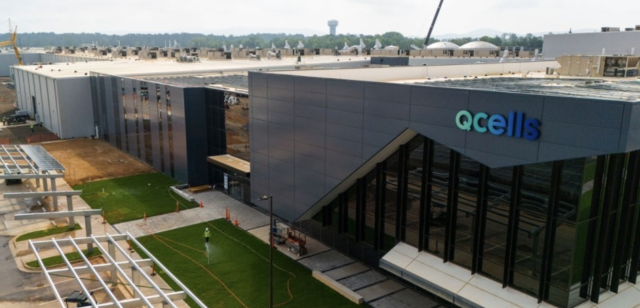
On June 9, local time, Reuters reported that Hanwha Q CELLS announced the start of solar cell production at its Cartersville plant.
Solar cells are essential components of solar modules that convert sunlight into electrical energy. According to Reuters, this production marks a significant step toward Hanwha Q CELLS' goal of producing all key components for silicon-based solar panels in-house.
The Solar Energy Industries Association (SEIA) states that the current solar panel production capacity in the United States is 60 gigawatts (GW), while solar cell production capacity is only 3.2 GW. This indicates that most module factories in the U.S. still rely on imported solar cells.
Recent trade tensions and regulations targeting Chinese suppliers have led to disruptions in imports, increasing the need for domestic solar component production. The U.S. government has been promoting domestic production through subsidies, trade measures, and tax credits linked to local manufacturing equipment.
Reuters noted that once production ramps up at the Hanwha Q CELLS Cartersville plant, the existing solar cell production capacity in the U.S. could nearly double.
Scott Moskowitz, Vice President of Market Strategy at Q CELLS, stated in an interview with Reuters, "Solar cell production is a key area that the U.S. has been trying to bring back home."
The Cartersville facility is expected to produce ingots, wafers, and solar cells at an annual capacity of 3.3 GW each, and solar modules at an annual capacity of 3.5 GW. Once fully operational in the third quarter of this year, the plant is anticipated to become the largest solar cell production facility in U.S. history, according to Reuters.
* This article has been translated by AI.
Copyright ⓒ Aju Press All rights reserved.