

"(ABC Broadcasting's question) Governor, Gangwon has long been a land of nature and tourism. However, in the AI era, data and power are becoming new assets. Are you confident in making Gangwon the capital of South Korea's AI infrastructure?"
Gangwon has always stood in the shadows of South Korea's development. During the industrialization era, it lagged behind the metropolitan area and the Yeongnam region, and in the information age, it fell behind Pangyo and Daedeok Special Zone. While it boasts abundant natural beauty and tourism resources, it has failed to create an industrial base strong enough to retain its youth. Despite the establishment of a special autonomous province, Gangwon continues to face the dual crises of population decline and regional extinction.
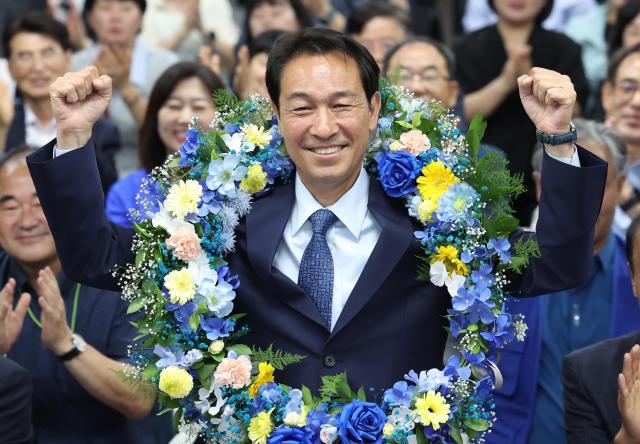
However, U Sang-ho, the newly elected governor of Gangwon, has proposed a different path for the province's development. He has declared his intention to shift from a tourism and SOC-centered strategy to a new industrial map that combines AI data centers, aerospace industry, and clean energy. In particular, attracting the AI data center to Gangneung and developing an aerospace industry cluster in Wonju represent a bold challenge to transform Gangwon's economic structure.
The success of U Sang-ho's administration ultimately hinges on one question.
Can Gangwon become a land of AI infrastructure beyond its natural beauty?
Why did Gangwon choose AI data centers?
In the AI era, national competitiveness is not solely determined by semiconductors. The computing infrastructure that powers AI is equally important. Data centers serve as the power plants and factories of the AI era. Just as steel mills and shipyards symbolized national growth during the industrialization era, data centers now fulfill that role.
AI requires processing vast amounts of data. Generative AI, like ChatGPT, demands significant power and computing resources each time it operates. Without data centers equipped with thousands of NVIDIA GPUs, the AI industry itself cannot exist. This is why countries like the United States, China, and those in the Middle East are currently competing to secure data centers.
U Sang-ho's emphasis on the Gangneung AI data center as a core promise stems from this reality. He aims to attract a massive AI data center to Gangneung to serve as an engine for economic growth in Gangwon. This initiative is not merely about installing servers; it envisions creating a new industrial ecosystem where AI companies, startups, and research institutions converge around the data center.
In fact, Gangwon has significant advantages as a location for data centers. It offers ample land and relatively lower land costs compared to the metropolitan area. The East Coast has a robust power infrastructure and substantial potential for renewable energy. Additionally, it does not suffer from the power shortages that plague the metropolitan area, enhancing its competitiveness.
Data centers in the AI era are not just buildings; they are industrial platforms that attract businesses, investments, and talent. Securing an AI data center means attracting the entire AI industrial ecosystem.
The key is not the data center itself, but what industries can be nurtured based on it.
Beyond Tourism: Gangwon as an AI Industry Hub
Gangwon's biggest challenge has been the absence of diverse industries. While tourism is important, it has limitations in sustaining the local economy. The tourism sector is seasonal and sensitive to economic fluctuations. Most importantly, it is difficult to create a large number of quality jobs that can retain young people.
As a result, Gangwon has long struggled with youth outmigration.
After graduating from university, many young people move to Seoul for employment opportunities. Ultimately, only an aging population remains in the region. The essence of Gangwon's population decline issue lies here.
U Sang-ho aims to address this problem through industrial development.
A prime example is the aerospace industry cluster in Wonju. He has announced plans to foster drone, space, and advanced aviation industries centered in Wonju. By utilizing military-related infrastructure and vacant land, he aims to create a new industrial belt.
It is noteworthy that AI and the aerospace industry are not separate sectors.
The future of drones will be driven by AI.
Autonomous flight is impossible without AI.
Satellite data analysis will also rely on AI.
In the defense sector, AI-based unmanned systems are becoming a core competitive advantage.
Thus, the AI data center in Gangneung and the aerospace industry in Wonju are interconnected rather than isolated ventures.
If Gangwon secures an AI data center and develops its aerospace industry, it could transform from a mere tourist destination into a testing ground for future technologies.
More importantly, the direction of the industry matters.
In the past, Gangwon focused on attracting factories.
However, moving forward, it must attract high-value-added industries based on AI and data.
This is the path to retaining youth and combating population decline.
Gangwon's Future Depends on EnergyWhat is the most crucial resource in the AI era?
Many people think of semiconductors.
However, what AI companies are truly concerned about is power.
AI consumes enormous amounts of electricity. A single data center can consume as much electricity as an entire small city. This is why countries around the world are pursuing AI strategies alongside energy strategies.
The United States' push to expand nuclear power is rooted in this necessity.
China's massive investments in solar and wind energy share the same rationale.
Ultimately, AI competition is a competition for power.
In this regard, Gangwon has unexpected strengths.
The East Coast is an optimal location for wind power generation. There is also significant potential for solar and hydrogen industries. U Sang-ho has pledged to establish a clean energy belt, positioning Gangwon as a center for South Korea's energy transition.
If clean energy and AI data centers converge, Gangwon could create an entirely new growth model.
Data centers consume power.
Clean energy supplies power.
The AI industry utilizes data.
The aerospace industry requires AI.
If these four elements connect, Gangwon can shift from a tourism-centered economy to a high-tech industrial economy.
Ultimately, the core of U Sang-ho's administration is not merely attracting the AI industry.
It is about transforming Gangwon's industrial structure.
Gangwon's Competitors Are Not Jeju, but the Middle EastMany people perceive Gangwon as a tourist city.
Thus, they consider Jeju as its primary competitor.
However, in the AI era, Gangwon must engage in a completely different competition.
To attract AI data centers, it must compete with Texas in the United States.
To foster clean energy, it must compete with Saudi Arabia.
To grow the aerospace industry, it must compete with Arizona in the United States.
In essence, Gangwon's competitors are not other regions in South Korea but global industrial hubs.
U Sang-ho's ambition to transform Gangwon from a mere tourist destination into an industrial zone stems from this reality.
For a long time, Gangwon has relied on its natural assets.
However, nature alone cannot create a future.
AI, data, energy, and industry must converge.
U Sang-ho has appointed Kim Heon-young, former president of Gangwon National University, as the chair of the transition committee, emphasizing youth employment, industry-academia cooperation, and local talent development as key tasks. This signifies a commitment to creating an ecosystem that connects talent with industry rather than just attracting industries.
For Gangwon to succeed in the AI era, attracting a few data centers will not be sufficient.
AI companies must gather.
Youths must start businesses.
Universities must connect with industries.
And new jobs must emerge in the region.
The next four years of U Sang-ho's administration will ultimately be a time to prove this potential.
Will Gangwon remain a land of nature?
Or will it transform into the capital of AI infrastructure?
Strengths
Gangwon has ample land, abundant renewable energy potential, and relatively low land costs. The plans for the Gangneung AI data center, Wonju aerospace industry, and clean energy belt represent a differentiated strategy. In particular, the growth model that combines AI infrastructure and energy could become Gangwon's new competitive edge.
Weaknesses
There is a lack of industrial ecosystem and specialized workforce. The concentration of AI companies and startups is low, and there is significant outmigration of talent to the metropolitan area. Critics argue that data centers alone cannot revitalize the entire local economy.
Opportunities
The growth of the AI industry has led to a surge in demand for data centers. There is potential to build a new growth model that combines clean energy and AI. The aerospace and drone industries also have high potential for growth in Gangwon's future.
Threats
If the plans to attract AI data centers do not proceed as intended, the entire administration could be adversely affected. Local governments across the country are entering the competition to attract data centers, and issues related to power grids and environmental regulations are also variables. Additionally, population decline and regional extinction remain the most significant threats to Gangwon.
* This article has been translated by AI.

Copyright ⓒ Aju Press All rights reserved.