

As concerns grow over tax revenue losses and increased national financial burdens due to rapid population aging, experts from a national research institute have strongly recommended a complete restructuring of the current basic pension system, which has been in place for ten years. They propose gradually excluding high-income earners while providing robust support for low-income individuals, a strategy known as 'thicker support for the lower class and thinner support for the upper class.'
This recommendation stems from the critical view that it is unreasonable to provide uniform payments to high-income individuals. It signals a paradigm shift by health authorities aimed at achieving both long-term fiscal sustainability and effective poverty alleviation among the elderly.
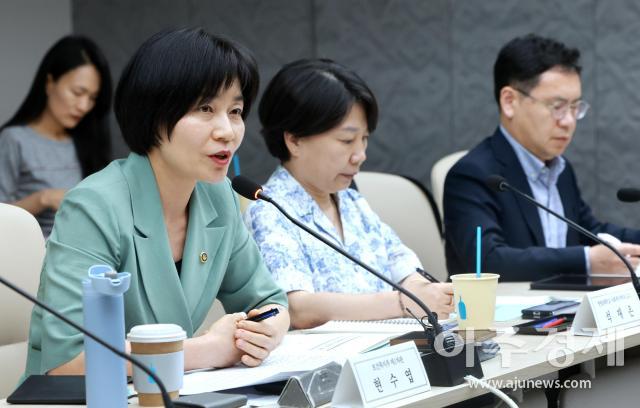
On June 10, the Ministry of Health and Welfare reported that a forum on pension reform was held the previous afternoon at Seoul Station, chaired by First Vice Minister Hyun Soo-yup. Experts from academia and government research institutes engaged in in-depth discussions on specific reform proposals.
The forum was organized in response to ongoing discussions in the National Assembly's pension special committee regarding the restructuring of the multi-layered income security system for the elderly. It aims to address the structural contradictions of the current basic pension system, which provides fixed payments to the bottom 70% of income earners aged 65 and older.
Choi Ok-geum, head of the Pension System Division at the National Pension Research Institute, served as the main presenter at the forum. She stated that the current expenditure structure of the basic pension imposes excessive tax burdens on future generations and proposed a '20-year long-term transition roadmap' based on the maturation of a multi-layered income security system.
Choi noted, "The ongoing issue of wealthy seniors receiving substantial basic pensions while living in high-value apartments worth 1.7 billion won is due to the ambiguous purpose and nature of the system. A macro-level reform that minimizes administrative fatigue and considers changes in public pension eligibility is urgently needed."
The core of Choi's reform proposal is to align the criteria for selecting recipients and the level of benefits for the basic pension with a certain percentage of the median income, ultimately integrating it with the National Basic Livelihood Security System to operate as a categorical public assistance program for the elderly. This approach suggests that high-income seniors should be excluded from receiving pensions to enhance financial efficiency, while the resources saved should be redirected to provide significantly higher pension amounts to low-income seniors, thereby achieving the intended 'thicker support for the lower class.'
Choi emphasized, "This transition must be implemented gradually over 20 years, targeting the 2040-2050 period, to ensure long-term fiscal sustainability as the National Pension becomes the central pillar of income security for the elderly."
In addition to these strong reform proposals, the forum also addressed alternative issues that need to be rectified, such as the persistent gaps and inequities within the current basic pension system. Researcher Lee Won-jin from the Korea Institute for Health and Social Affairs analyzed that the elderly poverty rate in South Korea remains among the highest in the OECD, and since the basic pension amount was frozen in 2021, the effectiveness of poverty alleviation has stagnated.
Lee warned, "If the reform simply reduces the number of beneficiaries to save national finances, it could paradoxically lead to a balloon effect, where seniors on the brink of poverty fall into extreme poverty. To rescue the extremely poor elderly, particularly those aged 75 and older, efforts must be made to protect the basic pension's inherent guarantee through benefit increases."
Senior Researcher Kim Tae-wan from the Korea Institute for Health and Social Affairs called for adjustments to address administrative irrationalities and distortions occurring in the field. He highlighted the unfairness of the 'couple reduction' system, which uniformly cuts 20% of benefits when both spouses receive pensions, and the exclusion of spouses of direct pension beneficiaries from receiving payments. He stressed the need to quickly eliminate the contradiction of 'giving and taking back' the basic pension, which results in vulnerable seniors having their living benefits reduced by the amount they receive in basic pensions, thereby narrowing the gaps in the system.
This recommendation stems from the critical view that it is unreasonable to provide uniform payments to high-income individuals. It signals a paradigm shift by health authorities aimed at achieving both long-term fiscal sustainability and effective poverty alleviation among the elderly.
On June 10, the Ministry of Health and Welfare reported that a forum on pension reform was held the previous afternoon at Seoul Station, chaired by First Vice Minister Hyun Soo-yup. Experts from academia and government research institutes engaged in in-depth discussions on specific reform proposals.
The forum was organized in response to ongoing discussions in the National Assembly's pension special committee regarding the restructuring of the multi-layered income security system for the elderly. It aims to address the structural contradictions of the current basic pension system, which provides fixed payments to the bottom 70% of income earners aged 65 and older.
Choi Ok-geum, head of the Pension System Division at the National Pension Research Institute, served as the main presenter at the forum. She stated that the current expenditure structure of the basic pension imposes excessive tax burdens on future generations and proposed a '20-year long-term transition roadmap' based on the maturation of a multi-layered income security system.
Choi noted, "The ongoing issue of wealthy seniors receiving substantial basic pensions while living in high-value apartments worth 1.7 billion won is due to the ambiguous purpose and nature of the system. A macro-level reform that minimizes administrative fatigue and considers changes in public pension eligibility is urgently needed."
The core of Choi's reform proposal is to align the criteria for selecting recipients and the level of benefits for the basic pension with a certain percentage of the median income, ultimately integrating it with the National Basic Livelihood Security System to operate as a categorical public assistance program for the elderly. This approach suggests that high-income seniors should be excluded from receiving pensions to enhance financial efficiency, while the resources saved should be redirected to provide significantly higher pension amounts to low-income seniors, thereby achieving the intended 'thicker support for the lower class.'
Choi emphasized, "This transition must be implemented gradually over 20 years, targeting the 2040-2050 period, to ensure long-term fiscal sustainability as the National Pension becomes the central pillar of income security for the elderly."
In addition to these strong reform proposals, the forum also addressed alternative issues that need to be rectified, such as the persistent gaps and inequities within the current basic pension system. Researcher Lee Won-jin from the Korea Institute for Health and Social Affairs analyzed that the elderly poverty rate in South Korea remains among the highest in the OECD, and since the basic pension amount was frozen in 2021, the effectiveness of poverty alleviation has stagnated.
Lee warned, "If the reform simply reduces the number of beneficiaries to save national finances, it could paradoxically lead to a balloon effect, where seniors on the brink of poverty fall into extreme poverty. To rescue the extremely poor elderly, particularly those aged 75 and older, efforts must be made to protect the basic pension's inherent guarantee through benefit increases."
Senior Researcher Kim Tae-wan from the Korea Institute for Health and Social Affairs called for adjustments to address administrative irrationalities and distortions occurring in the field. He highlighted the unfairness of the 'couple reduction' system, which uniformly cuts 20% of benefits when both spouses receive pensions, and the exclusion of spouses of direct pension beneficiaries from receiving payments. He stressed the need to quickly eliminate the contradiction of 'giving and taking back' the basic pension, which results in vulnerable seniors having their living benefits reduced by the amount they receive in basic pensions, thereby narrowing the gaps in the system.
* This article has been translated by AI.

Copyright ⓒ Aju Press All rights reserved.