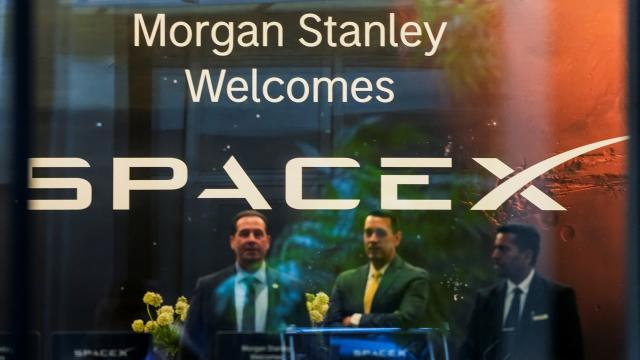
The world's largest-ever initial public offering is expected to begin trading after attracting more than $250 billion in investor demand for an offering seeking to raise about $75 billion at a valuation nearing $1.8 trillion, according to Reuters.
For Korean investors, the listing arrives at a particularly vulnerable moment.
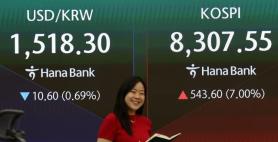
After nearly doubling from the start of the year on the back of an artificial intelligence-fueled memory boom, the KOSPI has entered a period of sharp volatility, swaying around 8 percent over the first two days in the IPO week and another fall of 3 percent on Wednesday.
Institutional pullout mostly centered around the two biggest gainers Samsung Electronics and SK hynix that accounted for much of the market's advance.
Foreign investors have been aggressive sellers of Korean stocks in recent weeks.
They net sold 24.6 trillion won ($18 billion) worth of KOSPI shares during the first nine trading days of June, following net sales of 51.5 trillion won in May. Combined foreign selling over the two months reached 76.1 trillion won, already more than half of the 144.2 trillion won dumped from Korean equities so far this year.
The sustained outflows have weighed on the Korean won, pushing the currency toward levels seen only during periods of severe market stress.
The concern is not merely about SpaceX itself but about where global capital flows next.
The company occupies a unique position at the intersection of several of the market's hottest investment themes -- space exploration, satellite communications and artificial intelligence infrastructure.
According to roadshow materials cited by Reuters, SpaceX told investors it sees a potential $23 trillion opportunity in artificial intelligence-related businesses and argued that future computing capacity could increasingly be built in space, where constraints on land, power generation and permitting are less severe than on Earth.
The company also highlighted the dominance of its rocket-launch business and the rapid growth of its Starlink satellite internet network, which has become a major source of recurring revenue.
The narrative is tailor-made for Korea's growing army of overseas investors.
Known as "seohak" (overseas-leaning) ants, Korean retail investors have poured record amounts of money into U.S. equities in recent years, attracted by technology companies unavailable on the domestic market.
SpaceX offers exactly the type of growth story that has fueled that migration.
The recent strength of the won has also made dollar-denominated assets relatively cheaper for Korean investors, creating an additional incentive to look abroad despite volatility in global markets.
The setup has prompted comparisons with LG Energy Solution's record domestic IPO in 2022.
At the time, investors sold existing holdings across the market to fund subscriptions for the battery maker's shares, creating a temporary liquidity vacuum that distorted trading throughout the KOSPI.
Analysts say the SpaceX debut could produce a similar effect on a global scale.
The timing is particularly challenging for semiconductor stocks.
Samsung Electronics and SK hynix remain among the biggest beneficiaries of the global AI boom and continue to post strong earnings. Yet they are also among the most liquid positions held by both foreign and institutional investors, making them natural candidates for profit-taking when investors need cash for new opportunities.
Not everyone is convinced the enthusiasm is justified.
SpaceX reported a net loss of nearly $5 billion last year, while some independent analysts have estimated the company's value at less than half the IPO target valuation. The offering is expected to float only about 3 percent of the company's outstanding shares, potentially creating sharp price swings once trading begins.
For Korean investors, the greater danger may not be the money leaving Seoul but what happens after it arrives in New York.
A volatile domestic market and one of the most expensive IPOs in history create conditions that have often led retail investors to chase momentum at elevated valuations.
As SpaceX prepares to begin trading on Friday, investors in Seoul will be watching not only the stock's debut but also whether the world's most anticipated listing becomes a new drain on liquidity for a Korean market already showing signs of fatigue after one of its strongest rallies on record.
Copyright ⓒ Aju Press All rights reserved.