

Understanding the Complex Real Estate Market
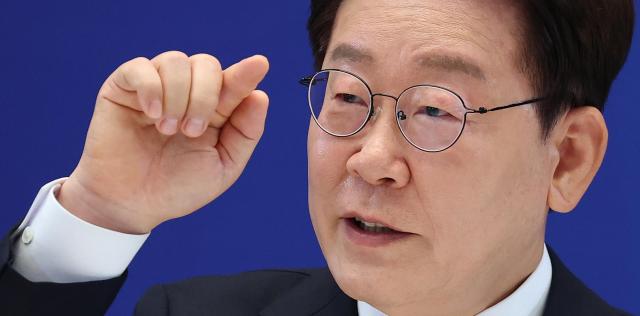
President Lee Jae-myung's press conference on June 8 included significant remarks regarding real estate. The president's prepared statements and the subsequent Q&A session provided insights into the government's approach to pressing issues such as the housing crisis, multiple homeowners, taxes, finance, and supply. While the topics varied, the overall direction of the government's policy was clear.
The Lee administration's real estate policy is not aimed at preventing home purchases but rather at reducing the expected returns from real estate investments. As the president stated, the goal is to "fundamentally lower the expected rate of return." While acknowledging the freedom to own multiple properties, the administration plans to impose corresponding costs, reduce tax benefits for speculative holdings, and accelerate supply through new construction, renovation projects, and public rentals.
Following the president's remarks, the anticipated directions for tax reform, financial regulations, and supply policies become apparent.
Government's Perspective on the Jeonse Crisis
One of the most contentious points was the government's view on the jeonse market. President Lee explained the recent shortage of jeonse properties and rising prices by noting that homes owned by multiple homeowners are being sold to first-time buyers, which reduces the availability of jeonse. He characterized this situation as a "normalization process" and assessed that the current surge in jeonse prices is not extreme.
This statement goes beyond a simple market analysis. It suggests that the government views the decrease in jeonse availability not as a policy failure but as a transition in the housing ownership structure. When properties rented by multiple homeowners are converted to owner-occupied homes, the supply of jeonse decreases. However, from the government's perspective, this can be interpreted as an increase in homeownership among first-time buyers. The president's description of jeonse as a "type of private finance unique to South Korea" aligns with this viewpoint.
The challenge lies in the lived experience. For tenants seeking jeonse, the reduced availability is a burden rather than a normalization. Concerns about declining apartment supply in Seoul persist, and there are signs that the jeonse crisis is spreading to non-apartment markets, such as multi-family homes. Ultimately, the second half of the year will test whether the government's normalization process is effective or if it leads to increased housing costs for tenants.
Signals for Revising Tax Benefits for Investors
Regarding taxation, President Lee delivered a clear message. He questioned why investment income should receive significant tax breaks, stating, "Why should we give so many deductions for investment income?" and added, "Why should we provide breaks for those who have speculated for a long time?" He contrasted this with the taxes paid by hardworking citizens, noting that they pay nearly half of their income in taxes.
This statement encapsulates the direction of future tax reforms. Discussions have been ongoing about reducing the long-term capital gains tax exemption for non-resident homeowners and increasing the tax burden on investment properties. The president's remarks indicate that these discussions are aligned with government philosophy rather than mere ideas.
The focus is not solely on long-term ownership but on whether the property is owner-occupied. Homes kept for personal residence and those held for speculative gains should not be treated the same. The intent to reduce real estate windfall profits and lower the expected returns on property ownership to redirect funds into productive areas is evident. The significance of the upcoming tax reform proposal in July lies in whether the long-term capital gains exemption will be adjusted, whether owner-occupancy requirements will be strengthened, and how non-resident homeowners will be regulated.

Increased Burden for Multiple Homeowners
The president's stance on multiple homeowners was also clear. He stated, "Owning several properties is not an issue. We are not prohibiting it," but added, "However, those who own multiple homes should bear corresponding burdens."
The approach is not to criminalize or stigmatize multiple property ownership but to increase the costs associated with it, leaving market choices to individuals. If someone wishes to own multiple homes, they can do so, but they must also accept the tax and financial burdens that come with it.
President Lee specifically mentioned property taxes, noting that they are relatively low in South Korea and that accumulating multiple properties does not impose a significant burden. He also emphasized the need to curb speculative investments using borrowed money, indicating a comprehensive view of taxes and loans. The policy direction is already shifting in this regard, with the suspension of the capital gains tax exemption for multiple homeowners ending, and financial authorities considering regulations for non-resident homeowners. Both multiple homeowners and non-resident homeowners are likely to face increased pressure from both tax and financial policies moving forward.
However, the effectiveness of these measures remains uncertain. The government anticipates that increasing ownership burdens will lead to more properties on the market and make housing available for genuine buyers. Conversely, there are concerns that the tax burden may result in holding onto properties, gifting them, or passing on rental costs rather than stimulating transactions. Therefore, the key issue is not the intensity of the regulations but the actual market response.
Upcoming Supply Policies Under Review
Regarding supply, the president indicated that the government is still in the early stages of planning. He stated, "We are currently organizing policies to increase supply" and promised that details would be announced soon. While the direction for regulations and taxes is becoming clearer, supply measures have yet to be revealed. This statement suggests that the government is preparing a separate message regarding supply.
Last September, the government announced a supply plan aiming for an average of 270,000 housing units to be constructed annually in the metropolitan area until 2030, totaling 1.35 million units. Since then, additional supply measures, including increased supply in the metropolitan area, expanded rental programs, and revitalization of non-apartment housing, have been introduced. However, what the market is waiting for is not just numbers but specifics on where, how, and how quickly supply can be increased.
Notably, the government's concept of supply may differ from market expectations. While the market envisions new apartment construction in downtown Seoul, the government considers various supply methods, including redevelopment, public rentals, and encouraging existing housing listings. The president's mention of concerns about depopulation in relation to releasing greenbelt land for new towns is also noteworthy.
The success of the upcoming supply measures will hinge on how well the government can align its vision of supply with market expectations.
In summary, President Lee's remarks during his first anniversary press conference can be distilled into four key points:
"Normalization process of jeonse reduction," "Why should we give breaks for long-term speculation?" "Corresponding burdens for multiple homeowners," and "Supply policies are being organized."
The forthcoming tax reform proposals, financial regulations, and supply measures are likely to reflect these four statements. The president's responses should not be overlooked, as they contain the blueprint for the next steps in real estate policy.
* This article has been translated by AI.
Copyright ⓒ Aju Press All rights reserved.