

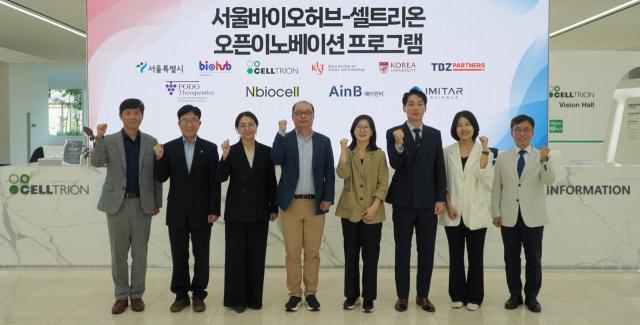
Seoul City is collaborating with major biotech firms to nurture promising bio startups, drawing attention to the technological capabilities of the selected companies. While biotechnology may seem complex, these innovative firms are focused on transforming injections into pills, developing new drugs without animal testing, and identifying personalized medications for patients in advance.
One standout is EnbioCell, selected in the fourth round by Celltrion. The company is developing a technology to convert GLP-1 class obesity treatments, which currently require injections, into oral medications. While these treatments are effective, the burden of self-injection can be significant for patients.
EnbioCell aims to tackle this challenge with its proprietary technology that enhances absorption in the body while resisting stomach acid and digestive enzymes. If successful, this could greatly improve patient compliance and attract global market interest.
AINB is leveraging artificial intelligence (AI) to design new drug candidates. Traditional drug development often involves a lengthy process of repeated experiments to identify potential candidates. However, AINB uses computer simulations to predict antibody structures that best bind to disease proteins, effectively acting as an AI that selects promising drug candidates. This approach has the potential to significantly reduce drug development costs.
Imita Science exemplifies the future direction of biotechnology with its focus on "animal-free drug development." The company utilizes organ-on-a-chip technology that mimics human organ environments to verify drug efficacy and toxicity in advance. By obtaining data from human cell-based environments instead of traditional animal testing, the company aims to enhance clinical success rates. This technology is gaining traction in the global pharmaceutical industry due to ethical and cost considerations.
Podotherapeutics, with its innovative organoid technology, cultivates stem cells extracted from patient tissues to create mini-organs in the lab. This allows for testing which drugs are most effective for individual patients before administering treatment, marking a significant step toward personalized precision medicine.
Daewon Pharmaceutical has also selected intriguing companies. OmniaMed is developing a smart drug delivery system that releases medication only when specific substances, often found in cancerous tissues or inflamed areas, are detected. This aims to minimize common side effects of cancer treatment, such as hair loss and vomiting, by concentrating the drug's effects on the targeted lesions.
CurioSabioScience possesses a platform technology that helps maintain consistent drug efficacy in the body over extended periods. The company is working on technologies to convert injections into oral medications that provide long-lasting effects, thereby reducing patient dosing burdens and enhancing global commercialization potential.
Industry experts view the selected companies as pushing the boundaries of existing biotechnology.
Seoul City, along with Celltrion and Daewon Pharmaceutical, will support joint research and commercialization verification over the next year. The initiative aims to combine the research capabilities of large corporations with the innovative technologies of startups to cultivate global biotech unicorns.
Lee Soo-yeon, Director of the Economic Office at Seoul City, stated, "The open innovation at Seoul Biohub serves as a ladder for startups to gain experience and networks from global anchor companies, while providing large corporations with a platform to secure innovative technologies. We will spare no effort in supporting the selected startups to grow into unicorn companies that lead the global biotech market beyond South Korea."
* This article has been translated by AI.

Copyright ⓒ Aju Press All rights reserved.