

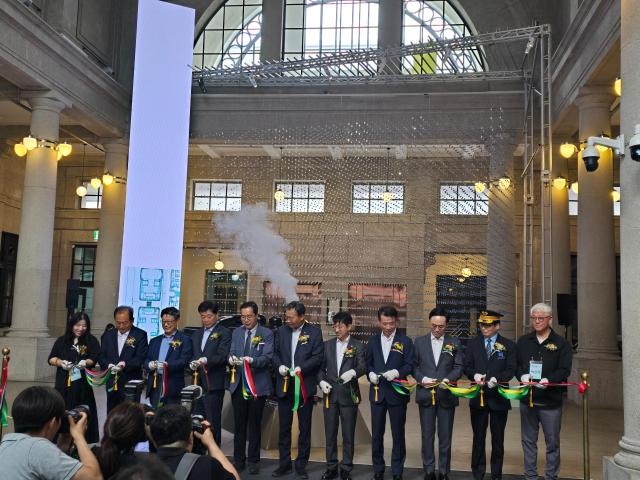
The historic Seoul Station, marking its 101st anniversary, has taken its first steps toward reclaiming its identity as a railway heritage site. Korail, the Korea Railroad Corporation, held the opening ceremony for the Railway Culture Exhibition at the old Seoul Station (Cultural Station Seoul 284) and officially declared its commitment to restoring the station's function as a national heritage site in collaboration with the Cultural Heritage Administration.
Korail announced that from June 11 to August 17, it will host the exhibition titled "Seoul Station 2026: The Heart Beats Again." This will be the largest exhibition to date, featuring 13 exhibition halls, including the first and second floors and train platforms. The exhibition aims to revive memories of the old Seoul Station, which was a hub of South Korean railways, and envision its future as a functioning railway station alongside visitors.
The ceremony at Cultural Station Seoul 284 was attended by key figures, including Korail President Kim Tae-seung, SR CEO Jeong Wang-guk, and Acting Chairman of the Korea Railroad Corporation Lee An-ho.
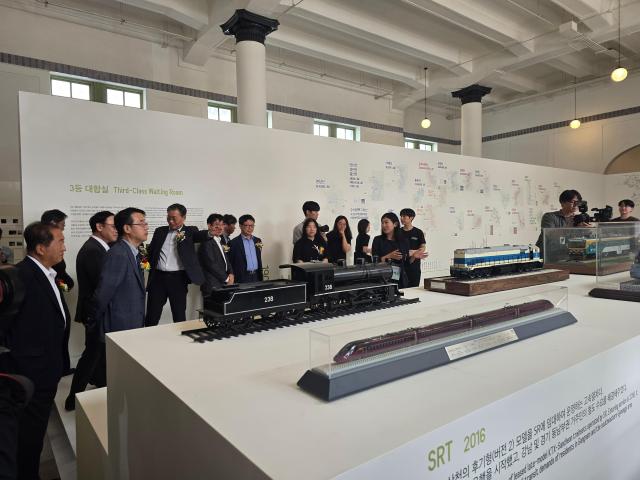
In his speech, President Kim Tae-seung expressed, "This cultural exhibition was organized with the hope that the old Seoul Station will once again become the heart of South Korean railways. We will strive to ensure that railways become spaces that connect culture and history, beyond just a means of transportation."
SR CEO Jeong Wang-guk emphasized, "While developing new railway technologies is important, it is equally essential to preserve and enhance our railway cultural heritage to match the status of the South Korean railway industry."
Acting Chairman Lee An-ho remarked, "Railways are completed not only through technology and speed but also through the cultural value of memories and stories passed down to the next generation."
The exhibition will run from June 11 to August 17. Artistic Director Kim Mi-yeon has designed it as a five-stage journey: 'Entry → Waiting → Movement → Boarding → Arrival.' Visitors will begin their journey at the entrance of the central hall by stamping the date on a replica of a ticket that was actually used in the past.
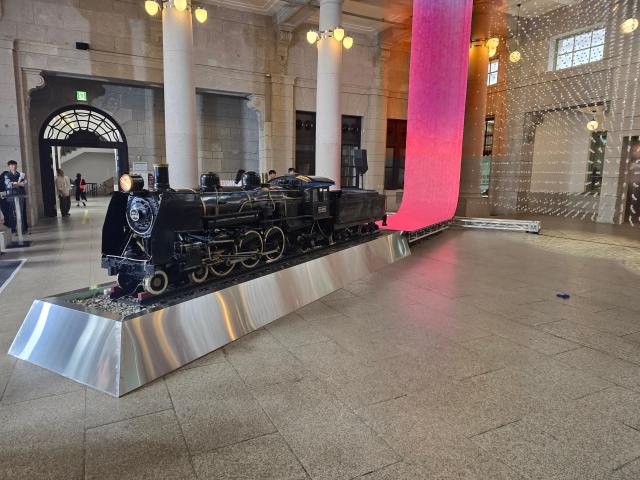
In the central hall, there is an installation of over 10,000 crystal balls by artist Park Seon-ki, alongside a one-fifth scale model of the Pasi Type 1 locomotive, which was produced in 1930. This model is a vivid artifact of railway history, having been demonstrated at the 1955 Industrial Fair marking the 10th anniversary of liberation. In the third-class waiting room, a black-and-white photo archive by photographer Lee Gap-cheol showcases regions with railway stations, along with the history of the opening of 27 railway lines in South Korea. In the first and second-class waiting rooms, visitors can experience KTX-Cheongryong and hydrogen mobility technology through 3D VR.
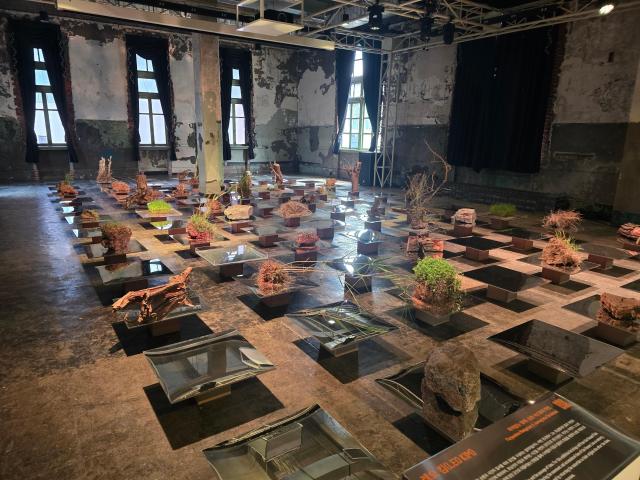
On the platform, visitors will have a special experience by descending to Seoul Station's Platform 4 and facing the tracks. In the baggage claim (RTO) area, florist Leo Kim visualized the logistics cycle using soil and plants sourced from the Honam Plain, which will be returned to its original location after the exhibition ends.
On the second floor, the dining hall recreates the actual tables and silverware of 'The Grill,' Korea's first Western-style restaurant, which opened in 1925, restoring the social culture of that time. This was a space frequented by literary figures such as Lee Sang and Park Tae-won. During the exhibition period, the 'Today's Destination' program will invite local brands from regions connected by rail, including Chuncheon, Hadong, Yeongju, and Daejeon.
Previously, Korail and the Cultural Heritage Administration signed a memorandum of understanding (MOU) in May of last year to enhance the value of the old Seoul Station and restore its function as a railway heritage site.
The two organizations are working together on plans that include restoring and preserving the historical structure, improving the heritage environment through connections between Seoul Station, the square, and railway spaces, and expanding public access to cultural experiences. They also jointly conducted a study on management and utilization plans for the old Seoul Station. This cultural exhibition is the first visible outcome following the MOU, with further restoration timelines and plans for connecting operations with the square remaining as follow-up tasks.
A Korail official stated, "Starting with this cultural exhibition, we plan to institutionalize the Railway Culture Exhibition annually to continue promoting railway culture."
* This article has been translated by AI.
Copyright ⓒ Aju Press All rights reserved.