

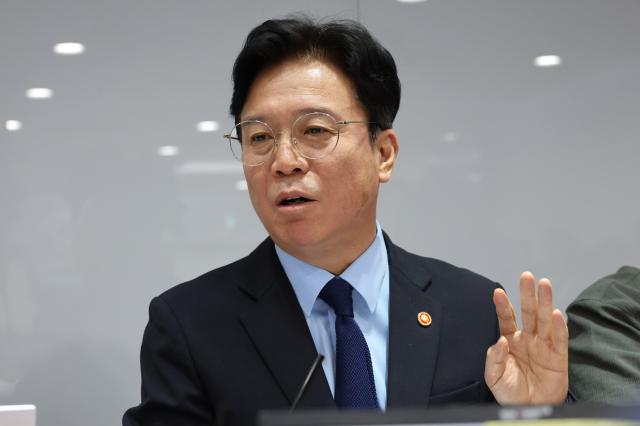
Speaking as the chief representative of the South Korean government at the 114th International Labour Organization (ILO) conference in Geneva, Kim declared that South Korea aims to be a country where "everyone can work happily," promoting an "industrial transformation with labor at its core."
He also noted that the government is continuously expanding the application of employment and industrial accident insurance to protect new forms of workers who are not covered by traditional employment relationships. "Technological innovation can only lead to development for people when workers, employers, and the government participate together and build trust," he stressed.
This marks Kim's second address at the ILO conference, the first being at the 99th session in 2010 as a representative of the labor sector. He expressed pride in representing the South Korean government and highlighted the need to extend democracy from the public square to the workplace.
Regarding labor in the AI era, Kim remarked, "We are experiencing significant changes driven by technology centered around AI, digital transformation, and the climate crisis." He emphasized that if the crisis is multifaceted, solutions must also be sought through the participation and dialogue of various stakeholders.
He added, "When we drive social innovation alongside technological innovation, AI will lead to growth for all. The benefits of AI should not be monopolized but fairly distributed among workers, businesses, primary contractors, subcontractors, and local communities. Moving beyond the dichotomy of reinvestment and redistribution, fair distribution should lead to reinvestment, creating sustainable growth as a new social contract in the AI era."
Kim urged collective inquiry and problem-solving regarding the various challenges encountered during this transition. "While we may not have all the answers, we can realize the tripartism and social dialogue that founded the ILO in South Korea," he added.
He noted that South Korea has grown with the support of the international community in the past and has now evolved into a country that shares experiences and responsibilities. Through the "Global AI Hub" being developed in collaboration with international organizations like the ILO and multilateral development banks, he aims to create an open platform for cooperation and communication that provides the benefits of AI technology to all countries and workers.
Kim concluded, "The future of technology has already begun. We are at a critical juncture where we must choose whether to center human dignity or prioritize efficiency and speed. Just as Rousseau's 'Social Contract' opened the door to modernity, I hope that discussions on a new social contract suitable for AI for humanity will begin here at the ILO."
The conference, attended by representatives from 187 member countries, will continue until June 12, focusing on key issues such as the platform economy, quality jobs, social dialogue, and gender equality in the workplace.
* This article has been translated by AI.
Copyright ⓒ Aju Press All rights reserved.