

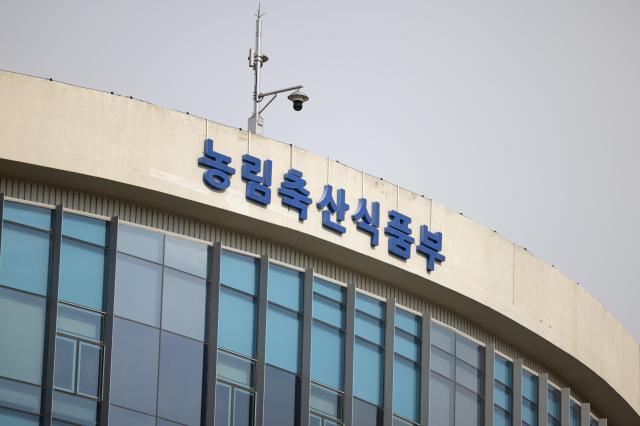
Ministry of Agriculture, Food and Rural Affairs in Sejong City. [Photo by Yu Dae-gil]
Starting in the second half of this year, imported honey and pollen for beekeeping will be classified as "animal quarantine targets" in South Korea. As a result, all honey and pollen imported for beekeeping will require animal quarantine procedures for customs clearance beginning six months from now.
The Animal and Plant Quarantine Agency announced on June 11 that it issued a notice on May 27 to include honey and pollen for beekeeping in the quarantine category. From the implementation date, all imported honey and pollen for beekeeping will be subject to quarantine as livestock products.
This measure reflects concerns raised by beekeeping organizations in 2024 regarding the potential import of bee diseases through foreign "honey feed." Following this, the quarantine agency designated honey and pollen for beekeeping as quarantine targets through four consultations involving quarantine experts and stakeholders.
To finalize the import quarantine procedures, the agency is expediting follow-up work, including revising the "Quarantine Methods and Standards for Designated Quarantine Products."
Starting November 27 of this year, honey and pollen for beekeeping imported must be accompanied by a quarantine certificate issued by the animal quarantine authority of the exporting country. Additionally, it must be proven that the honey and pollen were produced in areas free from bee diseases or processed in registered facilities that have completed radiation treatment.
If imported without radiation treatment, thorough inspections for bee diseases such as American foulbrood and chalkbrood will be required. If pathogens or genetic material related to the target diseases are detected in the inspection results, the entire shipment may be returned or disposed of.
In response to recent recurring bee losses due to diseases, the quarantine agency is enhancing communication by introducing the current status of the national quarantine system to beekeeping workers.
Choi Jeong-rok, head of the quarantine agency, stated, "The new designation of honey and pollen for beekeeping as quarantine targets aims to prevent the domestic entry of bee diseases and promote the development of the domestic beekeeping industry. We plan to conduct thorough quarantine measures along with meticulous preparations for the new quarantine system."
The Animal and Plant Quarantine Agency announced on June 11 that it issued a notice on May 27 to include honey and pollen for beekeeping in the quarantine category. From the implementation date, all imported honey and pollen for beekeeping will be subject to quarantine as livestock products.
This measure reflects concerns raised by beekeeping organizations in 2024 regarding the potential import of bee diseases through foreign "honey feed." Following this, the quarantine agency designated honey and pollen for beekeeping as quarantine targets through four consultations involving quarantine experts and stakeholders.
To finalize the import quarantine procedures, the agency is expediting follow-up work, including revising the "Quarantine Methods and Standards for Designated Quarantine Products."
Starting November 27 of this year, honey and pollen for beekeeping imported must be accompanied by a quarantine certificate issued by the animal quarantine authority of the exporting country. Additionally, it must be proven that the honey and pollen were produced in areas free from bee diseases or processed in registered facilities that have completed radiation treatment.
If imported without radiation treatment, thorough inspections for bee diseases such as American foulbrood and chalkbrood will be required. If pathogens or genetic material related to the target diseases are detected in the inspection results, the entire shipment may be returned or disposed of.
In response to recent recurring bee losses due to diseases, the quarantine agency is enhancing communication by introducing the current status of the national quarantine system to beekeeping workers.
Choi Jeong-rok, head of the quarantine agency, stated, "The new designation of honey and pollen for beekeeping as quarantine targets aims to prevent the domestic entry of bee diseases and promote the development of the domestic beekeeping industry. We plan to conduct thorough quarantine measures along with meticulous preparations for the new quarantine system."
* This article has been translated by AI.
Copyright ⓒ Aju Press All rights reserved.