

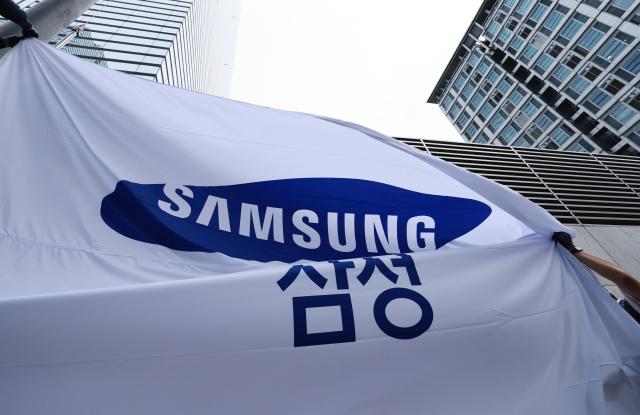
Samsung Electronics is reportedly in discussions to take on part of the production for Google's next-generation artificial intelligence (AI) chips. If Google becomes a customer alongside Tesla and Groq, it would further expand Samsung's foundry business in the AI chip sector.
According to industry sources, Google is considering assigning the production of some key components for its 10th generation Tensor Processing Unit (TPU) 'Icefish' to Samsung's foundry. This chip is currently under development with a target for mass production in 2028.
Google is exploring a strategy to divide the production of Icefish components between TSMC and Samsung. The main processor, which handles computations, is expected to be manufactured using TSMC's 1.4-nanometer process, while Samsung is likely to produce the memory input/output die that connects the main processor to high-bandwidth memory (HBM) using a 2-nanometer process.
The memory input/output die is responsible for data transfer between the computational units and HBM within the AI chip. As AI models grow larger, the efficiency of data transfer between memory and processors becomes increasingly critical, raising the importance of these connecting components.
Samsung's candidacy is bolstered by its dual capabilities in both memory and foundry businesses. The company's expertise in memory technology, combined with advanced process and packaging techniques, is seen as a significant advantage.
Industry analysts suggest that by pursuing contracts for Google TPU components, along with Tesla's AI6 and Groq's LPU, Samsung is strengthening its strategy to diversify its AI chip customer base beyond specific companies to include automotive, cloud, and AI startups.
Should these discussions lead to a formal contract, it would represent a significant opportunity for Samsung's foundry, especially as demand for AI semiconductors surges and TSMC's advanced production capacity becomes constrained. Major tech companies are increasingly considering Samsung as an alternative in their supply chain diversification efforts.
Samsung is currently establishing advanced production facilities in Taylor, Texas. Following its recent contract for Tesla's next-generation AI6 chip, the company is also expanding its orders related to AI semiconductors, including the production of Groq's language processing unit to be integrated into NVIDIA platforms.
Google is reportedly collaborating with Taiwan's MediaTek on the design of Icefish and is also in negotiations with Intel for TPU production, indicating that the final production structure may change based on further discussions.
* This article has been translated by AI.
Copyright ⓒ Aju Press All rights reserved.